
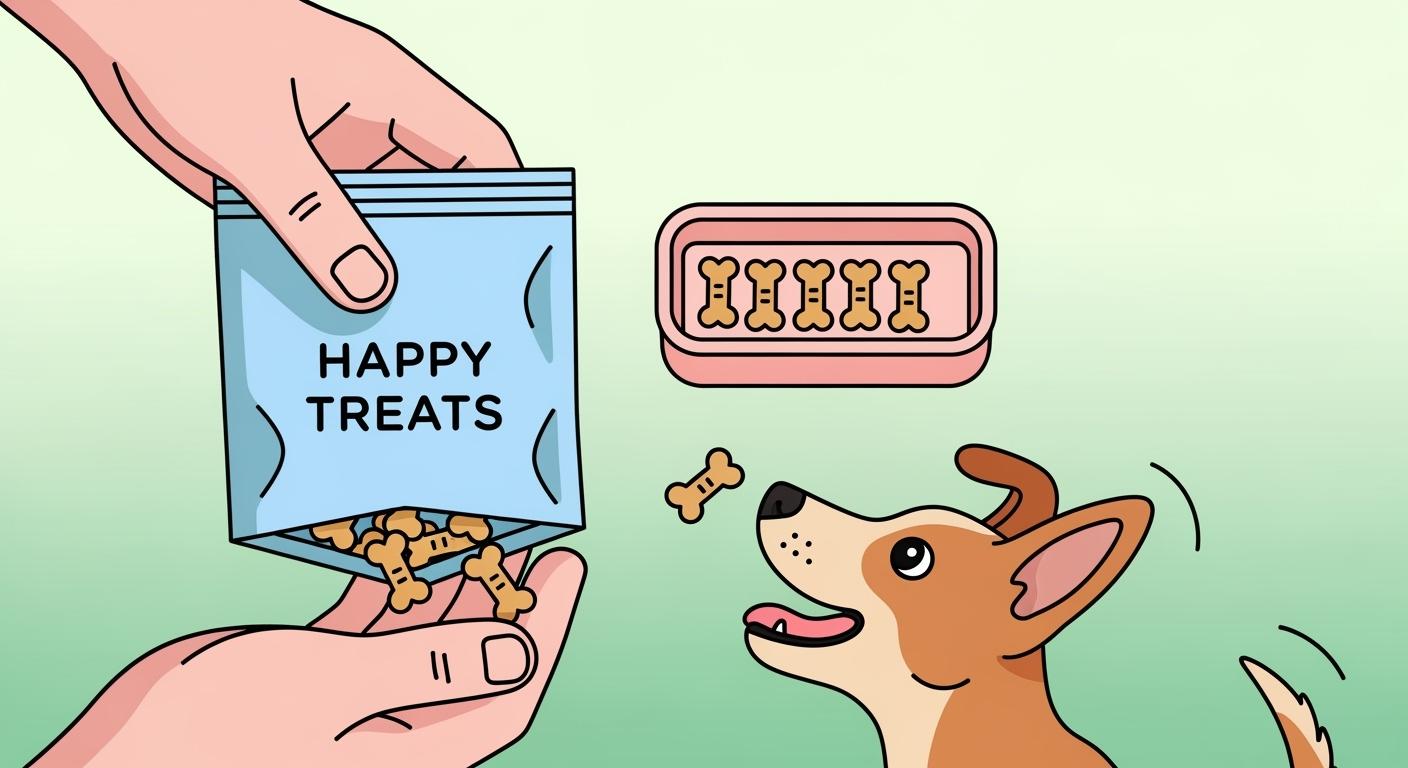
The problem is not the treats. It is the pouch geometry. When you reach into a pouch for dog treats mid-stride and your fingers close on nothing, the design has already failed — not because the pouch is too small, but because compartment depth, side structure, and bottom shape have let every reward migrate below your hand path. Quick access is not a convenience feature. It is the difference between a reward that lands on time and one that arrives too late for the dog to connect it to the behavior.
Why Small Treats Vanish Below Your Fingertips
The mechanism is straightforward once you look at it from the treat’s perspective. A small, lightweight piece travels downward through any gap available. Walking motion shakes the pouch. Each step compacts the treats a little more. Soft fabric sides offer no resistance — they billow and fold inward when your hand enters, pushing treats away from the opening at the exact moment you reach for them. Square bottom corners create dead zones where treats accumulate but fingers cannot follow. The result: a delay measured in seconds, repeated dozens of times per walk. Each delay weakens the association between the dog’s action and the reward.
After a 10-minute walk, open your pouch and look. Have the treats settled more than an inch below the rim? If your first two fingers cannot reach a treat without bending your wrist or looking down, the compartment depth is working against you. That is a measurable failure, not a preference question.
Dark or textured linings compound the problem. A sticky interior traps crumbs against the fabric. A dark lining hides small treats in shadow, especially in low light. You reach in, feel around, pull out a fragment instead of a whole reward. The dog watches this fumble and loses focus. What matters is not whether the pouch can hold treats. It is whether the interior surface and shape deliver them to your fingertips in one motion.
| Real-Use Symptom | Design Cause | Better Detail |
|---|---|---|
| Treats unreachable without looking | Deep compartment, soft sides | Shallow hand-level pocket, structured body |
| Treats stuck in corners or folds | Square bottom, collapsing fabric | Rounded lifted bottom, firm sides |
| Treats invisible or sticky | Dark textured liner | Light smooth wipe-clean liner |
Four Design Details That Keep Treats Within Reach
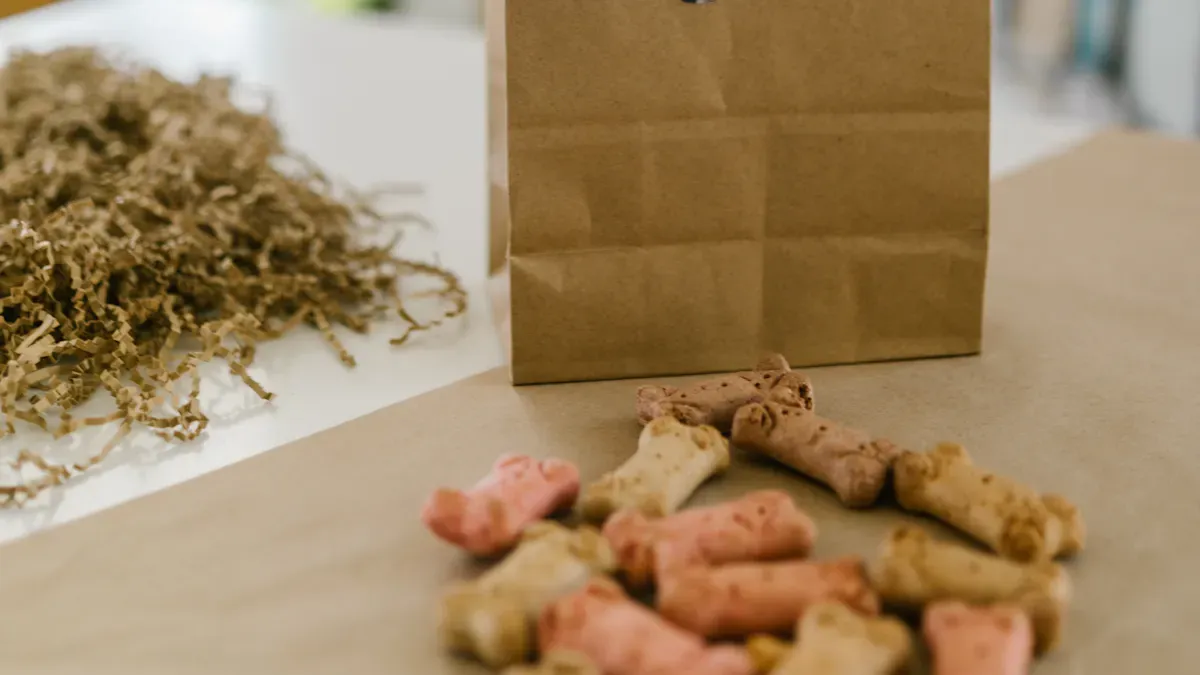
A pouch for dog treats either delivers a reward in one clean motion or it does not. The design features that separate the two outcomes are specific and testable.
Shallow food zone. A compartment that ends within an inch of the rim keeps treats in the path your fingers naturally follow. No digging. No glancing down. The depth decision is a tradeoff: a deeper pouch carries more, but a shallower one delivers faster. For pea-sized training treats and walk-length sessions, the shallower design wins on timing. When a pouch narrows the gap between the rim and the treat bed, your hand does less searching and more rewarding.
Structured rim. A firm opening stays wide when you reach in. Soft rims collapse. The physics is simple: an unstructured opening deforms under the pressure of your hand entering, reducing the usable cross-section at the exact moment you need it largest. A structured rim resists that deformation. A trapezoidal shape — wider at the opening than the base — keeps the entry point open even when the pouch body shifts with movement. You get a consistent target, not one that shrinks each time you reach for it.
Rounded or lifted bottom. Sharp corners trap treats. A radius at the bottom eliminates the dead angle where small pieces collect beyond fingertip reach. A lifted false bottom shortens the vertical distance treats must travel. Both changes funnel rewards toward the center of the compartment. This is not cosmetic — it is the difference between pulling out a single treat in one try versus fishing twice and losing the moment.
Smooth liner with guided interior shape. The liner material determines whether treats slide or stick. A textured or porous surface grips crumbs and oils. Over repeated use, the interior becomes tacky. Treats cling to the sides instead of dropping into your hand. A smooth wipe-clean liner — typically a coated fabric with heat-sealed seam tape — prevents crumbs from lodging in stitch holes. That last detail is a manufacturing choice, not something visible on a product page, but it changes how clean the pouch stays between uses. The interior shape should slope gently toward center: sloped sides and a rounded basin guide treats to where your fingers land.
Empty your pouch after a walk and run a finger along every interior seam. Crumbs clustered in the corners mean the bottom shape is trapping debris rather than funneling it toward the center. The same geometry that traps crumbs also traps treats.
These four details rarely appear together by accident. A pouch with a structured rim but a deep square-bottom compartment still forces you to dig. A shallow pouch with collapsing sides still hides treats in fabric folds. The designs that work combine all four, and the result is a difference in access speed, spill control, and how predictably the pouch behaves session after session.
When a Structured Pouch Helps Most — and When the Difference Shrinks
The design advantages described above are not uniformly important across all use cases. They matter most under specific conditions.
Where the advantage is largest. Small treats — pea-sized or smaller — benefit most from shallow, structured compartments because their size lets them migrate rapidly through gaps. Active walks amplify the effect: constant motion accelerates settling, and the need for one-handed blind access makes rim structure critical. Short-interval training, where rewards come every few seconds, punishes any delay in retrieval. In these conditions, the four design details directly determine whether the session flows or stutters.
Where the advantage shrinks. Large biscuit-style treats do not settle the same way — their size keeps them near the top regardless of compartment depth. Stationary training sessions, where you are seated and the pouch rests on a table or lap, remove the movement variable that makes soft-sided pouches collapse. If you carry mostly non-treat items — phone, keys, waste bags — a structured treat pouch may offer more organization than you need, and a simpler bag works fine. The design features that solve the sinking-treats problem also add structure and cost. If your use case does not trigger the problem, those features may not earn their keep.
A well-designed pouch fits into a broader training reward setup where every second of delay weakens the behavior-reward link. But if your sessions involve large rewards delivered slowly, or you work in one spot without walking, the difference between a highly structured pouch and a basic one compresses.
Disclaimer: The treat-access checks described here assume dry, firm treats roughly pea-sized or larger. Soft, crumbly, or moist treats — including raw or semi-moist training rewards — behave differently inside any pouch. They tend to smear and stick regardless of liner quality, and may require a removable insert and more frequent cleaning rather than a design change. Similarly, double-coated breeds that shed heavily may find hair working into pouch seams over time, which can affect liner smoothness in ways not visible during a one-time inspection.
Quick Fixes That Work With Your Current Pouch
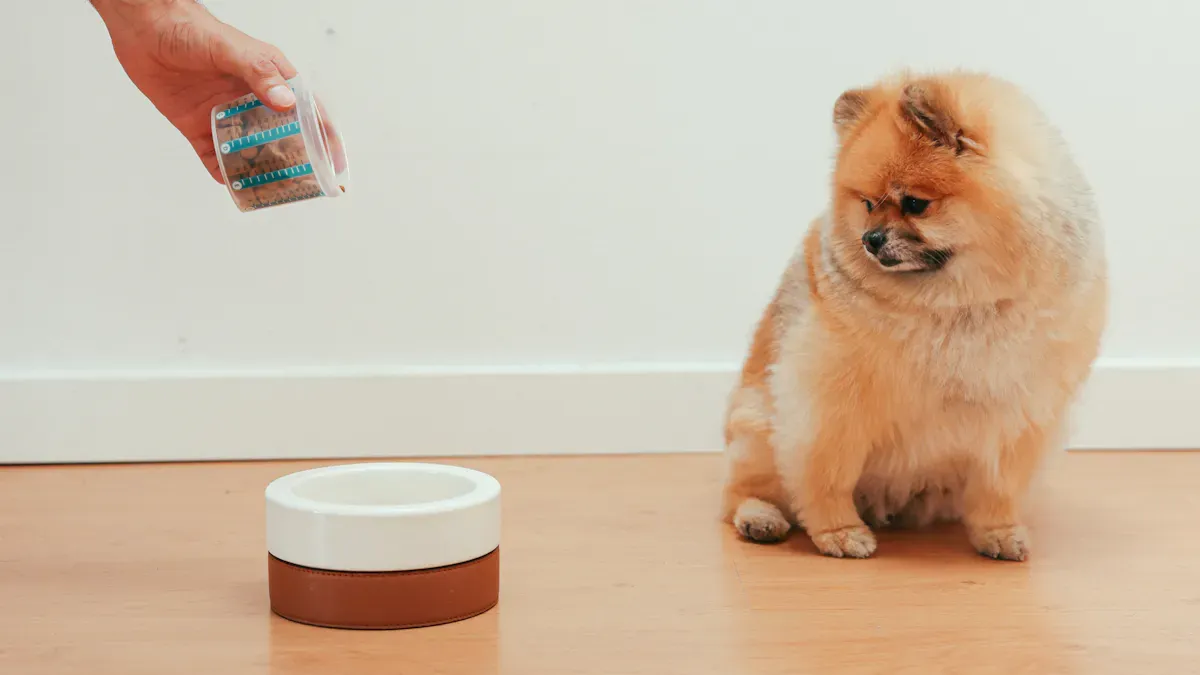
If replacing the pouch is not an option right now, a few low-effort changes can improve treat access with the gear you already have.
A shallow insert. A food-safe silicone cupcake liner or a trimmed plastic container placed inside the pouch creates a false floor. Treats sit higher. Your fingers find them faster. The insert also catches crumbs and pulls out for rinsing — a secondary benefit if the original liner is textured or hard to clean. Choose an insert that fits snugly but leaves room for your hand to enter without obstruction.
Right fill level. Overfilling buries small treats under the weight of the stack and blocks the opening. Underfilling lets them scatter across a wide empty floor, where they disperse into corners. Fill so treats sit just below the rim — enough to grab without looking, not so many that they spill or crush. Shake the pouch once before heading out. If treats shift freely and stay near the top, the fill level is about right.
Separate by size. Small treats migrate downward through gaps between larger ones. Keeping pea-sized rewards in a separate shallow section — a small baggie or divider cup inside the main compartment — stops them from filtering to the bottom. This also keeps raw or moist treats from contaminating dry ones, which reduces cleaning frequency and keeps the pouch from developing odors that transfer to your hands during a session.
None of these fixes replicate a purpose-built structured pouch — an insert cannot stiffen a collapsing rim, and a divider cannot round a square bottom. But they can bridge the gap until the pouch gets replaced. The right compartment depth depends partly on session length and treat size, and a DIY insert lets you experiment with shallower configurations before committing to a new pouch.
A pouch with a structured rim and heat-sealed interior seams — the design approach behind the pet training treat pack — keeps the opening stable through movement and prevents crumbs from accumulating in stitch holes. Even with that level of design, spill control and one-handed access depend on the closure system matching how you actually move during a session. A magnetic flap that works seated may pop open on a run. A drawstring that seals tight may slow you down when rewards need to come every three seconds. The closure choice is not separate from the access problem — it is the final link in the retrieval chain.
FAQ
Why do small treats sink more than large ones in the same pouch?
Granular convection. When a pouch shakes during movement, smaller particles filter downward through gaps between larger ones. This is the same mechanism that brings large nuts to the top of a mixed-nut container. A shallow compartment or a divider that separates small treats from large ones interrupts the effect by limiting vertical travel distance.
Does a drawstring closure solve the sinking-treats problem?
No. A closure controls spill risk, not interior geometry. A drawstring can seal treats inside, but once you open it, the same depth and bottom-shape problems remain. A drawstring may actually slow retrieval — opening it requires two hands or a deliberate motion, adding another step between you and the reward. A structured rim with a magnetic or wide-mouth flap keeps the pouch both accessible and closed when needed.
How do I know if the liner material is causing treats to stick rather than the treat type?
Wipe the liner clean with a damp cloth, let it dry, then run a dry treat across the surface. If it drags or leaves a visible residue trail, the liner texture is contributing to the problem. A smooth coated liner — typically TPU or silicone-laminated fabric — shows little to no drag in this test. If treats slide freely on a clean liner but stick after one session, the treat type is the dominant factor and a removable insert may help more than replacing the pouch.






