
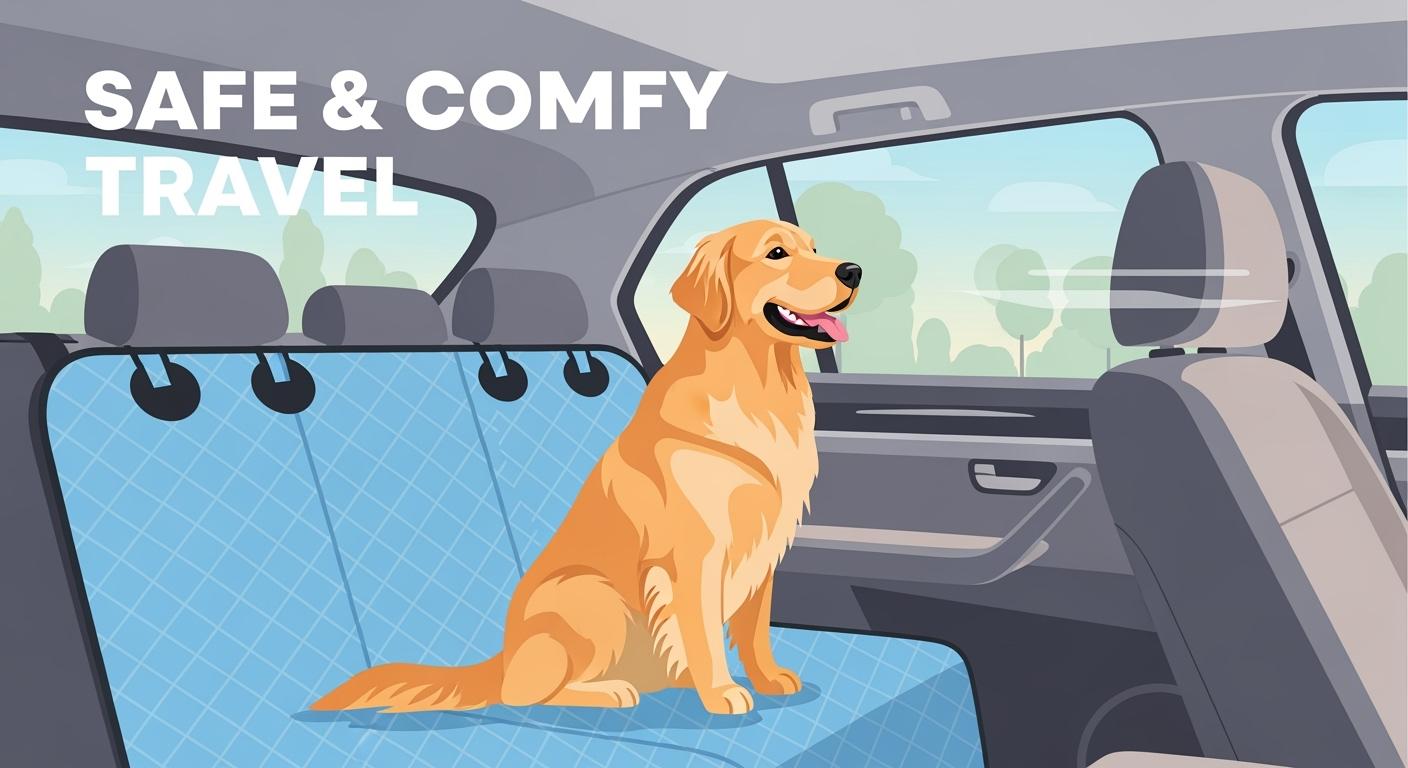
Full coverage sounds smart. It is not always.
A rear seat cover that seals every gap also seals in heat — and a dog trapped in a warm back seat will not quietly endure it. Dogs pant. They pace. They climb toward the front, whine, or simply refuse to lie down. The problem is rarely the idea of full coverage. It is the shape. The mesh placement. The panel height. The fabric weight. A cover that fits the seat perfectly but blocks air movement creates worse discomfort than one that fits poorly and lets air through. The difference between a cover that protects and one that overheats comes down to a handful of design details most buyers never check — the same tension between in-car protection and cleanliness and breathability that every rear seat cover has to resolve. Full coverage and easier daily reset often pull in opposite directions.
Where Rear Seat Covers Fail First
The most common failure is not tearing. It is not slipping. It is heat.
A dog that pants within ten minutes of a drive, shifts repeatedly away from the front panel, or will not settle is often reacting to trapped warmth — not anxiety, not motion sickness, not the car itself. Several design choices gang up to cause this. A front panel that rises too high and uses solid material blocks air from the dash vents. A mesh window placed too low — or too small — starves the back seat of airflow. Thick fabric with heavy waterproof coatings holds heat against the seat surface. Hammock tension cranked too tight pulls the cover into a near-vertical wall that stops air from circulating through the footwell. Blocked rear console vents cut off a second cooling path that many vehicles rely on.
These failures compound fast. A high solid panel, a small mesh window, tight hammock tension, and blocked rear vents — any two together can turn the back seat into a heat pocket. All four? The dog suffers on every drive longer than a few blocks.
Decision rule: If a dog pants heavily within 10 minutes, check the cover before assuming anxiety. The cover is the easiest variable to test — lower the front panel or loosen the tension and see if the panting stops.
Which Design Details Block or Support Airflow
Mesh Window Size and Placement
The mesh window is the primary airway from the front cabin to the dog. A small panel — or one placed off-center — chokes that path. The most effective placement is dead center, at the dog’s head level, right where dash vent air travels straight through. A wide mesh panel pulled taut across that zone lets air move freely. It also gives the dog a clear sightline to the driver. That matters. A dog that can see you is often a quieter dog, independent of airflow.
Front Panel Height and Material
The front panel does two jobs: it blocks the footwell and protects the back of the front seats. A tall, solid panel does both well. It also stops air from the front cabin cold.
Panels that use mesh across the upper section — or a cutout near the top — let air pass over the barrier while still blocking the dog from climbing forward. The tradeoff is straightforward. A lower panel breathes better. A taller panel contains better. Pick based on whether the dog is an escape artist or a heat-sensitive breed. You rarely get both in the same cover.
Fabric Weight and Waterproof Coatings
Oxford fabric with a tight weave resists scratches and water. It also holds heat when backed with thick padding. Polyester with a TPU coating stretches slightly and sheds water — but breathes less than uncoated fabric. PVC coatings seal the surface completely. Great for spills. Terrible for airflow. Quilted cotton with padding feels cooler to the touch but soaks up moisture and dries slowly — fine for short trips, less so if the dog is wet when it gets in.
The tradeoff between cooler fabric and a quieter surface shows up repeatedly. Materials that breathe tend to shift more against the seat. Materials that grip stay put but run warmer.
| Material | What It Gets Right | Main Limitation |
|---|---|---|
| Oxford Fabric | Resists scratches, water, and fur; high durability | Retains heat when backed with thick padding |
| Polyester with TPU Coating | Good waterproofing with some stretch | Less breathable than uncoated fabric |
| Polyester with PVC Coating | Strong spill resistance | Seals surface; traps the most heat |
| Quilted Cotton with Padding | Cooler feel, cushioned comfort | Absorbs moisture; dries slowly |
Hammock Tension and Rear Vent Clearance
Tension changes everything. Over-tightened straps pull the cover into a vertical wall. Air that would circulate through the footwell gets blocked entirely. Too-loose tension lets the cover sag and bunch. The dog loses usable space and can get spooked by the shifting surface on turns.
Rear vents are the hidden variable. Many vehicles push air through vents in the back of the center console. If the cover presses against those vents — even slightly — that cooling path disappears. Covers with vent cutouts or mesh panels near the console keep that airflow alive. Adjustable straps help here too: they let the cover sit flat without pulling tight against the console. Test this before every long trip. Reach back and feel for air movement at the dog’s head level.
Seat-Belt Opening Position
Seat-belt openings that do not align with the vehicle’s buckles force the cover to bunch. Bunching traps heat in pockets around the buckle area — exactly where the dog often rests. Misaligned openings also make it harder to clip in a harness tether. That friction pushes owners toward skipping the restraint on short trips. Not ideal.
Openings with Velcro or zipper closures stay flat when unused and open cleanly when needed. The best designs align with the buckle positions of common vehicle layouts rather than forcing the owner to wrestle the cover into submission every time.
When Full Coverage Is the Wrong Call
A hammock-style rear seat cover works well for medium-to-large dogs in vehicles with strong front-to-rear airflow. Beyond that zone, it gets dicey. Weak cabin circulation? The back seat turns stuffy regardless of mesh size. A small dog? A standard-height front panel can sit entirely above the dog’s head — blocking airflow the dog cannot reach anyway. Rear vents as the only practical cooling source, and the cover blocks them? That setup will overheat the dog on any drive past ten minutes.
For small dogs in particular, car booster seats rely on different fit and material checks that can sidestep the airflow problem entirely. A booster elevates the dog into the cabin airflow stream rather than trapping it behind a fabric wall.
| Scenario | Decision Direction | What to Watch |
|---|---|---|
| Small dog, sedan | Bench cover or bucket seat cover likely better | Hammock panels sit above small dogs, blocking airflow they cannot reach |
| Large dog, SUV | Hammock or cargo liner both viable | Check rear vent placement; SUV cargo areas run warmer than cabins |
| High-energy breed, truck | Hammock with reinforced anchors | Heavier fabric adds durability but also heat; mesh size matters more here |
| Brachycephalic breed, any vehicle | Maximum mesh area over full coverage | These breeds overheat faster than others; airflow beats spill protection |
Note: If overheating signs appear only on longer drives, the cover is likely holding heat that builds gradually. Lighter fabric and a larger mesh panel often fix it without switching cover styles.
Design Details to Check Before Buying
Do not assume more coverage equals better protection. That assumption is why so many dogs pant through every drive.
Evaluate each design element against how the cover will actually be used — in the specific vehicle, with the specific dog. A seat cover designed for back seat use should work with the vehicle’s airflow, not against it.
| Design Detail | Pass Signal | Fail Signal |
|---|---|---|
| Mesh window | Wide, centered, at dog’s head level | Small, off-center, or positioned too low |
| Front panel | Mesh upper section or airflow gap at top | Tall, solid material with no airflow path |
| Fabric | Lighter waterproof layers; mesh body panels | Thick padding under heavy PVC coating |
| Rear vent clearance | Cutouts or mesh near console vents | Cover presses against or covers rear vents |
| Seat-belt openings | Align with vehicle buckles; lay flat when closed | Misaligned, causing bunching around buckles |
| Hammock tension | Adjustable straps; cover sits flat, not tight | Fixed-length straps; pulls into a vertical wall |
Six details. Get four or more right and the cover will probably work. Get all six right and the dog stops panting. Maximum coverage was never the goal.
FAQ
How do you install a dog car seat cover without blocking airflow?
Attach the headrest straps first. Adjust tension so the cover sits flat — not tight. Check that the front panel does not press against rear console vents. After installing, turn on both front and rear fans. Reach back and feel for air movement at the dog’s head level. If you feel nothing, adjust.
Can a dog car seat cover be used with a child seat?
Most covers include seat-belt openings that work for child seat installation. Make sure the cover stays flat under the child seat base. The openings must align with the vehicle’s LATCH anchors or belt path before you tighten anything down.
Does a mesh window make the cover less waterproof?
Yes, in that spot. But a well-designed cover puts the mesh above the main seating area — where spills are less likely to hit it. The tradeoff is real: you give up a few inches of waterproof surface for airflow where the dog needs it most. For most dogs, that is the right call.
What is the difference between a bench cover and a hammock cover for airflow?
A bench cover leaves the footwell open. Air circulates more freely from the front cabin. A hammock seals the footwell and adds a front barrier — airflow then depends entirely on the mesh window and front panel design. How bench and hammock styles compare comes down to the dog’s size, the vehicle’s vent layout, and whether staying in place or staying cool matters more.






