
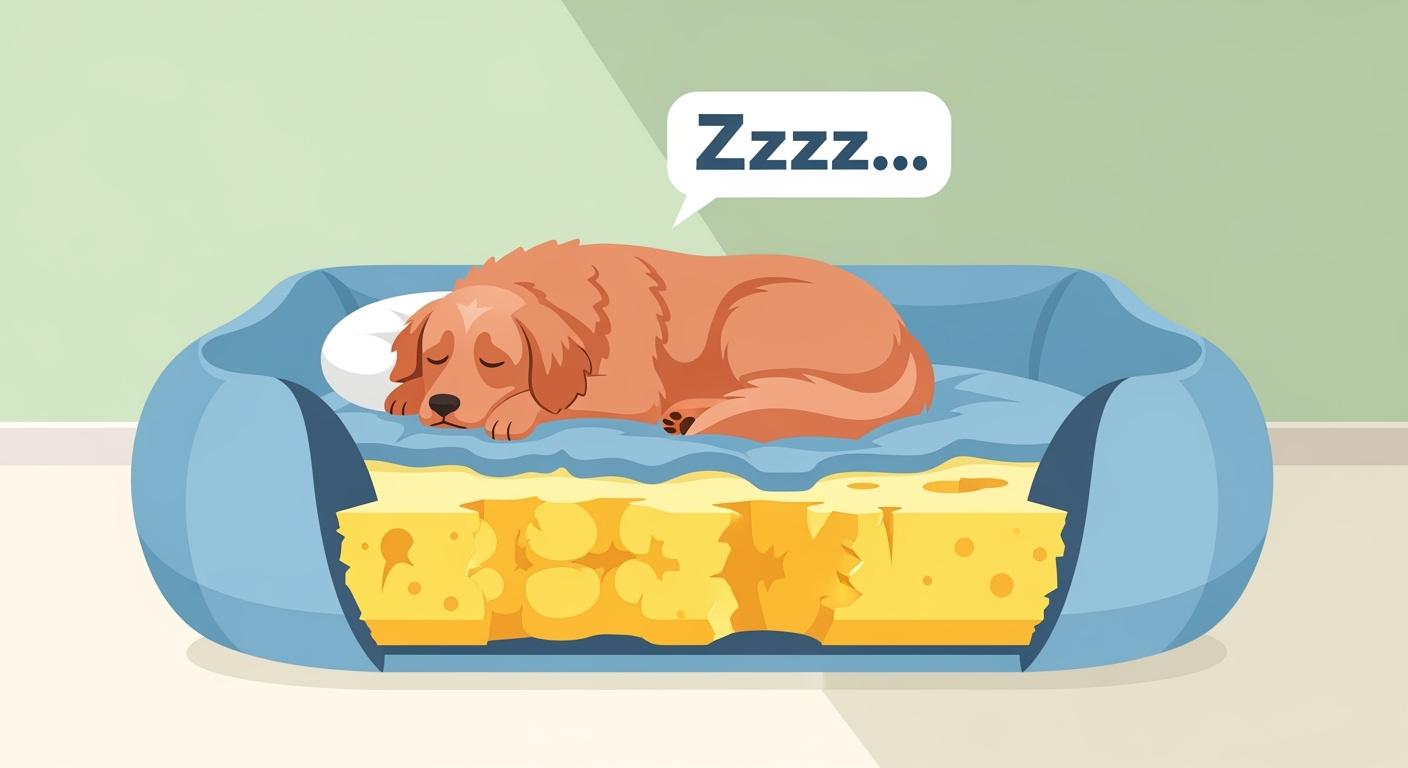
A washable cover alone does not make an extra large dog bed easy to keep clean. The bigger problem is the core. Once moisture, hair, dander, saliva, or dirt moves past the surface fabric, a thick foam or fiberfill center can hold odor long after the cover looks fresh again. For extra large dog beds, this matters even more because the bed has more surface area, deeper fill, and more pressure from heavy dogs resting, turning, and stepping on the same zones every day.
A better washable design should not stop at a zip-off cover. The whole bed structure needs to help the core stay dry, protected, and able to recover after cleaning. Waterproof liners, removable core sections, quick-dry fill, protected seams, and covered zippers all affect whether the bed truly resets after washing or only looks clean on the outside.
Where Cover-Only Cleaning Leaves the Core Behind
The Cover-Clean Illusion in Extra Large Beds
Many extra large dog beds marketed as washable only solve the surface problem. The removable cover can go into a machine cycle, but the foam or fiberfill underneath stays in place. That creates a bed that looks refreshed while the inner structure still holds old moisture, fine hair, dust, and odor. The issue becomes obvious when the cover has been washed but the bed still smells damp, feels heavy, or dries unevenly.
The product detail that separates surface-level washability from real hygiene is whether the core is also removable, protected, or built to dry quickly. If the inner structure cannot be accessed or isolated, every spill, accident, wet paw, and humid day slowly becomes part of the bed.
How Dirt, Odor, and Moisture Reach the Core
Extra large beds face more contamination pressure because the sleeping area is wider and the fill is deeper. Fluid and debris do not need a large opening to reach the inside. They can move through seam gaps, zipper tracks, stretched fabric, or a weak base panel long before the cover looks visibly dirty. Without a waterproof barrier between the cover and the fill, the core can absorb moisture and hold odor even when the outer layer is washed regularly.
Modular or sectioned construction changes the cleaning result. When each part can be removed, wiped, rinsed, or dried separately, the bed is less likely to keep one hidden wet area that turns into a lasting odor problem.
Hygiene Risks When the Core Cannot Be Reset
A core that stays damp and closed inside the cover can become the real source of smell, skin irritation triggers, and poor long-term freshness. This is especially frustrating when the cover still looks clean. The dog returns to the same bed, body heat pushes moisture deeper into the fill, and the odor comes back faster after every wash.
The safer product direction is a design where the core can return to a dry, clean state after the cleaning routine. That can come from a removable washable core, a waterproof liner that keeps foam isolated, or quick-dry fill that does not hold moisture for long periods.
Tip: Treat core hygiene as the main washability test. A cover that washes clean is the baseline, not the full solution.
| Product Area | Common Failure Signal | Product Detail That Matters | Better Product Direction | Avoid |
|---|---|---|---|---|
| Cover | Looks clean while core stays dirty | Removable, machine-washable cover | Waterproof or odor-resistant outer fabric | Thin, single-layer covers with no barrier |
| Inner Core | Moisture and odor trapped in foam | Core protection and washability | Removable, washable core with waterproof liner | Non-removable, dense foam that cannot dry fully |
| Bolster | Hair and debris packed into fixed edges | Modular, sectioned design | Washable, quick-dry bolster inserts | Fixed, bulky bolsters with no access |
| Base | Moisture wicking up from floor | Water-resistant or waterproof base layer | Wipeable, waterproof bottom panel | Absorbent, unprotected base fabric |
| Zipper and Seams | Dirt and fluid entry through closures | Protected, covered seam construction | Sealed zipper paths, reinforced tight seams | Exposed zippers, loose single-stitch seams |
Why Extra Large Fill Creates Deeper Hygiene Problems
Oversized Foam and Fill Create Cleaning Bottlenecks
Extra large beds use foam inserts and fill volumes that are much heavier and deeper than smaller beds. A thick slab or packed fill center can be hard to lift, rinse, squeeze, and dry. Even when spot cleaning removes the surface stain, moisture can remain inside the structure. That is why dense foam cores in extra large sizes often become the part that limits real washability.
A single solid slab is the hardest format to clean well. Sectioned or layered fill makes the cleaning burden smaller because each piece is easier to remove and expose to airflow. This does not only help hygiene. It also helps the bed keep its shape instead of staying compressed, lumpy, or damp after cleaning.
Moisture Traps, Slow Drying, and Odor Retention
Thick foam and deep fill create natural moisture traps. The outside can feel dry while the inner layers still hold dampness. This is more likely in humid rooms, covered patios, garages, kennels, and any space where the bed does not get full airflow. Once odor sits inside the core, washing the cover becomes a temporary fix rather than a full reset.
Quick-dry fill, breathable side panels, raised airflow channels, and sectioned construction all reduce how much moisture the bed holds. The goal is not just to make the bed washable. The goal is to make it dry fully enough that odor does not restart from the inside.
Tip: Sectioned or modular construction allows each part to dry independently. A design that breaks the fill into manageable pieces reduces the risk that moisture stays trapped long enough to cause odor or mildew.
Seam, Zipper, and Base Fabric Weak Points
The main pathways into the core are predictable: seams that open under weight, zipper tracks that collect debris, and base fabrics that sit against damp floors. Extra large beds put more stress on these areas because large dogs press more weight into the same edges and corners when they lie down, turn, and get up.
Reinforced seams reduce gapping. Covered zipper paths keep hair and debris from packing into the closure. A waterproof or wipeable base layer keeps floor-level moisture away from the fill, which is useful on tile, concrete, porch surfaces, or rooms where water bowls and wet paws are nearby. These construction details decide how long the core stays protected between cleanings.
| Construction Point | Failure Mode | What to Check | Safer Design Choice |
|---|---|---|---|
| Foam/Fill | Traps moisture, cannot dry fully inside | Fill density and water absorption rate | Removable, quick-dry fill; layered or sectioned core |
| Base Panel | Absorbs floor moisture, develops mildew | Base material and waterproof rating | Wipeable, waterproof base layer with sealed edges |
| Seams | Gap under weight, let fluid through | Stitch type and reinforcement | Double-stitched, sealed or taped seams |
| Zippers | Collect debris, allow fluid entry | Zipper exposure and covering | Covered zipper paths, flap-protected closures |
Product Structures That Make Full-Bed Cleaning Reliable
Removable and Washable Cores
The most important design decision for an extra large washable bed is whether the core can come out. A removable core changes the bed from surface-clean to whole-bed-clean because the hidden structure can be aired, wiped, rinsed, or washed depending on the material. Non-removable cores lock in whatever reaches the inside. Once odor or staining sets into a fixed foam center, the cover may keep washing well while the bed itself has already lost freshness.
Note: A bed labeled washable because its cover zips off is not the same as a bed with a washable core. The key question is whether the inner structure can be accessed and dried properly.
Waterproof Liners and Protective Barriers
A waterproof liner between the cover and the core isolates the fill from accidents, spills, saliva, wet paws, and room humidity. This matters for senior dogs and incontinent dogs, but it also matters in normal daily use. Keeping the core dry is what allows the bed to stay fresh longer between deeper cleaning cycles.
Odor-resistant or antimicrobial fabric can help, but it should not be treated as a substitute for a physical moisture barrier. If liquid reaches the foam, the hygiene problem moves below the surface. The liner is the part that keeps the washable cover from becoming the only clean layer.
Sectioned, Modular, and Quick-Dry Construction
Sectioned fill divides the core into separate chambers or removable panels. That solves two common problems at once: each piece is lighter to handle, and more surface area is exposed to airflow. A full one-piece slab can be difficult to dry evenly, while smaller fill sections are easier to remove and reset.
A product structure that holds up to repeated washing while maintaining shape and support depends on fill that does not clump, collapse, or lose loft after water and detergent exposure. Polyester fiberfill blends, shredded foam systems, and open-cell foam with better drainage can dry faster than a sealed, solid memory foam slab.
Quick decision rule: If the core cannot be separated into parts that dry properly after cleaning, the bed is not a practical washable product at extra large scale. It is mainly a cover-washable product with a core that may stay wet.
Seam and Zipper Design for Long-Term Hygiene
Seams and zippers are the entry points most likely to weaken a washable bed over time. Even when the cover and core are both removable, poorly protected closures allow dirt, hair, and fluid to bypass the cleaning routine and move toward the fill. Reinforced seams resist gapping under the weight and movement of large dogs. Covered zipper paths stop debris from packing into the track and forcing the closure open.
Zipper-free modular designs can also work when the closure system is strong enough for repeated large-dog use. Heavy-duty hook-and-loop, snap panels, or wrapped cover systems remove the zipper track as a contamination path, but they still need secure overlap and durable edge construction so the cover does not peel open under pressure.
| Feature | Why It Matters | What to Check |
|---|---|---|
| Reinforced Seams | Blocks dirt and fluid from reaching the core through stitch holes or gaps | Double stitching, sealed or taped seam construction |
| Covered Zippers | Prevents hair and debris from packing into the zipper track and forcing it open | Flap covers, hidden zipper paths with storm flaps |
| Zipper-Free Closures | Eliminates the zipper track as a contamination pathway and a mechanical failure point | Heavy-duty hook-and-loop, snap panels rated for large-breed weight |
| Protected Zipper Paths | Stops fluid from seeping through the zipper into the core during cleaning or accidents | Waterproof lining beneath the zipper, gusseted zipper construction |
Tip: Check seam and zipper construction as closely as cover fabric and fill type. A well-built closure keeps contamination out between washes and extends the working life of the core.
An extra large dog bed that claims washability but only delivers a clean cover is an incomplete product. Real full-bed hygiene depends on whether the core can stay protected, dry fully, and keep its shape after repeated cleaning. Removable cores, waterproof liners, sectioned fill, protected seams, and covered zippers are the structural details that let the bed reset instead of hiding moisture inside. Orthopedic support and full washability can work together when the support layer is removable or protected by a liner. For outdoor and semi-outdoor settings, elevated frames that lift the sleeping surface away from ground moisture, paired with quick-dry fabric, can be a better direction than a thick floor bed that stays damp underneath.
FAQ
How often should an extra large washable dog bed be fully cleaned?
The cover should be washed regularly, especially when the bed collects hair, odor, saliva, dirt, or wet-paw residue. The core should also be inspected when the bed smells damp, feels heavy, dries slowly, or shows signs of moisture under the cover. A washable design should make this process practical without damaging the fill, seams, or zipper path.
Can the inner core of every extra large dog bed be washed?
No. Many extra large beds use a single dense foam slab that is not designed for machine washing and may not dry evenly after soaking. Beds with removable, sectioned, or modular cores are easier to clean more completely because the inner structure can be accessed instead of staying sealed inside the cover.
What product features prevent moisture and odor from reaching the core?
Waterproof liners, quick-dry fill, sectioned construction, protected zipper paths, and sealed or reinforced seams all help reduce moisture entry and odor retention. The strongest design uses more than one of these features because moisture can enter through fabric, seams, closures, and the base.
Why do seams and zippers matter for long-term bed hygiene?
Seams and zippers are common entry points for dirt, hair, and fluid. Loose seams can open under the weight of large dogs, and exposed zippers can collect debris that weakens the closure. Protected, reinforced closures help keep the core cleaner between washes and reduce the chance that hidden moisture reaches the fill.






