
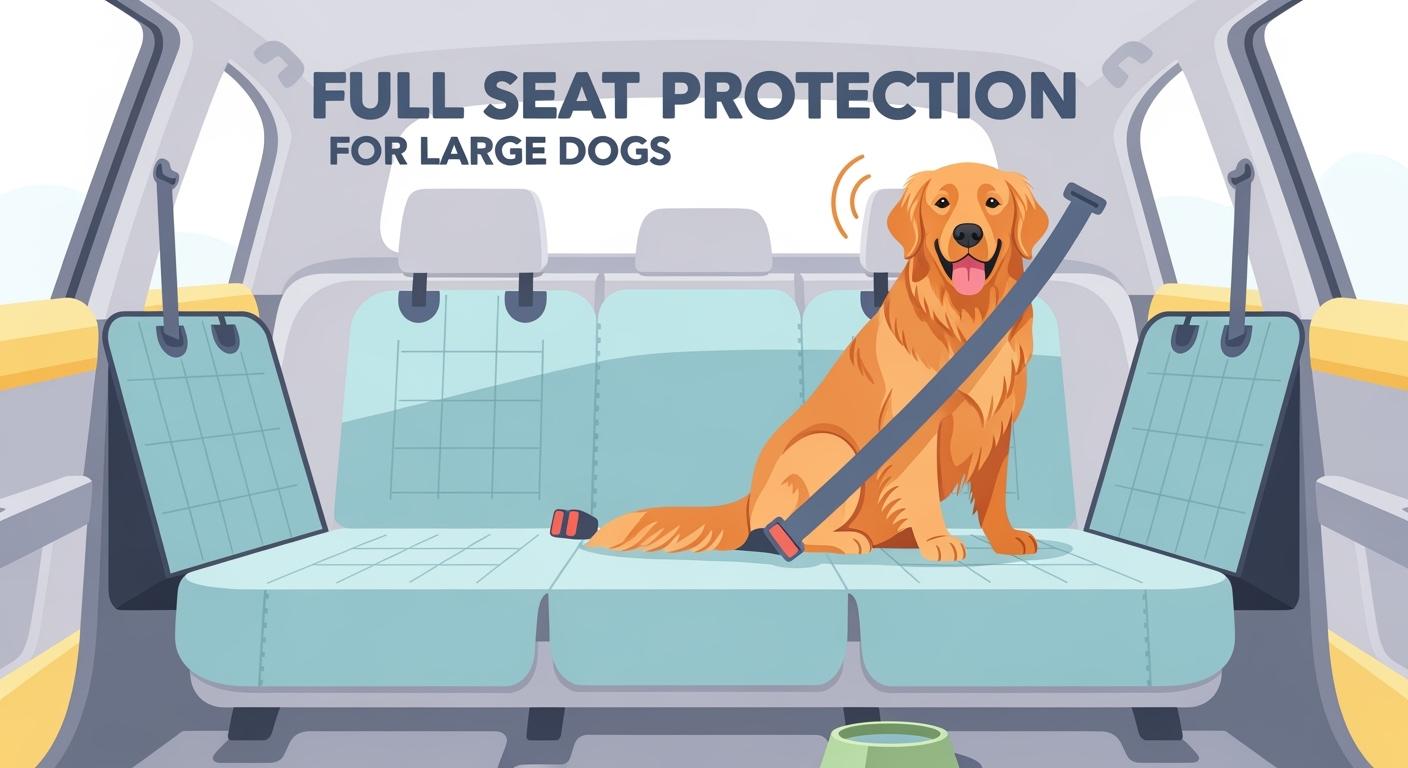
A dog car seat cover for a large dog fails first at the edges, not usually in the middle of the seat. The center panel may look wide in a product photo, but a large dog turns, leans, braces, sheds, drools, and presses toward the doors during travel. If the cover pulls inward or leaves the door-side seat edge open, the rear seat is still exposed.
The stronger product direction is not simply “bigger fabric.” The cover needs usable installed width, side flaps that stay down, corner anchors, full-underside grip, waterproof coverage to the edges, and buckle openings that do not tear or collect dirt. These details decide whether the cover protects the full rear seat after real movement begins.
| Real-use problem | Why it happens | Better product detail |
|---|---|---|
| Door-side seat edges stay exposed | The cover is measured flat but pulls inward after installation. | Usable installed width, longer side flaps, and stable edge drops. |
| The mat slides when the dog turns | Backing or anchors only hold the center panel. | Corner anchors and full-underside non-slip backing. |
| Moisture reaches the seat foam | The waterproof layer stops before seams, corners, or buckle areas. | Edge-to-edge waterproofing with sealed or protected seams. |
| Buckles become hard to use | Openings are misplaced, too weak, or uncovered. | Reinforced buckle openings with protective flaps. |
Where large dogs expose ordinary cover gaps
Large dogs do not stay on the center panel
A narrow bench cover can look acceptable when it is laid flat across an empty rear seat. The failure appears after a large dog starts moving. The dog may lean into the door, turn across the bench, brace with the shoulders, or settle into the corner. Those contact zones are outside the clean center area that many covers protect best.
That is why the protected area after installation matters more than the advertised flat measurement. A cover that loses width at the edges during use will not protect the parts of the seat that receive the strongest contact. The side edge, seat corner, backrest gap, and buckle zone need the same protection as the center panel.
The damage usually starts near the sides
Large-dog travel creates several repeat failure points. Hair collects along the seat seam. Nails hit the door-side edge when the dog braces. Wet fur and drool move toward corners. Dirt and grit settle in the gap between the seat base and the backrest. If the cover does not seal these areas, cleaning the visible center panel does not solve the real problem.
A full-coverage design also protects vehicle resale value because the most difficult damage is often under the surface: moisture in foam, odor near seams, and claw marks on exposed upholstery.
When a simpler cover can still work
Not every dog needs maximum side coverage. A simpler bench cover can be enough for a calm smaller dog, short city rides, or occasional use where the dog stays in one position. For a large dog that sprawls, rides often, enters the car wet, or presses into the door, a center-focused cover is more likely to leave exposed areas. The product should match the movement pattern, not only the rear-seat size.
Coverage details that decide full-seat protection
Usable width matters more than flat width
The most important size question is not how wide the cover is before installation. It is how much of the rear seat remains protected after the cover is anchored, the dog steps on it, and the side panels take pressure. A wide-looking cover with low edges can still expose the seat when the dog leans toward the door.
A cover with side flaps that stay in place under pressure protects more of the rear seat than a wider cover with weak side edges. Side flaps need enough length to cover the door-side edge, but they also need structure so they do not fold inward or ride up.
| Coverage detail | What it should prevent | Weak design sign |
|---|---|---|
| Longer side flaps | Exposed door-side seat edges. | Side fabric lifts or bunches when the dog leans. |
| Stable edge drop | Pull-in from body weight. | The cover narrows after the dog gets in. |
| Corner fit | Dirt and moisture collecting in seat corners. | The cover bridges across corners instead of fitting into them. |
| Seatback coverage | Hair, drool, and dirt on the lower backrest. | The lower backrest gap remains open. |
Side walls should hold shape under pressure
High side walls help only when they stay upright. If the wall collapses as soon as a large dog leans against it, the cover becomes a center mat with extra loose fabric. A better design uses enough side height, edge depth, and attachment stability to keep the side area in position during normal turning and bracing.
Edge waterproofing should follow the same logic. A waterproof center panel is not enough if liquid can move through side seams, stitch holes, buckle openings, or uncovered corners. Waterproof layers, coatings, or bonded membranes need to continue across the whole protected surface.
Bench and hammock styles solve different problems
Bench and hammock styles each handle side coverage differently. A bench cover can work when easy human-seat access matters, but it needs strong side flaps to protect the edges. A hammock cover can protect the footwell and create a more contained space, but its side walls and anchor points must resist inward pull. The better choice depends on the actual failure risk: exposed edges, footwell mess, buckle access, or dog movement across the full bench.
Stability is what keeps the cover protective
Anchors should hold the edges, not only the center
Many weak covers slide because their anchors control the middle of the mat while the sides remain loose. For large dogs, the strongest movement often comes from the side: leaning, turning, and bracing near the door. Corner anchors help the cover stay wide across the full bench instead of pulling inward toward the center.
Headrest loops, seat-gap anchors, and corner placement should work together. If the anchor system holds only one direction of force, the cover may still bunch, lift, or expose a corner during a normal ride.
Full-underside grip prevents edge slide
Non-slip backing should cover more than a center strip. When grip is limited to the middle, the door-side sections can still slide under lateral pressure. Full-underside backing helps the entire cover stay in contact with the seat, so the side flaps and corners remain useful.
The article topic is not only about comfort. Stability, grip, and secure fit decide whether the cover keeps doing its job after the dog moves around. A soft, waterproof surface still fails if it shifts away from the area it was supposed to protect.
Buckle openings must stay usable and protected
Large-dog covers also need clean buckle access. If the cover blocks seat belt buckles, harness tethers, or split-seat functions, users may fold the mat back, leave openings uncovered, or remove the cover for certain trips. Each of those behaviors creates exposed areas.
Reinforced buckle openings are stronger than simple cuts in the fabric. Covered openings help keep hair and grit away from the buckle mechanism when the seat belt is not in use. The opening placement should match real vehicle buckle positions, not only the ideal drawing on a size chart.
Material and cleaning details that keep the cover usable
The outer fabric has to resist claws without becoming stiff
Large dogs bring more pressure to the cover surface. The outer fabric should resist claw abrasion, repeated turning, and dirt rubbing into the weave. Heavy Oxford or tight polyester fabric can work well when it stays flexible enough to conform to the seat. Fabric that is too thin tears early; fabric that is too stiff may lift at corners or feel unstable under paw pressure.
For a back-seat cover product direction, the key is not one single material claim. The fabric face, waterproof layer, seam treatment, edge binding, anchors, and backing all need to work together.
Waterproofing fails when seams and edges are ignored
Moisture does not always pass through the middle of the panel. It often travels through stitch holes, side seams, buckle openings, or the gap where the cover does not sit tightly into the corner. If the center is waterproof but the edges are not protected, wet fur, drool, or spills can still reach the seat foam.
Sealed seams, protected stitch lines, and edge-to-edge waterproof coverage are more useful than a broad waterproof claim that applies only to the main panel. The same product can look waterproof in a short pour test but fail after repeated loading, folding, washing, and corner pressure.
Cleaning design should match large-dog mess
A large-dog cover must release hair, dirt, and wet debris without making cleaning harder than using a towel. Smooth-face fabrics are easier to wipe and vacuum than rough surfaces that trap hair. Detachable or easy-lift side areas can help clean the dirtiest zones without removing the full cover every time.
Washability also depends on the waterproof layer. A cover that delaminates, cracks, or curls after repeated cleaning will lose its protective value even if the fabric face still looks new. A clear understanding of cover type, material, and sizing helps prevent the mismatch between what the cover promises and what it can actually handle.
What the best dog car seat covers for large dogs should get right
The best dog car seat covers for large dogs protect the areas that ordinary covers miss. They do not rely on center-panel width alone. They hold the sides, corners, backrest gap, buckle zones, and footwell-facing edges in place while the dog moves.
| Product detail | Why it matters for large dogs |
|---|---|
| Usable installed width | Keeps door-side edges covered after the dog gets in. |
| Stable side flaps | Blocks hair, dirt, and moisture from reaching seat edges. |
| Corner anchors | Stops the cover from pulling inward during turns and leaning. |
| Full-underside grip | Reduces sliding and bunching across the whole rear seat. |
| Sealed waterproof edges | Prevents moisture paths through seams and corners. |
| Reinforced buckle openings | Keeps restraint access usable without tearing the cover. |
| Cleanable fabric surface | Releases hair, mud, and drool without damaging the waterproof layer. |
A cover that gets these details right feels less like a loose blanket and more like a fitted protection system for the rear seat. That is the difference between full rear-seat protection and a cover that only protects the easiest middle section.
FAQ
What makes a dog car seat cover better for large dogs?
Large dogs need more than a wide center panel. Better covers use stable side flaps, corner anchors, full-underside grip, reinforced buckle openings, and waterproof coverage that continues to the edges.
Why do some large-dog seat covers still leave gaps?
Many covers are measured flat before installation. Once straps are tightened and the dog steps in, the cover can pull inward. Low side flaps, weak anchors, and partial backing make the gaps worse.
Is a hammock cover always better for a large dog?
Not always. A hammock cover can protect the footwell and help contain mess, but it still needs strong side walls, stable anchors, and buckle access. A weak hammock can collapse or slide like any other cover.
What material matters most for large-dog car seat covers?
The whole material stack matters. A durable outer fabric, waterproof inner layer, sealed seams, edge binding, and non-slip backing need to work together. A strong fabric alone cannot stop leaking or sliding.
Should a large-dog cover include seat belt openings?
Yes. Seat belt and harness access should stay usable without removing the cover. Reinforced and covered openings help keep buckles accessible while reducing tearing, dirt buildup, and exposed gaps.






