
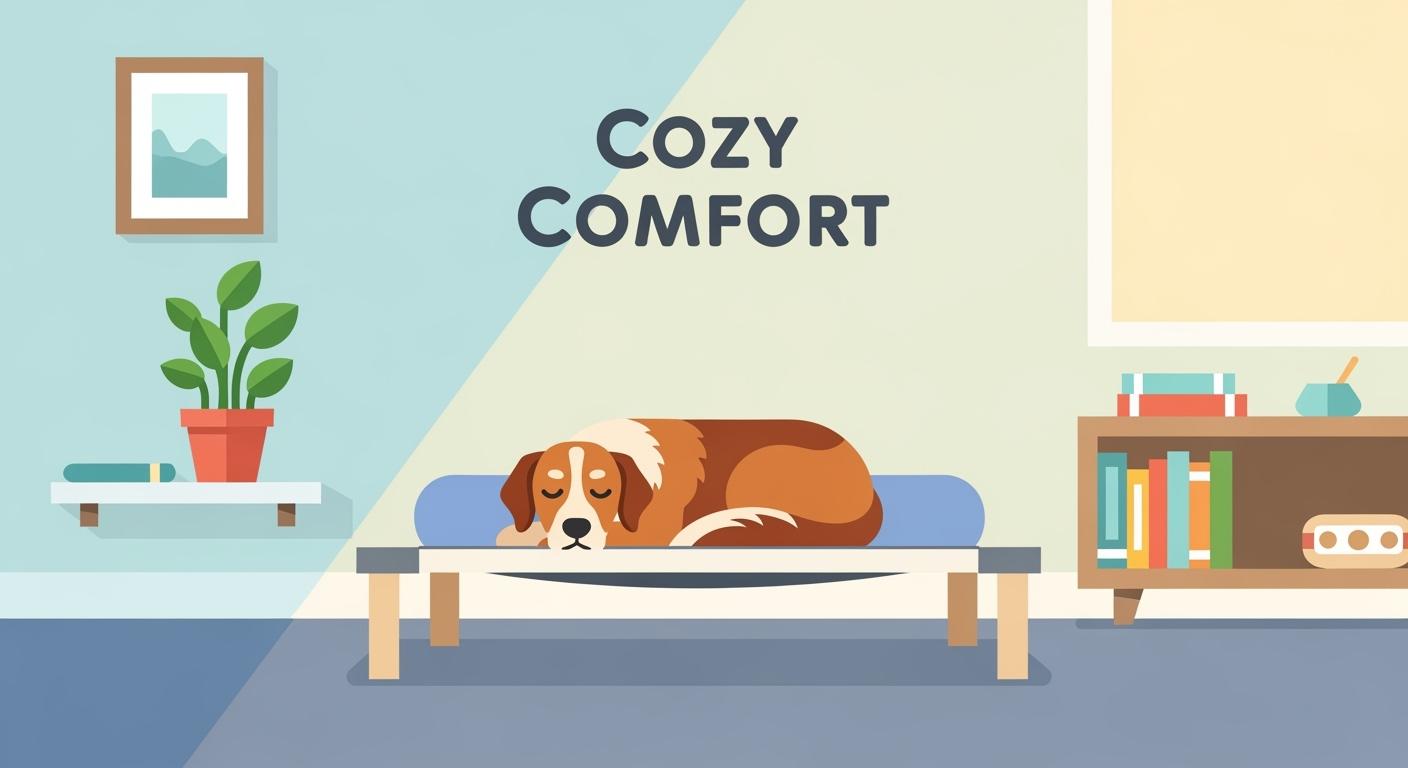
Start by watching how your dog settles before you buy an elevated bed. Some dogs stretch out flat like the Superman or roll Belly Up with legs in the air. Others curl into a tight Donut or burrow under anything soft for warmth and cover. Each sleep position tells you which cot style your dog will actually use. Elevated beds keep dogs cooler because air moves underneath and does not trap heat the way traditional padded beds do, but the right frame type still comes down to how your dog settles, not just the airflow advantage.
| Sleeping Style | Description |
|---|---|
| The Burrower | Seeks warmth and safety under blankets or pillows. |
| The Superman | Lays flat on stomach, legs stretched out to cool down. |
| The Donut | Curls up in a ball for temperature regulation and protection. |
| Lion’s Pose | Rests head on paws, just starting to fall asleep. |
| Side Sleeper | Sleeps on side, relaxed and comfortable. |
| Belly Up | Sleeps on back, exposed belly shows high comfort. |
| The Cuddler | Sleeps close to others for security and warmth. |
Open Mesh Cot: When Sprawling and Overheating Drive the Choice
If your dog sprawls out, stretches all four legs, or flips belly-up to cool off, an open mesh elevated cot usually fits best. This style gives a soft, breathable surface with unobstructed access from every side. Dogs that run warm especially benefit from the uninterrupted airflow under an open cot. The mesh stays cooler than fabric-covered frames and is easier to spot-clean after daily use. Many open cots work equally well indoors and outdoors, and their simple construction holds up to scratching and regular washing.
When you set up an open cot, pay attention to how your dog steps onto it. If the dog walks to the middle, lies down, and stays put through a full nap, the fit is right. If the dog keeps stepping off or perches at the very edge, the cot may need more edge definition. A steel-frame elevated dog bed with a taut mesh surface offers a stable platform, but some dogs want a boundary they can lean against. Portability also matters for comfort: a lightweight cot moves easily from room to room or outside for fresh air without disrupting the dog’s routine.
Tip: Watch your dog for the first few minutes on a new cot. If the dog stays and relaxes, the match is good. If the dog steps off or avoids the bed, try a different style.
Bolster Cot: When Curling Up and Feeling Secure Matter More
If your dog curls into a ball, presses against furniture, or seeks out corners to sleep in, a bolster elevated cot is the stronger match. The raised bolsters create a soft, enclosed space that dogs who feel anxious or need a sense of containment settle into more readily. The bolsters double as headrests, giving the dog a supported place to rest its head without straining the neck.
Dogs that burrow or nest often reject open cots because the lack of boundaries leaves them feeling exposed. Bolster walls solve that by mimicking the den-like enclosure many dogs instinctively prefer. The extra cushioning along the edges also reduces pressure points for dogs that like to lean while they sleep. Like open cots, bolster cots are breathable, portable, and hold up to regular cleaning. What changes is the sleep experience: nesters stay put longer when they can settle against a soft wall.
Note: If your dog only uses the bolster edge and avoids the middle, the bolsters may be too high or too firm. Try a lower bolster profile or an open cot instead.
Open Mesh vs Bolster vs Padded: What Changes in Daily Use
Each bed type handles comfort, airflow, durability, and access differently. Use this comparison to match the right style to how your dog actually sleeps and moves.
| Feature | Open Mesh Cot | Bolster Elevated Dog Cot | Lower Padded Bed |
|---|---|---|---|
| Comfort Fit | Soft, breathable, best for sprawlers and warm sleepers | Supportive bolsters, best for nesters and dogs that lean | Soft but less breathable, best for cuddlers |
| Edge Support | Minimal; open on all sides | Raised bolsters provide a defined boundary | None; dog may roll off |
| Airflow | High; keeps the bed noticeably cooler | High under the cot; bolsters add light warmth | Low; traps body heat |
| Durability | Durable mesh cover; easy to spot-clean | Durable cover; easy to spot-clean | Less durable; harder to clean thoroughly |
| Portability | Lightweight; easy to move between rooms or outside | Portable; slightly bulkier than open cots | Bulky; less convenient to relocate |
| Indoor Use | Works well; easy to reposition | Works well; easy to reposition | Works well but less flexible |
| Outdoor Use | Durable and breathable for outdoor use | Breathable with a durable cover | Not suited for outdoor use |
| Washable | Yes | Yes | Sometimes |
Open mesh cots give sprawlers the most unrestricted surface and the strongest cooling effect. Bolster cots trade some of that openness for security and head support. Padded beds feel soft but trap heat and wear out faster. The right choice follows the dog’s sleep style, not the price tag or the frame height.
Alert: No elevated dog bed replaces shade, water, or supervision in warm weather. Always check for heat stress and provide basic care.
Common Mistakes That Lead to Bed Avoidance
Choosing an elevated dog bed is not just about picking the tallest frame or the most popular design. You need to see how your dog actually uses the bed day after day. Several mistakes repeat across buyers and lead to poor sleep, wasted spending, or safety problems.
Mistakes and Their Real Consequences
- Ignoring sleep style. Picking a bed on looks or price without matching it to how the dog settles is the most common error. Sprawlers need open mesh cots. Nesters and curlers need edge support. A mismatch means the dog avoids the bed or uses only part of it.
- Overlooking step-on height. Dogs with short legs, joint issues, or under one year old can struggle with high frames. Jumping down from a frame that is too tall can put impact stress on growing or compromised joints. Always check the height against the dog’s leg length and watch how the dog gets on and off the bed. For small breeds especially, a lower step-up height makes the difference between daily use and total refusal.
- Choosing too much or too little edge support. Some dogs lean against bolsters and settle in. Others feel crowded by raised edges and stay only on the perimeter. If you see your dog perched on the bolster or using just one corner, the edge design does not match the dog’s preference.
- Assuming more airflow always means a better bed. Open mesh cots feel cooler, but not every dog is comfortable with the open, uncontained feel. Some dogs choose security and enclosure over maximum airflow, and they will leave a cooler bed for a warmer one if it feels safer.
- Skipping real-use checks after cleaning. Wash the bed weekly. If the cover sags, develops an odor, or loses its shape after washing, dogs may stop using it. A bed’s post-wash condition is a durability indicator that matters more than how it looks new. A frame that stays stable on tile or wood floors after repeated moves and washes holds its value longer.
Tip: Watch your dog through a full sleep cycle. Note where the dog settles, whether it stays on the bed, and whether it moves to the floor partway through.
| Mistake | What Happens in Real Life |
|---|---|
| Wrong bed for sleep style | Dog avoids bed, sleeps on floor, or uses only a corner |
| Bed too high for the dog | Dog hesitates, jumps off awkwardly, risk of joint strain |
| Too much edge support | Dog perches on edge, avoids the middle, restless sleep |
| Not enough edge support | Dog slides off, feels exposed, abandons the bed |
| Poor durability after cleaning | Bed sags, develops odor, loses comfort; dog stops using it |
Pass or Fail: Real-Use Acceptance Table
| Check Item | Pass Signal | Fail Signal | Fix |
|---|---|---|---|
| Dog steps on easily | Walks on without hesitation | Hesitates, needs help, jumps off quickly | Lower bed height or switch style |
| Dog settles in middle | Lies down, relaxes, stays put | Perches at edge, circles, leaves | Adjust edge support up or down |
| Dog stays for a full nap | Sleeps through without leaving | Gets up, moves to floor | Re-evaluate bed style and location |
| Bed holds shape after wash | Looks and feels the same | Sags, develops odor, loses comfort | Replace cover; check cleaning method |
Troubleshooting: Symptom, Cause, Check, and Fix
| Symptom | Likely Cause | Fast Check | Fix |
|---|---|---|---|
| Dog avoids bed | Wrong style, too high, too open | Watch sleep and step-on pattern | Switch to better style, lower height |
| Dog only uses edge | Too much edge support, space too small | See if dog curls or sprawls | Try open cot or larger size |
| Dog slips or falls | Bed too high, slick surface | Check frame height and floor grip | Add non-slip mat, lower bed height |
| Bed sags after cleaning | Weak cover, poor assembly fit | Inspect after each wash | Replace cover; check frame assembly |
Veterinary Considerations
- Dogs under one year old or with existing mobility issues face higher risk with elevated beds that require jumping up or down.
- Repeated impact from jumping off a high frame can aggravate joint conditions in dogs already prone to them.
- For at-risk dogs, choose a lower bed height and supervise use. Consult your veterinarian before choosing a bed if your dog has known joint or mobility concerns.
Note: Always provide shade, water, and supervision in warm weather. Elevated beds improve airflow but do not replace basic care. If your dog has mobility limits or health concerns, consult your veterinarian before choosing a bed.
Cooling, Body Support, and What Real Use Reveals
Who Benefits Most from Elevated Cooling
Elevated beds provide airflow underneath, which helps keep dogs cooler than padded beds that trap heat. Large breeds, active dogs, and dogs recovering from exercise gain the most from this cooling effect. The mesh surface stays cooler to the touch and dries faster than fabric-covered foam. Smaller breeds may find elevated frames harder to access, so step-on height deserves extra attention for short-legged dogs. In cold weather, padded beds retain warmth better than elevated cots; adding a dry pad or blanket to an elevated bed restores warmth when needed. For dogs that spend time outside, choosing a bed with materials that resist UV exposure and dry quickly after rain makes a meaningful difference in how consistently the dog uses it.
Sleep Position and Settling Patterns
Sprawlers and warm sleepers typically relax in the middle of an open mesh cot, using the full surface. Nesters and dogs that prefer boundaries settle against bolsters or curl into a defined sleep zone. If a dog keeps repositioning, circles without lying down, or perches at the very edge, the bed does not match the dog’s settling pattern. The fastest way to diagnose a mismatch is to watch one full nap: a dog that stays in place and sleeps through is on the right bed.
Body Support Differences
Elevated cots provide a firm, breathable platform but do not offer the same pressure relief as orthopedic foam beds. Dogs with diagnosed joint conditions or chronic orthopedic pain may need a bed that conforms to the body and distributes weight more evenly. An orthopedic bed with washable support layers can help dogs that show signs of discomfort after resting on a firm mesh surface. Watch for stiffness when the dog gets up, reluctance to settle, or repeated repositioning as signs that the bed may not provide enough pressure relief for that dog’s condition.
Step-On Height and Access
Dogs with short legs, senior dogs, and puppies under one year old can find standard elevated frames difficult to climb onto. A bed that is too high leads to hesitation, awkward jumping, or outright refusal. If a dog needs a running start or refuses to get on without coaxing, the frame height is wrong. Dogs sometimes avoid raised beds not because of the surface but because getting on and off feels uncertain. Lower the frame if possible, or choose a cot designed with a lower step-over height.
Pass or Fail Checklist: Cooling, Support, Cleanup, Space, and Material
| Criteria | What to Check For |
|---|---|
| Cooling | The bed feels cooler than the floor. The dog does not pant or move to a cooler spot. |
| Support | The surface stays flat and does not sag after the dog rests. |
| Cleanup | Hair brushes off and dirt wipes away without much effort. |
| Space | The dog can stretch out or curl up without hanging off the edge. |
| Material | The cover stands up to scratching, digging, and daily use without tearing. |
Tip: Check each box after a week of use. If you see a fail, try a different style or size before the dog gives up on the bed entirely.
Failure Signs That Signal It Is Time to Switch
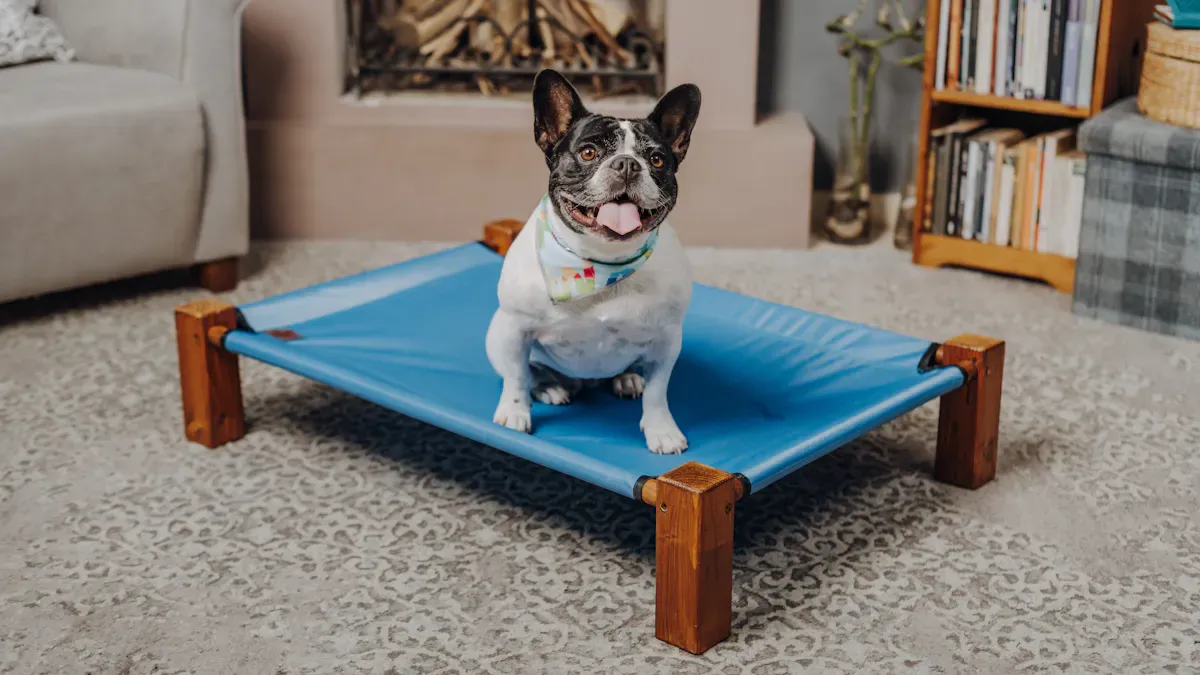
Dogs signal that a bed does not work through specific behaviors. Step-offs within the first few minutes, perching on the edge without lying down, using only a corner, or abandoning the bed for the floor are all signs the current style is wrong. A bed that sags in the middle after a week or loses its shape after washing fails on support, and dogs will stop using it.
How to Spot and Fix Bed Avoidance
A dog avoids a bed for a few predictable reasons: the style does not match the dog’s sleep pattern, the bed is too high, the surface feels unstable, or the location feels unsafe. To fix avoidance, first check whether the bed still provides enough comfort and cooling. Move the bed to a spot where the dog already chooses to rest. Encourage use with calm, positive reinforcement rather than pressuring the dog onto the bed. Make sure the bed stays clean and odor-free so the surface remains inviting.
When to Switch from Open Mesh to Bolster
Dogs that start out on an open mesh cot may later show a preference for bolsters as they age or as the household environment changes. If a dog that once sprawled begins curling up or pressing against nearby furniture, a bolster cot offers the edge support and enclosure the dog now seeks. The switch is about matching the dog’s current settling behavior, not about upgrading for its own sake. The best elevated dog bed is the one your dog chooses to use every day.
Disclaimer: Always check for signs of heat stress or mobility issues. Consult your veterinarian if your dog has special orthopedic or health needs.
Dogs choose beds based on comfort, cooling, and how secure the surface feels. Open mesh cots suit sprawlers and dogs that overheat. Bolster cots suit nesters and dogs that seek boundaries. Test both styles when you can. Use a simple pass-or-fail check across cooling, support, cleanup, space, and material durability. If the dog stays, the choice is right. If the dog leaves, the style needs to change.
FAQ
How does an elevated dog bed help with cooling?
Elevated beds allow air to flow underneath, which keeps the sleeping surface cooler than padded beds that trap body heat. This effect is most noticeable for large breeds and active dogs after exercise.
How often should an elevated dog bed be cleaned?
Clean the bed about once a week under normal use. If it looks dirty or develops an odor sooner, clean it immediately. Regular cleaning keeps the surface inviting and helps the cover hold its shape.
Which elevated bed style suits a dog that curls up to sleep?
Dogs that curl up or seek boundaries usually prefer a bolster elevated cot. The raised edges create a contained space that matches the dog’s instinct to nest.
Can an elevated dog bed be used outdoors?
Yes. Elevated beds keep dogs off damp or hot ground and allow airflow underneath. Choose a durable bed with materials that resist UV exposure and dry quickly after rain. For a deeper look at materials and sizing for outdoor conditions, see how outdoor dog bed sizing and weather-ready features affect daily use.
What if a dog refuses to use an elevated bed at all?
Check step-on height first: a bed that is too tall makes dogs uncertain. Then check whether the style matches the dog’s sleep pattern. An open cot may feel too exposed; a bolster cot may feel too confining. Move the bed to a spot where the dog already rests and observe the dog’s response over several days.






