
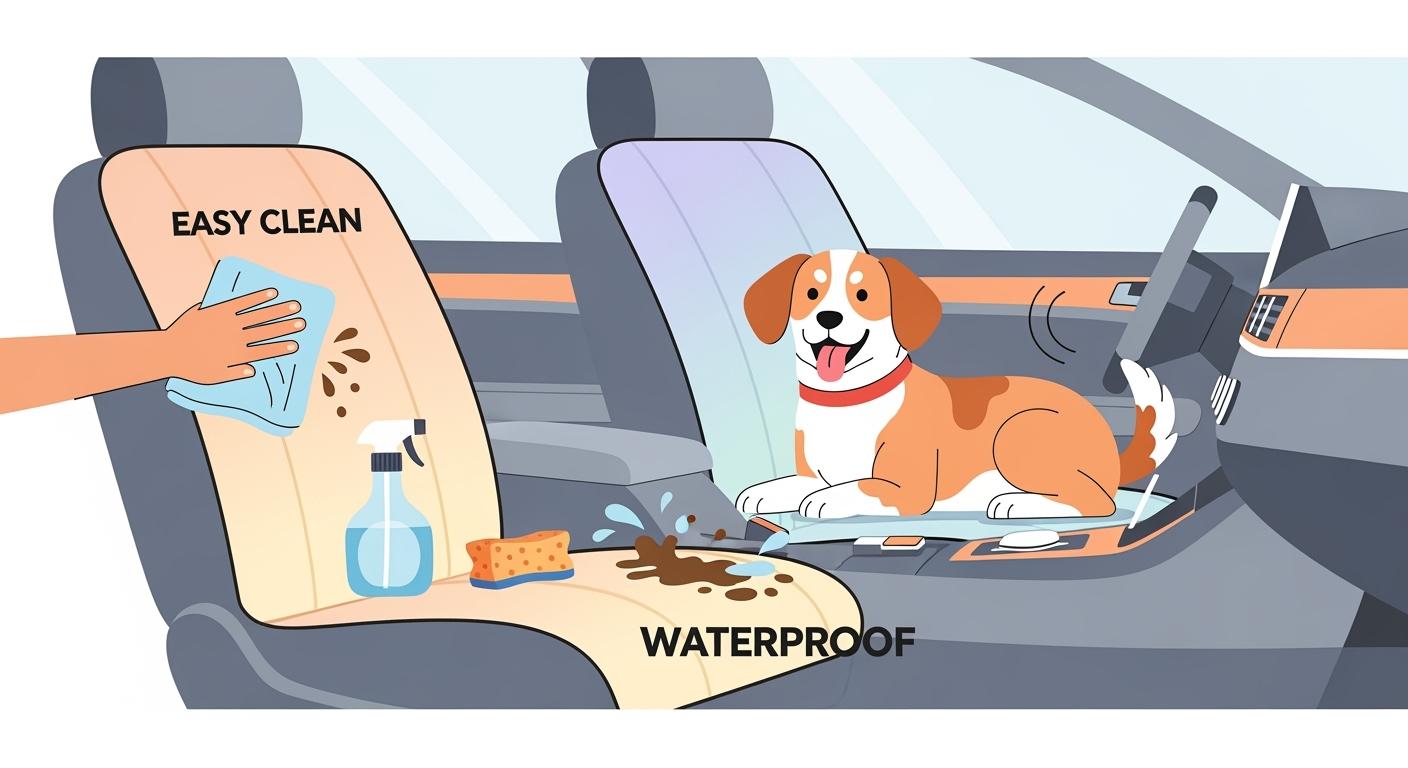
After a rainy walk or a quick vet run, you usually do not need to remove and fully wash a dog car seat cover waterproof design. A fast wipe is enough for light mud, drool, wet paws, and surface hair. A deeper wash matters more when dirt gets packed into seams, odors stay after drying, or the cover sees frequent messy trips. The right routine depends on the material, the fit, and how much cleanup you are willing to do after each ride.
| Material | Usually Best For | Cleaning Approach |
|---|---|---|
| Coated polyester or Oxford fabric | Everyday dirt, wet paws, light spills | Wipe clean first, wash only when needed |
| Neoprene blends | Softer feel with moderate moisture protection | Spot clean often, gentle wash if the care label allows it |
| Leatherette-style surfaces | Fast cleanup and lower hair cling | Wipe with a damp cloth and mild cleaner |
| Heavily padded multi-layer covers | Longer rides and extra cushioning | Wash less often and allow more drying time |
When a quick wipe is enough
If the mess stays on the surface, wiping is usually the better first move. That covers most short rides with dry shedding, light paw prints, a little drool, or a damp coat that has not soaked into the stitching. For many owners, the real buying question is less about heavy-duty laundering and more about in-car protection and cleanliness that is easy to keep up with during a normal week.
How wipe-clean covers compare with washable designs
| Type | What It Handles Well | Where It Falls Short | Best Fit |
|---|---|---|---|
| Wipe-clean | Surface spills, hair, routine dirt | Can leave odors or trapped grit in seams | Short trips and lighter messes |
| Machine washable | Heavy shedding, mud, repeated wet rides | Longer reset time and more wear from repeated washing | Frequent use and dirtier outings |
| Removable-panel or sectional designs | Localized messes | Extra seams can still hold moisture | Dogs that usually dirty one area |
Everyday cleaning that protects the waterproof layer
- Shake out loose dirt and crumbs before they grind into the fabric.
- Use a vacuum, lint roller, or damp microfiber towel for hair.
- Blot wet mud or accidents instead of rubbing them deeper into the cover.
- Wipe with mild soap and water when plain water is not enough.
- Check seams, strap slots, and buckle openings before reinstalling the cover.
- Let the cover air dry fully before the next trip.
Covers built around fit, stability, and easy cleanup are usually easier to maintain because the fabric stays flatter and traps less dirt at the edges.
When a full wash makes more sense
Move from wipe-downs to a full wash when the cover still smells after drying, feels gritty after vacuuming, or keeps holding dampness in the stitching. That is also the safer choice after a large spill, repeated muddy trips, or an accident that reached the underside.
- Remove the cover and shake off as much hair and dirt as possible.
- Check the care label before washing.
- Pre-treat obvious stains with a mild pet-safe cleaner.
- Use a gentle cycle with cold or cool water if machine washing is allowed.
- Skip bleach, fabric softener, and high heat.
- Air dry until the cover is completely dry, especially around seams and anchor points.
If your setup includes side flaps, seat anchors, and strap openings like a dog seat cover for back seat, inspect every fold before putting it back in the car. Owners comparing soft versus hard-bottom seat cover setups should also expect thicker padding to take longer to dry after a full wash.
What changes after real trips
Spills, hair, and dirt in seams
Wet paws, sand, drool, and loose fur are usually manageable if you catch them early. The trouble starts when the mess sits long enough to work into stitched areas or under the cover. If you are deciding between bench versus hammock coverage, focus on how well each setup closes off gaps around the seat base, door-side edges, and buckle openings in your own vehicle.
- Hair that lifts easily with a towel or vacuum is a good sign.
- Moisture that stays on top of the cover is a good sign.
- Dirt packed into seams, damp stitching, or residue on the seat usually means the fit or material is falling short.
If your dog sometimes rides in a raised travel setup instead of a full rear cover, booster seat sizing and material checks can help you compare how padding, side walls, and fabric choice affect cleanup after messy rides.
Damp seams, odor, and slow drying
Lingering odor usually means one of three things: the cover was reinstalled before it dried, liquid reached an absorbent layer, or grime is still trapped around stitching and hardware openings. Some covers are water-resistant rather than fully waterproof, so a large spill may still move toward the seat edge or underside.
| Problem | What To Check | What Usually Helps |
|---|---|---|
| Water reaches the seat | Edges, seams, anchor slots, and wrinkles | Refit the cover and replace it if liquid keeps getting through |
| Lingering odor | Whether the cover dried fully after washing | Rewash if needed and air dry longer in moving air |
| Slow drying | Padding thickness and folded areas | Hang it open and avoid stacking damp layers |
| Stiff panels | Detergent residue or heat exposure | Use a milder wash routine and skip high heat |
| Dirt stuck in seams | Quilting lines, binding, and buckle openings | Vacuum first, then spot clean before washing |
A simple paper towel check can help after a wet ride. Put the towel under the cover for a few minutes in the dampest area. If the towel picks up moisture, the cover may need a better fit, gentler care, or replacement.
Choose the cover you will actually maintain
- Choose wipe-clean first if most mess stays on the surface.
- Choose washable construction if your dog regularly brings in mud, sand, or heavy odor.
- Choose simpler strap layouts if reinstalling the cover already feels like a chore.
- Choose flatter, less bulky fabrics if fast drying matters more than extra cushioning.
- Replace the cover when water reaches the seat, seams open up, or odor never fully clears.
The most common mistakes are easy to avoid: washing too often when spot cleaning would do, using harsh cleaners, reinstalling the cover while it is still damp, and ignoring the hidden dirt around seams and buckle cutouts. When cleaning feels too slow or the cover never resets well, that is usually a product-fit problem as much as a maintenance problem.
FAQ
How often should you clean a dog car seat cover waterproof design?
Spot clean after dirty trips and save full washing for heavy mess, trapped odor, or buildup that a wipe-down cannot remove.
Can you put a waterproof dog car seat cover in the dryer?
Usually it is safer to air dry, because high heat can damage coatings, stiffen padding, or shorten the life of the waterproof layer.
What is the fastest way to remove pet hair?
A vacuum, lint roller, rubber glove, or damp microfiber towel usually works best, depending on how deeply the hair is stuck in the fabric.
Why does the cover still smell after washing?
The most common causes are trapped moisture, residue left in seams, or reinstalling the cover before it is fully dry.
When should you replace the cover instead of cleaning it again?
Replace it when liquid keeps reaching the seat, the seams or straps are failing, or the material stays stiff, damp, or odorous even after careful cleaning.






