
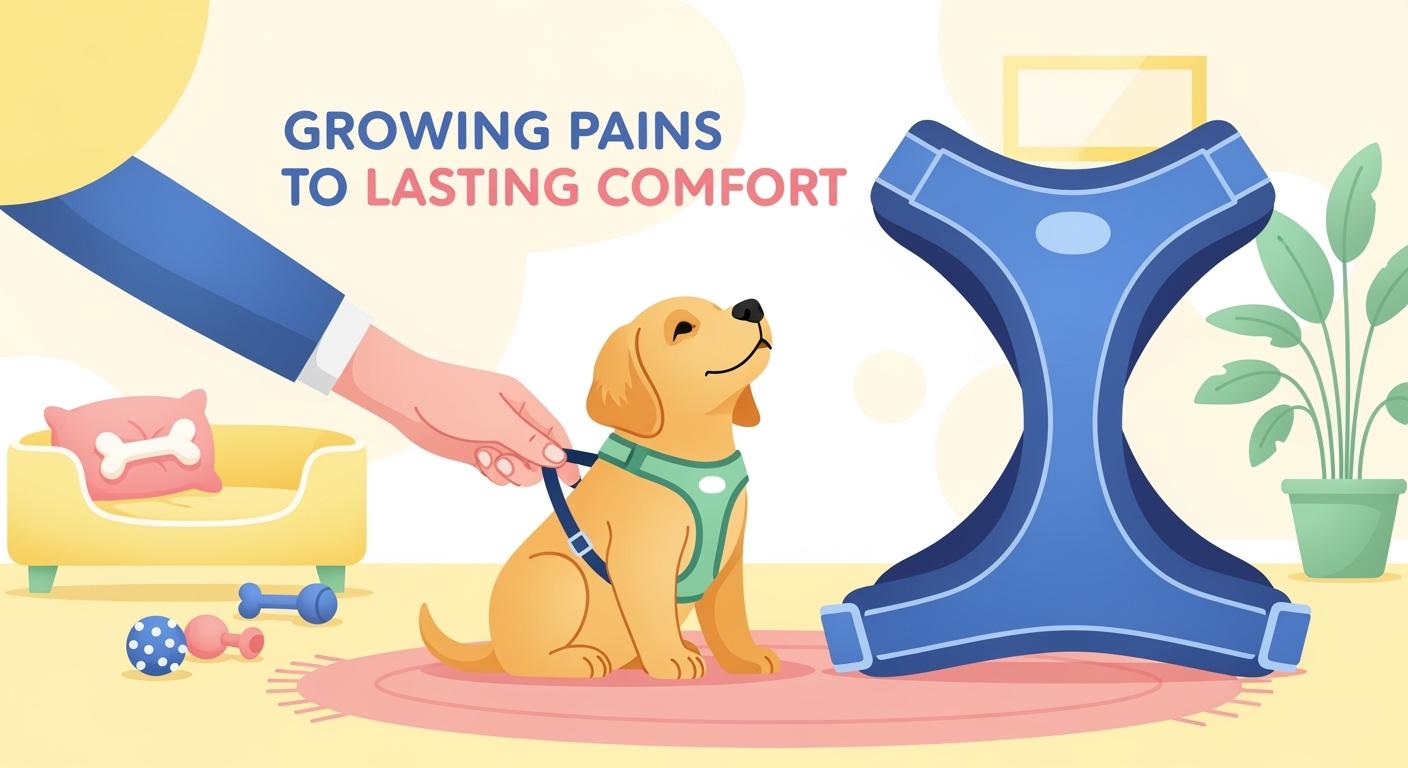
The best dog harness for puppies is usually the one that fits the body your puppy has today, not the one you hope will last through the next growth spurt. During the first year, chest width, rib depth, and shoulder shape can change fast enough that a harness that looked fine a few weeks ago may already be twisting, rubbing, or loosening at the neck.
That is why it helps to start with a light, adjustable dog harness that sits cleanly on the chest, clears the armpits, and can be fine-tuned without a struggle. The goal is not just restraint. It is calm movement, steady leash handling, and a fit you can keep up with as your puppy changes.
Note: If your puppy coughs, limps, shows skin irritation, or seems painful on walks, stop treating it as a simple fit problem and ask your veterinarian for guidance.
Why a harness usually makes more sense for puppies
It moves leash pressure away from the throat
Puppies are still learning how to walk with a human, so sudden stops, bouncing starts, and short bursts of pulling are common. A well-fitted harness spreads that force across the chest and shoulders instead of concentrating it at the neck. That usually makes everyday walks more comfortable, especially for puppies that surge forward, turn sharply, or get excited easily.
A collar can still be useful for tags and daily identification. Questions about comfort, odor, and cleanup for that separate piece of gear are covered in puppy collar materials and cleaning, but the leash load for a growing puppy is often better handled by a harness.
Tip: Fit the harness while your puppy is calm and standing naturally. A sitting or twisting puppy can make a poor fit look acceptable for a moment.
Adjustability matters more than extra structure
For most puppies, a lightweight harness with multiple adjustment points is easier to live with than a bulky, highly padded design. Extra material can feel more secure to the owner, but it can also get restrictive sooner as the chest deepens and the shoulders start moving more freely.
If your puppy already pulls hard enough that you are thinking about front-clip handling, the routine in front clip harness training guide fits naturally with the same kind of adjustable setup that works well during growth.
| Setup | Why owners choose it | What it does well | What to watch |
|---|---|---|---|
| Light adjustable puppy harness | Handles frequent size changes | Spreads pressure well and usually feels easier for puppies to accept | May still need replacing once the adjustment range runs out |
| Structured padded harness | Feels more substantial and covered | Can work well once size is stable | Often becomes restrictive sooner during active growth |
| Collar only | Simple and familiar | Good for tags and low-pressure use | Less forgiving when a puppy pulls, lunges, or startles |
That is why the best dog harness for puppies usually looks a little simpler than people expect. A puppy rarely needs more bulk. A puppy usually needs a cleaner fit and more room to adjust it correctly.
Fit changes faster than most owners expect
Growth does not happen evenly
Puppies do not outgrow harnesses in a neat, predictable way. One month the neck loop is the issue. A few weeks later the girth strap is closer to the armpits, or the front plate starts drifting off center during turns. Those changes can happen even when the puppy has not gained much visible size overall.
The easiest way to stay ahead of that problem is to recheck fit often and pay attention to movement, not just measurements. The same measurement habits explained in dog training harness sizing guide make more sense once you treat fit as something dynamic rather than a one-time setup.
Check the same landmarks every time
The sternum contact point and the space around the armpits usually tell you the most, the fastest. When those two areas are wrong, the rest of the harness rarely performs well for long.
| Check | Good sign | Problem sign | What to do first |
|---|---|---|---|
| Sternum contact point | Stays centered on the chest while walking | Twists or drifts off the midline | Even out both sides and recheck after a short walk |
| Armpit clearance | Straps sit back far enough to avoid rubbing | Redness, hair loss, or obvious friction | Loosen or reposition the girth area |
| Neck opening | Sits securely without riding into the throat | Too loose to contain the puppy or too high at the neck | Readjust the neck loop or change size |
| Front leg movement | Stride stays even on both sides | Short steps, hesitation, or bracing | Check strap placement and overall tightness |
| Skin and coat after the walk | No deep marks or irritation | Lines that linger, chafing, or chewing at the harness | Loosen the pressure point and inspect the fabric edges |
If you need a simpler reference for those checks, the examples in harness size and fit guide line up with the same practical questions most owners ask after a few real walks.
Common mistakes that make a puppy harness fail early
- Buying a larger size so the puppy can grow into it instead of fitting the current body
- Tightening one side more than the other and creating sideways rotation
- Judging fit while the puppy is sitting instead of while moving
- Leaving the harness unchanged for a month or more during active growth
- Assuming resistance always means training trouble when discomfort may be the real issue
Tip: A puppy that suddenly starts scratching at the harness, planting the feet, or refusing the first few steps may be telling you the fit changed before you noticed it.
When the harness stops working, the walk usually tells you
You usually do not need a complicated diagnosis to tell when a harness is no longer right. The signs tend to be obvious once you know what to watch for: sideways shifting, rubbing under the front legs, reluctance to move, or a puppy that can suddenly back out of the setup more easily than before.
The sequence in fit checks before the first walk is also useful after adjustments, because many of the same mistakes show up again when a once-correct harness has slowly gone out of fit.
| Symptom | Likely cause | Fast check | Best next step |
|---|---|---|---|
| Harness shifts sideways | Uneven strap tension or too much room overall | Watch whether the chest piece stays centered | Balance both sides and test again on a short walk |
| Rubbing under the armpits | Girth area sits too close to the front legs | Inspect the skin after walking | Reposition the strap or try a different cut |
| Puppy freezes or resists walking | Restriction, discomfort, or rushed introduction | Watch for shortened stride or immediate scratching | Loosen the fit and return to short indoor sessions |
| Escape risk increases | Neck area too loose or front point drifting off center | Test a gentle backward pull before leaving | Refit now or move to a smaller size |
| Coughing or gagging | Front section sits too high or overall fit is wrong | Check whether the harness is riding toward the throat | Stop and reassess before the next walk |
Know when to adjust and when to size up
Small adjustments are enough when the harness still sits in the right places and the puppy is simply filling out a little. Size up when the straps are close to their limit, the sternum contact point will not stay centered even after readjustment, or the neck and girth cannot both fit correctly at the same time.
Replacement can also be about wear, not just growth. Frayed edges, damaged stitching, and hardware that no longer closes cleanly are all reasons to retire the harness even if the size still looks acceptable.
Disclaimer: If gait changes, coughing, skin damage, or clear stress continue after you adjust the fit, stop using the harness and get professional guidance instead of forcing more trial and error.
Helping your puppy accept a harness without a fight
Acceptance usually improves faster when you keep sessions short and predictable. Puppies often do better when the harness becomes a normal part of calm routines rather than a long event that starts right before an exciting walk.
- Let your puppy sniff the harness before you put it on.
- Drape it on briefly, remove it, and reward calm behavior.
- Clip it for a short indoor session and keep the mood neutral.
- Add a few steps of walking inside before you go outdoors.
- If the puppy freezes or scratches, step back instead of pushing through.
That gradual approach matters because resistance is not always stubbornness. Sometimes the puppy is telling you the fit feels strange, the movement feels restricted, or the introduction was simply too fast.
What matters most on real walks
The best dog harness for puppies is not the one with the most features on paper. It is the one that keeps pressure off the throat, stays centered while your puppy moves, clears the armpits, and gives you enough adjustment range to keep up with growth.
If you remember only a few things, remember these: fit the puppy you have now, recheck often during growth, and treat rubbing, twisting, or sudden resistance as useful information. A growing dog can make a once-good setup stop working quickly.
- Choose a harness with multiple adjustment points and light enough structure for daily movement.
- Recheck the sternum contact point and armpit clearance every few weeks, and sooner during obvious growth spurts.
- Size up when the harness can no longer stay centered and comfortable at the same time.
FAQ
How do I know if a puppy harness fits correctly?
A good fit stays centered on the chest, clears the armpits, and allows normal front leg movement without rubbing, coughing, or obvious resistance.
How often should I adjust a puppy harness?
Check it every couple of weeks during active growth, and sooner if the harness starts twisting, rubbing, or looking uneven on walks.
When should I replace a puppy harness?
Replace it when the adjustment range is no longer enough for a stable fit, or when wear in the straps, stitching, or hardware makes the harness unreliable.






