
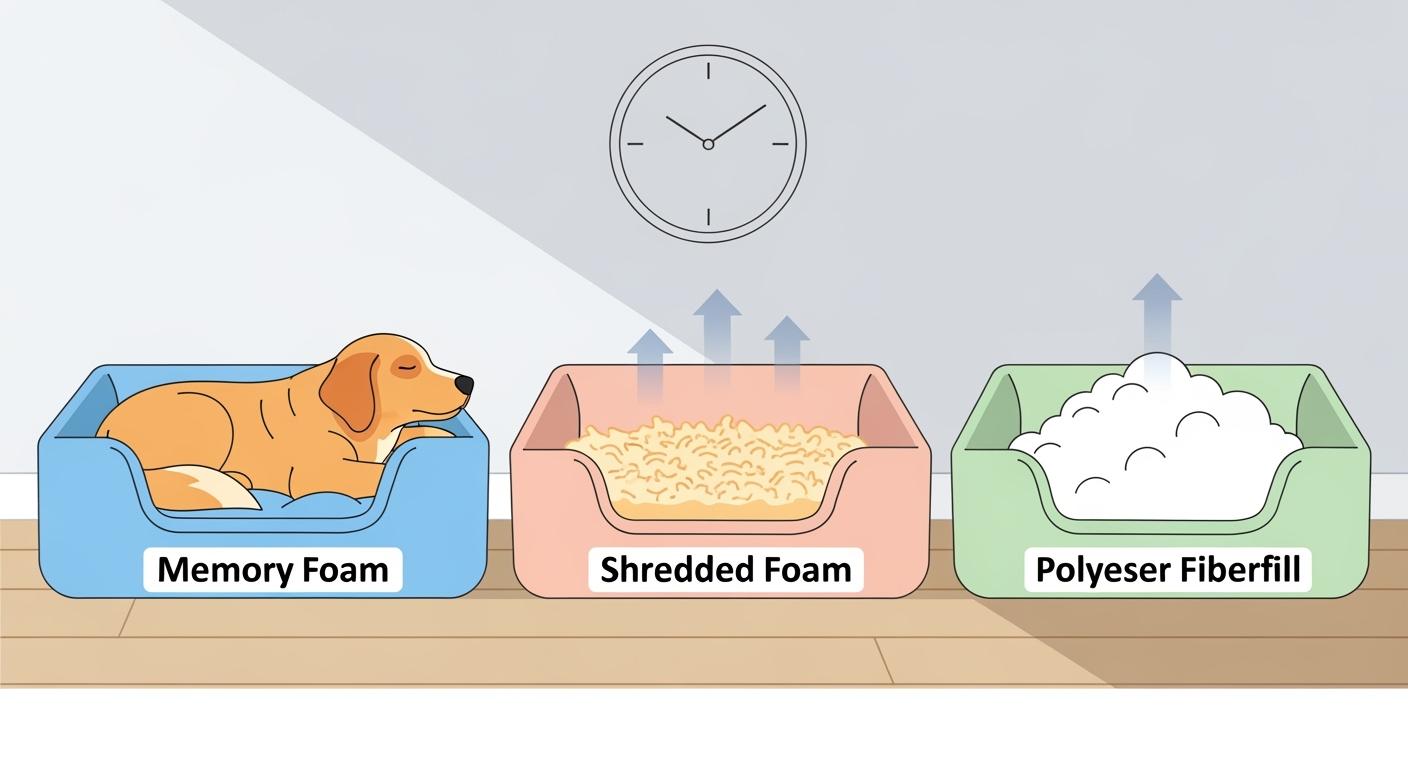
The best dog bed material depends less on the label and more on what your dog does every day. A heavy shedder, a drooler, a chewer, and an older dog with stiff joints can all need very different combinations of cover fabric and fill. The right choice is usually the one that handles your dog’s messiest habit without turning daily cleanup into a chore.
That is why material choice works better when you think in terms of reset speed, surface feel, and long-term wear. If a cover releases hair quickly, dries without trapping odor, and still feels good enough that your dog actually uses the bed, it is usually a better match than something softer that becomes frustrating after a week. For many homes, when to wash a dog bed becomes easier to manage once the material itself fits the dog’s routine.
Note: This article covers everyday cover fabrics and fill types for home dog beds. It is not a substitute for veterinary advice when a dog has an active skin condition, ongoing pain, or a prescribed support need.
What matters most when choosing a dog bed material
Most owners get better results by starting with the biggest day-to-day problem. If hair sticks everywhere, smooth tightly woven covers usually help more than extra loft. If drool, damp coats, or accidents are the bigger issue, faster-drying covers and better moisture handling matter more. If the dog digs or chews, the cover fabric often matters more than the fill underneath.
Reset speed changes daily life fastest
Reset speed is simply how quickly the bed becomes usable again after hair, dirt, drool, or a quick wash. Smooth surfaces like microfiber suede, coated synthetics, and some tightly woven canvas fabrics usually clear faster than plush or looped textures. Hair tends to lift off in one pass instead of packing into the weave.
That difference adds up quickly. A bed that resets in seconds is easier to keep in regular use than one that always feels like it needs another lint roller pass or another wash cycle.
Comfort still matters because the dog has to use it
Even a durable cover can fail in practice if the surface feels rough, slippery, or too firm for your dog. Softer covers and more supportive fill tend to matter most for dogs that spend long stretches resting, older dogs that need more cushioning, or dogs that hesitate to settle on a firmer surface.
When support matters as much as cleanability, washable orthopedic support options can make more sense than trying to solve everything through cover fabric alone.
Durability is really about how the bed ages
Durability is not just whether the bed survives the first week. It is whether the cover still resists pilling, whether seams still hold after repeated washing, and whether the fill keeps its structure instead of staying damp or flattened. Cotton canvas and high-denier synthetics often hold up better under frequent washing than plush covers that break down faster with heat and abrasion.
| Material | Feels Like | Cleaning Speed | Durability | Usually Best For |
|---|---|---|---|---|
| Microfiber suede | Soft and smooth | Fast | Medium to high | Heavy shedders and muddy paws |
| Cotton canvas | Firm and breathable | Fast | High | Frequent washing and active dogs |
| High-loft polyester | Plush and cozy | Medium | Medium | Comfort-first setups for calmer dogs |
| Memory foam fill | Dense and supportive | Depends on cover | Medium | Older dogs or dogs that need more pressure relief |
| Ballistic nylon | Firm and slick | Fast | Very high | Diggers, chewers, and heavy use |
| Ripstop canvas | Textured and sturdy | Fast | Very high | Outdoor use and rough sleepers |
| Organic cotton | Gentle and natural | Medium | Medium | Sensitive skin and warmer climates |
Matching the material to the dog’s habits
The easiest way to narrow the choice is to match the bed to the one problem you deal with most often.
For heavy shedding and fast cleanup
Smoother fabrics usually win because hair releases quickly and the cover does not trap as much debris in the surface. Microfiber suede and smooth polyester are often easier to reset day to day than plush textures or looped fabrics that hang on to fur.
For drool, damp coats, and odor control
Faster-drying covers and fills that do not stay wet for hours usually make the biggest difference. If a bed smells stale soon after washing, the problem may be less about detergent and more about moisture getting trapped in the fill or the cover taking too long to dry.
For chewing, scratching, and digging
Tough cover fabrics tend to matter more than soft fill when the dog actively damages the bed. Ballistic nylon, ripstop canvas, and reinforced seams usually outlast softer upholstery-style covers. If this is your main issue, beds that hold up to digging and chewing are worth comparing before you replace another plush cover.
For older dogs or dogs that need more cushioning
Supportive fill can matter more than the surface texture. Memory foam or denser foam cores usually stay more comfortable for longer rest periods than flatter fills, but they still work best when paired with a cover that can be removed and cleaned without much effort.
Easy-to-clean, comfort-first, and durability-first setups
Most dog bed choices fall into one of three priorities. Deciding which one matters most usually makes the rest simpler.
Easy-to-clean setups
These work best for homes dealing with mud, wet paws, drool, or heavy shedding. Smooth synthetic covers, microfiber suede, and weather-resistant fabrics tend to clear quickly and dry faster than plush surfaces. If the bed also moves between indoor and outdoor spaces, some outdoor dog bed options make sense because their covers are built for easier wipe-downs and more weather exposure.
Comfort-first setups
These usually pair softer covers with thicker or more supportive fill. They can be a good fit for dogs that rest for long periods or need more pressure relief, but they often ask more from your wash routine because hair, moisture, and odor tend to stay in the bed longer.
Durability-first setups
These prioritize strong fabrics, tighter weaves, reinforced seams, and some kind of barrier between the cover and the fill. If your dog has accidents or regularly carries moisture onto the bed, washable and waterproof bed features can help preserve the inside of the bed instead of only cleaning the outside surface.
How to tell the material is not working
Most material mismatches become obvious within the first couple of weeks. The bed may start smelling too quickly, stay damp for too long, trap hair in the weave, or get ignored because the surface feels wrong to the dog.
| Problem | Likely Cause | What To Check | Better Direction |
|---|---|---|---|
| Hair is hard to remove | Textured or looped surface | Swipe the cover with your hand and see if fur stays behind | Move to a smoother, tighter-weave cover |
| Odor returns fast after washing | Moisture stays in the fill or cover | Compare the smell of the cover and fill separately after drying | Choose quicker-drying materials or a thinner fill |
| Bed stays damp too long | Dense fill or slow-drying cover | Press the bed 12 hours after washing | Use a lower-loft fill or a faster-drying cover |
| Dog avoids the bed | Surface feel or firmness mismatch | Watch whether the dog approaches and then leaves | Change the cover texture before replacing the whole bed |
| Cover breaks down early | Fabric not suited to washing or scratching | Look for pilling, fraying, or seam stress | Switch to a tougher weave or gentler wash routine |
Choosing a better match for your home
If your main goal is less daily effort, choose the material that clears fastest. If your main goal is longer and more comfortable rest, invest in the fill first and then pair it with a removable cover that is easy to maintain. If the bed keeps failing because of damage, choose stronger cover materials before you worry about plushness.
No single fabric is best for every dog. The best dog bed material is usually the one that fits your dog’s habits closely enough that the bed stays clean, usable, and comfortable without constant extra work.
FAQ
What dog bed material is easiest to clean?
Smooth, tightly woven covers such as microfiber suede or some coated synthetics are usually the easiest to reset because hair and dirt do not cling as much to the surface.
Is memory foam worth it for every dog?
Not always. It can be especially useful for older dogs or dogs that need more support, but younger healthy dogs may do well with easier-drying fills if maintenance matters more.
What material works best for dogs that chew or dig?
High-denier fabrics like ballistic nylon or ripstop canvas usually hold up better than plush covers when damage resistance is the main priority.
How do you know a cover is trapping too much hair?
If fur stays packed into the weave after a quick swipe or light vacuuming, the surface is likely creating more daily work than it should.






