
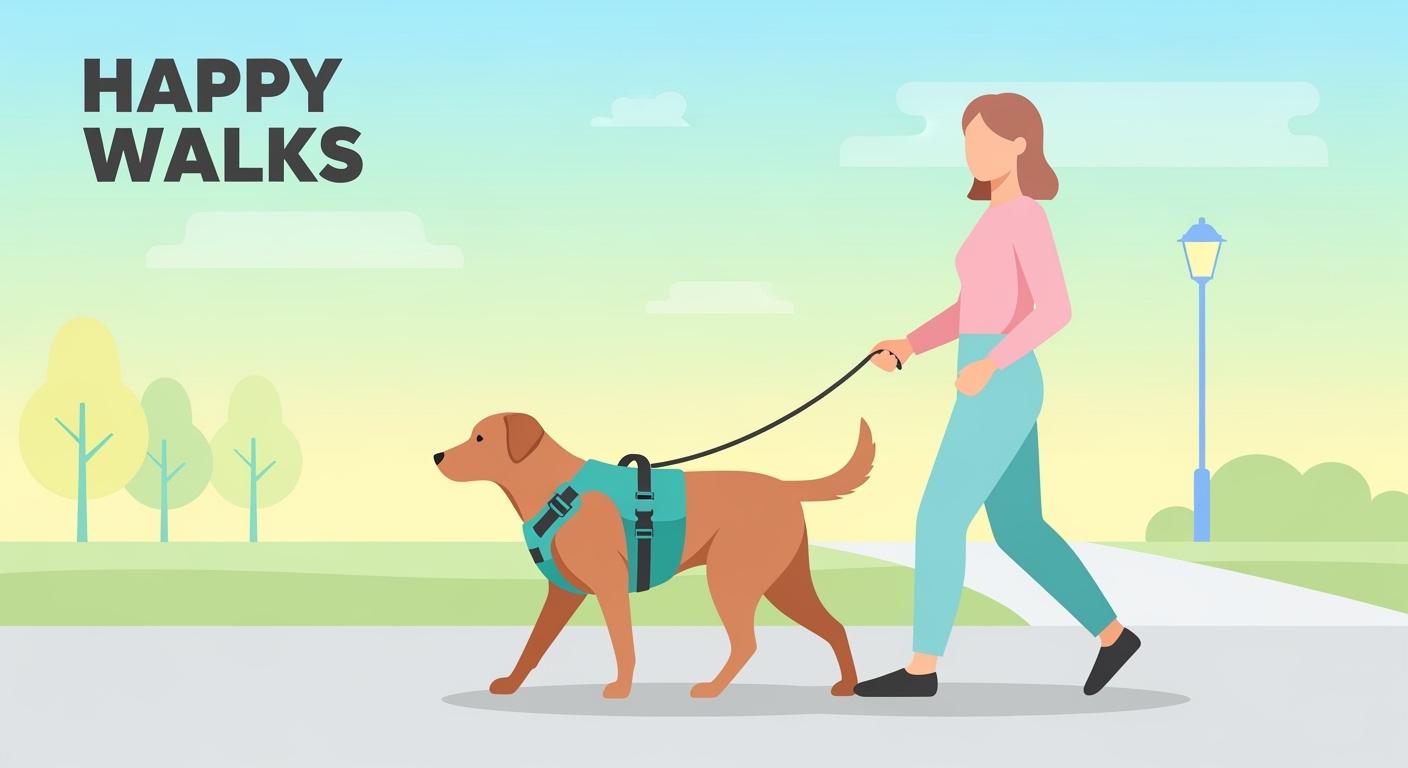
Scope: selecting and checking the fit of a body harness with extra coverage for everyday dog walks.
When a dog surges ahead or twists at the end of the leash, a simple collar puts all that force on the neck. A body harness with extra coverage spreads that load across the chest and back-but only when the fit and material match the dog. Too much material in the wrong spots can shorten your dog’s stride, trap heat, or slide out of position mid-walk. This guide helps you read those signals and act on them.
Note: This guide covers harness selection and fit checks for everyday walks. It does not cover medical bracing, post-surgery support, or car-restraint crash ratings.
Who This Guide Is For
This guide is for dog owners managing a dog that pulls, slips out of simpler harnesses, or has sensitive skin that reacts to narrow straps. It assumes you are buying or already own a body-style harness with chest, belly, or back panel coverage beyond a basic Y-front design. It is not aimed at competition sport dogs, working dogs with specialized gear needs, or dogs with diagnosed orthopedic conditions-those cases benefit most from direct veterinary or certified trainer input.
A Short Glossary
Four terms used throughout this guide, defined once so they stay consistent:
- Pressure distribution-how evenly a harness spreads load across the chest, sternum, and back, rather than concentrating it at one contact point.
- Front-clip harness-a harness with the leash attachment ring on the chest panel rather than the back; tension redirects a pulling dog toward the handler instead of away.
- Gait restriction-shortened, stiff, or asymmetric steps caused by a harness crossing the shoulder blades or leg pits at the wrong angle.
- Thermal load-heat retained by thick or non-breathable harness material against the dog’s coat, which increases panting and fatigue on warm-weather walks.
How This Guide Was Written
The recommendations here come from hands-on fit observations-watching how harness position shifts over a 20-minute walk and noting where skin reactions occur after removal. No lab data or clinical trial is cited. Where the guide references patterns in pulling behavior or skin sensitivity, those observations align with general principles shared by certified professional dog trainers (CPDT-KA) and canine rehabilitation specialists. Readers who need clinical guidance should consult a veterinarian or a CCPDT-certified trainer directly.
Key Takeaways
Extra coverage helps most when a dog pulls hard, escapes Y-front harnesses by sliding backward, or has skin that reacts to narrow straps. It starts causing problems when the material is too thick for the climate, the panel is too long for the torso, or the fit drifts mid-walk. Check fit before every walk, and watch for shoulder restriction and rubbing as the two earliest warning signs.
When More Body Coverage Helps on Daily Walks
Extra coverage earns its place when a dog’s behavior or body makes a minimal-contact harness unreliable. Control, escape prevention, and pressure distribution are the three scenarios where more material consistently delivers a better outcome.
Better Control for Strong Pullers or Reactive Dogs
Pressure distribution is the core reason extra coverage improves control for pullers. A wider chest panel spreads pulling force across the sternum instead of concentrating it at a narrow strap, which lets you maintain a stable position with less effort. Front-clip designs add a second advantage: when a dog lunges, leash tension swings the dog’s front end toward you rather than away, shortening the surge before it builds momentum. Check that the chest section stays centered and that the shoulder blades move freely through a full stride-if steps shorten within the first block, the panel is likely crossing the scapulae. For step-by-step guidance on pairing harness choice with pulling management, see the front-clip harness training steps guide.
Tip: Use high-value treats and practice loose-leash walking at home before the first walk with a new harness-the reward latency window is shorter indoors, which helps the dog associate the new gear with calm movement.
Added Safety for Escape Artists or Small Breeds
Dogs that slip backward out of Y-front harnesses-usually by tucking the chin, pulling back, and compressing the chest strap-need a belly strap or a full vest panel to close that exit route. Three-strap designs add one strap behind the front legs; vest styles wrap the chest and torso continuously. Either approach makes the backward-slide maneuver structurally harder. Before each walk, run a thumb under the belly strap: it should resist movement without pinching the skin. If the harness shifts laterally within the first few minutes regardless of adjustment, a different panel layout-not just a smaller size-is usually what is needed.
Comfort for Dogs with Sensitive Skin or Medical Needs
Narrow nylon straps concentrate contact pressure at two or three small points-the chest and the back-clip area-which creates predictable hot spots for dogs with thin coats or reactive skin. A wider panel distributes the same force over a larger surface, reducing pressure per contact zone. Soft-lined or padded materials add a second layer of protection against friction chafing, particularly in the axillary (armpit) region where leg action creates repetitive rubbing. If a dog has a tracheal or cervical condition, verify the harness does not ride toward the throat under tension-that is a fit issue, not a harness-type guarantee. When a dog has a diagnosed condition, confirm harness choice with your vet before the first walk.
Comparison: Body Harness Types by Use Case
Use this table as a starting point for matching harness type to your dog’s primary need-not as a ranking from best to worst.
| Feature | Body Harness (Extra Coverage) | Simple Y-Front Harness | Vest-Style Harness | What to Watch |
|---|---|---|---|---|
| Control for Pullers | High | Moderate | High | Front-clip placement matters more than coverage area |
| Escape Prevention | High | Low | Very High | Vest styles add thermal load in warm weather |
| Pressure Distribution | High | Moderate | High | Wide panels still rub when fit drifts |
| Heat Buildup Risk | Moderate | Low | High | Check coat thickness and walk duration |
| Ease of Movement | Moderate | High | Moderate | Watch for shortened stride in first 10 minutes |
| Cleaning | Moderate | Easy | Moderate | Padding traps odor; check care label |
| Best For | Pullers, sensitive skin | Calm walkers, quick fit | Small breeds, escape artists | No single type suits all dogs |
What This Guide Will Not Tell You
- Brand or price recommendations-specific products change; a certified trainer or vet can evaluate what you currently own.
- Medical diagnoses-skin reactions, gait abnormalities, and overheating that persist after a harness change need veterinary assessment, not just a different harness.
- Car-restraint crash ratings-harness use in vehicles involves crash-test data that requires separate evaluation; look for third-party crash-test labels when shopping for a travel restraint.
- Breed-specific sizing tables-body proportions vary significantly within breeds; always measure your individual dog against the manufacturer’s size chart.
When Extra Coverage Starts Causing Bulk, Heat, or Stiff Movement
Overheating and Restricted Movement in Warm Weather
Thermal load is the main trade-off of extra coverage. More material against the coat reduces airflow, which raises the dog’s surface temperature faster than a minimal-contact harness would. Air-mesh panels are the most practical fix for hot climates: they maintain structure while allowing airflow. Neoprene-lined options cushion well year-round but add noticeable warmth in summer. Nylon webbing minimizes coverage and is the coolest option for high-output walks. After grooming or seasonal coat changes, recheck whether the harness that worked in cooler weather is now trapping too much heat.
| Material | Breathability | Cushioning | Durability | Best Use Case |
|---|---|---|---|---|
| Air-mesh | ★★★★★ | ★★☆☆☆ | ★★★☆☆ | Hot climates, city walks |
| Neoprene-lined | ★★★☆☆ | ★★★★☆ | ★★★★☆ | Year-round, anti-chafe |
| Nylon webbing | ★★★☆☆ | ★★☆☆☆ | ★★★★★ | Training, hiking |
Note: If your dog is panting heavily, drooling, or slowing noticeably within the first few minutes of a walk, remove the harness and let them rest in a cool spot-those are signs of heat stress, not just warm weather adjustment.
Bulky Harnesses on Small or Short-Legged Dogs
Small and short-legged dogs have proportionally shorter torsos, which means a harness sized by chest girth alone can still sit too low on the ribcage or cross the shoulder blades at the wrong angle. The goal is a harness that clears the shoulder joint and sits behind the armpits-not one that passes through those areas. Watch for any tendency to shorten steps, favor one side, or pause and shake off the harness after a few strides. For more on preventing chafing on active outings, the axillary contact zone is the highest-risk area in small dogs specifically.
- Choose a harness that clears the shoulder joint and sits fully behind the armpits
- Avoid designs with torso-length panels that sag, bunch, or contact the belly unevenly
- Prioritize lightweight materials-the harness should not add perceptible weight to the dog’s front end
Common Mistakes With Extra Coverage Harnesses
Most fit problems with body harnesses come from applying collar-sizing logic to harness selection. The most frequent errors:
- Sizing by collar measurement rather than chest girth and back length together
- Fitting once at purchase and not rechecking after weight changes, grooming, or seasonal coat growth
- Choosing a vest-style harness for a warm-climate dog without monitoring thermal load
- Leaving back straps loose because the harness looks correct-loose straps allow the harness to rotate under pulling force
- Relying on a front-clip harness alone without any loose-leash work; fit and sizing checks for everyday walks cover what to verify before you start training
Tip: The most common single mistake is fitting the harness once at purchase and never rechecking-a harness that fitted correctly in the store often shifts after real-world walks reveal weak adjustment points.
Pass/Fail Check: Is Your Body Harness Setup Helping or Hurting?
Run this check before the first walk with a new harness, and again after 3 sessions to catch any gradual drift.
| Check | Pass Signal | Fail Signal | Fix |
|---|---|---|---|
| Chest panel stays centered | Harness holds position for the full walk | Panel drifts to one side within minutes | Tighten girth strap; try smaller size |
| Shoulder blades move freely | Dog walks and turns without shortening steps | Stride shortens or dog shakes off harness | Switch to a shorter front panel or lighter style |
| No rubbing or heat buildup | Skin stays clear; panting normal for route | Redness, hair loss, or earlier-than-usual fatigue | Switch to air-mesh; check fit in armpit zone |
| Leash path stays clean | Harness stays aligned when leash tension is applied | Harness rotates or clip migrates off-center | Recheck all strap adjustments; try front-clip |
The Signs the Harness Is Wrong: Rubbing, Side Shift, Short Steps, Throat Rise
Spotting Discomfort and Movement Issues Early
A poorly fitting body harness often shows its problems within the first block of a walk, not immediately in the driveway. Watch for stiffness when transitioning from standing to walking, tripping at curbs, redness or hair loss under the harness after removal, excessive licking or scratching directed at the harness, and resistance when you reach for it before the walk. Any of these signals a fit problem worth investigating-extra body coverage is not automatically better just because it contacts more of the dog.
Troubleshooting: Symptoms, Causes, and Fixes
| Symptom | Likely Cause | Fast Check | Fix |
|---|---|---|---|
| Rubbing behind legs | Rough material or tight fit in armpit zone | Check axillary area for redness after removal | Add soft lining or switch to a padded harness |
| Harness shifts to one side | Loose or asymmetric strap fit | Watch for lateral drift within the first 5 minutes | Adjust straps evenly; try the next size down |
| Shortened steps | Front panel crossing the shoulder blades | Watch shoulder rotation at a normal walking pace | Switch to a shorter panel or Y-front style |
| Throat pressure or coughing | Chest strap riding up under leash tension | Check neck contact when leash is taut | Lower the chest strap; recheck front-clip position |
When to Switch Harness Styles or Sizes
Switch sizes when your dog’s measurements change-after significant weight gain or loss, after heavy grooming, or when a puppy moves through a growth phase. If you can fit more than two fingers easily under any strap, refit. If the harness rotates or shifts within the first few minutes regardless of adjustment, the current model likely does not suit this dog’s body proportions-a different panel layout is usually what is needed, not just a different size. An ill-fitting harness worn repeatedly can lead to focal pressure soreness over time. If rubbing, restricted movement, or heat stress persist after refitting, stop using that harness and consult your veterinarian.
3-Session Observation Log
Record for 3 walks before deciding to refit or switch: harness position at start vs. end of walk, step quality (normal / shortened / asymmetric), skin check after removal (clear / pink / red), panting onset (normal / earlier than usual), dog’s reaction when harness is presented.
Summary: Matching Harness Coverage to Your Dog’s Real Needs
Extra coverage improves control, prevents escapes, and reduces pressure points-when the fit is correct and the material suits the climate. The same features become problems when the panel is too long for the torso, the material traps heat, or the fit drifts mid-walk. Check fit before every walk and monitor for the four key failure signals: rubbing, side shift, shortened steps, and throat rise. For browsing harness options by coverage type, see the dog harness category.
| Advantage | Limitation |
|---|---|
| Reduces neck strain under pulling force | Can cause rubbing if material is rough or fit drifts |
| Steadier control through pressure distribution | Vest styles increase thermal load in warm weather |
| Prevents backward-slip escapes | May restrict shoulder movement if panel sits too long |
| Useful for loose-leash training with front-clip designs | Requires more frequent fit checks than a simple Y-front |
| Dog Type | Recommended Harness Style | Key Consideration |
|---|---|---|
| Strong Pullers | Front-clip body harness | Verify chest panel stays centered when leash tension is applied |
| Small Dogs | Lightweight air-mesh vest | Confirm shoulder clearance; axillary zone is the highest chafe risk |
| Puppies | Adjustable front-clip | Recheck fit every few weeks during growth phases |
| Senior Dogs | Wide-panel, well-padded body harness | Easy on/off design reduces joint stress during dressing |
| Escape Artists | Three-strap or vest style | Monitor thermal load; belly strap must stay snug throughout the walk |
Disclaimer: A harness is a control and comfort tool, not a substitute for veterinary care. If your dog shows persistent skin reactions, ongoing gait changes, or heat stress that does not resolve after a harness switch, consult your veterinarian before continuing walks with any harness style.
FAQ
How do you know if your dog’s harness has too much coverage?
Watch for shortened steps, rubbing behind the legs, or heavier-than-usual panting-any of those signals gait restriction or thermal load from excess coverage.
Can extra coverage help with training a strong puller?
A front-clip body harness usually gives steadier control by redirecting pulling force toward the handler, though it works best when paired with loose-leash training rather than used as the only intervention.
How often should you check the fit of your dog’s harness?
Check before every walk, and refit any time your dog’s weight, coat length, or age changes significantly.
Note: This FAQ covers harness choice and fit checks for everyday walks. It does not replace veterinary or behavior advice when pulling, skin reactions, or gait changes are linked to an underlying health issue.





