
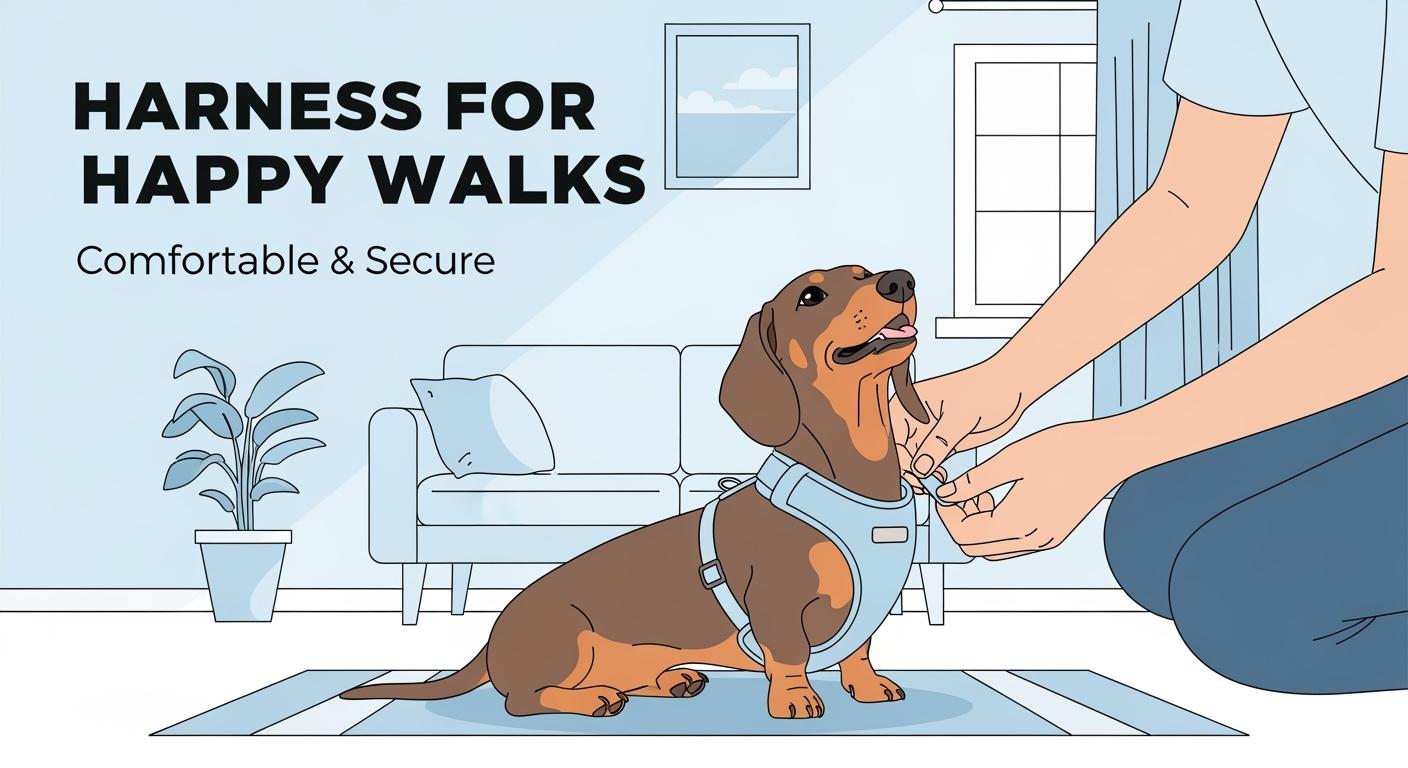
The best harness for small dogs is not simply the softest or cutest option. Small bodies make small design mistakes feel bigger: a heavy clip can pull the chest down, a wide front panel can push into the throat, and a loose neck opening can let the dog back out of the harness.
A good small dog harness should stay light without feeling flimsy. It should keep pressure away from the neck, leave room behind the front legs, hold the leash point steady, and avoid bulky hardware that makes the harness twist or sag during normal walks.
Key Takeaways
- Choose a lightweight harness that fits well to keep your small dog comfortable and safe during walks.
- For small dogs, hardware weight, chest shape, and neckline position often matter more than thick padding.
- A harness can look correct while standing still but still twist, rub, or press into the throat once the dog starts walking.
- Lightweight does not mean loose. The harness still needs stable chest coverage, smooth edges, and enough adjustment to close escape gaps.
Why small dog harnesses fail in real walks
Small dogs have body proportions that make harness fit more complicated. Their front-leg clearance is short, their neck area is easy to crowd, and even a small buckle or D-ring can feel heavy compared with the rest of the harness. That is why a small dog harness should be judged by movement, not only by size label or product photos.
The most common failures happen when the harness adds bulk where the dog has the least room. A chest panel that is too wide can climb toward the throat. A belly strap placed too close to the front legs can rub the armpit area. A heavy clip can pull the front of the harness down and make it drift to one side.
| Real-use problem | Why it happens | Better harness direction |
|---|---|---|
| Neck pull or coughing | The front panel rides too high or the neckline is too tight. | Lower chest placement with a neckline that stays off the throat. |
| Harness sagging forward | Clips, buckles, or thick padding add too much front weight. | Lighter hardware and better balance between chest and back panels. |
| Rubbing behind the front legs | The belly strap sits too close to the armpit or the edge finish is rough. | Cleaner strap angle, smoother binding, and more front-leg clearance. |
| Harness twisting sideways | The leash point pulls off center or the chest strap is too loose. | Stable chest coverage, balanced D-ring placement, and even adjustment. |
| Dog backs out of the harness | The neck opening and chest fit do not control reverse movement. | More secure adjustment around the neck and chest without throat pressure. |
Hardware weight matters more on small bodies
Small dog harnesses often fail because the hardware is scaled for appearance or strength, not for the dog wearing it. A metal clip, oversized buckle, or thick D-ring may look secure, but on a small dog it can become the heaviest part of the harness. When that weight sits near the chest, the harness may drag down, tilt forward, or pull to one side.
The better design is not to remove structure completely. The better design is to match hardware size to the harness size. A small harness still needs secure attachment points, but the clips and rings should not overpower the fabric panels or change how the dog moves.
| Hardware detail | Failure sign | What works better |
|---|---|---|
| Large front clip | Front of the harness drops or swings when the dog moves. | Smaller, lighter clip matched to small-size webbing. |
| Heavy back D-ring | Harness shifts under leash tension or rotates on the body. | Centered, reinforced D-ring that does not pull the harness sideways. |
| Bulky side buckles | Buckles press into the ribs or make the side panel stiff. | Lower-profile buckles placed away from high-friction zones. |
| Thick adjustment sliders | Straps feel lumpy or do not sit flat on a small chest. | Smoother sliders that hold adjustment without adding pressure points. |
Chest shape decides neck pressure and stride freedom
Selecting the best harness for small dog use means focusing on fit, comfort, and real movement. The chest shape is the first place to look. A harness that sits too high can push pressure into the throat. A panel that is too wide can block the shoulder path. A strap that sits too close behind the front legs can rub with every step.
For many small dogs, a lighter Y-front structure or a low-bulk vest style works better than a heavy, high-coverage harness. The goal is to guide leash pressure across the chest while keeping the neck and shoulder area open enough for normal movement.
| Harness structure | Where it works better | Where it can fail |
|---|---|---|
| Y-front harness | Daily walks where shoulder movement and low neck pressure matter. | Can twist if the chest strap and back strap are not adjusted evenly. |
| Low-bulk vest harness | Small dogs that need softer body contact and easier on/off use. | Can run warm or feel restrictive if the panel is too thick. |
| Step-in harness | Dogs that dislike gear passing over the head. | Can rub the armpit area if the strap geometry is shallow. |
| Handle harness | Short support moments or specific handling needs. | Often too heavy or bulky for normal small-dog walks. |
Lightweight does not mean loose or flimsy
A lightweight small dog harness still needs security. If the neckline is too open, the dog may back out. If the chest strap is too loose, the harness may rotate. If the material is too stretchy, it may feel soft at first but lose stability once leash pressure starts.
The best small dog harness usually balances three things: low weight, stable adjustment, and smooth contact edges. Too much padding can add heat and bulk. Too little structure can make the harness collapse or shift. The right middle ground depends on whether the dog is narrow-chested, broad-chested, long-bodied, or escape-prone.
- Use narrow but reliable webbing where the body has limited space.
- Keep the front panel low enough to avoid throat pressure.
- Place the belly strap far enough behind the front legs to reduce rubbing.
- Scale clips and D-rings by harness size, not by one-size hardware logic.
- Use smooth edge binding where the harness contacts the chest and armpit area.
How to check fit before the harness is trusted
Fit should be checked while the dog moves, turns, stops, and backs up gently. A harness that looks correct while the dog stands still may still shift once the leash pulls or the dog changes direction.
| Fit check | Pass sign | Fail sign |
|---|---|---|
| Neck area | The harness stays below the throat and does not press upward. | The front rides up, the dog coughs, or the dog lowers the head to avoid pressure. |
| Front-leg clearance | The dog walks with normal stride and no repeated scratching. | Short steps, rubbing, flattened hair, or red marks behind the legs. |
| Side stability | The harness stays centered during turns and light leash tension. | One side drops, the D-ring pulls off center, or the chest panel rotates. |
| Back-out control | The dog cannot slip shoulders backward through the harness during a controlled check. | The neckline opens, the chest strap slides, or the dog escapes backward. |
| Hardware comfort | Clips and sliders sit flat without dragging the harness down. | Hardware bumps into the body, swings, or makes the harness sag. |
For sizing, start with the widest chest girth behind the front legs, then compare it with the actual size chart for that harness. Avoid assuming that every small dog uses the same size. A narrow terrier, a compact pug-type body, and a long-bodied small dog can all need different strap ranges and panel shapes.
Materials and cleaning details that affect daily use
Nylon, mesh, soft synthetic fabric, and padded panels can all work for small dog harnesses, but the material name alone does not decide comfort. The finished structure matters more. A mesh harness can still rub if the edge is rough. A padded harness can still feel hot if the panel is too thick. A lightweight strap harness can still fail if it lacks stable adjustment.
Cleaning also affects real use. Small harnesses pick up sweat, dust, rain, and odor quickly because they sit close to the chest and armpit area. Materials should dry fully after cleaning, and stitching, buckle points, and D-rings should be checked for wear before the next walk.
FAQ
What is the best harness for small dogs?
The best harness for small dogs is light, stable, and shaped to keep pressure away from the throat. It should stay centered during walking, avoid rubbing behind the front legs, and use hardware that does not drag the harness out of place.
Is a vest harness or Y-front harness better for small dogs?
A Y-front harness often works well when shoulder freedom and low neck pressure matter. A low-bulk vest harness can work when the dog needs softer body contact. Either design can fail if it is too heavy, too wide, too warm, or poorly adjusted.
Why does my small dog harness rub under the legs?
Rubbing usually comes from a strap sitting too close to the armpit area, rough edge binding, uneven adjustment, or a harness that shifts while the dog walks. More padding is not always the fix; cleaner strap placement and smoother edges often matter more.
How do I know if a small dog harness is too heavy?
Watch the first few minutes of movement. If the front drops, the harness swings, the dog shortens stride, or the dog resists walking, the hardware or panel structure may be too heavy for that body size.
Can a lightweight harness still be escape-resistant?
Yes, if it has stable adjustment around the chest and neck opening. Lightweight should mean lower bulk and better scale, not loose straps or weak structure.






