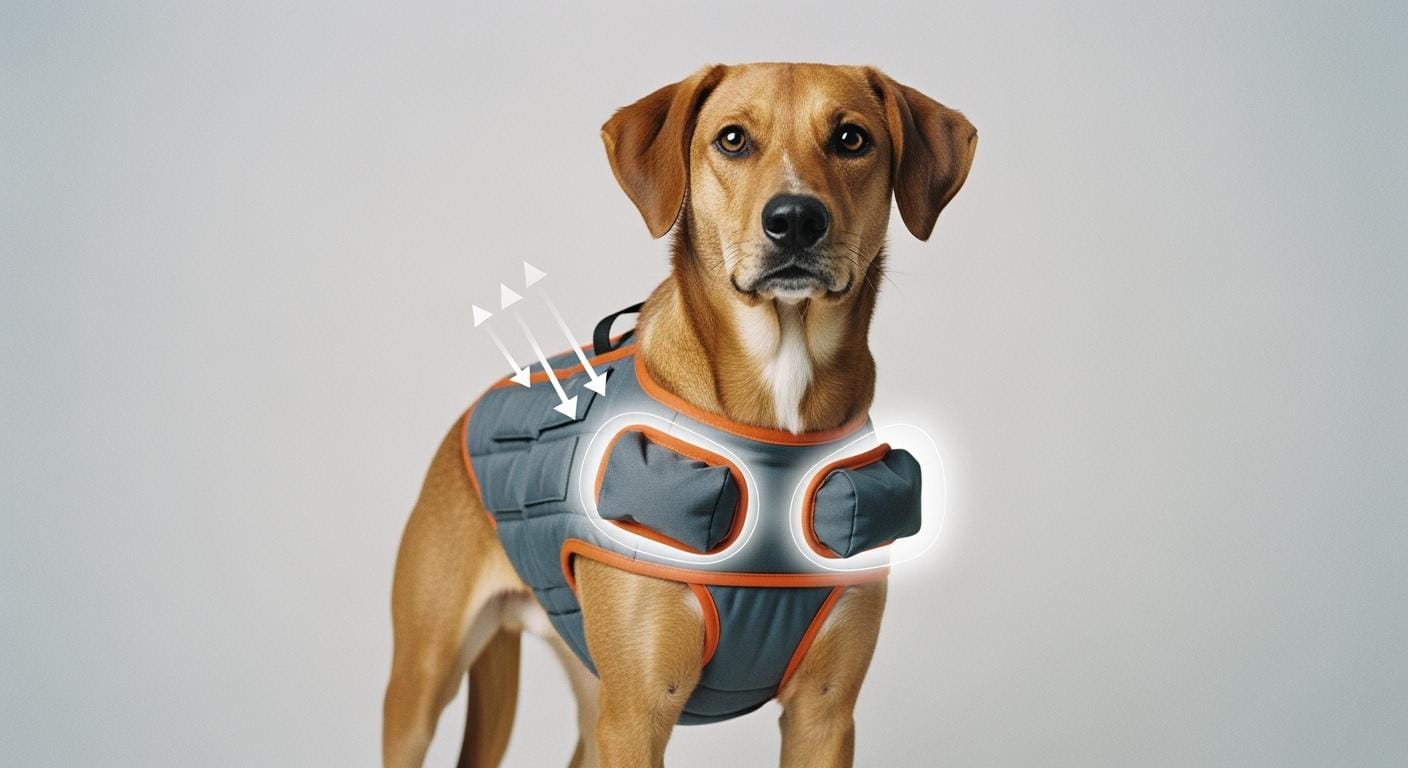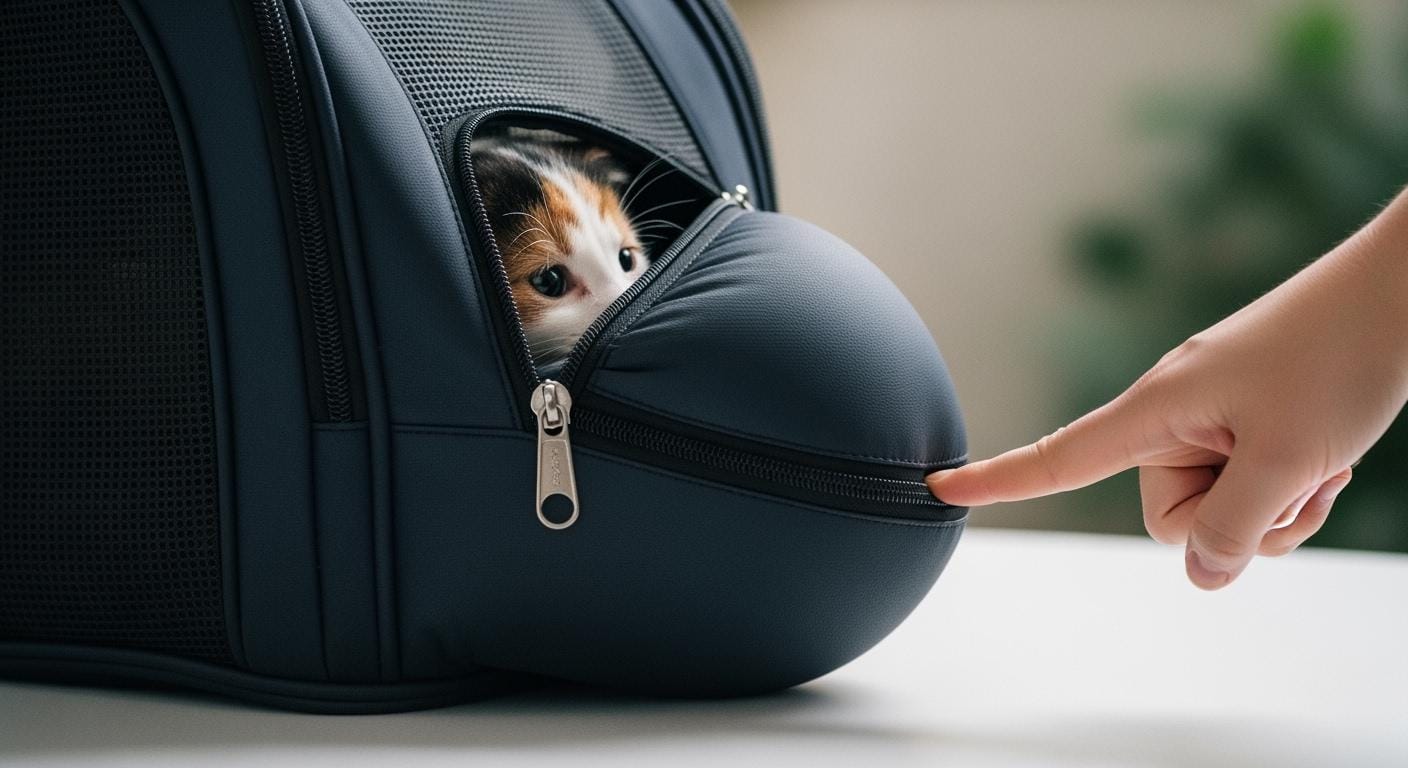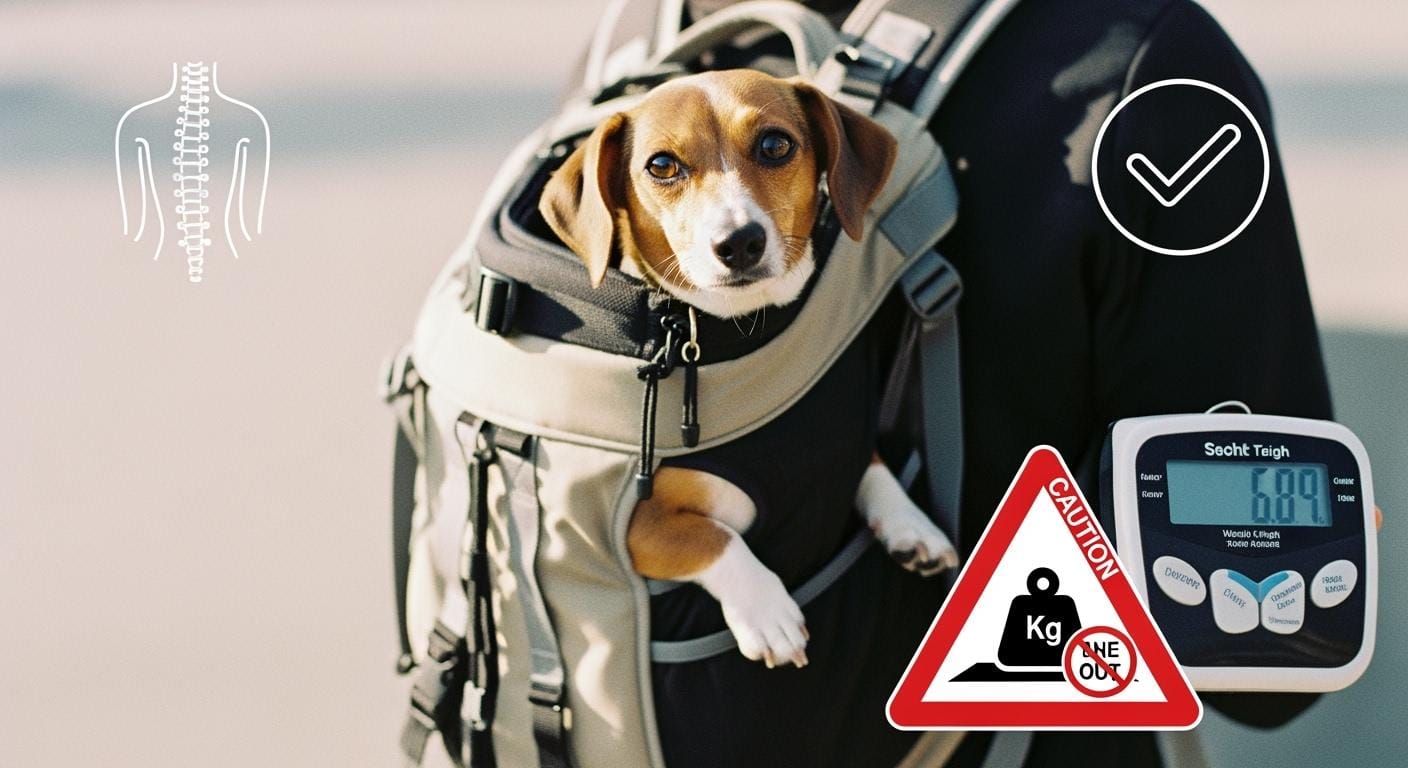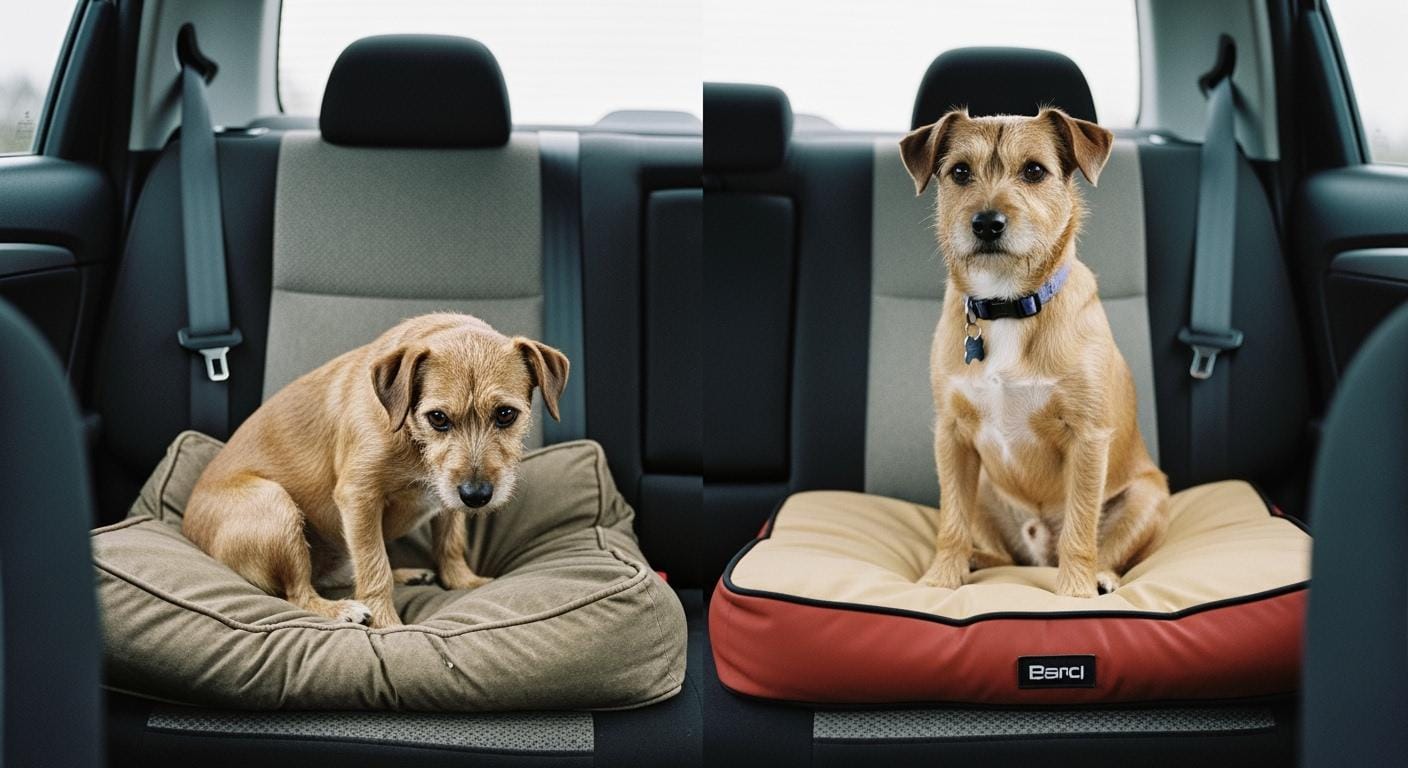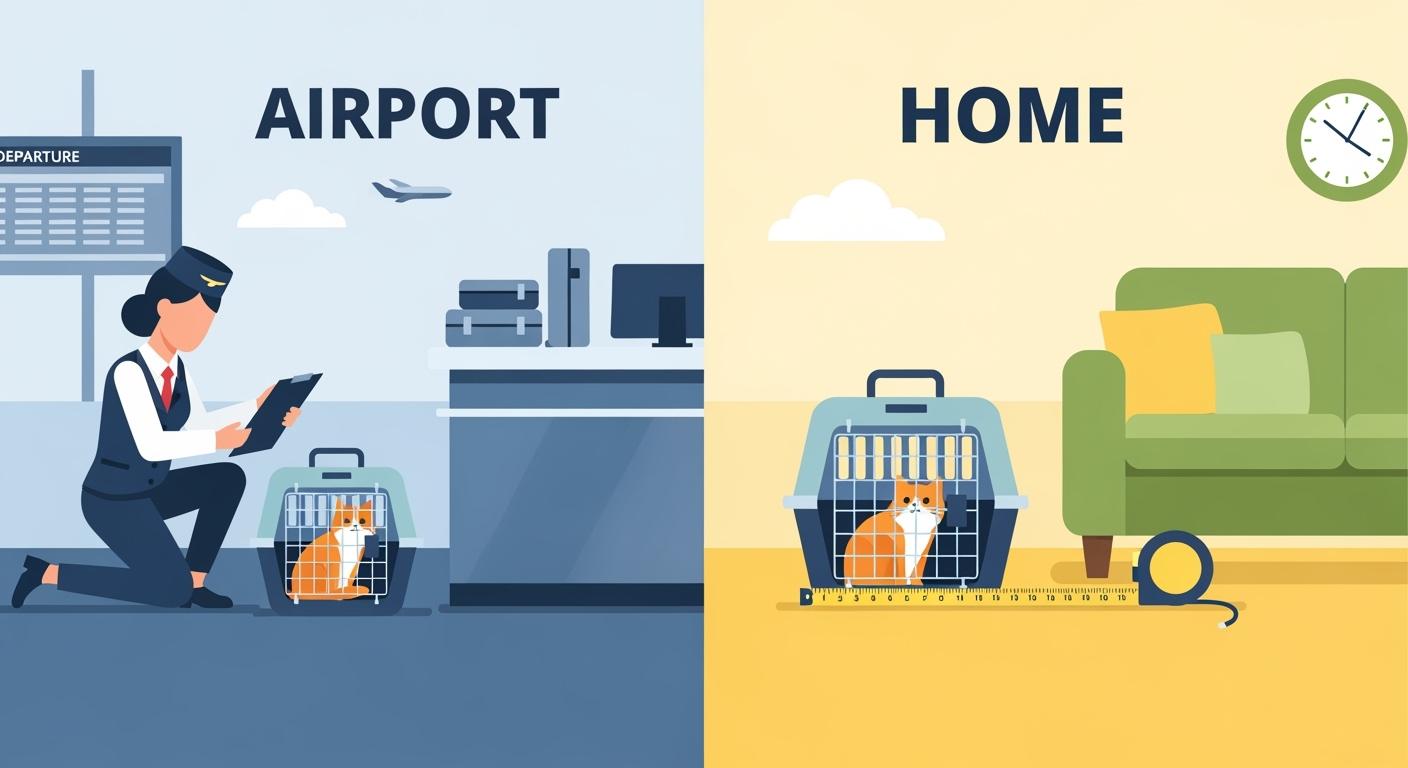
A carrier that works at home may still fail during airline travel. At home, you mainly see whether your pet enters, rests, and feels calm. At the airport, the same carrier must also handle under-seat fit, security screening, zipper stress, ventilation, base support, and airline paperwork checks. Pet carriers for airlines should be judged by the whole travel path, not just by whether your pet fits inside on the living room floor.
Key Takeaways
- Airline pet carriers need more than a comfortable home fit. Look for strong mesh, secure zippers, a steady base, and enough structure for travel-day handling.
- Check the exact airline rules before booking and again before travel. Under-seat space, paperwork, and pet policies can vary by route, aircraft, and airline.
- Practice the airport sequence at home: entry, carrying, waiting, removing your pet for screening, and re-settling inside the carrier.
Why Home Fit Fails for Pet Carriers for Airlines
Airline pet carrier rules vs. home use
You may think your pet carrier is fine at home. That does not mean it is ready for airline travel. A home-use carrier can be comfortable, roomy, and easy to clean, but still be too tall, too soft, too unstable, or too hard to manage at the airport.
Airline travel adds several checks. Your pet should have enough room to stand, turn, sit, and lie naturally inside the carrier. The carrier also needs to fit the airline’s in-cabin space rules if your pet travels under the seat. Because those rules are enforced by the airline, do not rely on generic “airline approved” wording alone.
| Feature | Airline Pet Carrier | Typical Home-Use Carrier |
|---|---|---|
| Fit standard | Must match pet space needs and airline under-seat limits | Mainly judged by comfort and short home handling |
| Base support | Should stay steady when carried, lifted, and placed down | May only need to sit on the floor or in a car |
| Ventilation | Must stay open when the carrier is under a seat or in a waiting area | Usually easier to monitor in open home spaces |
| Closure security | Zippers and openings must resist stress during screening and waiting | Less exposed to airport noise, handling, and escape pressure |
| Paperwork | May require airline, destination, or health documents | No airline check-in documents needed |
Common reasons carriers fail at the airport
Many carriers fail because owners check only one thing: whether the pet can get inside. Airport use adds more pressure. A carrier that sags when lifted can reduce usable space. A zipper that works at home may jam when the pet scratches or pushes at the opening. A soft side that compresses too much may make the carrier fit under the seat but leave the pet with poor posture.
| Failure Point | What Happens | Fast Check | Fix |
|---|---|---|---|
| Wrong dimensions | Carrier may not fit the airline’s under-seat space | Compare carrier size with the selected airline’s current rule | Confirm before booking and before travel |
| Sagging base | Pet slides, crouches, or loses usable height | Carry the loaded carrier for several minutes | Use a firmer base or choose a more structured carrier |
| Weak mesh | Claws, stress, or pressure may damage ventilation panels | Inspect mesh after practice sessions | Choose stronger mesh and stop using damaged carriers |
| Unreliable zippers | Pet may push, claw, or create an escape gap | Close every zipper and test gentle pressure from inside | Use secure zipper pulls or replace poor closures |
| Missing documents | Check-in or boarding may be delayed or refused | Review airline and destination requirements | Prepare documents before travel day |
Carrier comparison table: soft, structured, rolling
Picking the right pet carrier for airlines means knowing what each type does best. Use this table to choose by travel situation, not by product photos alone.
| Carrier Type | Use Case | Main Benefit | Main Watchout | Who Should Skip It |
|---|---|---|---|---|
| Soft Airline Carrier | In-cabin travel with small pets | More flexible for under-seat placement | Can sag or compress if structure is weak | Pets that chew, claw, or need stronger side support |
| Structured Soft Carrier | In-cabin travel where base support matters | More stable shape and better floor support | May not compress enough for tight spaces | Very tight under-seat routes or oversized pets |
| Rolling Carrier | Long airport walking before check-in or boarding | Reduces lifting effort for the handler | Can be heavier, bulkier, and harder to fit under a seat | Travelers who need the most compact in-cabin setup |
Mistakes with real consequences
Many airport problems start with small assumptions. A product page may say travel-ready, but the airline may still reject the carrier if it does not meet that flight’s requirements. A pet may rest calmly inside at home but panic after screening, when noise, handling, and unfamiliar smells change the situation.
- You pick by outside size but forget to check whether your pet can still sit, turn, and lie naturally inside.
- You choose a flexible carrier that fits under a seat but collapses too much when your pet moves.
- You test the carrier empty instead of carrying it with your pet inside.
- You do not practice removing your pet and putting them back in after screening.
- You rely on old airline screenshots instead of checking the current flight policy.
Tip: Treat “airline approved” as a starting claim, not final proof. Always check the selected airline’s current pet policy and test the carrier with your pet inside.
Travel Day Changes: Handling Your Airline Pet Carrier

Entry, security, and waiting
You start your airport journey by checking your pet’s comfort and carrier fit. At security, your pet will need to come out of the carrier while the empty carrier is screened. That is why carrier training must include more than entry and exit at home.
Practice holding or controlling your pet calmly outside the carrier, then helping them re-enter without panic. If your pet is likely to bolt, scratch, or freeze, ask the airline or airport staff about safer screening help before travel day.
Re-settling after screening
After screening, pause before rushing to the gate. Check the carrier base, mesh, zippers, and vents. Make sure the pet has not shifted the liner, blocked airflow, or damaged an opening. Re-settling matters because a pet that refuses the carrier after screening can create a stressful delay.
Use a familiar blanket or soft liner if allowed and practical. Keep the carrier dry, stable, and ventilated. Avoid overfilling pockets or placing heavy items against ventilation panels.
This is not medical advice. If your pet has breathing problems, heat sensitivity, serious anxiety, or travel-related health concerns, ask your veterinarian before flying.
Pass/Fail checklist table: choose the right carrier
| Check Item | Pass Signal | Fail Signal | Fix |
|---|---|---|---|
| Entry and exit | Pet enters, exits, and re-enters without panic | Pet freezes, bolts, claws, or refuses re-entry | Practice short carrier sessions before travel |
| Base support | Base stays flat when loaded and carried | Base sags, tilts, or makes pet crouch | Use stronger support or replace the carrier |
| Zipper closure | All openings close smoothly and stay secure | Zipper sticks, gaps, or opens under pressure | Repair or replace before flying |
| Ventilation | Mesh stays open and unblocked | Mesh is blocked, torn, bent, or pressed closed | Repack pockets and choose better ventilation |
| Under-seat readiness | Carrier size matches the airline’s current rule | Carrier is too tall, too long, or too rigid | Confirm with the airline before travel |
| Paperwork | Required documents are ready and accessible | Health, import, or airline documents are missing | Prepare documents before check-in day |
Troubleshooting table: fast fixes
| Symptom | Likely Cause | Fast Check | Fix |
|---|---|---|---|
| Pet anxious after security | Noise, handling, unfamiliar smells, or rushed re-entry | Watch for refusal, clawing, hiding, or heavy breathing | Pause in a quieter area and re-settle calmly |
| Carrier sags | Weak base or overloaded pockets | Carry the loaded carrier and watch the floor line | Remove excess items or use a firmer carrier |
| Mesh tears | Clawing, stress, weak material, or sharp contact | Inspect every mesh panel before boarding | Do not fly with damaged containment |
| Strap loosens | Worn hardware or poor adjustment | Tug the strap gently while loaded | Re-secure or replace before travel |
| Accident in carrier | Stress, delay, or long wait time | Check liner, odor, and pet comfort | Replace liner and keep the pet dry and calm |
You can choose the right carrier by testing these steps before your trip. Focus on the full airport path: home practice, check-in, screening, waiting, boarding, and under-seat placement.
Failure Signs: When Home Fit Is Not Enough
Refusal to re-enter
Your pet may enter the carrier calmly at home but refuse after airport screening. That does not always mean the carrier is wrong, but it is a warning sign. Check whether the base has shifted, the liner smells different, the zipper path feels tight, or the pet is already over-stressed.
If refusal repeats, do not force the pet into a stressful struggle. Find a quieter spot if possible, reset calmly, and reassess whether your pet is ready for this travel setup.
This is not medical advice. Ask your veterinarian if your pet shows ongoing stress, breathing problems, heat signs, or unusual weakness.
Zipper stress and vent blockage
Zippers and mesh are small details until they fail. A stressed pet may push the zipper, claw the mesh, or press against a vent. If a zipper opens a gap or a mesh panel bends inward, the carrier is no longer reliable enough for airline travel.
Ventilation should remain usable when the carrier is carried, placed under the seat, and held during waiting. Do not block mesh panels with documents, jackets, pocket items, or soft liners.
Sagging base and restless movement
A sagging base changes the usable size of the carrier. Your pet may technically fit inside, but still crouch, slide, or lean because the floor is unstable. Restless movement can then make the carrier feel less secure and increase zipper or mesh pressure.
Press the base before travel, then carry the loaded carrier at home. If the pet cannot stay level, the carrier is not ready for the airport.
When to choose a different carrier
Choose a different carrier when the same fail sign returns after basic adjustments. Do not rely on temporary patches, tape, or forced compression for airline travel. A better carrier should fit the airline rule, support your pet’s posture, stay ventilated, and let you manage screening without panic.
| Failure Sign | Why It Matters | Better Direction |
|---|---|---|
| Pet cannot sit, turn, or lie naturally | Home comfort does not meet travel-space needs | Recheck internal dimensions and pet posture |
| Carrier barely fits under-seat rules | Small airline or aircraft differences may create problems | Confirm with the airline before booking |
| Mesh or zipper fails during practice | Containment may fail during airport stress | Replace the carrier before flying |
| Pet overheats or breathes poorly | Carrier ventilation or pet health may not fit travel conditions | Stop use and ask your veterinarian for advice |
Pet carriers for airlines should pass more than a home comfort check. Confirm the airline’s current rule, test the loaded carrier, practice screening steps, protect ventilation, and prepare documents before travel day. If the carrier sags, blocks airflow, creates zipper gaps, or makes your pet panic, choose a better travel-ready setup before you reach the airport.
FAQ
What should you do if your pet carrier does not fit under the seat at the gate?
Ask airline staff for help immediately. You may need a different travel arrangement, and options can be limited at the gate. To reduce this risk, confirm the carrier size with your airline before booking and again before travel.
How can you keep your pet calm during airport security checks?
Practice taking your pet in and out of the carrier at home. Use calm handling, a familiar liner, and short practice sessions. At the checkpoint, keep control of your pet while the empty carrier is screened.
This is not medical advice. Ask your veterinarian for health or anxiety concerns before flying.
What if your pet refuses to re-enter the carrier after screening?
Stay calm and avoid forcing the pet into a struggle. Move to a quieter spot if possible, check the carrier for odor, base sag, zipper problems, or poor airflow, and offer a familiar item or treat. If the pet remains distressed, ask airport or airline staff for help.