
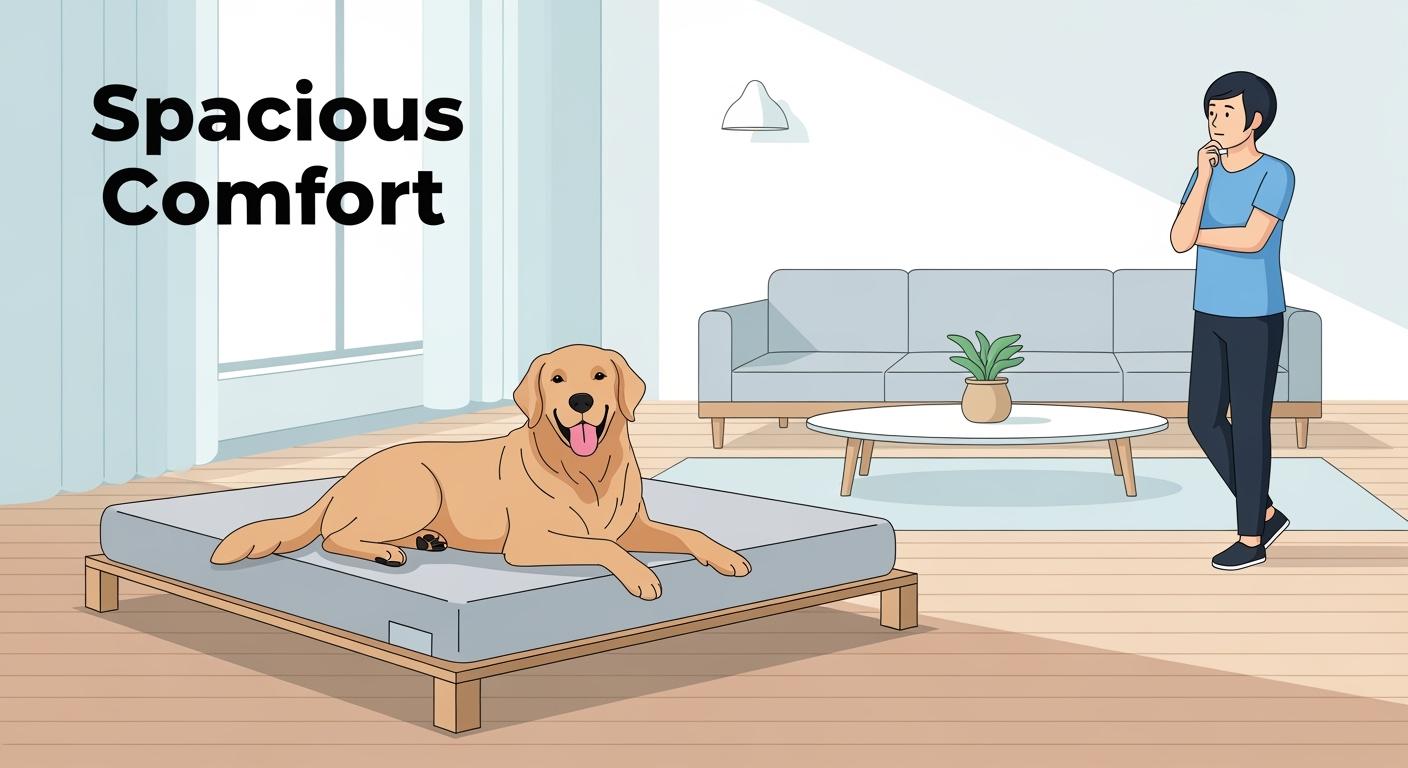
A raised dog bed extra large can give a big dog more usable stretch room, but only if the bed also fits your home. The real question is not “larger is better.” It is whether your dog actually uses the full surface without hanging off the edge, and whether the frame still leaves enough walkway space, cleaning access, and stable footing around it. If the bed blocks daily movement or your dog only uses one corner, extra size may be solving the wrong problem.
Key Takeaways
- An extra large raised dog bed gives your dog more room. It works best for dogs that sprawl, stretch, or keep sliding off smaller beds.
- Measure the bed footprint before buying. A good bed should not block doorways, narrow walkways, furniture paths, or cleaning tools.
- Watch real use after setup. If your dog avoids the bed, crowds one edge, or struggles to get on and off, a different size or bed style may fit better.
Raised Dog Bed Extra Large: When More Space Helps
Signs your dog needs extra room
You may notice your dog stretching out with the front legs extended, changing sleep positions often, or letting the head, hips, or paws hang over the edge of the current bed. Some large dogs do not curl tightly when they rest. They need enough surface to lie flat, roll slightly, and reposition without falling off the frame.
A raised dog bed extra large can help when the current bed is too narrow, too short, or too unstable under your dog’s movement. But the extra size should create usable sleep space, not just a larger frame. If your dog still chooses the floor after trying the bed, the issue may be height, surface feel, wobble, or location rather than size alone.
Sleep styles that benefit most
Extra-large raised beds usually make the most sense for large or giant dogs that sprawl, side-sleep, or shift positions during rest. They can also help dogs that prefer airflow under the bed, especially in warmer rooms, patios, or outdoor rest areas.
For dogs with stiffness, soreness, or trouble rising, do not assume a raised bed is automatically better. Watch whether your dog steps on and off easily, rises without hesitation, and moves normally after rest. If your dog shows stiffness, limping, reluctance to climb, or trouble getting up, ask your veterinarian for guidance before changing bed style.
Note: This article helps with bed-size judgment. It does not provide medical advice. If your dog shows pain, stiffness, or mobility changes, talk to your veterinarian.
Comparison table: extra large raised bed, large raised bed, floor bed
Choose by usable sleep space, not only by the listed product size.
| Bed Type | Best Use Case | Main Benefit | Main Watchout | Who Should Skip It |
|---|---|---|---|---|
| Raised Dog Bed Extra Large | Big dogs that sprawl, stretch, or hang off smaller beds | More usable stretch room and better airflow under the bed | Large footprint can block walkways or make cleaning harder | Dogs that curl tightly, avoid height, or live in tight rooms |
| Large Raised Dog Bed | Large dogs that need moderate stretch space | Better fit for more rooms while still lifting the dog off the floor | May still feel short or narrow for giant sprawlers | Dogs that consistently hang off the edge |
| Floor Bed | Dogs that want softness, low entry, or enclosed edges | Easier access and more cushion options | Less airflow and more floor contact | Dogs that need a cleaner patio setup or cooler raised surface |
An extra large raised bed is worth choosing when the extra surface changes how your dog rests. If the bed only adds unused corners or crowds the room, a smaller raised bed or a different bed style may be the better match.
Elevated Dog Bed Footprint: Home Impact
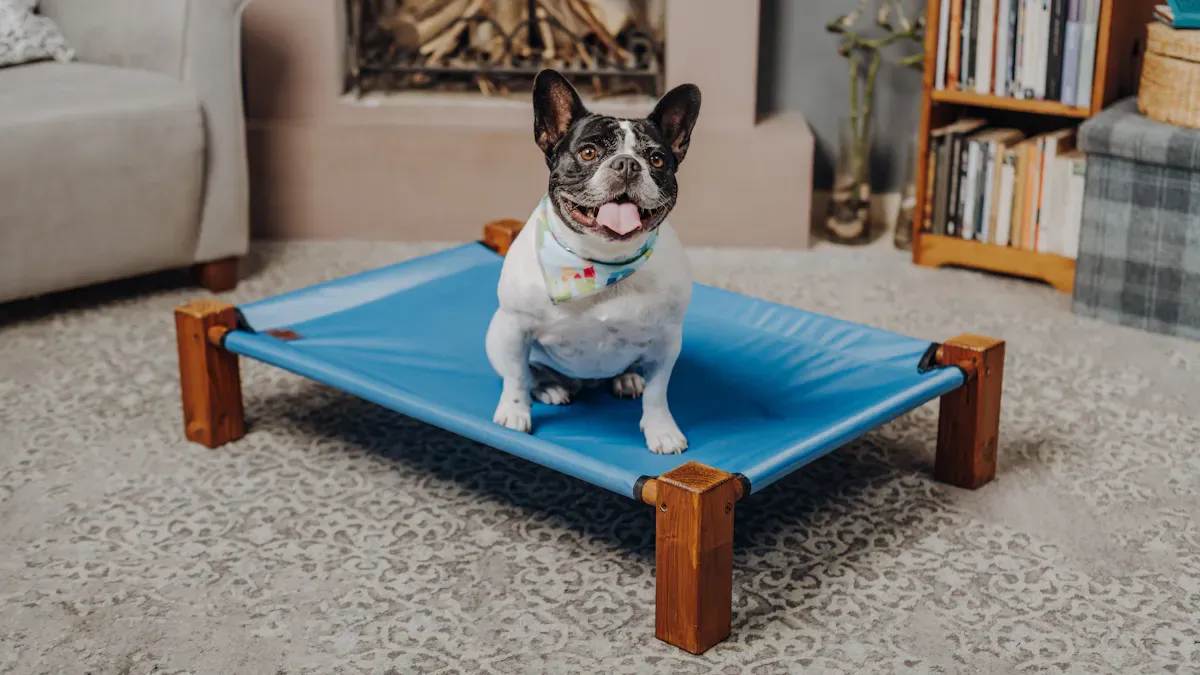
Measuring floor space and walkways
Before you choose an extra large raised dog bed, mark the footprint on the floor with tape, cardboard, or a blanket. Leave it there for a day and walk around it during normal routines. Carry laundry, open doors, move around furniture, and check whether people step over the outline instead of walking around it naturally.
A cooling elevated dog bed often has a visible frame, so you need to check more than sleeping-surface length. This means you need to check both the length and width, plus the space under and around the bed. The frame should not create toe-stub points, block doorways, or make the room harder to clean.
Tip: If the taped outline already feels annoying before the bed arrives, the real frame will probably feel even larger.
Cleaning and daily reset with a large frame
A raised bed can make floor cleaning easier because air and tools can reach under it. That benefit disappears if the frame is too low, too wide, or too heavy to move when needed. Check whether your vacuum, mop, or broom can reach under the bed without lifting the whole frame.
Large frames can collect dust and hair under the bed. Follow the bed’s care label, wipe the frame as needed, and let washable parts dry fully before reuse. Clean more often when your dog sheds heavily, tracks in dirt, uses the bed outdoors, or leaves odor or moisture on the surface.
Pass/Fail checklist table: fit and flow
Use this checklist after placing the bed in the actual room.
| Check Item | Pass Signal | Fail Signal | Fix |
|---|---|---|---|
| Dog stretch space | Dog can lie flat without hanging off the frame | Head, hips, or legs still fall outside the bed | Recheck usable surface, not just outside dimensions |
| Walkway flow | People can pass without stepping over the frame | Family trips, detours, or squeezes past it | Move the bed or choose a smaller footprint |
| Frame stability | Bed stays level when dog steps on and turns | Rocks, slides, or flexes under weight shift | Level the floor contact points or change frame style |
| Cleaning access | You can sweep, vacuum, and wipe around it easily | Hair and dust collect under hard-to-reach areas | Move to a more open spot or choose an easier-clean frame |
| Dog adoption | Dog chooses the bed and settles naturally | Dog avoids it, sleeps beside it, or only uses one corner | Check height, surface feel, location, and bed size |
Troubleshooting table: common space issues
If the bed feels wrong after setup, use this table before replacing it.
| Symptom | Likely Cause | Fast Check | Fix |
|---|---|---|---|
| Blocked walkway | Bed footprint is too large for the room path | Walk past while carrying something bulky | Move the bed to a wall zone or downsize |
| Dog avoids bed | Surface feels too firm, frame wobbles, or height feels awkward | Press corners and watch entry behavior | Stabilize the frame, add a thin comfort layer, or try lower access |
| Hard to clean under bed | Frame is too low, too heavy, or placed too tightly | Try your normal vacuum or broom | Move it forward from the wall or choose a more open frame |
| Unused corners | Bed is larger than the dog’s real sleep outline | Watch where your dog actually lies for several days | Choose a smaller size or different shape |
| Odor or stains stay | Cover or frame traps moisture and dirt | Check corners, fabric tension, and underside | Clean by label instructions and dry fully before reuse |
Tip: A raised bed should improve both dog comfort and home flow. If one gets worse, adjust the location, size, or style.
Best Elevated Dog Bed Fit: Failure Signs and Fixes
Common mistakes and real consequences
The most common mistake is buying the largest available bed without checking how your dog actually sleeps. A huge frame may look generous, but it can waste floor space if the dog curls in one corner. Another mistake is choosing a raised bed for “joint support” without checking whether the dog can step on and off comfortably.
Here are the real problems that show up when the size or style is wrong:
| Problem | What It Usually Means |
|---|---|
| Dog avoids the bed | The height, wobble, surface feel, or location may not feel safe or comfortable. |
| Dog only uses one corner | The bed may be larger than the dog’s real sleep pattern requires. |
| Family trips over frame | The footprint does not fit the room’s natural walking path. |
| Dog is stiff after rest | The bed may not match the dog’s comfort needs, or there may be a mobility issue to discuss with a vet. |
Note: If your dog shows pain, limping, stiffness, or reluctance to get up, contact your veterinarian. This guide does not replace medical advice.
Spotting and fixing a poor fit
You can spot a poor fit by watching both the dog and the room. For your dog, look for edge crowding, unstable stepping, repeated circling, or choosing the floor instead. For your home, look for blocked paths, difficult cleaning, or furniture that has to be awkwardly moved around the bed.
Try simple fixes first. Move the bed to a quieter wall area. Check frame stability. Add a thin washable comfort layer if the surface feels too firm. Give your dog a few calm chances to use it without pressure. If the same problem continues, the bed is probably the wrong size, height, or style.
When to downsize or change bed style
Downsize when your dog does not use the extra surface, when the bed blocks normal movement, or when cleaning becomes harder than before. Change bed style when the dog avoids the height, dislikes the surface tension, or needs softer support than a raised frame can provide.
A smaller raised bed may still give enough airflow and cleaner floor separation. A floor cushion may be better for dogs that need low entry or softer contact. A bolster bed may work better for dogs that like edges and leaning support. The right bed is the one your dog uses comfortably and your home can live with every day.
Choose a raised dog bed extra large when your dog genuinely needs more stretch room and your home has enough clear floor space for the frame. Measure the dog’s sleep outline, mark the bed footprint in the room, and watch real use after setup. If the bed creates unused corners, blocked walkways, difficult cleaning, or hesitant entry, a smaller raised bed or a different bed style may be the better choice.
FAQ
How do you keep an extra large raised dog bed clean?
Follow the care label first. Brush off hair and dirt, wipe the frame, wash removable fabric when needed, and let every part dry fully before reuse. Clean more often if the bed is used outdoors, smells, or collects visible dirt.
How do you know if an extra large raised bed is too big?
It is probably too big if your dog uses only one corner, the bed blocks a walkway, people step over the frame, or cleaning around it becomes difficult. Extra room only helps when your dog actually uses it.
What makes a raised dog bed truly washable?
A washable raised bed should have removable or easy-clean fabric, a frame you can wipe down, and corners that do not trap dirt. It should also dry fully before your dog uses it again.
Note: Always ask your vet if you see health changes in your dog. This FAQ does not give medical advice.






