
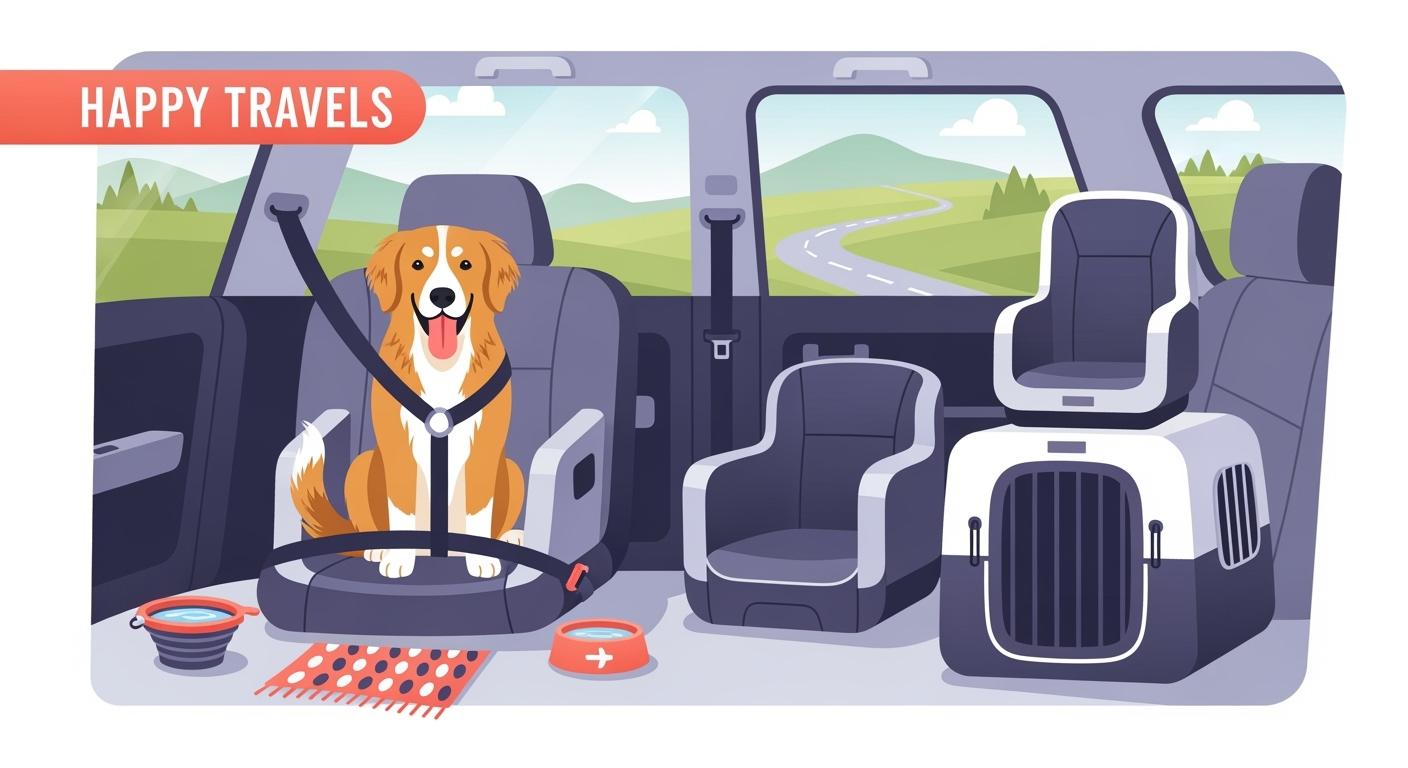
A dog travel car seat can make short drives calmer and longer rides more organized, but it should not be treated as a complete safety system by itself. A travel seat mainly helps with position, comfort, and reducing loose movement inside the car. For safer travel, you still need rear-seat placement, a secure restraint path, a harness or carrier setup that matches your dog, and enough room for your dog to settle without sliding, twisting, or overheating.
Key Takeaways
- Choose a dog travel car seat that fits your dog’s size and your car. A secure seat helps keep your dog more settled during short trips, but the seat must stay stable once the car moves.
- Attach travel tethers only to a suitable harness, not to a collar. A collar connection can create neck pressure if the dog shifts, braces, or the car stops suddenly.
- For longer rides, do not judge by padding alone. Check turning room, airflow, restraint access, rest breaks, and whether your dog can stay calm after the first part of the drive.
Dog Travel Car Seat for Short Trips
Quick trip comfort and setup
You want your dog to feel secure and calm during short drives, such as errands, vet visits, grooming appointments, or quick family stops. A dog travel car seat can help when the dog is small enough for the seat, the seat anchors firmly, and the dog does not spend the whole ride trying to climb out.
Start by placing the seat in the rear seat and anchoring it with the vehicle seat belt or included straps. Then check whether the seat tips, slides, or collapses when you press lightly from different angles. Clip the tether to your dog’s harness, keep the tether short enough to reduce roaming, and make sure it does not twist around the dog’s legs or pull upward at an awkward angle.
If your dog is new to car seats, let them explore the setup before the first real drive. A few calm minutes in the parked car can tell you whether the seat feels stable, whether the dog accepts the height, and whether the harness path is easy to manage.
Tip: A short-trip seat should be quick to install, easy to check, and stable enough that you are not fixing it again after every turn.
Comparison: car seat vs rear bed vs carrier
Choosing the right setup depends on your dog’s size, behavior, and how much movement control the trip needs. A dog car seat is useful for smaller dogs that settle when they have a defined space. A rear bed works better for calm dogs that prefer lower, flatter rest. A secured carrier or crate is often better for dogs that need fuller containment or feel safer in an enclosed setup.
| Option | Best Use Case | Main Benefit | Main Watchout | Who Should Skip It |
|---|---|---|---|---|
| Dog travel car seat | Short errands, vet visits, smaller dogs that like a defined spot | Helps reduce roaming and gives the dog a set ride position | Not crash protection by itself; must not block restraint routing | Large dogs, dogs that panic when elevated, or dogs that keep climbing out |
| Rear-seat bed | Calm dogs, lower rest position, short naps | Lower profile and easier lie-down comfort | Can allow too much movement if not paired with a suitable restraint | Jumpers, restless dogs, or dogs that need stronger containment |
| Secured carrier/crate | Nervous dogs, dogs needing fuller containment, multi-stop travel | More complete containment and less roaming | Can feel warm or stressful if poorly sized or poorly ventilated | Dogs that panic in enclosed spaces without gradual practice |
A dog car seat can be a good short-trip answer when it keeps the dog in one stable zone and does not interfere with the harness. A rear-seat bed is better when the dog needs lower comfort. A carrier or crate is better when containment matters more than view.
| Benefit/Drawback | Description |
|---|---|
| Position Control | A car seat can keep a small dog in a more predictable place instead of roaming across the cabin. |
| Comfort | A defined, padded space can help some dogs settle during quick drives. |
| Reduced Distractions | A more contained dog is less likely to move into the driver’s space or shift around the car. |
| Limitations for Larger Dogs | Many travel seats are not practical for larger dogs because of size, weight, and turning-room limits. |
| Potential Anxiety | Some dogs dislike elevation, side walls, or a new restraint angle. |
| Preference for Lower Beds | A lower bed may work better for dogs that curl up, sprawl, or feel uneasy when raised. |
Checklist: short trip readiness
Before you head out, use this checklist to make sure your dog is ready for a safer and calmer ride. Check each item before the car starts moving.
| Check Item | Pass Signal | Fail Signal | Fix |
|---|---|---|---|
| Dog travel car seat secured | Seat stays flat and does not tip when pressed | Seat slides, tips, or rotates | Re-anchor seatbelt and straps before driving |
| Harness attached to tether | Tether clips to a fitted harness with a clean path | Tether clips to collar, tangles, or has too much slack | Attach to harness only and shorten or re-route the tether |
| Dog calm and settled | Dog can sit or lie without fighting the setup | Dog paces, climbs, whines, or keeps twisting | Pause, reduce the trip difficulty, and practice in the parked car |
| Essentials packed | Leash, ID, water, waste bags, and needed documents are ready | Missing items create rushed handling later | Pack before loading the dog |
| Short walk before drive | Dog has had a chance to relieve and settle | Dog is restless before loading | Take a short calm walk first |
For short drives, the goal is a smooth load-in, stable seat placement, and a dog that can stay calm until you arrive. If the setup creates stress before you leave the driveway, make the next trip easier instead of assuming your dog will adjust during the ride.
Common mistakes on short drives
Many owners make simple mistakes that affect safety and comfort during short trips. Avoid these common errors:
- Letting your dog roam free in the car, which increases distraction and movement risk.
- Skipping a short walk before the drive, especially for dogs that get restless fast.
- Feeding right before travel when your dog already tends to feel carsick.
- Not securing the car seat or harness path before driving.
- Assuming a dog will adjust to a new car seat without gradual practice.
- Ignoring travel stress signs such as heavy panting, pacing, drooling, or freezing.
Note: If your dog shows signs of motion discomfort, heat stress, anxiety, or breathing trouble, stop and check your dog. Ask your veterinarian for guidance when symptoms continue.
Safety boundaries for short trips
Use the rear seat whenever possible and keep your dog away from the driver’s lap, footwell, and front-seat airbag zone. A dog travel car seat can help with comfort and position, but it should not be treated as crash protection on its own. The restraint path, harness fit, seat stability, and vehicle placement all matter.
Dog Car Seat Comfort on Longer Travel
Features for long ride comfort
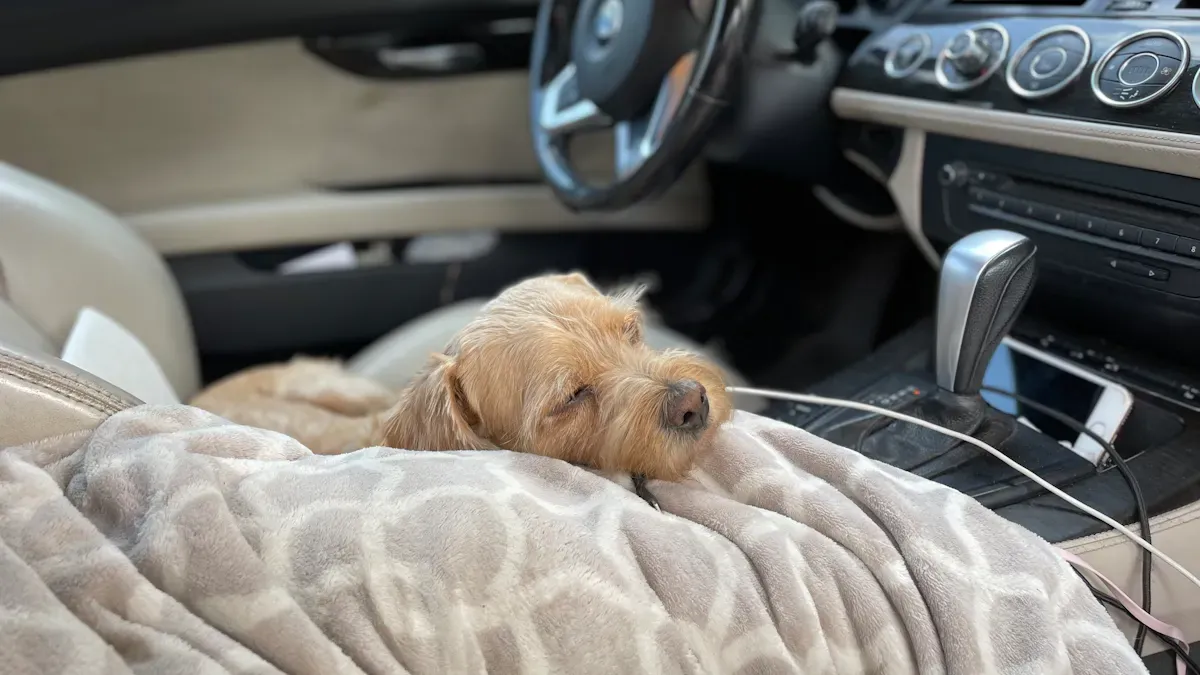
You want your dog to feel good on long trips. Long rides ask more from the setup than short errands do. Your dog needs enough room to change posture, enough airflow to avoid overheating, and enough stability that the seat does not slide or shake every time the car turns. Padding helps, but padding alone cannot fix poor size, poor restraint routing, or a seat that keeps moving under the dog.
| Feature | Benefit |
|---|---|
| Supportive padding | Helps the dog stay comfortable during longer rest periods without sinking into an unstable base. |
| Secure attachment | Helps the seat stay planted so the dog does not keep bracing against movement. |
| Usable size | Lets the dog turn, lie down, and adjust posture without fighting the walls. |
| Washable cover | Makes cleanup easier after drool, dirt, shedding, or rest stops. |
| Breathable materials | Helps reduce heat buildup when the trip is longer or the weather is warm. |
Pick a seat that gives your dog enough support without blocking the harness path. Choose covers that are practical to clean and materials that do not trap too much heat. The right size lets your dog stretch out and relax.
Tip: Let your dog try the seat before a long trip. A short parked-car session and a short practice drive are more useful than discovering the problem halfway through the journey.
Comparison: seat vs bed vs carrier for long trips
You need to pick the best setup for your dog’s needs on long trips. A dog car seat may work for smaller dogs that like a defined space. A rear bed may feel better for calm dogs that want lower, flatter rest. A carrier or crate may be better when containment and predictability matter most.
| Feature | Dog Car Bed | Dog Car Seat | Carrier/Crate |
|---|---|---|---|
| Comfort | Lower, softer rest area for calm dogs | Defined seat space, sometimes elevated | Enclosed and predictable if the dog is crate-comfortable |
| Safety Role | Mostly comfort unless paired with proper restraint | Mostly position and distraction reduction; not crash protection by itself | More complete containment when properly secured and sized |
| Ideal for Long Trips | Often good for relaxed dogs that need rest space | Works for dogs that stay settled in a defined seat | Works when the dog is used to the crate or carrier |
| Padding | Usually softer and more bed-like | Varies by model and wall height | May need a washable liner or fitted mat |
| Cleaning | Depends on cover design and moisture control | Often easier when covers remove cleanly | Easier if liner and base can be cleaned separately |
Do not choose only by softness. For long rides, the setup also needs airflow, a clean restraint path, and enough room for the dog to settle without repeated shifting. A dog that never stops repositioning may need a different setup, not just more padding.
Troubleshooting: discomfort or restlessness
Watch your dog for signs of discomfort on long trips. Heavy panting, drooling, whining, repeated shifting, freezing, or trying to climb out can all mean the setup is failing or the trip is too hard for your dog at that stage.
| Symptom | Likely Cause | Fast Check | Fix |
|---|---|---|---|
| Excessive panting | Heat, stress, or poor airflow | Check cabin temperature, sun exposure, and ventilation | Stop, cool the car, offer water, and reassess the setup |
| Restlessness | Cramped space, unstable seat, or poor padding | Watch whether the dog can turn and lie down normally | Use a better-sized setup or lower, more stable rest area |
| Whining or whimpering | Stress, unfamiliar setup, or restraint discomfort | Check harness path, tether angle, and body position | Practice shorter rides and correct the restraint path |
| Freezing/refusing to move | Anxiety, motion discomfort, or poor acclimation | Notice whether the dog relaxes before the car starts | Gradually acclimate and reduce trip difficulty |
- Make sure your dog is secured in a way that does not twist, tangle, or press on the neck.
- Stop often enough for your dog to stretch, drink, and reset.
- Keep the car comfortable, shaded, and ventilated, especially in warm weather.
Note: If your dog seems sick, too hot, has trouble breathing, or is very anxious, stop your trip and contact your vet. This blog does not give medical advice.
Mistakes to avoid on long rides
You want your dog to be safe and comfortable on long trips. Try not to make these mistakes:
- Picking a seat with thin padding when your dog needs longer rest support.
- Not attaching the seat firmly enough, which lets it slide and creates stress.
- Using a seat that is too small for turning and lying down.
- Ignoring washable covers when your dog drools, sheds, or gets dirty during stops.
- Skipping breaks and expecting your dog to stay settled for the entire route.
- Letting your dog ride in the front seat or near airbags.
- Not checking cabin temperature, sun exposure, and airflow.
- Waiting until the long trip to test a new seat for the first time.
Alert: Keep your dog in the rear seat with an appropriate harness, secured carrier, or crate setup. Never leave your dog alone in a parked car.
You can help your dog feel better by choosing a stable setup, enough room, washable materials, and planned breaks. Comfort and safety work together only when the dog can stay settled in the actual car environment.
Signs Your Travel Setup Fails
Warning signs of poor fit or comfort
Watch your dog closely every time you drive. A travel setup may be failing if your dog pants heavily, drools more than usual, keeps shifting, tries to climb out, or cannot lie down without fighting the restraint. If the dog tries to reach the front seat, slides during stops, or avoids the seat on the next trip, treat that as useful feedback.
Also watch for heat signs. Seeking shade, slowing down, thick saliva, heavy panting, or restlessness in a warm car can mean the dog needs cooling and a setup change.
Note: If your dog seems sick from motion, heat, or breathing stress, stop and check them. Ask your vet for help if signs continue.
Checklist: ongoing comfort and safety
Check these things before every trip to keep your dog safer and more comfortable.
| Check Item | Pass Signal | Fail Signal | Fix |
|---|---|---|---|
| Seat stability | Seat stays in place during turns and stops | Seat shifts, tips, or rotates | Adjust anchors and straps before driving |
| Reliable attachment system | Harness or crate setup stays secure and untangled | Loose, twisted, or blocked restraint path | Reattach, shorten, or reroute before travel |
| Material condition | No tears, weak seams, or worn attachment areas | Rips, holes, loose seams, or damaged clips | Repair or replace before the next trip |
| Cleanliness | Surface is clean, dry, and odor-free | Dirt, moisture, odor, or leftover mess | Clean, air out, or wash removable parts |
| Dog’s behavior | Dog settles and can recover after normal movement | Restless, panting, drooling, freezing, or climbing | Pause, check comfort, and change the setup if needed |
Troubleshooting: fixing seat issues
If you see problems with your dog’s seat, try these steps:
- Tighten straps and anchors if the seat cover is loose or the base slides.
- Make sure the non-slip part sits flat on the vehicle seat.
- Check whether the seat blocks the tether, harness clip, or belt path.
- Clean areas where dirt, water, and fur build up, especially seams and lower corners.
- Switch to a different style if your dog cannot turn, lie down, or stop bracing in the current seat.
Common mistakes with travel setups
Many owners make mistakes that make rides less safe and less comfortable. Letting your dog ride loose is one of the biggest ones. Skipping practice trips is another. Packing only new items and forgetting familiar comfort objects can also make the ride harder for some dogs. Follow the same basic safety routine for short and long drives: secure the setup, check the dog’s behavior, control heat, and adjust before stress builds.
Tip: Check your setup often. A seat that worked for a short errand may still fail on a longer ride if heat, restlessness, or restraint twisting builds up over time.
You should choose a dog travel car seat based on the trip length, your dog’s size, and how your dog behaves once the car starts moving. For short trips, quick setup and stable positioning matter most. For long rides, room, airflow, rest breaks, and a clean restraint path become more important. A good setup keeps your dog more settled without pretending the seat alone solves every travel safety problem.
FAQ
How do you help your dog adjust to a new car seat?
Let your dog explore the seat at home first. Reward calm behavior, then try short parked-car sessions and short drives. Use a familiar blanket if it helps your dog settle.
What signs show your dog feels uncomfortable during travel?
Watch for panting, whining, drooling, repeated shifting, freezing, climbing, or avoiding the seat later. Check heat, restraint angle, seat size, and whether your dog has had enough practice with the setup.
If your dog shows motion discomfort, breathing stress, or anxiety, pause and consult your veterinarian. This FAQ does not provide medical advice.
Can you use a dog car seat for both short trips and long rides?
Yes, if the seat stays stable and your dog remains comfortable over time. Short trips need fast setup and calm loading. Long rides need more room, airflow, break planning, and a restraint path that does not twist or create pressure.






