
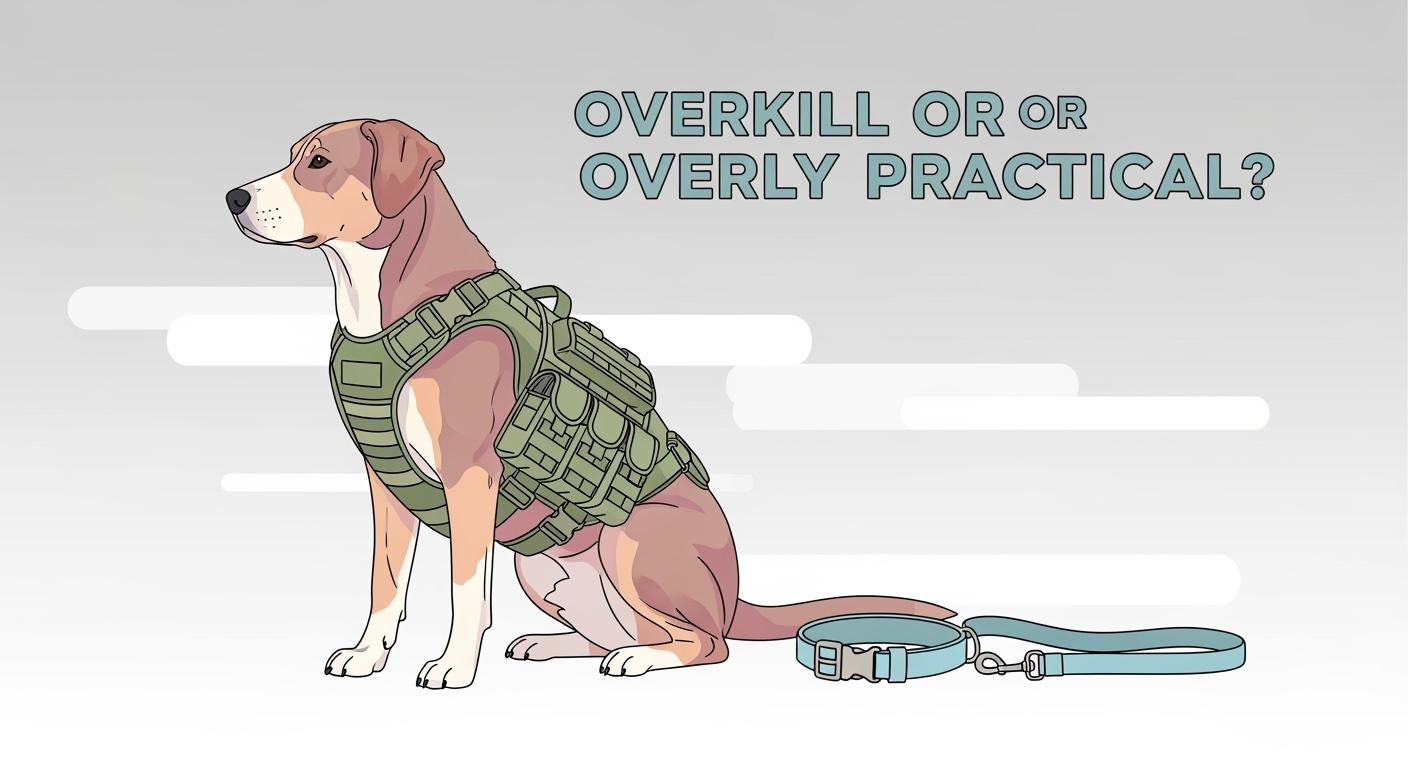
A tactical dog harness vest can be useful when the extra structure solves a real handling problem. A top handle, wider body panel, and gear attachment zones may help during hiking, training, crowded areas, or short moments when you need closer control. But for many daily walks, those same features can become unnecessary bulk. The better question is not whether the harness looks strong. It is whether the added coverage improves control without creating heat buildup, shoulder restriction, snag points, or daily discomfort.
Key Takeaways
- A tactical dog harness vest is most useful when you need a handle, stronger attachment points, or added body coverage for a specific activity.
- For normal daily walks, a plain or lighter control harness is often easier to fit, cooler to wear, and less likely to interfere with natural movement.
- Do not judge tactical features by appearance alone. Check shoulder room, heat buildup, unused webbing, rubbing, and whether the vest still stays centered under leash tension.
When a Tactical Dog Harness Vest Makes Sense
You want to pick the best harness for your dog based on the job it needs to do. Some walks need extra control or attachment options. Other walks only need a secure, comfortable harness that does not get in the way.
Real-world scenarios where tactical features help
A tactical dog harness vest makes the most sense when its features are actually used. A sturdy top handle may help during short close-control moments, such as guiding a dog through rough ground, helping a dog over a small obstacle, or holding the dog briefly in a crowded space. Wider panels may help stabilize the harness on active dogs if the fit is correct. Attachment areas may help when the handler truly needs to carry small, balanced items.
The feature has to solve a real problem. If the handle is never used, the panels only add warmth, or the webbing catches on brush and furniture, the vest is no longer practical. It is just extra gear on the dog.
Tip: Choose a tactical vest only when you can name the exact feature you need and when that feature will be used often enough to justify the added coverage.
Everyday use: when a plain harness wins
For daily walks, park trips, errands, and short travel breaks, a plain harness often works better. It is usually lighter, easier to put on, easier to adjust, and less likely to trap heat. Many dogs also move more naturally when the chest and shoulder area is not covered by extra panels.
If your dog walks calmly, does not need gear attachments, and does not require close handle control, a tactical vest may be more harness than the walk needs. A lighter everyday harness can still give leash control without adding unused features.
Comparison table: which harness fits your needs?
| Harness Type | Use Case | Main Benefit | Watchouts | Who Should Skip |
|---|---|---|---|---|
| Tactical Dog Harness Vest | Hiking, training, rugged outdoor use, short close-control moments | Handle access, stronger structure, optional attachment zones | Heavier, warmer, more snag points, possible movement restriction | Dogs that only need light daily walking, hot-weather use, or minimal gear |
| Plain Harness | Everyday walks, parks, travel, calm outings | Lightweight, easy to use, less body coverage | Less useful for close handling or carrying gear | Handlers who need a strong handle or repeated close control |
| Control Harness | Training, energetic dogs, moderate pulling | Better leash guidance without full tactical bulk | Still needs correct fit and shoulder clearance | Dogs that already walk well and need only a simple harness |
Factors that influence your choice
- Dog size and strength: Larger or more active dogs may benefit from steadier structure, but the vest still has to stay comfortable under movement.
- Age and mobility: Senior dogs or dogs with limited mobility may need lighter gear with less shoulder interference.
- Activity level: Hiking, training, and crowded areas may justify extra features. Calm neighborhood walks often do not.
- Climate and coat: More coverage can hold heat. Hot weather, thick coats, and long walks make bulk less forgiving.
A tactical dog harness vest is practical when it solves a defined handling or outdoor-use problem. If the dog only needs a simple walking setup, a lighter harness usually gives a better comfort-to-control balance.
Tactical Features That Add Real Value
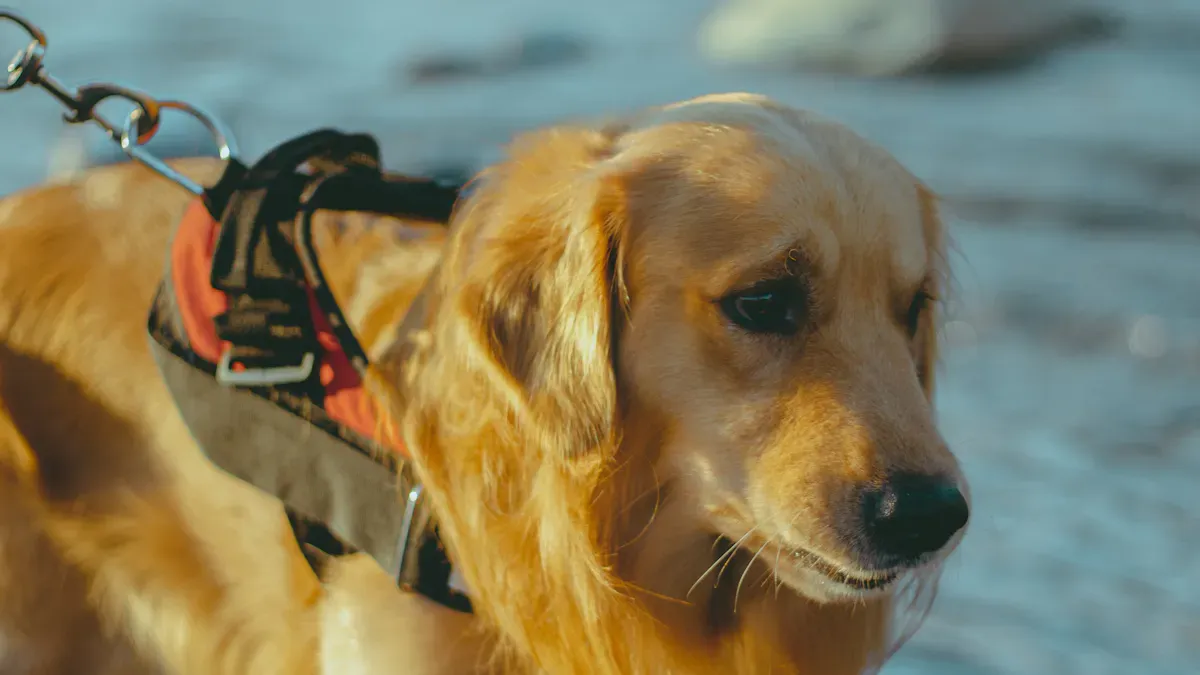
When you look at a tactical dog harness vest, you see many features. Not all of them help every dog or owner. The goal is to separate useful control from decorative bulk.
Top handle: control, lift assist, and limits
A top handle can be useful when you need brief close control. It can help you steady the dog near traffic, guide the dog around obstacles, or help with controlled entry into a vehicle. It should feel firm, easy to grip, and positioned where it does not twist the vest when lifted lightly.
But a handle is not a substitute for leash training or a correct harness fit. If you never use it, or if it causes the vest to shift when grabbed, it becomes extra weight rather than a safety feature.
MOLLE webbing and panels: useful only when managed
MOLLE-style webbing and modular panels can help when you need small attachments during outdoor use. They are less helpful when they remain empty or carry items that bounce, snag, or unbalance the vest. A dog should not have to manage loose pouches, sharp edges, or uneven weight just because the harness allows attachments.
Keep attachment use simple. If a pouch changes the dog’s movement, catches on brush, or makes the vest slide to one side, remove it.
Body coverage: protection vs heat and movement
A tactical vest usually covers more of the dog’s body than a plain harness. That coverage can add stability and some protection from rough surfaces. It can also trap heat, hold moisture, and crowd the shoulder area if the cut is not right for the dog.
Watch movement from the side. If your dog shortens stride, turns stiffly, scratches under the vest, or slows down after a few minutes, the coverage may be costing more than it helps.
Tip: Always check sizing, strap balance, and shoulder clearance after the dog has moved, not only while the dog is standing still.
Pass/Fail Checklist for Tactical Features
| Check Item | Pass Signal | Fail Signal | Fix |
|---|---|---|---|
| Top Handle | Firm, easy to grab, does not twist the vest | Floppy, hard to grab, pulls the vest off center | Use a simpler harness or choose a better-positioned handle |
| MOLLE Webbing | Flat, secure, and used only for needed items | Loose, snagging, or carrying unnecessary weight | Remove extra gear and check stitching |
| Body Coverage | Stable without blocking shoulder reach | Too hot, stiff movement, rubbing under edges | Use less coverage or limit to cooler, shorter outings |
| Modular Panels | Easy to add or remove without changing balance | Hard to use, bulky, or uneven on the dog | Keep only the parts that solve a real use case |
A tactical dog harness gives you structure and options. For daily walks, too many options can become a problem. Choose only the features that improve safety, control, or comfort in the activity your dog actually does.
Signs the Tactical Vest Is Overkill
You want your dog to feel safe and happy in a harness. Sometimes, tactical features make the setup look more capable while making daily use worse. Unused handles, extra webbing, thick panels, and heavy straps are not benefits if they do not solve a real walking problem.
Common mistakes: overfitting, unnecessary bulk, ignoring comfort
Many owners make the same mistakes with tactical harnesses:
- You fit the harness too tight because you want more control.
- You pick a vest with too much coverage, which crowds the dog’s shoulders.
- You ignore short steps, stiff turns, rubbing, or heat buildup.
- You keep unused pouches or panels attached because they came with the vest.
- You rely on the two-finger rule alone instead of watching movement under real leash tension.
A fit check should include more than strap tightness. Watch whether the vest stays centered, whether your dog can reach forward naturally, and whether the edges leave marks after the walk.
Troubleshooting table: symptom, likely cause, quick check, fix
| Symptom | Likely Cause | Fast Check | Fix |
|---|---|---|---|
| Chafing or red skin | Too much pressure or repeated edge friction | Check skin and coat right after the walk | Adjust fit, remove bulk, or switch to a softer layout |
| Stiff or short steps | Excessive coverage or shoulder crowding | Watch the dog from the side while walking | Choose a lighter harness or a cut with more shoulder room |
| Heavy panting or slowing down | Heat buildup under thick panels | Check weather, coat, activity length, and body coverage | Remove the vest, cool down, and use lighter gear in warm conditions |
| Snagged gear | Loose webbing, pouches, or attachment points | Inspect the vest after brush, stairs, furniture, or car entry | Remove unused accessories and tighten loose attachment areas |
| Deep marks after walks | Uneven pressure or over-tightening | Look for strap marks that stay after the harness is removed | Rebalance straps or switch to a better-fitting harness |
Real consequences: discomfort, safety risks, reduced mobility
A tactical harness that does not fit well can cause real problems. Your dog may walk with stiff legs, avoid the harness, scratch under the panels, or refuse to move. Extra bulk can block forward reach and rub under the legs. Poor fit can also make the leash path less predictable when your dog pulls.
Do not leave a tactical vest on just because it feels secure. Remove the harness when your dog rests, sleeps, or is unsupervised, unless a professional has given you a specific reason not to. Long wear time can increase rubbing, heat, and tangling risk.
Note: This section does not give medical advice. If your dog shows pain, trouble breathing, overheating signs, or skin problems, talk to your veterinarian.
Safety, Fit, and Maintenance Checks
You want your dog harness to keep your pet safe and comfortable. Start by sizing your dog for a harness using a soft tape measure. Measure around the chest and neck, then compare those numbers with the product’s size range. After fitting, check whether the straps sit close without pinching and whether the dog can still move normally.
Fit checks should happen before real use and again after a few minutes of walking. A vest may look correct indoors but shift, rub, or climb once the dog starts moving. Check the harness if your dog grows, gains or loses weight, changes coat thickness, or starts behaving differently on walks.
Cleaning your tactical dog harness vest helps reduce dirt, odor, and buildup. Follow the care label first. For washable pet gear, use soap or detergent, rinse away residue, and let the harness dry fully before reuse. Do not use harsh chemicals on gear that touches your dog’s skin, and keep cleaning products away from pets until the item is dry and safe to use.
You should also inspect the harness for frayed straps, weak stitching, cracked buckles, bent rings, rough edges, and loose webbing. A tactical look does not guarantee durability. The harness is only as reliable as its weakest buckle, seam, or attachment point.
Tip: Store your tactical dog gear in a dry place. A damp harness can smell, weaken, or irritate the dog’s skin if reused before it is fully dry.
| Feature | Benefit for You and Your Dog |
|---|---|
| Durability | Helps the harness hold up during outdoor use when stitching, buckles, and webbing stay sound |
| Comfort | Only counts if the dog can move normally without rubbing, heat buildup, or stiff steps |
| Versatility | Useful when handles or panels match real activities, not when they remain unused |
| Control | Works best when the harness stays centered and the leash path remains predictable |
A tactical dog harness vest is a practical choice when the handle, panels, and structure solve a real problem. It becomes overkill when those features are mostly unused or make the dog hotter, stiffer, or harder to fit. Choose the simplest harness that gives the control, comfort, and durability your actual activity requires.
FAQ
Can you use a tactical dog harness vest for puppies?
You can use one only if it fits well, stays light enough for normal movement, and does not overwhelm the puppy. For most puppies, a lighter adjustable harness is easier to fit as they grow.
How do you know if your dog feels too hot in a tactical vest?
Watch for heavy panting, slowing down, repeated stopping, drooling, or seeking shade sooner than usual. If you see these signs, remove the vest, let your dog cool down, and use lighter gear in warm conditions.
Should you leave a tactical harness on your dog all day?
No. Remove the harness when your dog rests, sleeps, or is unsupervised. This helps reduce rubbing, heat buildup, tangling risk, and skin irritation.






