
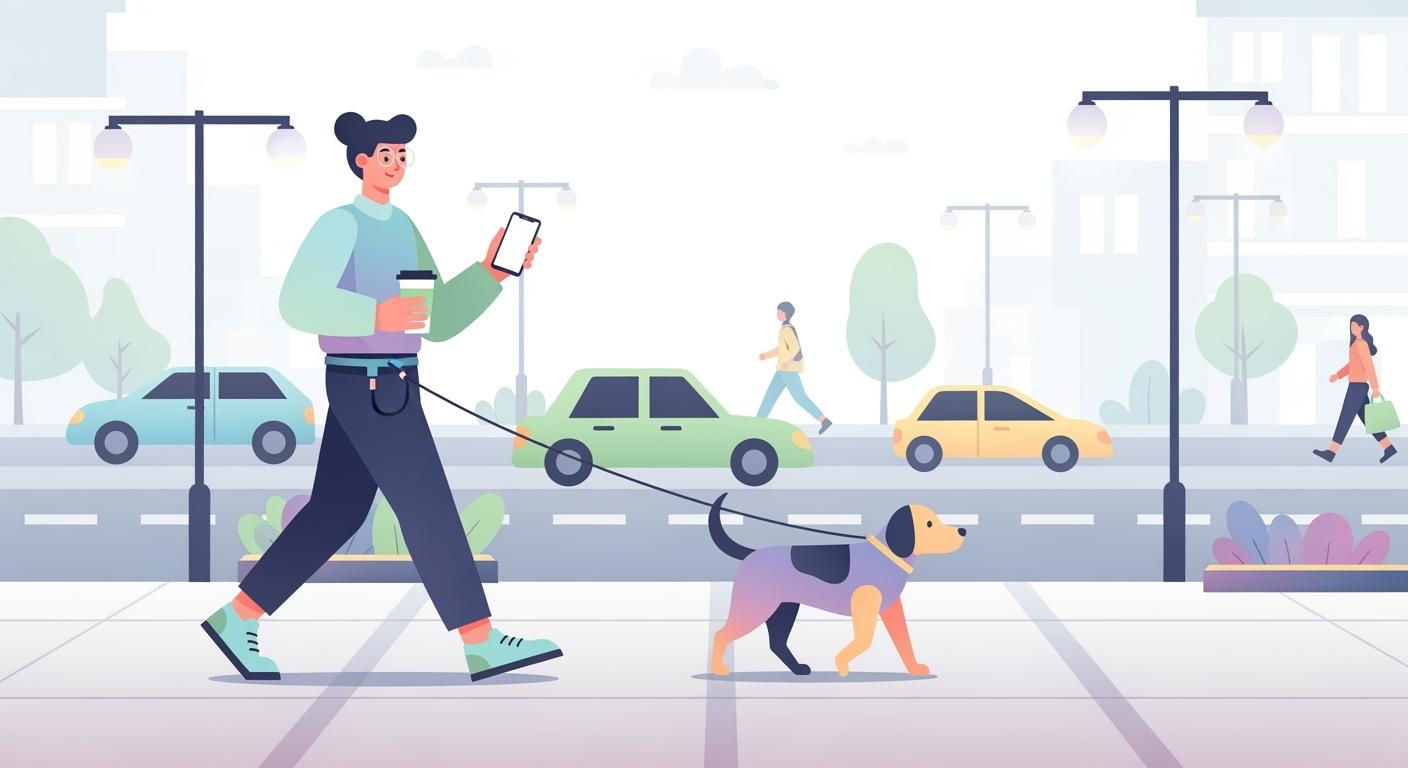
A hands-free leash feels great on a quiet morning loop and a lot less great when a delivery cart rolls past on a crowded sidewalk. The real question is not whether it is comfortable-it usually is-but whether you can shorten the line and react fast enough on the routes you actually walk. A hand-free dog leash is best matched to predictable dogs and open paths, while busy streets often reward the quick control of a hand-held setup.
Note: A hands-free leash improves comfort, not handling skill. If you cannot reduce slack in under a second, the route is probably too busy for this setup.
Key Takeaways
Hands-free leashes usually shine on steady, open walks with calm dogs, and often struggle in tight, reactive environments. The right call depends on your dog’s predictability and how quickly you can shorten the line. Browse the full dog leash collection with both your route and your dog’s behavior in mind.
Where a Hand-Free Leash Fits the Route
Route fit comes down to three things: how much arm freedom you actually need, how stable the belt feels under sudden tension, and how fast you can react when the leash path goes wrong.
Arm Freedom on Steady Walks
Arm freedom matters because long walks tire the grip and shoulder before they tire the legs. A waist-anchored leash usually lets you swing your arms naturally, carry water, or pick up waste without juggling a handle, which often makes a 45-minute loop feel shorter and easier on the body.
For most calm dogs on steady routes, hands-free is generally the more comfortable setup. The trade is that comfort only stays useful while your dog stays predictable.
Belt Stability in Busy Streets
Belt stability matters because a sudden lunge transfers force straight to your hips instead of your hand, and a narrow belt can twist before you have time to brace. On crowded sidewalks, this often turns a small surprise into a balance problem.
For most owners on busy streets, a hand-held leash usually offers faster, more predictable control-even though it costs comfort.
Leash Path and Reaction Time
Reaction time matters because tight environments rarely give you a second try. A hand-held line can be choked up in a single motion; a waist line often requires two hands and a step closer to the dog before you can do the same thing.
Tip: Practice a one-second shortening test in your driveway before any new route. If you fumble it standing still, you will fumble it next to a moving car too.
Comfort vs. Control: Match to Your Walks
Neither style is “better.” They optimize for different things, and the right pick depends on which trade-off hurts you less on your usual route. Our hands-free leash safety checks guide walks through the most common failure points before they become incidents.
| Leash Style | Steady Route Comfort | Busy Route Control | Quick Shortening | Main Limitation |
|---|---|---|---|---|
| Waist-belt hands-free | Very high | Moderate | Decent if the belt has a sliding ring | Slow second-hand grab when surprised |
| Crossbody hands-free | Moderate | Low | Awkward across the body | Belt twist and leash swing risk |
| Hand-held leash | Lower over long distances | High | Excellent | Tires the grip and shoulder |
Waist-belt hands-free is usually the better choice for predictable dogs on long, open walks. Hand-held is generally the better choice when crossings, traffic, or other dogs are part of every walk.
Waist-Belt vs. Crossbody
Belt placement matters because force from a pulling dog wants to find the path of least resistance through your body. A wider waist belt centered at the hips usually spreads that force evenly; a crossbody strap often shifts to one shoulder and starts twisting the moment your dog changes direction.
For most owners, a wide padded waist belt is the more stable starting point. Crossbody styles can work for very calm dogs but rarely feel as planted under real pulling.
When Hands-Free Is Not the Right Match
Some setups simply do not pair well with a hands-free leash, no matter how comfortable it feels. The honest filter is whether your dog’s behavior leaves room for slower reaction time.
| Situation | Hands-Free Match | Why |
|---|---|---|
| Calm adult dog, open trail | Usually a good fit | Predictable line, low surprise rate |
| Strong puller, urban sidewalk | Often a poor fit | Belt twist and slow shortening |
| Reactive or fearful dog | Generally not recommended | Quick redirection is hard from the waist |
| Flat-faced or neck-sensitive dog | Use with caution and a harness | Sudden tension on the neck is risky |
| Runner with steady-pace dog | Often a strong fit | Symmetrical motion suits a waist anchor |
For most reactive dogs and tight urban routes, a hand-held leash is usually the safer everyday choice-even if hands-free is the more comfortable one.
Pre-Walk Tests Before You Trust the Setup
The honest way to know whether your setup works is to test it before the route demands it.
- Quiet-route test-walk a calm loop and notice how the belt sits under normal motion.
- Stop-and-turn check-halt, pivot, and see if you regain control without shifting your feet.
- One-second shortening test-see if you can pull your dog within arm’s reach in a single motion.
- Busy-route recheck-only after the first three pass, try a short crowded segment.
Our harness and leash fit and length guide covers how leash length and harness placement work together-both shape how well any of these tests go.
Pass / Fail Checklist
| Check Item | Pass Signal | Fail Signal |
|---|---|---|
| Belt position | Sits centered, stays put while walking | Slides up or twists to one side |
| Quick shortening | One-handed grab brings dog close | Needs two hands or a step forward |
| Stop-and-turn | Stable footing, dog redirects easily | Loss of balance or tangled legs |
| Leash path | Stays beside the body, no swing across legs | Swings between the knees on direction changes |
| Dog response | Walks with steady tension | Lunges, freezes, or surges unpredictably |
Common Mistakes That Catch Owners Out
- Skipping the quiet-route test and going straight to a busy street.
- Wearing the belt high on the waist instead of low at the hips.
- Assuming a calm indoor dog will be calm next to traffic.
- Letting too much slack hang between belt and dog.
Tip: The most common mistake is moving to a busy route before the one-second shortening test feels automatic-comfort masks the slow reaction time until something goes wrong.
Troubleshooting on the Road
| Symptom | Likely Cause | Improvement Plan |
|---|---|---|
| Belt twists to one side | Strap too narrow or worn too high | Reposition lower at the hips, try a wider belt |
| Leash swings into your legs | Too much slack between belt and dog | Shorten the line and walk the dog closer |
| Slow reaction at crossings | Two-hand shortening required | Switch to a hand-held leash for that route |
| Dog lunges and pulls you off balance | Behavior mismatch with hands-free style | Train recall first, use hand-held in the meantime |
| Hip or lower back ache after walks | Belt sitting too high or pulling unevenly | Lower the belt and balance the leash side |
A Simple Setup Log
One short note for the first week makes the keep-or-switch decision much easier.
Record for 5 walks before deciding to keep or switch: route type, number of times you reached for the leash with both hands, any belt twist, and how stable the belt felt at the end of the walk.
If you grabbed the line two-handed on three out of five walks, hands-free is probably not the right match for that route.
FAQ
Can I use a hands-free leash with any harness?
It works with most well-fitted harnesses, but a Y-neck cut that handles sudden tension is usually the safer pairing.
How do I keep the leash from tangling around my legs?
Walk your dog closer to your body and remove slack before every turn or crossing.
What should I do if my dog pulls suddenly?
Plant your feet, grab the leash with your hand for direct control, and switch to a hand-held setup if it happens often.
Is a hands-free leash safe for running?
Generally yes for steady-paced dogs that run in a straight line, and generally not for dogs that lunge at distractions.
Note: This FAQ covers leash style and route fit. It does not replace trainer or veterinary advice when pulling, fear, or reactivity continue after the setup is correct.
Putting It Together
A hands-free leash earns its keep on steady, predictable walks where comfort over distance matters more than split-second control. On busy streets and around reactive dogs, a hand-held setup is usually the safer everyday default. Many owners end up with both-and pick by route, not by habit.
| Walk Profile | Recommended Setup | Key Consideration |
|---|---|---|
| Long open trail, calm dog | Wide waist-belt hands-free | Comfort over distance is the main win |
| Urban sidewalks, mixed traffic | Hand-held with a short fixed length | Reaction time matters more than comfort |
| Steady-pace running route | Waist-belt with a bungee section | Symmetrical motion suits the waist anchor |
Disclaimer: If your dog shows ongoing reactivity, pain, or pulling that the setup cannot manage, stop relying on the hands-free option and check in with a trainer or veterinarian.






