
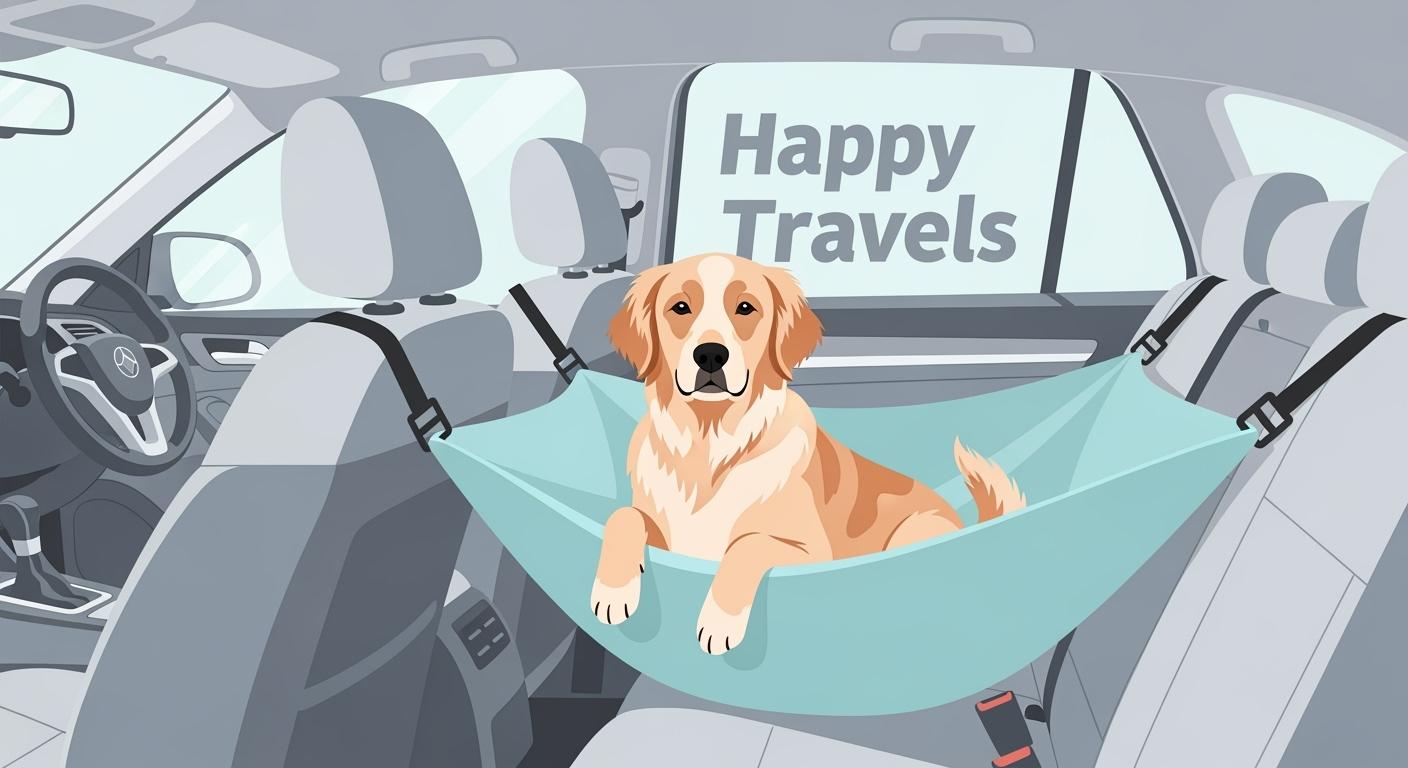
A dog seat cover hammock works best when it matches the seat width, stays under tension, and gives paws enough grip. A loose cover can sag, bunch, or leave side gaps that make dogs brace instead of settle. Fabric changes the feel of the ride too: some surfaces are quieter and easier to clean, while others trap heat or get slick after dirt or moisture builds up. A hammock helps block the footwell and protect the seat, but it does not replace a restraint for travel safety.
Key Takeaways
- Choose a hammock-style dog seat cover that fits your car’s back seat well. A proper fit prevents gaps and keeps your dog stable.
- Look for covers with non-slip backing and quilted surfaces. These features help your dog feel secure and comfortable during rides.
- Regularly check and adjust the cover’s straps and anchors. A tight fit reduces sagging and helps your dog settle more easily.
Dog Seat Cover Hammock Fit: Coverage, Tension, and Comfort
Many hammock-style seat covers look similar online. In real use, the big differences are seat coverage, strap tension, surface grip, and how the material behaves after dirt, moisture, and repeated washing. A dog seat cover hammock should fit the back seat, reduce side gaps, and give your dog a more stable place to stand, turn, and lie down. It can help stop a dog from dropping into the footwell, but it still does not act as a restraint on its own.
Seat Coverage and Gap Protection
You need full seat coverage for real protection. If your dog seat cover hammock leaves gaps at the sides or between the seats, your dog can slip or get stuck. A loose cover can bunch up and shift under your dog’s paws. This makes your dog feel unstable and can cause stress. When the cover lifts at the corners or sags, your dog may need to brace or move around to feel safe.
- A loose cover can bunch up and shift under the dog’s paws, causing instability.
- If the cover does not fit well, it may create gaps where the dog can slide or fall, increasing discomfort.
- A cover that lifts at the corners or bunches up becomes unpredictable, contributing to the dog’s need to brace or readjust.
Some hammock-style covers include structural details that can reduce sagging and help the panel stay in place. The table below shows how these features can help when the overall fit is right.
| Feature | Benefit |
|---|---|
| Hard bottom structure | Can improve support and reduce sagging |
| Honeycomb base | Can add structure and help the panel hold shape |
| Zippered side flaps | Can improve side coverage and reduce open gaps |
Stability and Tension for Settling
You want your dog to feel steady when the car moves. A hammock style cover should stay tight and not sag between the seats. Check the straps and anchors. Make sure they hold the cover flat and firm. If the cover sags, your dog may slide or have trouble standing. A tight fit helps your dog settle faster and feel more secure.
To check tension:
- Pull the cover tight across the seat and between the headrests.
- Press down with your hand. The cover should not dip or shift.
- Look for any bunching or loose fabric. Adjust straps if needed.
Comfort for Standing, Turning, and Lying Down
Your dog needs to stand, turn, and lie down without slipping. The right dog car seat cover gives a stable surface. Padding helps, but grip and tension matter more. If the cover slides or bunches, your dog may not want to settle. Watch your dog during a short drive. If your dog keeps shifting or looks uneasy, check the fit and surface.
Step-by-step comfort check:
- Let your dog enter the car and step onto the hammock.
- Watch your dog stand, turn, and lie down.
- Notice if your dog slips, slides, or avoids certain spots.
- Adjust the cover if your dog seems unsure or keeps moving.
Pass/Fail Fit Checklist Table
Use this quick table to check if your hammock style cover fits well:
| Check Item | Pass Signal | Fail Signal | Fix |
|---|---|---|---|
| Seat coverage | No gaps at sides or seat edges | Gaps, exposed seat, or footwell access | Adjust or choose better-fitting cover |
| Tension/stability | Cover stays flat and tight | Sagging, bunching, or shifting | Tighten straps, adjust anchors |
| Comfort for movement | Dog stands, turns, and lies down easily | Dog slips, slides, or avoids lying down | Re-tension, check grip, refit cover |
A well-fitted dog seat cover hammock gives your dog protection, comfort, and a stable ride. Always check the fit before every trip. If you see sagging, gaps, or bunching, adjust the cover or try a different hammock style. Your dog’s comfort and safety depend on it.
Dog Car Seat Cover Materials: Grip, Cleanup, and Comfort
Many dog seat cover hammocks look similar at first glance. The more useful comparison is how the surface grips paws, how noisy it feels during movement, how quickly it cleans up, and whether the layers still feel stable after repeated use.
Surface Grip and Noise on Drives
Your dog should feel steady on every ride. Surface grip matters because a slick top can make even a well-fitted hammock feel unstable. Quilting, texture, and backing can all affect traction, but results depend on the full build rather than one feature alone.
Noise can bother some dogs. Hard, slick surfaces may sound scratchy under nails, while softer or lightly padded tops can feel quieter and less distracting. Comfort still depends on the full construction, including tension, top texture, and how much the cover shifts in use.
Here is a quick table to show how common materials compare for grip and noise:
| Material | Traction Features | Noise Reduction Features | Typical Wear | Common Build | Spill Control |
|---|---|---|---|---|---|
| Oxford Fabric | Non-slip backing, textured surface | Waterproof layer reduces spill noise | Often | Often | Often |
| Waterproof Fabric | Quilted surface, honeycomb pattern | Blocks mess, keeps car clean | Often | Often | Often |
| Faux Rabbit Fur | Soft, quilted surface for traction | Dampens noise, adds comfort | Often | Often | Often |
| Mesh Panels | Breathable, some grip | Reduces heat, less noise | Often | Sometimes | Often |
| PP Cotton Padding | Adds cushion, improves traction | Absorbs movement noise | Often | Often | Often |
Tip: Always check for non-slip backing and a quilted top. These features help your dog stay safe and comfortable.
Waterproof Dog Car Seat Cover Layers and Cleaning
A water-resistant cover helps manage spills, dirt, and stains, but performance depends on the outer fabric, coating, seam quality, and how belt slots or anchor openings are finished. Oxford-type shells, laminated layers, and non-slip backings can all contribute, but no single layer tells the whole story.
No seat cover blocks every mess in every condition. Seams, anchor points, and seat-belt slots are common weak spots, so check those areas after wet or muddy trips and after washing.
A water-resistant cover can help you:
- Stop stains, spills, and dirt from hurting your car seats.
- Keep your car looking new and protect its value.
- Block most liquid with good water-resistant materials.
Cleaning is important for long-lasting use and health. Here is an easy cleaning routine for your cover:
- Take off the cover and shake out loose dirt.
- Use a vacuum or rubber brush to remove pet hair.
- Clean small spills with mild soap and a damp cloth.
- Wash the cover in cold water on gentle with pet-safe soap.
- Air dry or use a dryer on low to protect the waterproof layer.
Note: Always follow the cleaning label on your cover. Let it dry all the way before your dog uses it again.
Padding, Heat, and Mess Management
Padding makes the cover soft and helps your dog relax. PP cotton padding gives a quilted feel and soaks up noise. Too much padding can trap heat, so look for mesh panels if your dog gets hot. A quilted surface helps with grip and keeps your dog from sliding.
Mess control depends on where spills go. A water-resistant top layer stops most messes, but seams and edges need care. Non-slip backings keep the cover in place when your dog moves. Strong stitching and tough edges help the cover last through many washes.
You want comfort, grip, and easy cleaning. Pick a cover with quilted padding, water-resistant layers, and a non-slip base for the best results.
Comparison Table of Common Materials
Use this table to compare popular materials for your dog seat cover hammock. Choose the features that fit your car, your dog, and your cleaning needs.
| Material | Traction | Noise | Comfort | Typical Wear | Common Build | Spill Control | Easy Cleaning | Heat Control | Best For |
|---|---|---|---|---|---|---|---|---|---|
| Oxford Fabric | Often good | Can be good | Can be good | Often | Often | Often | Often | Varies | Everyday use, messy rides |
| Waterproof Fabric | Often good | Can be good | Can be good | Often | Often | Often | Often | Varies | Wet, muddy, or active dogs |
| Faux Rabbit Fur | Often good | Often high | Often high | Often | Often | Often | Often | Can be good | Nervous dogs, long drives |
| Mesh Panels | Medium | Can be good | Can be good | Often | Sometimes | Often | Often | Often high | Hot climates, summer travel |
| PP Cotton Padding | Often good | Often high | Often high | Often | Often | Often | Often | Varies | Comfort-focused, older dogs |
Decision Tip: Start with fit and stability first, then compare surface grip, cleanup routine, and heat build-up. A quilted top and non-slip base can help, but only if the cover stays flat and secure on your seat.
A dog seat cover hammock works better when the material choice matches the way you travel. Look for a surface your dog can stand on confidently, layers that handle everyday mess, and a build that still feels stable after repeated cleaning.
Dog Seat Cover Hammock Use Cases and Common Mistakes
Many hammock-style covers look alike, but how they work depends on fit, material, and how you use them. A dog seat cover hammock keeps your car seats clean, controls messes, and helps keep your pet in one spot. It does not keep your dog safe in a crash, so always use a harness or crate when you travel.
Everyday Errands and Wet or Muddy Rides
You might use the car for short errands, daycare runs, or rides home after wet walks. Some covers focus on heavier water-blocking shells for muddy trips, while others focus more on family use, easier access to belt slots, and faster day-to-day cleanup.
| Cover Type | Key Features | Use Case |
|---|---|---|
| Heavy waterproof shell | Laminated shell, stronger spill blocking, wipe-clean surface | Wet, muddy, or outdoor-heavy trips |
| Family-use hammock cover | Hammock panel, liner, and accessible belt-slot layout | Mixed passenger use and everyday cleanup |
Multi-Passenger and Flexible Configurations
Sometimes you need to carry people and dogs together. Look for features that let you switch between pets and passengers:
| Feature | Description |
|---|---|
| Adjustable Straps | Easy to put on and change for different needs |
| Seat Belt Slots | Allows access to belt buckles when needed |
| Non-Skid Backing | Helps reduce sliding on the seat surface |
Common Mistakes and Troubleshooting Table
Many owners make these mistakes:
- Picking a cover by pictures, not by how their dog acts.
- Choosing ‘non-slip’ without checking both sides of the cover.
- Not making the cover tight enough.
- Forgetting about safety and letting the dog walk around.
| Symptom | Likely Cause | Fast Check | Fix |
|---|---|---|---|
| Dog slides or won’t settle | Loose or slick cover | Press on cover, check movement | Tighten straps, check grip |
| Corners lift or curl | Poor fit or weak anchors | Inspect edges after setup | Adjust anchors, refit cover |
| Buckle slots misaligned | Cover bunches or shifts | Try buckling after install | Realign and secure cover |
| Center sags | Weak base or over-padding | Step in center, watch for dip | Choose firmer base, reduce padding |
When to Use Flat Covers, Carriers, or Crates
Use a flat cover for short, easy trips. Pick a carrier or crate for dogs who need to be held in place or for long drives. Always choose what fits your dog’s needs and your car’s space.
Tip: Measure your seat and check the cover’s size before you buy. Make sure the cover stays flat and does not move when your dog steps on it.
Choose a dog seat cover hammock by checking seat coverage, strap tension, surface grip, and cleanup routine together. A better fit usually matters more than extra padding alone. Recheck the setup after installation and after the first few trips, because sagging, shifting, or slick surfaces are often what keep dogs from settling.
Quick Checklist:
- Measure your seat before you buy.
- Check straps and anchors.
- Clean covers often.
| Benefit | Description |
|---|---|
| Secure Fit | Keeps cover in place for safer travel |
| Easy to Clean | Makes cleanup fast and simple |
| Better Settling | Gives the dog a steadier place to ride |
FAQ
How can you check if your dog seat cover hammock fits your car?
You measure your back seat. You look for gaps or sagging. You adjust straps and anchors. You check if your dog settles comfortably.
Does a hammock-style seat cover keep your dog safe in a crash?
You use a hammock for seat protection and mess control. You use a harness or crate for crash safety. Hammocks are not crash-tested restraints.
What should you do if your cover bunches or slides during a drive?
You tighten straps. You check anchor points. You inspect the non-slip backing. You refit the cover for a stable surface.
Note: Check the cover before each trip, especially the anchors, belt-slot area, and any place where the panel has started to sag or bunch.






