
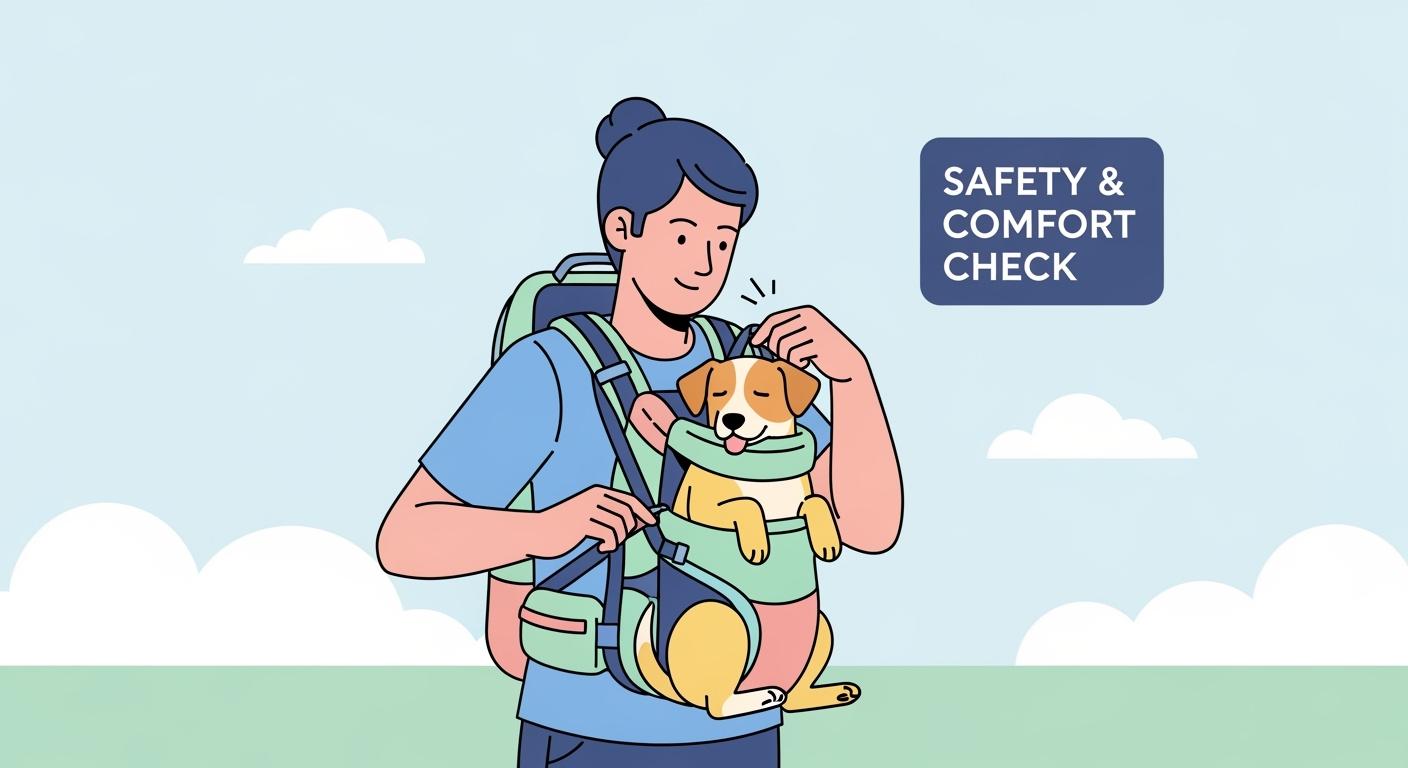
A backpack small dog carrier can look perfectly fine on a size chart and still feel wrong the moment your dog is inside. Small dogs often show the problem fast: they brace with the front legs, lean into one side, freeze during entry, or keep trying to reposition because the ride does not feel steady.
This article stays focused on that one problem. It is not a broad carrier guide. It helps you judge whether a small dog backpack carrier stays calm enough in real use by checking posture, base stability, entry behavior, and the cleanup details that affect whether your dog will want to go back inside next time.
Key Takeaways
- Do not judge a small dog carrier backpack by label size alone. A light dog can still feel unstable if the base sags, the body shifts, or the opening makes entry awkward.
- Watch for brace, sway, slump, and repeated repositioning. These are often better fit signals than a simple weight limit.
- Easy-clean features matter because trapped odor, damp padding, and messy seams can make a carrier feel worse on the second or third use.
Why Small Dogs Brace or Refuse the Backpack
Extra space is not always extra comfort
Many buyers assume a little extra room is safer. For small dogs, too much empty space can do the opposite. The dog ends up shifting side to side, leaning into the wall, or bracing against movement because the carrier does not hold the body in a calm, supported position. A better fit usually means enough room to sit, adjust, and settle without forcing the dog to stabilize the ride with its own legs.
A weak base feels bigger than it looks
Small dogs are especially sensitive to base collapse. If the bottom softens under load or the carrier pulls away from your back when you move, the dog often responds by stiffening, crouching, or pressing forward. This is one reason a carrier can seem roomy in the living room but feel unstable on stairs, sidewalks, or crowded stops.
Stress signals matter more than label confidence
If your dog shows stress, pants, or tries to escape, the fit is wrong. In small dogs, the early signals are often subtle before they become obvious. Look for repeated front-leg bracing, pushing toward the opening, refusing to settle after a short trial, or staying rigid instead of relaxing into the base.
| What You See | What It Often Means | Why It Matters |
|---|---|---|
| Dog keeps leaning to one side | Base or strap balance is off | The carrier may feel unstable even if the size label seems correct |
| Dog braces with front legs | The ride feels insecure or too upright | The dog is working against the carrier instead of resting in it |
| Dog freezes at the opening | Entry shape, visibility, or past discomfort is a problem | Good fit includes calm entry, not just how the carrier feels once closed |
| Dog keeps shifting or turns back toward the zipper | Heat, pressure points, or poor internal support | “Comfy” materials do not help if the actual riding position feels wrong |
Tip: A small dog that never quite settles is telling you more than the product page does.
First-Walk Checks Matter More Than the Size Label
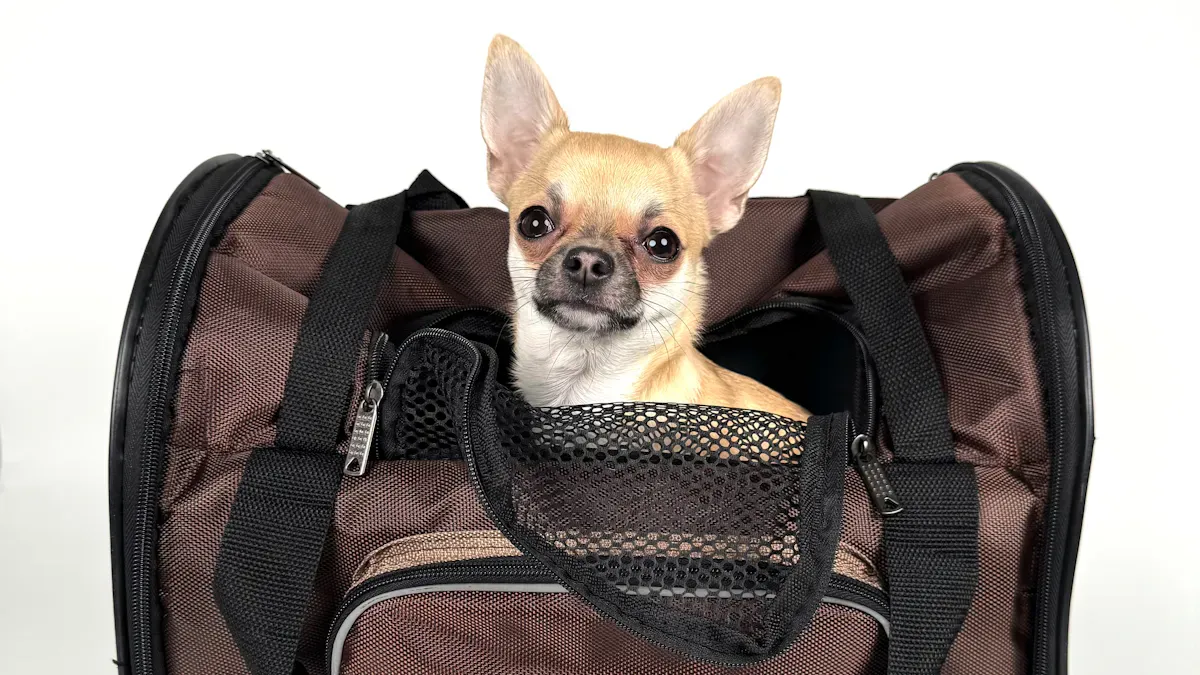
Check posture before you check convenience
Before you think about pockets, styling, or commuting convenience, check fit with your dog inside the carrier. The body should stay supported without slumping into the corners. The chest area should stay open enough that your dog is not compressed forward, and the bottom should feel steady rather than hammock-like.
Entry and exit should stay calm and repeatable
A carrier that technically fits but creates a stressful entry routine will still fail in daily use. Small dogs often dislike backpacks that collapse inward during entry, make them step onto a weak floor panel, or close too close to the face. A better design lets the dog enter with less hesitation and leave without getting tangled, pinched, or rushed.
Watch the carrier in motion, not just on the floor
The real test happens when you move. Walk a short, calm route and watch what changes. Does the carrier stay close to your body, or does it sway away and bounce back? Does your dog remain centered, or start leaning, stiffening, and shifting? A backpack that looks good while you stand still can still fail once normal body movement starts.
| Check Item | Pass Signal | Fail Signal | What to Change |
|---|---|---|---|
| Base support | Dog stays level and does not sink into the bottom | Dog sags, crouches, or braces to keep balance | Move to a firmer, more supportive base |
| Ride stability | Carrier stays close and moves with your body | Carrier sways, bounces, or drifts away from your back | Recheck strap balance and overall structure |
| Entry behavior | Dog enters with mild curiosity and exits cleanly | Dog freezes, resists, or tries to back out fast | Reassess opening design and trial pace |
| Heat comfort | Dog stays calm and does not look trapped by the interior climate | Heavy panting, repeated repositioning, or clear heat discomfort | Use a more ventilated option or shorten the outing |
Note: Start with a short, supervised trial. If the backpack only works in still photos and not in motion, it is not ready for regular use.
Cleanup Problems Can Turn Into Comfort Problems
Mess that stays inside changes how the carrier feels next time
Easy cleanup is not just a convenience feature. Small dogs often ride close to the interior surfaces, so trapped hair, damp padding, drool, and odor build-up affect comfort quickly. A carrier that is hard to dry or awkward to wipe can feel less inviting after just a few real outings.
Look beyond “removable liner” as a checkbox
Removable liners help, but only if they are easy to take out, easy to refit, and do not bunch or curl after washing. The shell should wipe clean without holding dirt in deep corners, rough seams, or folded fabric edges. If the cleanup process leaves the base uneven or the interior stiff, the next ride may feel less stable to your dog.
| Cleanup Detail | Good Sign | What Causes Trouble Later |
|---|---|---|
| Liner | Comes out easily and sits flat after cleaning | Bunches, shifts, or changes the feel of the base |
| Shell interior | Smooth enough to wipe without hidden buildup | Deep seams and corners trap hair, grit, and moisture |
| Drying behavior | Dries fully without a clammy feel | Padding stays damp and turns the next ride stuffy |
| After-clean reassembly | Carrier keeps the same support shape | Base changes shape or the interior becomes uneven |
For daily errands or repeated short trips, cleanup reality can matter as much as comfort on day one. If the inside stays fresh and the support shape comes back easily, your dog is more likely to accept the carrier again instead of treating it like a stressful last-resort item.
When a Backpack Is the Wrong Carry Format
Some small dogs never settle well in a backpack, even after careful fitting. That does not always mean the product is defective. Sometimes the format itself is wrong for that dog or that route. Dogs that run hot, dogs that panic in enclosed spaces, dogs that brace hard during movement, and dogs that need frequent visual reassurance may do better in another carrying setup.
Backpacks also stop being a good idea when the outing gets longer, hotter, more crowded, or more stop-and-go than the dog can handle. If you keep shortening the trial because your dog stiffens, pants, or fights the opening, do not talk yourself into “they will get used to it” forever. A calmer carry format may simply suit that dog better.
- Do not choose by label weight alone.
- Do not treat sway as a minor issue if your dog keeps bracing against it.
- Do not assume mesh means the backpack is automatically cool enough.
- Do not keep using a carrier that your dog repeatedly resists entering.
Alert: If your dog shows heat distress, repeated panic, unstable posture, or cannot settle after a fair trial, stop using the backpack and reassess the carry format.
A good backpack small dog carrier should feel steady enough that your dog does not need to fight the ride. If the base stays supportive, the pack moves with your body instead of swinging away from it, entry stays calm, and cleanup does not make the next ride worse, you are much closer to a carrier your dog will actually accept.
FAQ
Can a small dog still feel unstable in the “right size” carrier?
Yes. The size label can be technically correct while the ride still feels wrong. Weak base support, extra empty space, poor strap balance, or a stressful entry shape can all make a small dog brace or shift even in a carrier that seems big enough.
What is the fastest way to tell if the backpack will not work?
Watch the first short trial in motion. If your dog stays rigid, keeps pushing against the opening, braces with the front legs, or refuses to settle after a fair introduction, the problem is usually more than simple unfamiliarity.
When should you stop trying to make the backpack work?
Stop and reassess if your dog repeatedly resists entry, pants heavily, looks unstable during normal walking, or becomes more stressed each time rather than calmer. At that point, a different carry format may be the better answer.






