
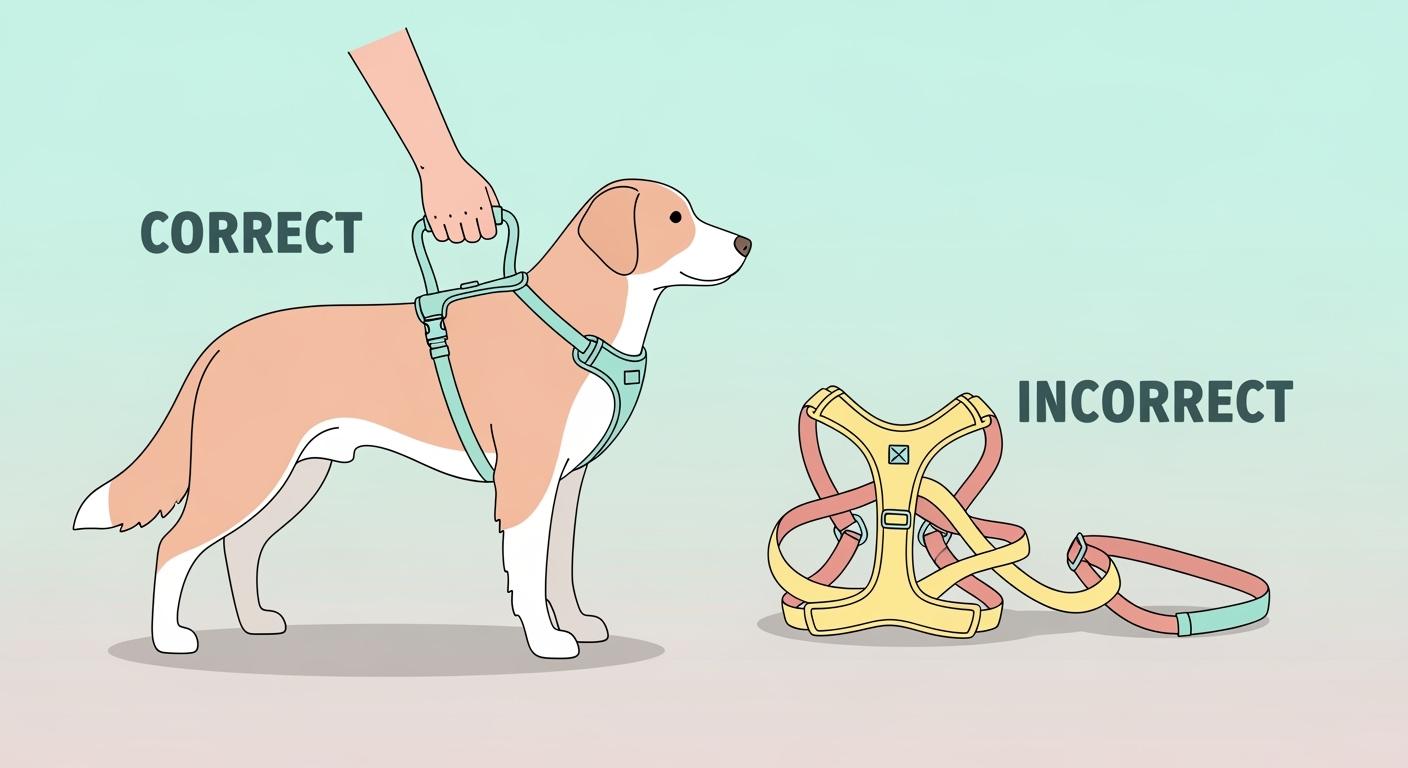
Many shoppers look for a dog handle harness because they want faster close control in busy walks, at curbs, or during short pauses near traffic. That is a real use case. The mistake starts when the top handle is treated like proof that the harness fits well, gives better support automatically, or can double as a lifting tool whenever your dog hesitates.
This page stays focused on that trade-off. A handle can be useful, but it can also reveal problems faster than a simpler harness does. If the harness twists when you touch the handle, crowds the shoulders, rides toward the throat, or makes the whole top panel feel too bulky, the handle is not helping. It is exposing a poor match.
Note: This article is not medical advice. If your dog limps, coughs, wheezes, shows pain, or has known mobility issues, stop using the harness and speak with your veterinarian.
Key Takeaways
- A handle is best treated as a brief close-control feature, not as a reason to ignore fit.
- Choose a dog handle harness that fits well, offers useful control, and still lets your dog move naturally.
- If the handle makes the harness bounce, twist, or feel top-heavy, a simpler layout is often the better answer.
When a handle actually helps
Brief control is the main job
A walking harness handle is most useful when you need a quick, short moment of control. That might mean guiding your dog closer past a bicycle, steadying them for a curb, or bringing them in briefly in a crowded space. In those moments, the handle should be easy to reach, easy to release, and stable enough that touching it does not drag the whole harness out of place.
That is very different from relying on the handle through the whole walk. If you feel like you need to keep one hand on the top handle most of the time, the real issue is usually pulling, poor fit, reactivity, or a harness style mismatch. A handle can help you manage a moment. It should not become the main steering system.
Walking help is not the same as mobility support
Some owners also buy a handled harness because they think it will help with stairs, jumping into the car, or balance changes. That only makes sense if the harness is actually designed for that kind of support. A standard walking handle harness is not the same thing as a mobility or lift harness. If your dog needs genuine assisted support because of age, injury, surgery, or rear-limb weakness, that is a different gear question and usually needs veterinary guidance.
Handle Use Check
| Situation | Handle Helpful? | Main Watchout | Better Use |
|---|---|---|---|
| Busy sidewalk or curb | Usually yes | Do not drag the harness upward | Use brief steadying, then release |
| Dog that pulls most of the walk | Only partly | Handle use can hide a fit or training problem | Match clip layout and training plan first |
| Dog needs help with stairs or recovery | Often no for a standard walking harness | Support needs may exceed what the harness is built for | Use a dedicated support solution instead |
| Very small or light dog that already walks calmly | Often no | Extra top structure may add bulk without real benefit | Choose a lighter harness if control is already good |
Fit problems the handle reveals fast
Check where the handle sits before you walk
You need to start with the right measurements to avoid picking the wrong size. Measure the base of the neck and the widest part of the chest, then fit the harness so it lies flat and centered. After that, look at the handle itself. A good handle should sit flat over the back instead of standing up, tilting to one side, or trailing too far toward the waist. If it feels awkward before the walk starts, it usually feels worse once the leash goes tight.
The fastest check is simple: fit the harness, touch the handle lightly, and watch what moves. If the handle lifts the top panel without shifting the rest of the harness, that is workable. If the whole harness rolls, the chest panel drifts off center, or the neck opening creeps upward, that is a fit problem, not a handle feature.
Watch the shoulders, throat, and underarms in motion
A handle harness should still let your dog move freely. The handle does not excuse poor strap layout. Watch your dog walk, turn, and sit. If the harness starts pressing toward the throat, shortens the front stride, rubs behind the front legs, or shifts more when you reach for the handle, those are fail signals. They matter more than how padded or sturdy the harness feels in your hand.
Tip: The fit check is not finished when your dog is standing still. A handled harness has to stay balanced after a few minutes of normal movement.
Pass/Fail Fit Table
| Check Point | Pass Signal | Fail Signal | What To Do |
|---|---|---|---|
| Neck opening | Sits low at the base of the neck | Rides up toward the throat | Refit or change harness shape |
| Chest panel | Stays centered under light leash tension | Twists or drifts when you touch the handle | Reset straps and retest before walking farther |
| Shoulder movement | Normal stride and easy turning | Shortened front reach or stiff turning | Use a less restrictive layout |
| Underarm clearance | No rubbing behind the front legs | Redness, hair wear, or repeated scratching | Adjust or switch the harness |
| Top handle behavior | Lies flat and stays easy to grab | Bounces, twists, or makes the harness feel top-heavy | Choose a lower-bulk design |
Clip layout changes how the handle feels
Front clip helps some dogs, but only if the harness stays balanced
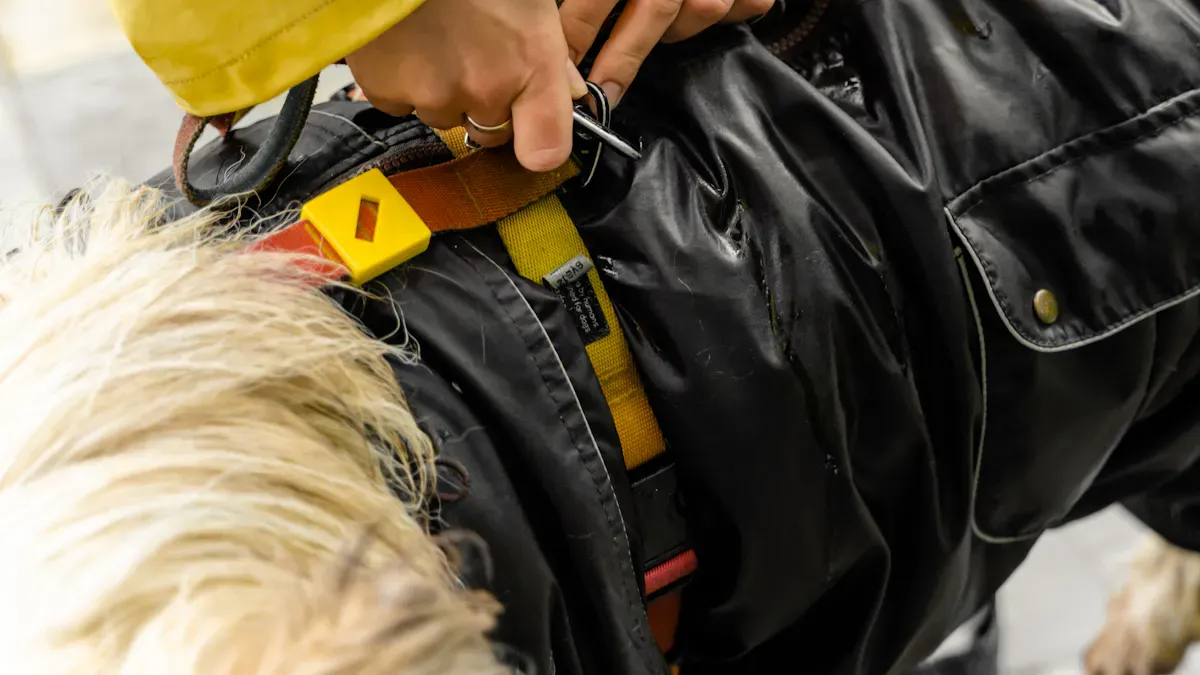
A front clip can be useful when pulling and redirection are the main daily problem. It often gives the handler more control, but it also exposes weak fit quickly. If the chest ring pulls the harness sideways, or if the front strap layout already crowds the shoulder, adding a top handle does not improve that setup. It usually makes the instability easier to notice.
Back and dual clip setups work better when you want less interference
Back-clip and dual-clip layouts can feel cleaner when your dog already walks fairly well and the goal is comfort plus occasional close control. A dual-clip harness can still be useful if you want front control in busy areas and back attachment in calmer ones. The important part is not having more hardware. It is whether the harness stays stable and does not make the top panel feel heavier than your dog needs.
Clip Choice Table
| Clip Layout | Usually Best For | What To Watch | Good Match When |
|---|---|---|---|
| Front clip | Dogs that pull or need redirection | Twisting, chest drift, shoulder crowding | You need control and the fit stays balanced |
| Back clip | Calmer walkers and simpler daily use | Less help if pulling is the main issue | You want less front-end interference |
| Dual clip | Mixed walking situations | Extra hardware and top bulk | You truly switch between control and comfort needs |
When a simpler harness is the better choice
Sometimes the best answer is not a better handle harness. It is no handle at all. If your dog walks calmly, stays close, or has a compact frame that already carries extra gear poorly, a simpler harness may fit better and move better. This is especially true when the top handle adds bulk without solving a real control problem.
A simpler harness is also the better choice if the handle keeps creating the same failure signs: top-heaviness, twisting when grabbed, bounce over the back, or a layout that feels heavier than the dog needs. Repeatedly adjusting that setup usually does not fix the real issue. It only delays the conclusion that the extra feature is not helping this dog.
Troubleshooting Table
| Problem | Likely Cause | Fast Check | Better Answer |
|---|---|---|---|
| Handle feels useful only in your hand, not on the dog | The feature helps the buyer more than the fit | Walk a few minutes without touching the handle | Use a simpler harness if control is already fine |
| Harness twists when you grab the top | Poor balance or too much upper bulk | Touch the handle lightly while the dog stands and turns | Reduce bulk or change harness style |
| Dog shortens stride after fitting | Front layout is too restrictive | Compare movement with and without the harness | Switch to a freer-cut shape |
| You want to use the handle for lifting | The need is support, not ordinary walking control | Ask whether your dog needs help with stairs, rising, or recovery | Use a support-specific solution instead |
Reminder: A handle is only a good feature when it improves control without making the harness harder for the dog to wear.
The best dog handle harness is not the one with the biggest top panel or the most reassuring grip. It is the one that stays centered, leaves the throat clear, respects shoulder movement, and gives you brief, useful control without creating new fit problems.
FAQ
How do you know if the handle is helping or hurting?
The answer shows up fast on a short walk. If the handle stays easy to grab and the harness still sits flat, it may be useful. If the harness twists, bounces, or starts riding upward when you touch the handle, the feature is making the mismatch easier to see.
When does a handle become unnecessary?
It becomes unnecessary when your dog already walks calmly and you rarely need brief close control. In that case, the extra structure may add bulk without adding real value.
Can you lift your dog by the top handle?
Do not assume that a standard walking handle is meant for full lifting. If your dog truly needs help with stairs, recovery, or mobility support, that usually calls for a different type of support gear and veterinary guidance.
What should you check after the first short walk?
Recheck the neck opening, chest position, shoulder freedom, and the skin behind the front legs. If you see throat crowding, twisting, rubbing, or a shorter stride, change the fit or switch the harness style before using it again.






