
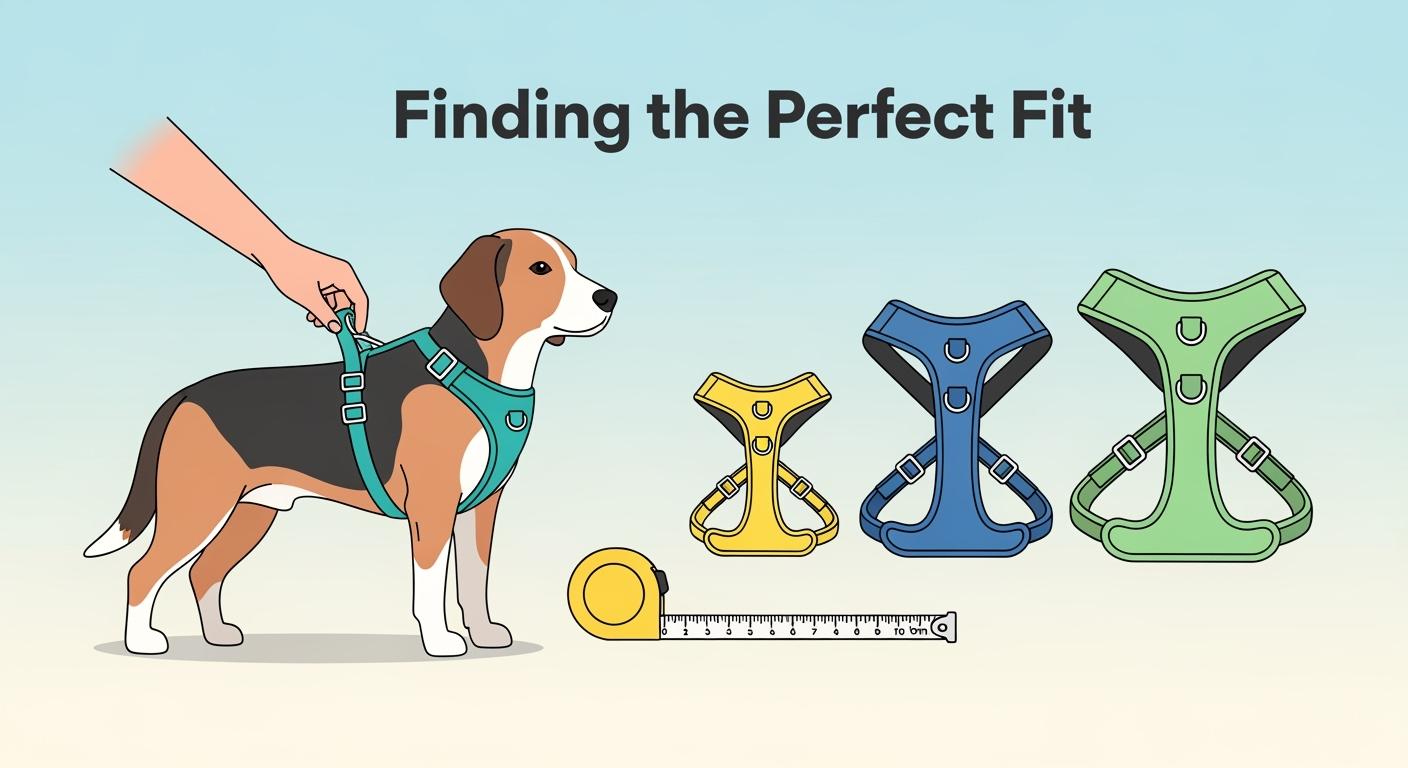
The best dog harness for walking is not the one with the biggest claim. It is the one that fits your dog well, lets the shoulders move freely, keeps the leash clip easy to reach, and stays stable through a normal walk. A good harness should feel secure without pinching, twisting, rubbing, or sliding out of place.
Always measure your dog’s neck and chest first. Size labels alone are not enough. Dogs with the same weight can still need very different strap lengths, neck openings, and chest coverage.
What matters most before you buy
Fit matters more than big claims
Many harness pages focus on control, padded panels, reflective trim, or extra hardware. Those details can help, but they do not fix a poor fit. For daily walking, the first priority is how the harness sits on the body when your dog stands, turns, sits, and walks forward on a loose leash.
The neck opening should sit at the base of the neck rather than pressing on the throat. The chest area should stay centered. The belly strap should sit behind the front legs without rubbing the elbow area. If the harness shifts every few steps, the design or size is likely wrong for your dog.
Comfort in motion matters more than comfort on the floor
Your dog’s comfort is most important on walks. A harness that feels soft when your dog is standing still can still cause trouble once the walk starts. Watch for shortened stride, shoulder restriction, elbow rubbing, or a harness that creeps sideways after a few minutes. Walking comfort depends on motion, not just padding.
A walking harness should help with everyday control without blocking natural movement. If the harness leaves marks, shifts often, or changes the way your dog steps, the fit needs work.
How to measure and check fit

Measure at the neck base and widest chest
You need to start with the right measurements. Use a soft tape measure while your dog is standing. Measure around the neck base where the neck meets the shoulders, then measure the widest part of the chest just behind the front legs. Write both numbers down before you compare them with a size chart.
If your dog falls between sizes, do not assume the smaller option will feel more secure. A harness that is too small can press on the neck opening, shorten stride, or create rubbing at the elbows. A harness that is too large can twist, sag, or make it easier for a dog to back out.
Check shoulder freedom and belly strap position
After putting the harness on, run through these checks:
- The neck opening should sit low enough to avoid pressing on the throat.
- The chest section should stay centered instead of leaning to one side.
- The belly strap should sit behind the front legs with visible clearance from the elbow area.
- You should be able to slide one to two fingers under the straps without forcing them.
Then do a short walk test. Let your dog walk several steps, turn, stop, and sit. Recheck the harness after movement, not just before it.
Clip access and handle placement still matter
For everyday walks, the leash clip should be easy to reach without digging through bulky panels. If the harness includes a handle, it should lie flat and not add extra bulk across the back. Added features are only helpful if they do not make daily fitting and clipping harder.
| Fit check | Pass signal | Fail signal |
|---|---|---|
| Neck opening | Sits at the neck base, not high on the throat | Presses upward, looks narrow, or leaves throat pressure |
| Chest fit | Centered and steady on the chest | Tilts, drifts, or sags after a short walk |
| Shoulder movement | Front legs move freely | Shortened stride or obvious restriction |
| Belly strap position | Clears the elbow area | Touches or rubs behind the front legs |
| Leash clip access | Easy to clip and unclip | Hidden, awkward, or blocked by extra layers |
Match the harness to your walking routine
Calm neighborhood walks and busier routes need different priorities
For calm daily walks, many dogs do well in a simple harness that stays centered, feels light, and clips quickly. On busier routes with more stops, distractions, or leash tension, you may prefer a design that makes the leash attachment easier to manage from the chest or upper back. The best choice depends on how and where you walk, not just what looks strongest on the product page.
Body shape still changes what works
Deep chests, broad shoulders, narrow waists, and thick coats all affect fit. A harness that works on one body shape may not sit correctly on another. If your dog wears a coat in colder weather, put the full walking setup on and repeat your fit check. Seasonal bulk can change strap tension and clip access more than many owners expect.
When a front attachment may help
If your dog pulls hard or gets overexcited at the start of a walk, a front attachment may help you guide direction more clearly. It can support better day-to-day handling, but it does not replace training. If your dog coughs, limps, resists the harness, or seems uncomfortable during walks, stop using that setup and ask your veterinarian what to check next.
Quick pass or fail checks before and after a walk
Use a quick routine before the first few walks and again after any size adjustment:
- Clip the harness on and check the neck opening, chest position, and belly strap clearance.
- Slide one to two fingers under the main straps.
- Walk your dog for a few minutes on a normal route.
- Stop and check for twisting, rubbing, or shoulder restriction.
- After the walk, look for red spots, hair flattening, or pressure points.
| Common problem | Likely cause | Quick check | What to change |
|---|---|---|---|
| Harness rides up | Neck opening too high or size too small | See where the front edge sits at the throat | Refit or try a different size or cut |
| Harness shifts sideways | Loose chest fit or body-shape mismatch | Check position after a few minutes of walking | Tighten carefully or switch design |
| Red marks behind the legs | Belly strap too close to elbows | Inspect after the walk | Adjust strap position or try another layout |
| Dog resists the harness | Restricted movement or uncomfortable pressure | Watch stride, turning, and sitting | Loosen, refit, or change style |
Common sizing mistakes include buying by weight only, pulling the straps too tight to prevent escape, ignoring coat changes, and assuming a larger padded harness must be more comfortable. The better approach is simple: measure, fit, test, recheck.
FAQ
How tight should a walking harness feel?
It should feel secure without pinching. You should be able to slide one to two fingers under the main straps while the harness still stays centered during a short walk.
Should the front of the harness sit on the throat?
No. The front opening should sit at the base of the neck rather than pressing high on the throat. If it rides upward during the walk, the size or shape may be wrong.
Can one harness work for every walk?
Sometimes, but not always. Calm neighborhood walks, crowded sidewalks, and stronger pullers may call for different priorities in clip position, bulk, and daily control.






