
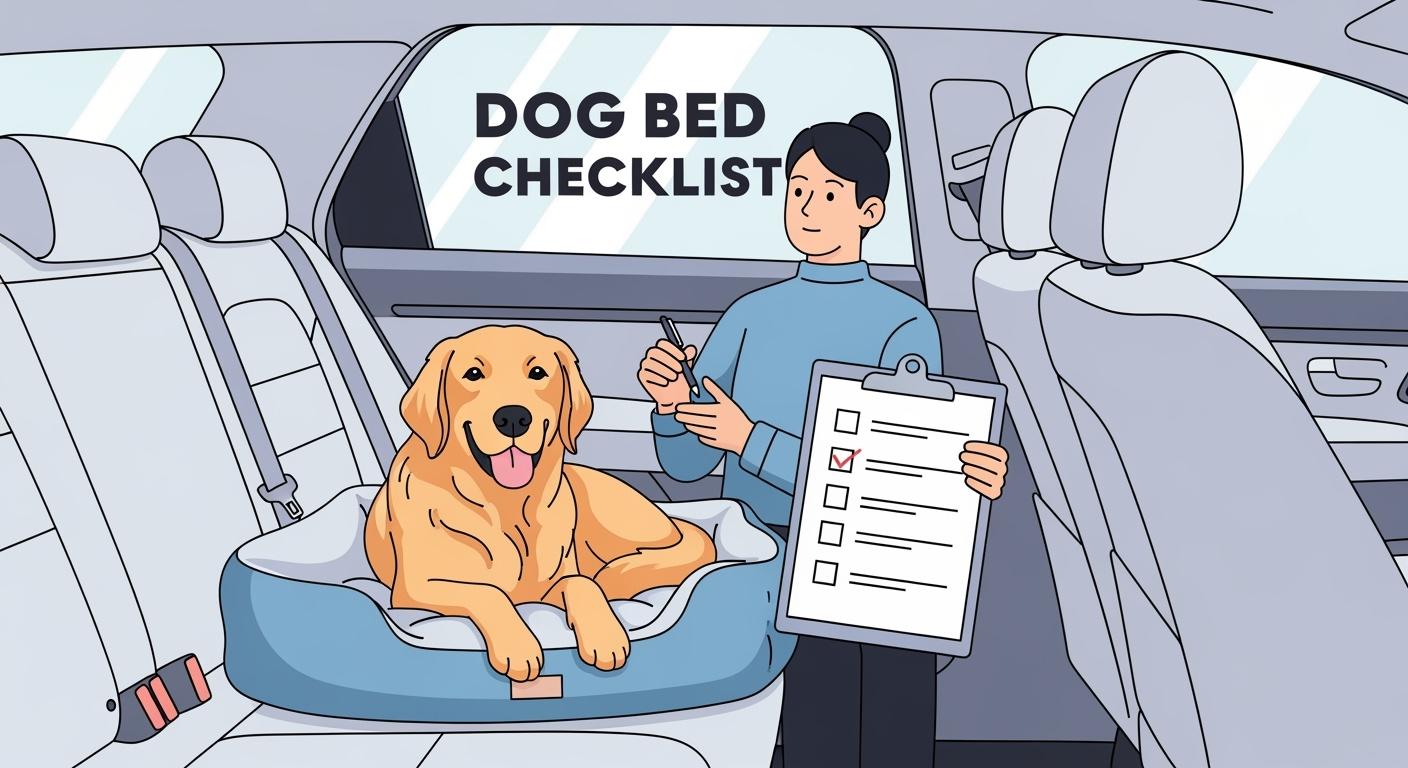
A car dog bed should make the rear seat easier to use, not harder to manage. The right pick gives your dog enough room to settle, keeps the sleep surface stable on the seat, and makes cleanup realistic after daily drives, wet paws, or shedding. It should also be easy for your dog to step into without climbing over a wall that feels too high or squeezing through an opening that collapses.
This guide focuses on fit, comfort, seat placement, and everyday maintenance. It does not treat a bed as a crash-protection product or as medical support. Use the bed as a comfort layer in the rear seat, then check whether your broader travel setup matches how your dog actually rides.
Key Takeaways
- Measure your dog and car seat before buying a bed. Check resting length, curled width, and the usable rear-seat footprint instead of relying on size names alone.
- Prioritize a stable base, a washable cover, and an opening that stays usable when your dog steps in or turns around.
- Treat a car dog bed as a comfort product for rear-seat travel. Use observable checks such as sliding, bunching, hot spots, odor buildup, and first-ride behavior to decide whether it is a good fit.
Fit the Bed to Your Dog and Rear Seat
Good fit starts with the dog and the seat, not with the product name. A bed can look plush online but still feel cramped once it sits on a contoured rear bench. You want a bed that gives your dog enough space to relax, stays in place, and allows easy entry and exit.
Measure resting space, not just standing size
Check three measurements before you buy:
- Resting length: measure from nose to tail base while your dog is lying in a natural resting position.
- Curled width: measure the widest point when your dog curls up, especially if your dog likes to lean against bolsters.
- Seat footprint: measure the usable rear-seat width and depth, not the entire cabin. Account for buckles, seat contours, and any raised center section.
Quick check: After setup, all sides of the bed should sit on the seat without hanging off an edge. Your dog should be able to turn once and settle without one shoulder or hip riding on the bolster seam.
Check entry height and opening shape
A car dog bed can feel awkward if the wall is too tall, the front edge folds down, or the interior surface is smaller than it looks from above. Dogs that hesitate to step in often respond to three simple checks: can they place front paws inside without the wall collapsing, can they turn once without bunching the base, and can they rest with their body supported instead of perched on the edge.
| Check | Pass signal | Fail signal | What to do |
|---|---|---|---|
| Rear-seat footprint | Base sits flat across the usable seat area | One side hangs off, curls up, or bunches near the buckle | Pick a smaller footprint or a flatter base shape |
| Entry and exit | Dog steps in and out without pausing or climbing awkwardly | Dog hesitates, scrambles, or catches paws on the wall | Look for a lower front edge or firmer opening |
| Turning space | Dog turns once and settles naturally | Body rides on the side wall or pushes the bed out of place | Choose a wider interior or lower bolsters |
| Placement stability | Bed stays aligned after a driveway or parking-lot test | Bed shifts during mild turns or braking | Use a grippier base or a simpler shape that sits flatter |
Choose Materials That Stay Comfortable and Easy to Clean

Materials matter most when they affect noise, heat, cleanup, and surface stability. You want a bed that gives your dog comfort, stays clean, and lasts through many trips. Soft fabric alone is not enough if the base slides, the fill shifts, or the cover is difficult to wash.
What helps in daily use
- A removable cover makes it easier to deal with fur, dirt, drool, and wet paws after ordinary drives.
- A surface that keeps its shape is easier for most dogs to settle on than one that collapses into deep lumps after a few uses.
- A low-noise fabric can help nervous dogs settle because it does not crackle loudly when they shift position.
- A grippy underside or seat-contact panel reduces sliding and bunching during turns.
- Smooth edge finishing reduces snag points near paws, elbows, and chest contact areas.
What to watch for before buying
| Feature area | What to look for | Watch-out |
|---|---|---|
| Cover | Removable and straightforward to wash | Attached cover that traps odor or takes too long to dry |
| Fill | Even support across the full surface | Lumps, thin spots, or quick bunching along one edge |
| Base | Textured or grippy seat-contact area | Slick underside that slides when pushed by hand |
| Bolsters | Enough shape for leaning without stealing too much interior room | Walls so bulky that the listed size overstates usable space |
| Trim and seams | Smooth finishing near contact zones | Hard trim, exposed zipper areas, or edges that press into the dog |
Quick check: Push down on the center, then release. The surface does not need to feel rigid, but it should return to shape without leaving one corner thin or twisted.
Use Checks, Mistakes, and Safety Boundaries
A car dog bed often works best when you test it at home first. Put it on the rear seat, invite your dog in while the car is parked, and watch how the body settles. Then do a short driveway, parking-lot, or neighborhood test ride before using it on a longer trip.
Common mistakes that lead to returns
- Buying by label alone without checking the actual rear-seat footprint
- Choosing tall bolsters that reduce usable sleep space for a dog that likes to sprawl
- Ignoring base grip, then discovering the bed slides every time the car turns
- Assuming a thicker bed is always better even when it lifts the dog too high or makes entry awkward
- Skipping cleanup checks and finding out later that the cover is slow to remove, wash, or dry
Safety boundary: comfort is not crash protection
A car dog bed is best treated as a comfort product for rear-seat travel. It should not be described as crash protection unless that claim comes directly from the product maker with clear testing information. Keep the bed in the rear seat, make sure your dog is not riding loose in the front, and never leave your dog alone in a hot vehicle.
Simple routine: Start parked. Then do a short ride. Recheck for sliding, leaning, bunching, trapped heat, or a dog that keeps stepping out of the bed instead of settling into it.
FAQ
How do I know if a car dog bed is too small?
If your dog cannot turn once and settle naturally, or if part of the body rests on the side wall instead of the sleep surface, the usable interior is too small even if the listed size sounds correct.
Should a car dog bed go in the front or rear seat?
Use the rear seat. It is the more appropriate place for a comfort bed during ordinary travel, and it keeps the setup away from the front-passenger area.
What is the fastest way to test whether the bed will slide?
Press and pull the empty bed by hand once it is on the seat, then do a short, slow test ride. If it shifts quickly, curls at one edge, or drifts toward the seat gap, the base grip is not strong enough for everyday use.
How often should I wash the cover?
Wash it when odor, dirt, hair, or dampness starts to build up. The right interval depends on how often your dog rides, the weather, and how messy each trip tends to be.
A good car dog bed makes rear-seat travel easier because it fits the seat, matches your dog’s resting style, and stays manageable after repeated use. Measure first, test at home, and let observable checks such as entry, sliding, cleanup, and how your dog settles guide the final choice.






