
Choosing the best dog harness for large dogs is not just about size. A harness can match the chest measurement and still fail once a large dog starts walking, turning, leaning forward, or pulling into the leash. The common problems are usually easy to see: the chest panel rides up, the belly strap rubs behind the front legs, the back ring twists to one side, or the whole harness feels too bulky to move in naturally.
For a large dog, the better harness is not always the thickest one or the one with the longest feature list. It is the one that stays centered under leash pressure, keeps the shoulder line clear, spreads force through the chest instead of the throat, and avoids hot or stiff contact points during repeated walks.
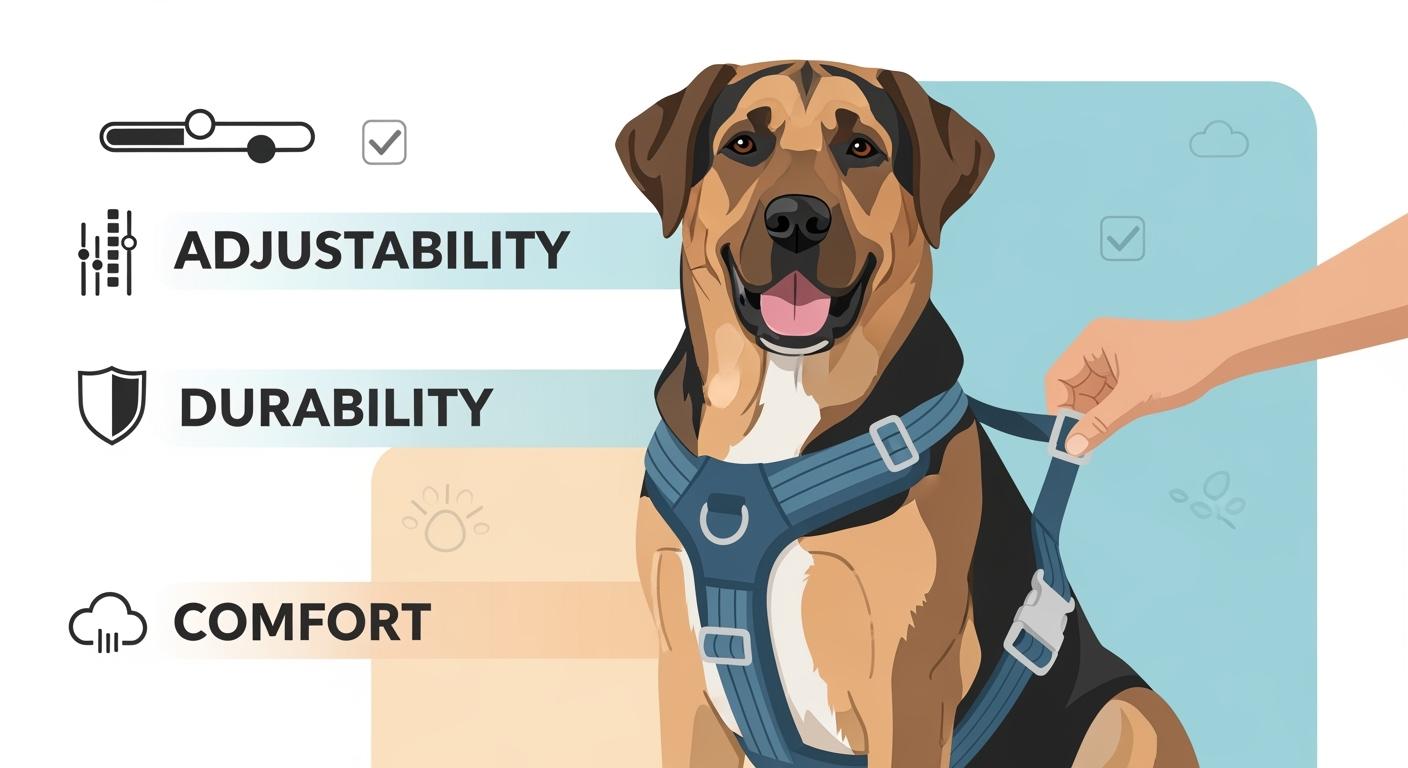
Why large dogs expose harness fit problems faster
Large dogs create more forward force and more side-to-side movement than smaller dogs. A small fit error can look minor when the dog is standing still, then become obvious as soon as the leash tightens. The harness may creep toward the throat, rotate across the chest, or pull harder on one side because the strap path does not match the body shape.
Chest depth is one of the first details to check. A deeper chest needs a front section that can sit low and stable without pressing into the neck. If the front panel is too short, too narrow, or too stiff, the harness often climbs upward when the dog leans forward. Once that happens, the harness stops acting like a chest-control product and starts acting like neck pressure.
Shoulder clearance matters just as much. A large dog usually has a longer stride and stronger shoulder movement. If the front coverage crosses the moving shoulder area, the dog may shorten its steps, turn stiffly, or resist wearing the harness after a few walks. If you need a broader product overview before checking large-dog details, start with the best dog harness guide. For this page, the focus is narrower: what keeps a large-dog harness stable once the dog is actually moving?
- The front section should stay on the chest instead of sliding toward the throat.
- The shoulder area should stay open enough for a natural stride.
- The belly strap should avoid the elbow zone after movement begins.
- The harness should stay centered during turns, stops, and leash tension.
Chest panel, strap path, and girth placement decide stability
A large-dog harness works best when the load path is simple and balanced. The leash force should move through the chest and body straps without pulling the harness diagonally. If one side carries more tension than the other, the harness will usually drift, bunch, or twist on the stronger side of the pull.
The chest panel should be wide enough to spread pressure but not so bulky that it pushes into the shoulders. This is where many overbuilt harnesses fail. Heavy front coverage can look strong in photos, yet still ride high, trap heat, or make the dog move around the harness instead of through it.
Girth placement is another common failure point. If the belly strap sits too close to the front legs, rubbing appears quickly behind the elbows. If it sits too far back without enough adjustment control, the harness may feel loose, slide backward, or leave the front section unstable. A good dog harness structure keeps these points balanced across different large-dog body shapes, not just one ideal size-chart example.
| Fit area | Better structure | Failure sign |
|---|---|---|
| Chest panel | Low, centered, and shaped to spread pressure | Rides toward the throat under pull |
| Shoulder line | Clear enough for long, natural steps | Short stride, stiff turning, or front-leg resistance |
| Belly strap | Far enough from the elbow zone to avoid rubbing | Heat, hair compression, or redness behind the legs |
| Back ring and webbing | Aligned with the body so force stays centered | Side shift, twisting, or one-sided pull |
| Adjustment range | Enough room to fine-tune chest and girth fit | Size looks right but straps max out before stable fit |
Why a strong harness can still be the wrong harness
Large dogs often push people toward heavy padding, thick handles, oversized buckles, and extra-wide panels. Those details can help when they are designed well, but they can also create new problems. A harness can look stronger and still feel hotter, stiffer, heavier, or harder to keep centered during a normal walk.
A handle is a good example. A flat, well-reinforced handle can help with short-distance control. A raised or bulky handle can add a pressure point on the back and make the harness top-heavy. It should never make the product feel like a lifting device for daily use, especially on a large dog.
Hardware needs the same balance. Buckles, D-rings, and clips should match the dog size and expected leash force, but oversized metal is not automatically safer. If the hardware adds too much weight or pulls unevenly, it can make the harness rotate even when the fabric size looks correct.
- Skip excess bulk if it makes the front section ride high.
- Avoid stiff edges near the armpit and shoulder movement zones.
- Do not treat heavy hardware as a substitute for balanced strap geometry.
- Choose structure that stays centered under pull, not just a larger-looking harness.
Walk tests that reveal whether the harness will hold position
A standing fit check is not enough for a large dog. The real test starts when the dog moves. A harness that looks clean indoors can still shift once the dog turns, lowers the head, or leans forward into the leash. A short movement test shows whether the harness shape, strap path, and hardware position are working together.
- Let the dog walk forward at a normal pace and check whether the harness stays centered.
- Make one slow turn in each direction and watch for one-sided pulling or panel rotation.
- Apply light leash tension and check whether the front section stays on the chest.
- Watch the shoulder area when the dog lengthens stride or lowers the head.
- After a few minutes, check behind the front legs for heat, rubbing, or compressed coat.
The best dog harness for large dogs should look almost uneventful in motion. It should not need constant correction, should not drag to one side, and should not force the dog into shorter steps. Stability is the result of chest fit, strap path, hardware placement, and material contact working together.
Material and edge details that affect daily comfort
Material choice matters because large-dog harnesses cover more surface area and carry more tension. A stiff outer shell may hold shape, but it can also rub if the edges are too hard. Soft padding may feel comfortable at first, but too much padding can trap heat or make the harness bulky around the shoulder and chest.
A better design uses firm structure where the harness needs stability and softer contact where the body moves. The inside surface should feel smooth against the coat. Binding should not cut into high-friction areas. Breathable zones help during warmer walks, especially when the dog is active or has a dense coat.
| Material detail | What it should do | What can go wrong |
|---|---|---|
| Outer fabric | Hold shape without becoming stiff | Panel collapses or feels board-like |
| Inner lining | Reduce rubbing during repeated walks | Hot spots behind legs or across the chest |
| Edge binding | Stay smooth along movement zones | Hard edges press into skin and coat |
| Webbing | Manage force without twisting | Strap curls, slips, or loosens under tension |
| Breathable areas | Reduce heat under larger coverage | Heavy padding traps warmth during walks |
When an overbuilt harness is not the best choice
Some large dogs do need stronger materials and more secure hardware, but that does not mean every large dog needs the thickest harness available. A calm large dog on daily neighborhood walks may do better with a flatter, lighter, more breathable structure. A stronger puller may need reinforced webbing and better load control, but still needs shoulder clearance and clean strap placement.
The right choice depends on the real use problem. If the issue is rubbing, more padding may make the harness hotter and bulkier. If the issue is side shift, extra thickness may not help unless the strap path is balanced. If the issue is throat pressure, the chest section needs to sit lower and spread force more cleanly. The product structure should solve the failure, not simply look stronger.
FAQ
What matters most when choosing a harness for a large dog?
Chest stability, shoulder clearance, and strap path matter more than the size label alone. A large-dog harness should stay centered under leash tension and avoid riding toward the throat.
Is more padding better for a large dog harness?
Not always. Padding can improve comfort, but too much padding can trap heat, add bulk, and make the harness harder to keep in position. Smooth edges and stable fit are more important than padding volume alone.
Why does a large dog harness shift to one side?
Side shift usually comes from uneven load path, poor strap angle, loose girth placement, or a chest panel that does not match the dog’s body shape under pull.
Should a large-dog harness have a handle?
A handle can help with short control moments if it lies flat and is well reinforced. A bulky or poorly placed handle can add back pressure and make the harness feel top-heavy.
When should the harness be replaced or removed?
Stop using the harness if it keeps riding into the throat, twisting under pull, rubbing behind the legs, loosening after adjustment, or showing hardware and stitching problems.






