
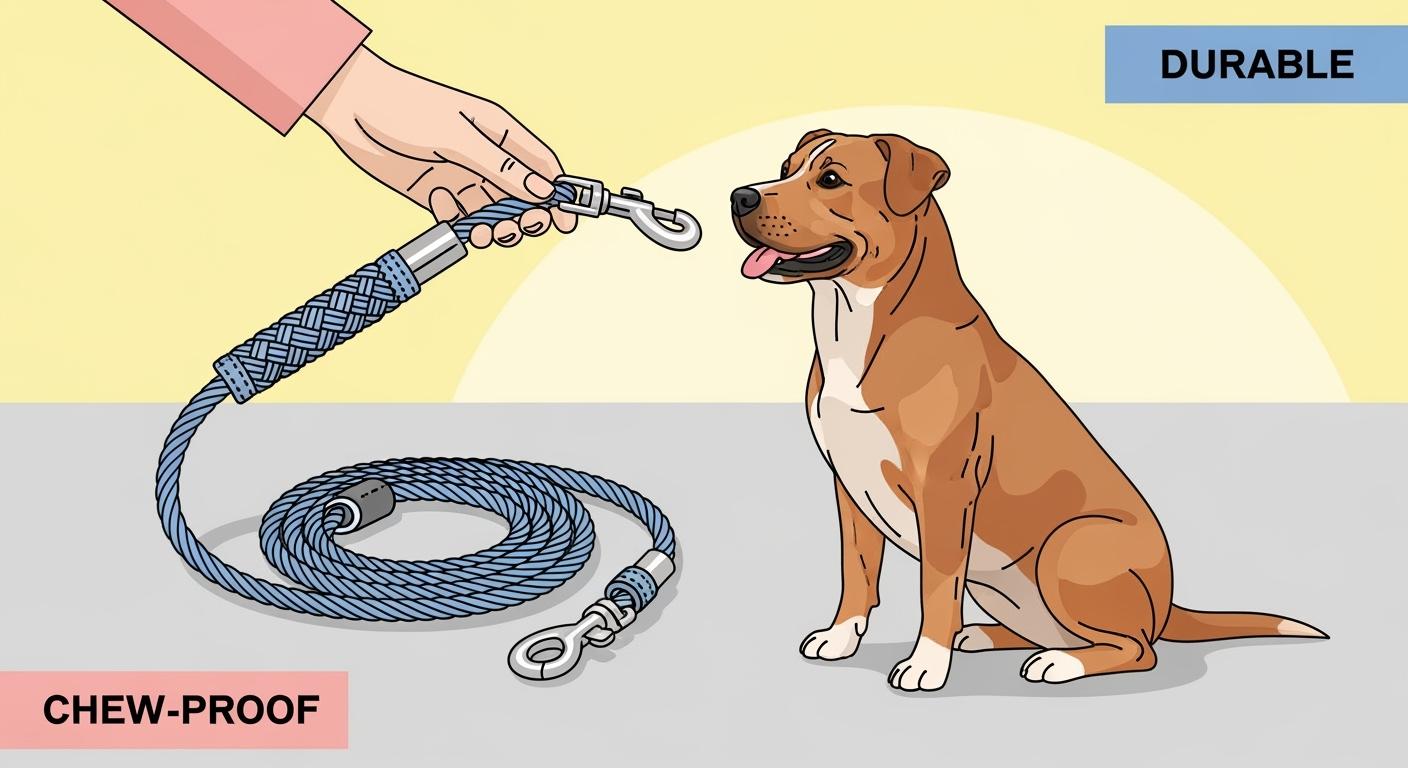
A chew proof dog leash can lower the risk of a fast bite-through during normal walks, but it is not a magic fix for every dog or every setting. The better buying approach is simple: match the leash to your dog’s size, chewing pattern, walking environment, and the hardware you can control comfortably.
Buying only by the words “chew proof” often leads to the same problems: a leash that feels too heavy for a small dog, a clip that overwhelms a small harness ring, a stiff layout that is awkward in tight spaces, or a handle that becomes uncomfortable once your dog pulls.
What to check first
- Choose the right chew proof dog leash by matching it to your dog’s size and strength.
- Check whether your dog lightly mouths the leash, repeatedly chews it, or bites when frustrated.
- Think about where you actually walk: tight sidewalks, apartment hallways, neighborhood loops, or open space.
- Make sure the clip, handle, and leash weight feel manageable for both you and your dog.
Tip: “Chew proof” should be treated as a durability claim, not as a promise that the leash cannot be damaged.
Match the leash to dog size, pull style, and walking space
Start with body size and pull pattern
Small dogs usually do better with lighter layouts and less bulky clips. If the clip looks oversized next to the harness ring, twists the front of the harness, or drags downward when your dog turns, the setup is probably too heavy. Stronger dogs or dogs that surge at the end of the leash need sturdier hardware and a handle that stays secure in your hand under tension.
Your dog’s chew style matters too. A dog that occasionally grabs the leash during excitement has different needs from a dog that repeatedly works at one spot with steady pressure. In the second case, material and coating matter more, and frequent inspection matters even more.
Choose the layout for your real route
You need to pick the right length for your walking environment. For crowded sidewalks, parking lots, building entrances, and short urban walks, a shorter fixed-length layout is usually easier to manage. Extra length makes more sense in quieter open areas where your dog has space to explore without crossing traffic, bikes, or doorways.
If you already know your dog tangles easily, spins at exits, or rushes ahead at curbs, avoid buying more length than you can comfortably gather and control.
Material and hardware checks that matter
Picking the right leash material and hardware matters more than buying by label alone. Focus on what you can inspect with your own hands: edge wear, coating cracks, clip action, handle comfort, and how the whole setup behaves once your dog starts moving.
| Option | Often works well for | Watch-outs | Quick check before buying |
|---|---|---|---|
| Coated cable or metal-core layout | Dogs that repeatedly work at the leash with their teeth | Can feel heavier or stiffer, especially on small dogs | Lift it, bend it, and check whether the weight and stiffness feel manageable in one hand |
| Chain layout | Dogs that quickly destroy soft webbing | Weight, noise, and less flexibility can make it a poor everyday choice for some dogs | Check whether it bangs into the chest or front legs when your dog changes pace |
| Coated webbing or wipe-clean surface | Owners who want faster cleaning after wet or muddy walks | Still needs inspection for cuts, peeling, or split edges | Run your fingers along the edges and bend the surface to look for stress points |
Hardware points worth checking in person
- Clip closure: The gate should close fully and stay shut when you pull and release it several times.
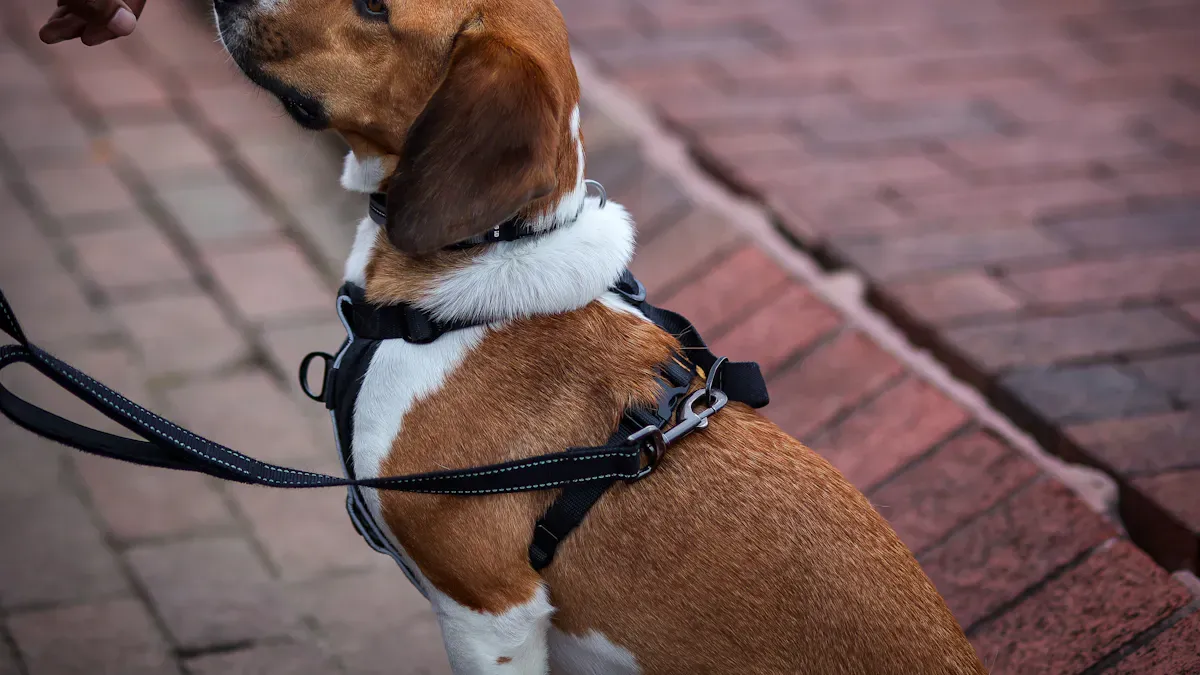
- Clip bulk: On small dogs, an oversized clip can twist the leash connection and make the front feel clumsy.
- Swivel movement: A swivel that turns smoothly can reduce leash twisting during turns and stop-start walking.
- Handle comfort: If the handle already bites into your hand indoors, it will feel worse once your dog pulls outside.
- Finish quality: Look for sharp edges, exposed wire, cracked coating, or uneven stitching near the handle and clip.
Quick real-world checks before the first full walk
A short test tells you more than a spec list. Before making the leash your daily setup, run through a few simple checks at home and on a short outside loop.
| Check | Pass | Fail | Why it matters |
|---|---|---|---|
| Doorway test | The leash stays organized as you enter and exit without wrapping around legs or door edges | The leash drags, catches, or swings awkwardly in tight spaces | This reveals whether the layout fits your real route, not just your shopping checklist |
| Clip pull-and-release test | The clip stays shut and the leash connection sits flat | The clip feels sticky, loose, oversized, or twists the harness ring | Clip problems show up early and should not be ignored on small dogs |
| Three-minute walk test | Your dog moves normally and the leash stays easy to manage | The leash knocks the legs, feels too heavy, or becomes hard to gather | This is the fastest way to spot a mismatch in weight, stiffness, or length |
| Post-walk edge check | No fresh nicks, split coating, exposed wire, or loosened stitching | You see early damage at one chew point or near the clip | Damage usually starts in a small area before the leash fully fails |
Common buying mistakes that lead to returns or frustration
- Buying by label alone: “Chew proof” does not tell you whether the leash is too heavy, too stiff, or too bulky for your dog.
- Choosing the heaviest option for a small dog: More material is not always better if it makes everyday handling awkward.
- Ignoring handle comfort: If the grip is uncomfortable, you are less likely to use the leash consistently.
- Using extra length in busy spaces: More freedom is not helpful when you need quick, close control.
- Expecting the leash to solve the chewing cause: A tougher leash may reduce damage, but it does not address boredom, frustration, or over-arousal on its own.
Cleaning, storage, and replacement checks
Easy cleaning matters because dirt hides wear. After wet or muddy walks, wipe the leash clean and let it dry before storing it. Pay extra attention to the clip area, stitched transitions, and the spot your dog tends to mouth most often.
Replace the leash if you notice exposed inner material, sharp metal edges, a clip that no longer closes cleanly, deep cuts in the coating, or damage that keeps returning to the same spot.
This guide is for product selection and everyday walk checks. If your dog chews from panic, pain, or intense frustration, the product choice should be paired with a closer look at the cause.
FAQ
Is a chew proof dog leash the same as a bite-proof leash?
No. The term usually means the leash is harder to damage than standard soft webbing. It does not mean the leash cannot be damaged at all.
Is chain always the best choice for dogs that chew?
Not always. Chain can reduce direct bite-through risk, but it also adds weight and changes how the leash feels in daily use. That trade-off is not ideal for every dog.
Can you use a chew-resistant leash with a harness?
Yes, as long as the clip size matches the harness ring and the connection does not twist or overload the front of the harness during normal walking.
When should you replace it?
Replace it when you see exposed inner material, cracked coating, rust, sharp edges, failing stitching, or a clip that does not close and reset cleanly.
The best chew proof dog leash is the one that stays manageable in your hand, fits your dog’s size and walk style, and still looks dependable after real-world inspection. Start with handling, hardware, and route fit before you decide that a tougher material is the right answer.






