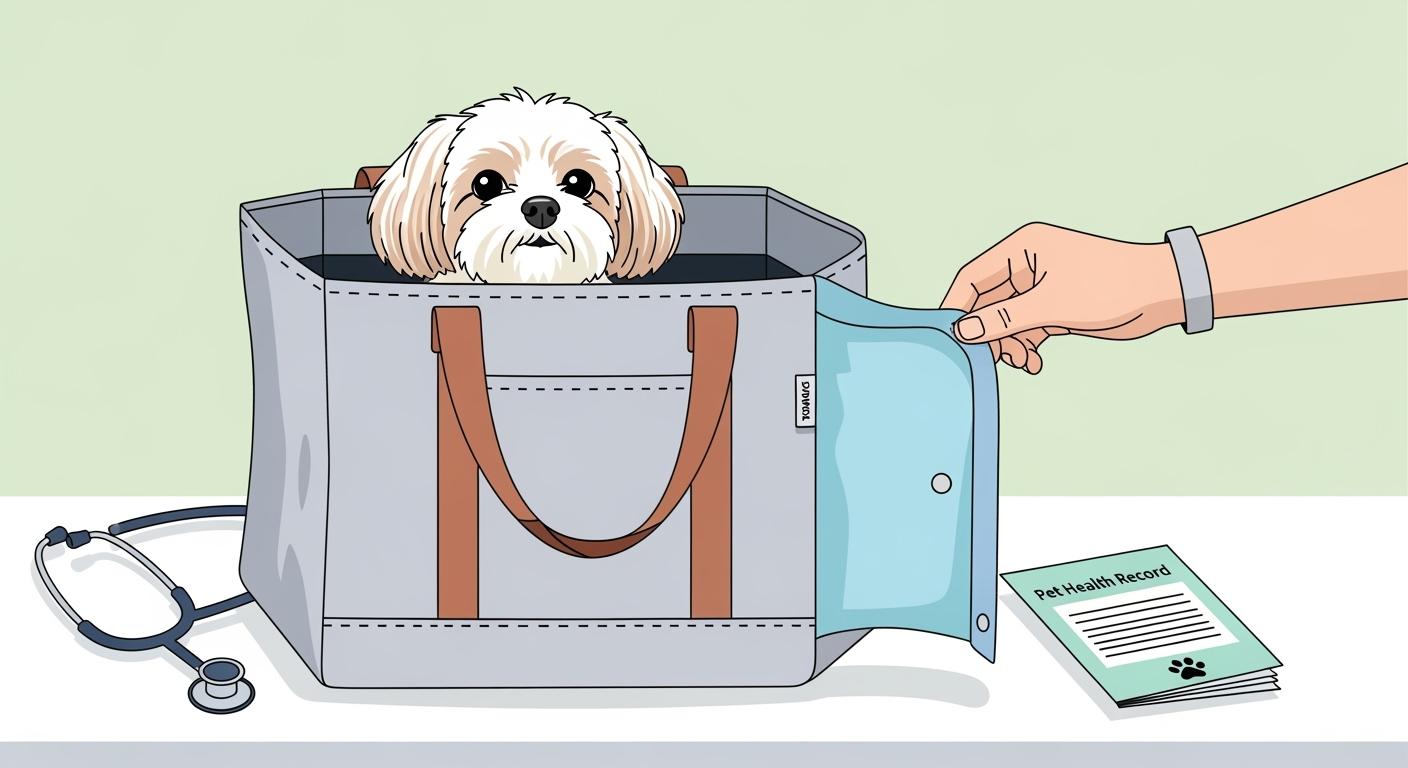
A small dog tote bag carrier faces one repeat problem that most soft-sided carriers handle poorly: moisture. Wet paws from a clinic floor, a stress-triggered accident, a quick set-down on a damp waiting-room tile — each event pushes moisture into the carrier’s lowest layer. What happens next depends almost entirely on whether that layer lifts out or stays sewn in place. For short trips like vet visits and urban carrying between errands, the liner design is not a minor detail. It is the difference between a carrier that resets in two minutes and one that stays damp until the next trip.
Why Vet Trips Push Soft Tote Liners Past Their Limits
Clinic Floors, Damp Paws, and Stress Accidents
Vet clinic floors stay damp. Cleaning solutions, tracked-in rain, a nervous dog’s puddle — the floor holds moisture that transfers directly to the carrier base every time you set it down. Dogs step in it. They track it inside. If the liner is stitched into the shell, that moisture has nowhere to go. The fabric wicks it sideways into the seam fold, where stitching perforations break the water-resistant backing and create paths into the padding layer below.
A nervous dog makes it worse. Stress raises the odds of an accident inside the carrier — and that accident lands on a liner already holding clinic-floor moisture. The carrier gets wet at two separate entry points, and a fixed liner merges them into one continuous damp zone. You cannot separate the sources. You cannot dry them independently.
Waiting Room Set-Downs and Quick Reloading
You set the carrier on the waiting-room floor. The base picks up whatever is on that floor. When the vet calls, you need the dog back inside fast. If the liner is already damp or soiled, you are reloading a dog onto a wet surface. A stitched-in pad cannot be pulled, shaken out, and replaced in the 15 seconds you have before the vet tech waves you toward the exam room.
The stability of a tote carrier during quick one-hand access matters here too. A carrier that tips or collapses when you open it one-handed makes reloading slower — and a wet liner that cannot be removed turns a 10-second delay into a ride home with a dog sitting in its own mess.
Comfortable at First, Hard to Reset After Messes
A soft liner feels fine on the way to the clinic. The problem shows up afterward. Even after wiping the surface, moisture trapped in the seam corners keeps the pad damp. The base panel can sag if the liner absorbed enough liquid to add weight — and a sagging base means the dog sits in a shallow depression that holds whatever did not dry.
You dry the carrier at home. It takes hours because air cannot reach the liner’s underside or the seam pockets. The next time you grab the carrier, it still smells. That is not a cleaning failure. That is a design failure — the liner and the shell are permanently linked, so one wet trip cascades into the next.
Tip: After each vet trip, pull the liner and check the pad edge, seam corners, and base panel stitching. A liner that cannot be removed will trap moisture in exactly these spots — if you cannot pull it, assume it is wet and plan drying time accordingly.
How a Removable Liner and Stable Base Panel Change the Reset Speed
Fast-Dry Seam Shape and Stable Base Panel
A stitched-in pad creates a continuous fabric bridge from the interior floor to the sidewall. When moisture enters — from damp paws or an accident — capillary action draws it along the fabric weave into the seam fold. The stitching perforations create dozens of micro-channels through the water-resistant backing, and moisture spreads into the padding underneath. Because the pad cannot come out, the only drying path is evaporation through the carrier opening. Slow. Uneven. That is why the carrier still smells days later.
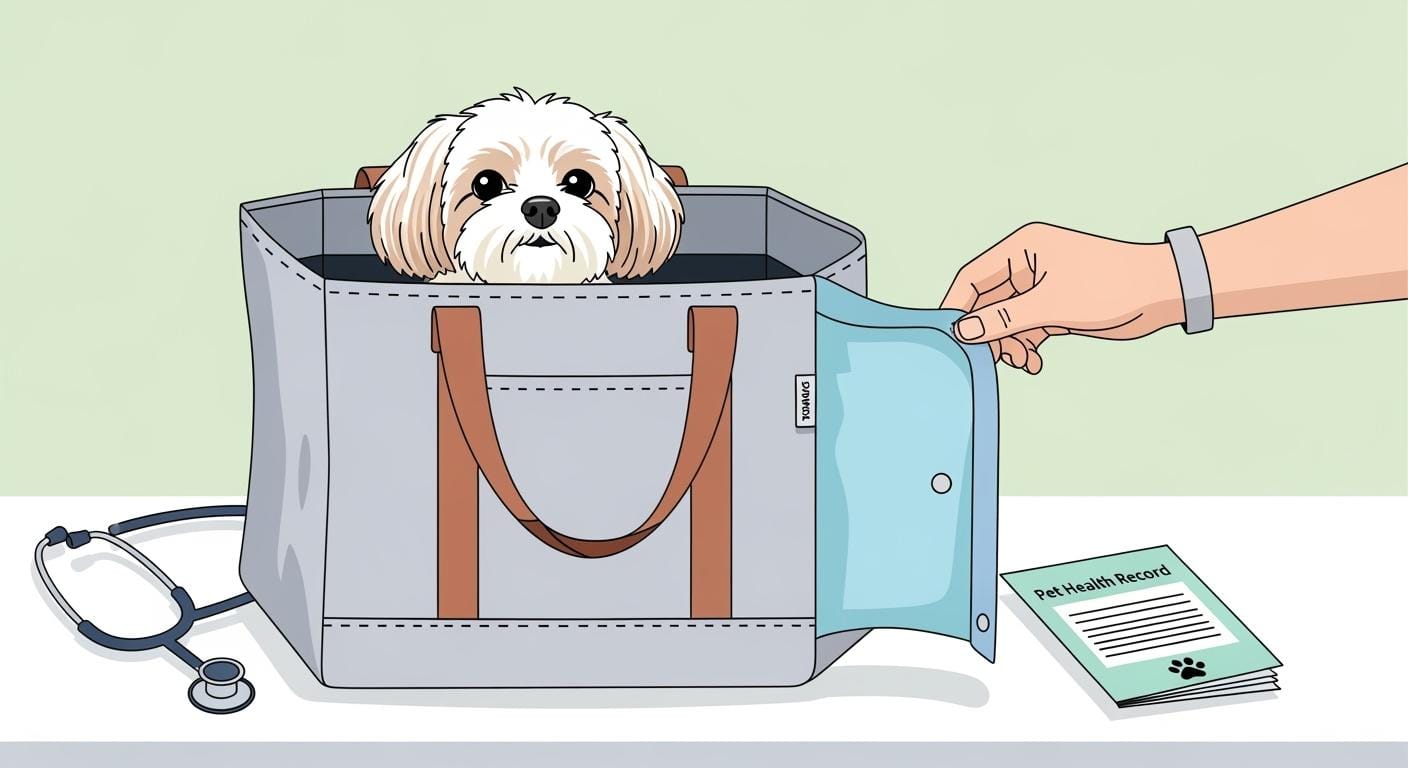
A removable liner breaks this moisture path at the attachment point. The liner edge forms a physical stop: no continuous fabric bridge runs from the liner surface into the base panel. Lift the liner out and the remaining shell is a flat, wipeable surface with no seam pockets holding trapped water. Both pieces — liner and shell — dry independently, with full air exposure on all sides. The base panel stays flat because it is not absorbing weight from retained moisture. A tote carrier built around a removable pad and wipe-clean base resets the equation: the part that gets wet separates from the part that provides structure.
Check this yourself. After a vet trip, remove the liner and press a dry paper towel against the base panel seams for five seconds. Dampness on the towel means moisture wicked past the liner edge into the structural layer. A carrier that passes this check stays dry where it counts.
Cleaning Speed, Odor Control, and Repeat Use
Removable liners change the workflow from “wipe and wait” to “remove, wipe, replace.” You lift out the liner. You wipe the interior shell. If the liner needs a wash, it goes in the sink or machine while the carrier body is already dry and ready. Total reset time: under five minutes. A stitched-in pad in the same condition needs hours of airflow — and often still holds odor at the seam roots.
The material on the interior walls matters too. Odor molecules embed in fabric fibers; a smooth, sealed surface gives them less to grip. That is not a cleaning trick. That is a material property — and one you can check by wiping the interior with a damp cloth and smelling the cloth afterward. If the cloth picks up odor, the surface is holding compounds from previous trips.
| Feature | Removable Fast-Dry Liner | Stitched-In Fabric Pad |
|---|---|---|
| Removal for cleaning | Lifts out in seconds | Cannot be removed |
| Drying speed | Full air exposure on all sides | One-sided evaporation only |
| Seam moisture trapping | Liner edge stops wicking at attachment point | Stitching perforations channel moisture into padding |
| Odor retention | Low — sealed surfaces resist odor embed | Higher — fabric fibers hold odor molecules in weave |
| Long-term cost pattern | Higher upfront, reusable across trips | Replacement needed when odor becomes permanent |
A quick at-home test tells you whether a carrier’s interior design holds up. Load the carrier with a weight roughly equal to your dog — a bag of flour or rice works — and carry it for five minutes. Set it down and check the base panel. If it bows downward or the liner shifted more than half an inch, the base lacks the rigidity to stay flat under load. A dog moving inside will amplify that sag on every trip.
What Else Makes Short Vet Trips More Practical
The removable liner solves the moisture problem. Other design features solve different problems that show up on the same trip. Mesh panels on multiple sides keep airflow moving — important when a nervous dog runs warmer than usual. A secure zipper path that does not catch on fabric prevents the frustration of fighting the opening while holding a dog. An interior tether clipped to a harness adds a restraint point for dogs that try to jump out at the check-in counter.
| Design Feature | What It Solves During a Vet Visit |
|---|---|
| Multi-side mesh ventilation | Prevents heat buildup inside a closed carrier in a warm waiting room |
| Fully removable and washable liner | Resets carrier to dry, odor-free condition between trips |
| Padded shoulder strap | Reduces carry fatigue when walking from parking to clinic and back |
| Interior tether with harness clip | Keeps dog from jumping out when the carrier is unzipped at the counter |
| Lockable zippers | Prevents a dog from nosing the zipper open from inside |
| Four-sided mesh ventilation | Maintains airflow regardless of which side faces a wall or seat back |
A well-ventilated carrier with a fixed, damp pad is still a damp carrier. The liner is the foundation; everything else builds on it. When evaluating a tote carrier for daily or frequent vet use, the first question is whether the liner comes out. Everything else is secondary because everything else depends on a dry start.
When This Carrier Design Fits — and When It Does Not
Ideal for Short Vet Visits and Quick Errands
A small dog tote carrier with a removable liner is built for trips measured in minutes or an hour or two — vet check-ins, a quick run to the groomer, carrying a small dog through a crowded lobby. The removable liner handles the moisture these trips reliably generate. The soft walls keep the carrier light enough to carry one-handed. The enclosed design helps dogs that get anxious in open waiting areas.
Typical limits for this carrier category:
- Weight capacity: up to approximately 16 lbs
- Typical interior dimensions: roughly 11 inches high by 16 inches long
- Carrier weight: around 3 lbs empty
The trade-off is straightforward. You get a carrier that resets fast between short trips. You give up the structural rigidity and crash protection that longer trips demand. For the vet-visit use case, that is a favorable trade.
Disclaimer: This fit guidance assumes a smooth-coated dog under the weight limit. Double-coated breeds or dogs with thick fur may not show liner shifting as visibly — hand-check the pad edge by feel rather than by sight after each trip. Dogs that actively chew or dig at fabric can defeat a well-built removable liner within a single session; this carrier design is not built for that behavior profile. If the dog’s chest shape falls well outside breed norms — particularly barrel-chested or very deep-keeled dogs — the carrier dimensions listed here may not provide adequate interior clearance even if the weight limit is met.
Not Suitable for Long Carry, Heavy Dogs, or Chewers
The design has clear limits. A 16-lb dog inside a 3-lb carrier makes nearly 20 lbs on one shoulder — manageable for a walk from the parking lot, uncomfortable for a 30-minute carry. Heavier dogs increase the load and accelerate liner wear at the attachment points. The removable liner relies on a clean mechanical fit; a dog that shifts weight constantly grinds the liner edge against the shell, which over time can fray the liner rim or loosen the fit.
Chewers pose a different problem. A soft-sided carrier — removable liner or not — is fabric. A determined dog can work a hole through mesh or seam in minutes. The liner cannot protect against that. If the dog treats the carrier as something to dig at or mouth, no amount of liner design solves the underlying behavior. A hard-sided carrier or a carrier built with heavier-gauge materials rated for active dogs may match that temperament better.
Main failure points under mismatched use:
- Shoulder strap fatigue on carries longer than 15-20 minutes with a dog near the weight limit
- Liner edge fraying when a restless dog shifts weight repeatedly against the attachment seam
- Mesh panel damage from dogs that paw or chew at enclosure walls
When a Full Travel Carrier Is the Safer Choice
A tote carrier serves short errands. Longer drives, flights, or any scenario where crash safety matters call for a different design. Full travel carriers use rigid frames, crash-tested anchor points, and structural base panels that do not fold or sag under lateral force. They are heavier and bulkier — and that is the point. The bulk is structural.
| Design Factor | Tote Carrier | Full Travel Carrier |
|---|---|---|
| Best trip length | Under 1 hour | Multi-hour, flights, long drives |
| Structure | Soft-sided, flexible base | Rigid frame, reinforced base |
| Weight | Light, typically under 4 lbs | Heavier, built for anchor stress |
| Crash protection | Minimal — not designed for vehicle impact | Designed with anchor points and impact absorption |
| Cleanup pattern | Removable liner, wipe-clean shell | Varies — some have removable trays, others wipe-down only |
The two designs serve different trips. A tote carrier solves the moisture-and-speed problem for short errands. A full carrier solves the safety-and-containment problem for long hauls. Using one for the other’s job creates the kind of mismatch where a dog leans out of a tote on a long drive because the carrier was never built to resist that kind of sustained lateral pressure.
A removable liner is not a convenience feature. It is the single design choice that determines whether a small dog tote carrier survives repeated vet trips or becomes a one-and-done purchase. Take the liner out, wipe the shell, and the carrier is ready. Leave the liner sewn in, and every trip’s moisture accumulates in the seams — invisible until the smell gives it away. Check the base panel seams with a dry paper towel after each wet trip. Check the liner edge for fraying at the attachment points. If both pass, the carrier is doing what it was designed to do.
Häufig gestellte Fragen
How do you clean a removable liner after a vet trip?
Lift the liner out and wipe both sides with a damp cloth. For machine-washable liners, use cold water and air-dry — heat can shrink the liner just enough to loosen its fit inside the shell. Make sure the liner is fully dry before placing it back. A damp liner reinstalled into a closed carrier traps moisture between the liner and base panel, which defeats the purpose of removing it.
How often should you check the liner and base panel?
After every trip where the carrier touched a wet surface or the dog had an accident. For dry trips, a visual check every few outings is enough. Focus on the liner rim — friction against the shell creates the earliest wear there — and the base panel seam pockets, which are the first places moisture hides when the liner fit starts to loosen.
What should you do if your dog has an accident in the carrier mid-trip?
Remove the liner as soon as the trip ends. Rinse it immediately — dried waste bonds to fabric and becomes harder to fully remove. Wipe the interior shell with a mild cleaner. Do not put the liner back until both are dry. If the accident soaked through to the base panel seams, prop the carrier open and aim a fan at the interior for 20-30 minutes before storing.
Does a fast-dry liner matter for a carrier used only once a month?
Yes — arguably more. A carrier stored for weeks between uses gives trapped moisture time to develop mildew inside the seam pockets. A removable liner that was dried fully before storage prevents that. A stitched-in pad that felt “mostly dry” when you put the carrier away can grow mold in the dark of a closet over a month. Infrequent use makes thorough drying more important, not less.