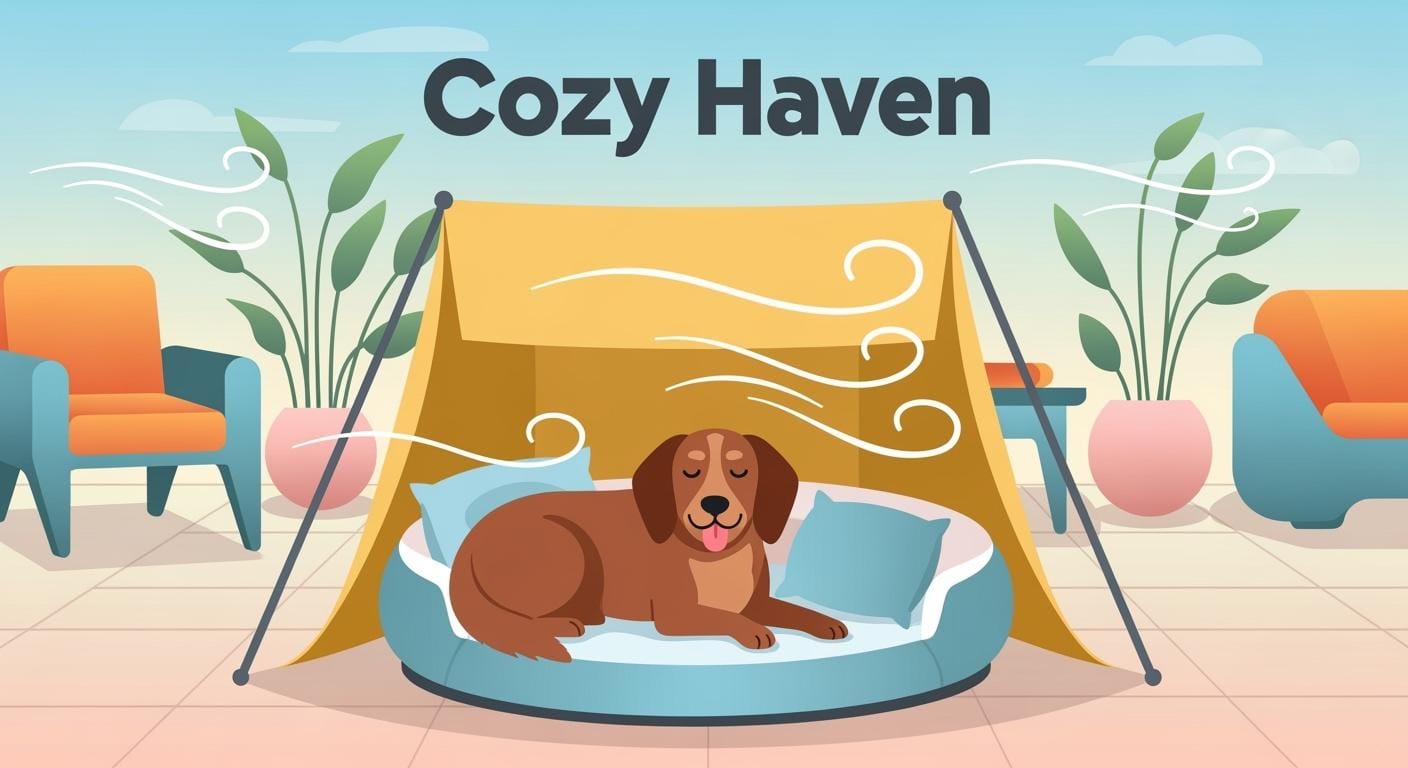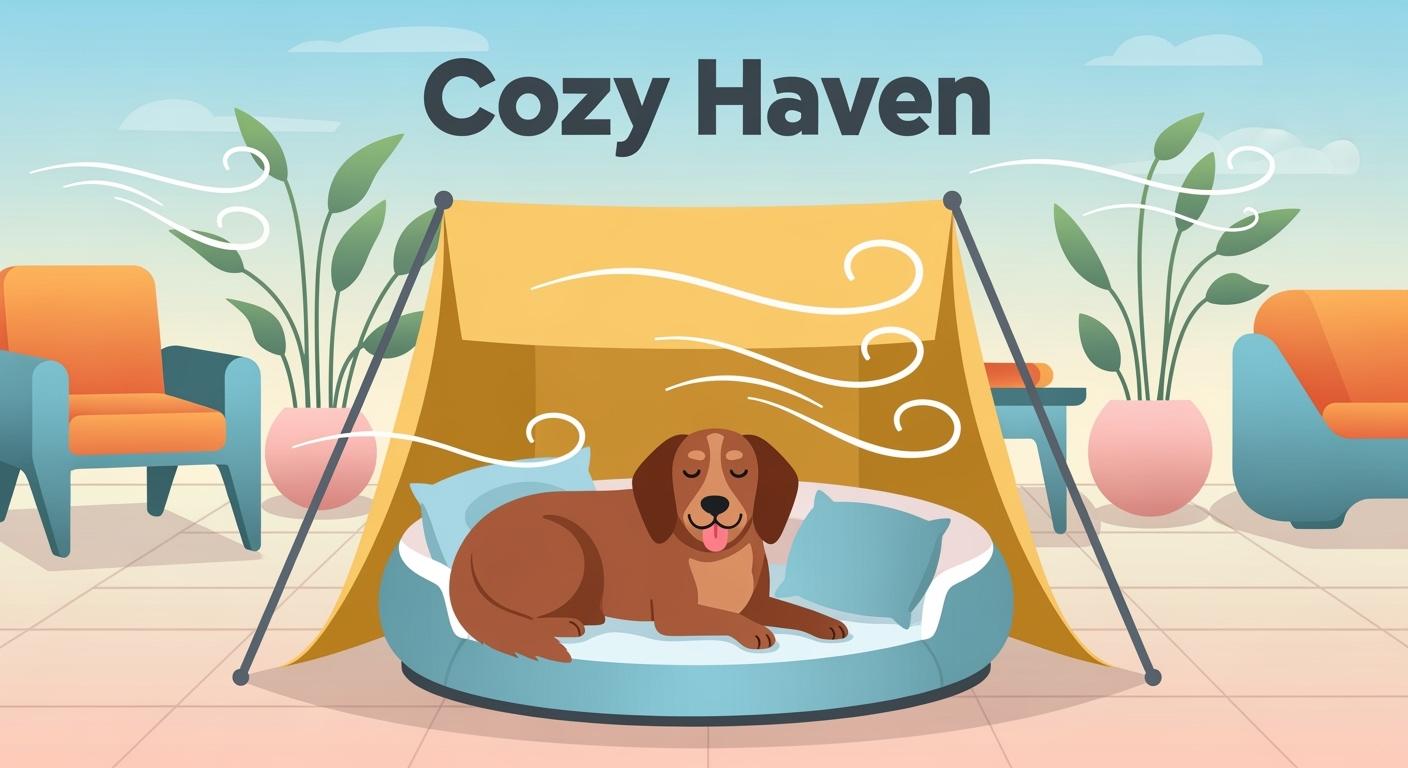
Wind hits loose canopy fabric and shade turns into a sail. Fabric flaps. The frame twists. The bed slides across the patio. A dog bed with canopy outdoor either handles these forces or it fails on the first breezy afternoon. Three design differences separate the two outcomes: how the canopy attaches to the frame, how wide that frame sits, and whether air can move through the sleep surface rather than getting trapped underneath.
Why Outdoor Canopies Flap, Shift, or Tilt
Loose fabric corners turn shade into a sail
When canopy fabric hangs loose over a frame, wind does not flow over it. It grabs the slack. The fabric billows upward, then snaps back. Each cycle stresses the attachment points unevenly — one corner takes more load, then another. Over a single afternoon of gusty wind, the stitching at the corners can start to pull. The noise alone is enough to keep a dog from settling.
The mechanical problem is straightforward: without tension, wind force concentrates at whichever attachment point happens to be downwind. The rest of the canopy contributes nothing to resisting it. A taut surface spreads that same force across the entire perimeter.
Tip: Pinch the canopy fabric at any corner after setup. More than half an inch of lift between your fingers means the wind has slack to work with. The canopy should feel like a drum skin, not a bedsheet.
Narrow frames rotate when a dog steps on from the side
Dogs rarely step onto a bed straight from the front. They approach from the side, plant one paw, then pull themselves up. That side entry creates a rotational force. A narrow frame has a short lever arm to resist it — the same force produces more rotation. The bed tilts. Anti-slip feet help on smooth surfaces, but they cannot compensate for a footprint that is simply too small relative to the dog’s weight and entry angle.
Frame width is not about accommodating a larger dog. It is about the distance between the load point and the frame’s center of mass. More distance means the same side-entry force produces less tilt.
Low covers feel protective but trap heat
A canopy that sits close to the sleep surface looks like it should offer more shade. In still air, it does. But the moment the sun heats the ground, warm air rises from below and collects under that low cover. There is no cross breeze to carry it away. The space under the canopy becomes warmer than the open air beside it. A dog lying there gets the shade but not the cooling.
Open sides break that microclimate. Air moves through at ground level and exits above. The canopy blocks direct sun while the open perimeter lets convection do the rest.
Design Details That Keep Shade Stable Outside
Tensioned removable canopy instead of loose draped fabric
A canopy that stretches tight across the frame behaves like a structural membrane, not a cover. Wind force hitting the fabric travels along the tension lines to the frame members, then down to the ground. The load path is continuous. No single seam or attachment point acts as a stress concentrator. That is why tensioned canopies do not flap — there is no slack for wind to catch in the first place.
Removability adds a practical dimension. A canopy that detaches can be washed separately when birds drop debris on it. It can be stored indoors during winter, which slows UV degradation of the fabric. When reattached, pulling it tight again restores the same load path. Some elevated outdoor dog beds with canopy use adjustable tension straps at each corner so the fabric can be taken up as it relaxes over time.
On gusty days, supplementary anchoring makes a measurable difference. Bungee cords from the frame corners to a deck railing or stakes add redundant load paths. Tarp clips on the canopy edges with tie-downs prevent lift. Even sandbags placed on the frame feet increase the force required to slide the bed. These are not design flaws — no portable structure resists every wind speed. They are acknowledgments that wind loads vary, and a well-designed bed gives you attachment points to match.
Wider raised frame for steadier patio and camping use
The frame’s job is not just to hold the bed up. It resists rotation. When a dog plants a paw on the edge and pushes down, the frame experiences a moment — a twisting force equal to the dog’s weight multiplied by the horizontal distance from the point of contact to the nearest frame foot. A wider frame increases the distance between the load and the opposite-side feet, creating a longer lever arm to counter that twist. The bed stays flat.
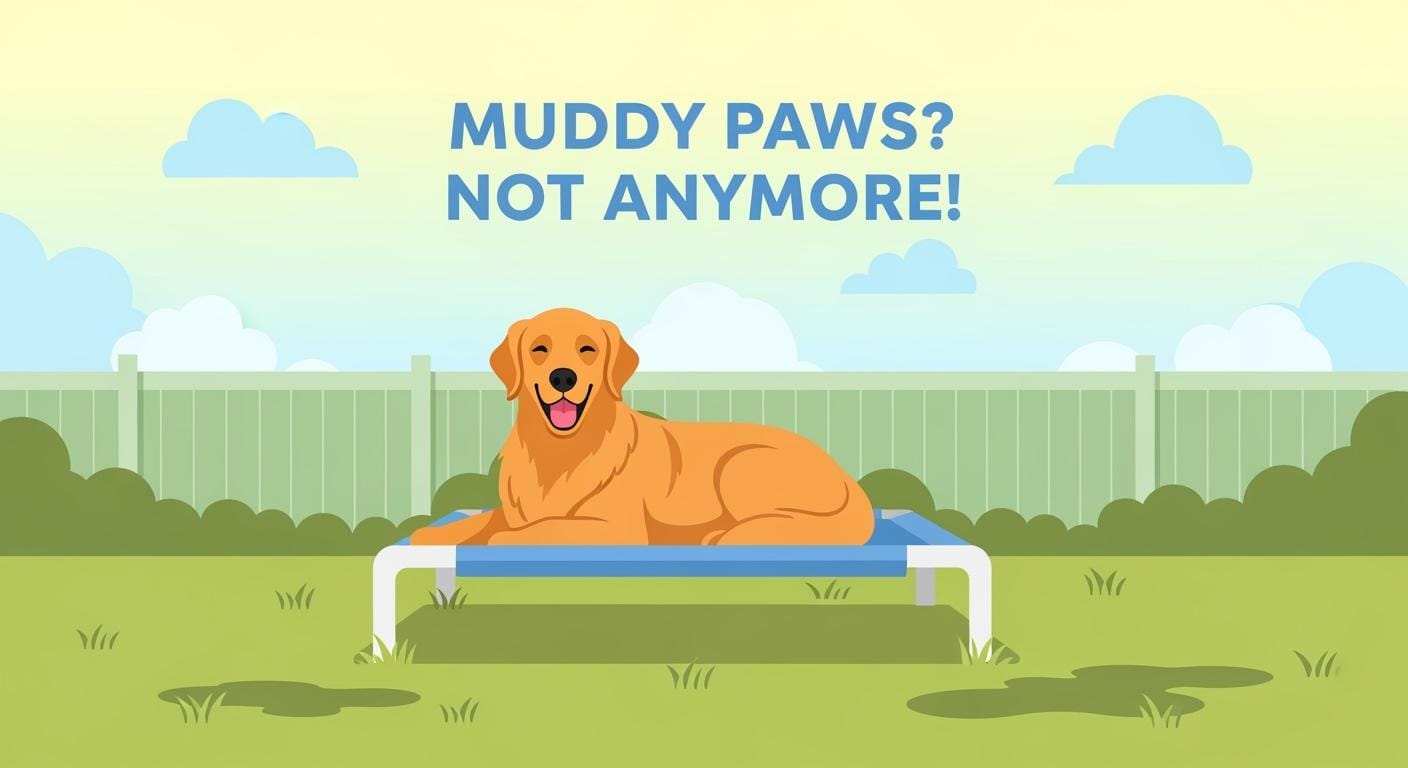
Raised legs serve a second function: they break thermal contact with the ground. On a sun-heated patio, the surface temperature can exceed 120°F. A raised bed creates an air gap that insulates the dog from that heat. On damp grass or after rain, the gap keeps the sleep surface dry. The elevation also makes the bed easier for an older dog to step onto compared to a ground-level pad — less knee flexion required.
Anti-slip feet add friction against smooth surfaces like stained concrete or deck boards. But friction only helps against sliding. It does nothing for tipping. If the frame is narrow, good feet will not save it. The outdoor dog bed features that matter most start with frame geometry, not foot material.
Open sides and mesh surface keep air moving
Heat leaves a dog’s body through conduction into the sleep surface and convection into the surrounding air. A solid fabric blocks both paths. A mesh surface enables both — body heat conducts into the mesh fibers, then moving air strips it away. The same principle applies to moisture. After a dog that has been swimming lies down, water drains through the mesh rather than pooling. The open weave dries faster than any solid textile.
Textilene, the mesh fabric common in patio furniture, works here because its PVC-coated polyester yarns are spaced in an open weave. Water and air pass through the gaps between yarns, but the yarns themselves resist UV and mildew. It is not the most cushioned surface — that tradeoff is deliberate. Cushioning traps heat and moisture. An outdoor dog bed that actually gets used outside prioritizes staying cool and dry over feeling plush.
In practice: After 20 minutes in direct sun, slide your hand under the mesh from below. The underside should feel close to ambient air temperature, not warm. If it feels warm, air is not moving through fast enough for the conditions.
When a Canopy Dog Bed Works and When It Does Not
Good fit for patios, decks, yards, and calm campsite shade
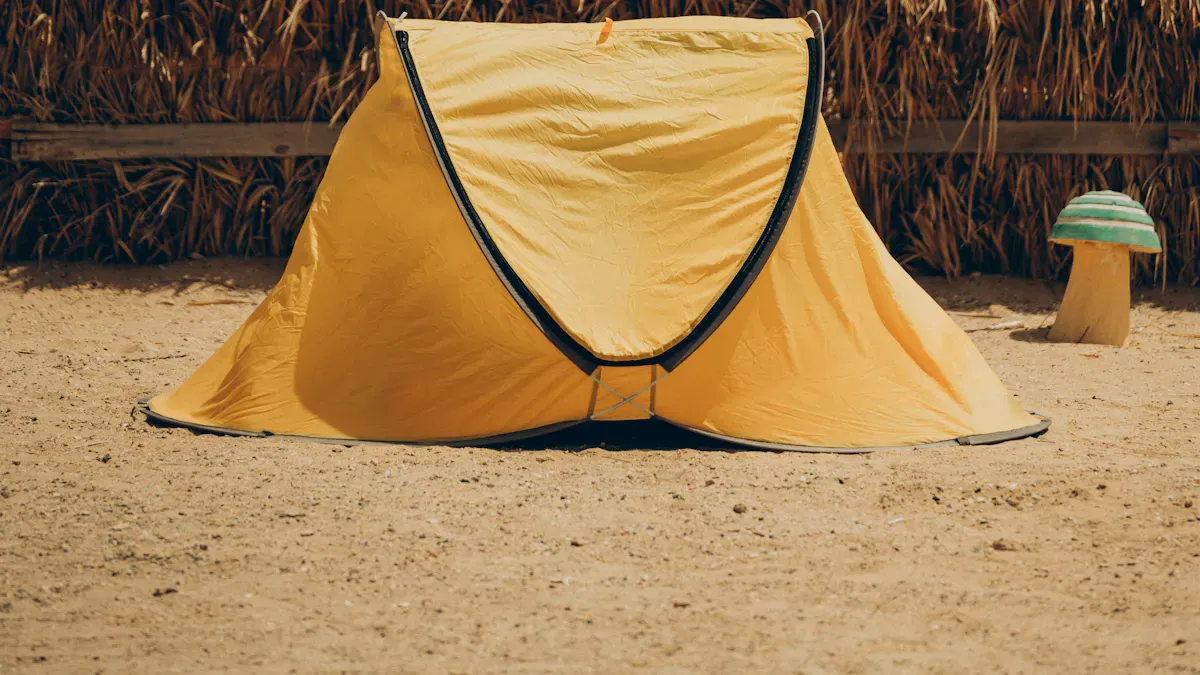
A tensioned canopy bed performs best where wind is predictable and the surface underneath is flat. Patios and decks provide stable footing for the anti-slip feet. Yards work when the bed is placed on level ground. At calm campsites, a canopy bed doubles as a familiar resting spot that keeps the dog off damp soil and away from ground-level insects. The raised design also works on surfaces that get uncomfortably hot in direct sun — the air gap insulates better than any ground pad.
The bed moves between these settings with reasonable effort. Most frames fold or disassemble for car transport. A camping shelter setup that includes a raised bed gives a dog a defined resting zone at a campsite, which can help a restless dog settle in an unfamiliar environment.
Weak fit for strong wind, storms, or unsupervised hot-weather shelter
A tensioned canopy bed is not engineered for storm conditions. Sustained gusts above roughly 25 to 30 mph can overcome even well-tensioned fabric — the wind force exceeds what portable frame anchoring can counter. The bed should come inside when storms are forecast. It is also not a substitute for climate-controlled shelter during extreme heat. The canopy blocks direct sun but does not lower the ambient air temperature.
Disclaimer: Canopy shade reduces radiant heat load but does not change air temperature. Double-coated breeds — huskies, malamutes, Akitas — may still overheat under a canopy in high temperatures because their undercoat traps body heat regardless of shade. For these breeds, check the dog’s gum color and panting rate after 15 minutes under the canopy on any day above 85°F. Pale gums or rapid, shallow panting mean the dog needs to move indoors regardless of how stable the shade looks.
What to check after the first few outdoor uses
New outdoor gear settles. Seam threads relax. Frame joints bed in. Canopy fabric stretches slightly as it adapts to repeated tensioning. A few specific checks after the first three to five uses catch problems before they become failures.
Run a finger along every seam on the canopy. Fraying starts as a slight fuzz before it becomes a tear. Check frame joints for gaps — any separation that was not there when the bed was new means a fastener is loosening. Inspect the mesh surface for sagging; more than an inch of deflection under the dog’s weight means the fabric has stretched beyond its design tension. These checks take under two minutes and tell you whether the bed is wearing in or wearing out. A canopy dog bed sizing and fit guide can help determine whether what you are seeing is normal break-in or a defect.
Chewed corners and claw marks near the edge of the mesh are the most common early failure points. A dog that digs before lying down concentrates force at the mesh-to-frame attachment. If the mesh edge shows pulled threads, a canopy bed that fits the dog’s resting style may reduce the digging behavior by giving the dog enough space to circle without hitting the frame.
| Design Difference | Warum das wichtig ist | Main Limitation |
|---|---|---|
| Tensioned canopy | Spreads wind load across frame instead of concentrating it at corners; eliminates flapping noise | Fabric relaxes over time and needs periodic re-tensioning |
| Wide raised frame | Longer lever arm resists rotational tipping from side entry; air gap insulates from hot ground | Wider footprint takes more patio space; heavier to carry for camping |
| Open mesh surface | Allows convection cooling and water drainage; dries faster than solid fabric | Less cushioning than padded beds; dogs that circle excessively may catch claws in the weave |
| Removable canopy | Washable separately; store indoors during winter to slow UV breakdown | Re-tensioning after reattachment adds a setup step |
Häufig gestellte Fragen
How do you clean a dog bed with canopy outdoor?
Hose down the mesh surface and wipe the frame with a damp cloth. Remove the canopy and wash it separately with mild soap and cool water — hot water can relax the tensioning fabric prematurely. Let all parts air dry completely before reassembling. Re-tension the canopy corners after reattachment.
Does the canopy protect a dog from rain?
The canopy sheds light rain if it is tensioned properly — water runs off rather than pooling. In steady or heavy rain, water will eventually seep through the fabric weave and drip from the edges. The mesh surface drains freely, so the dog is not lying in a puddle, but the bed is not a rain shelter. Bring the dog and bed inside during storms.
Can the bed stay outside permanently?
It can, but fabric life shortens. UV exposure degrades canopy and mesh fibers over months of continuous sun. Morning dew and rain accelerate mildew growth on any trapped dirt. Storing the bed indoors during harsh weather or covering it with a breathable tarp when not in use extends its usable life significantly. Even UV-resistant materials have a finite outdoor lifespan.