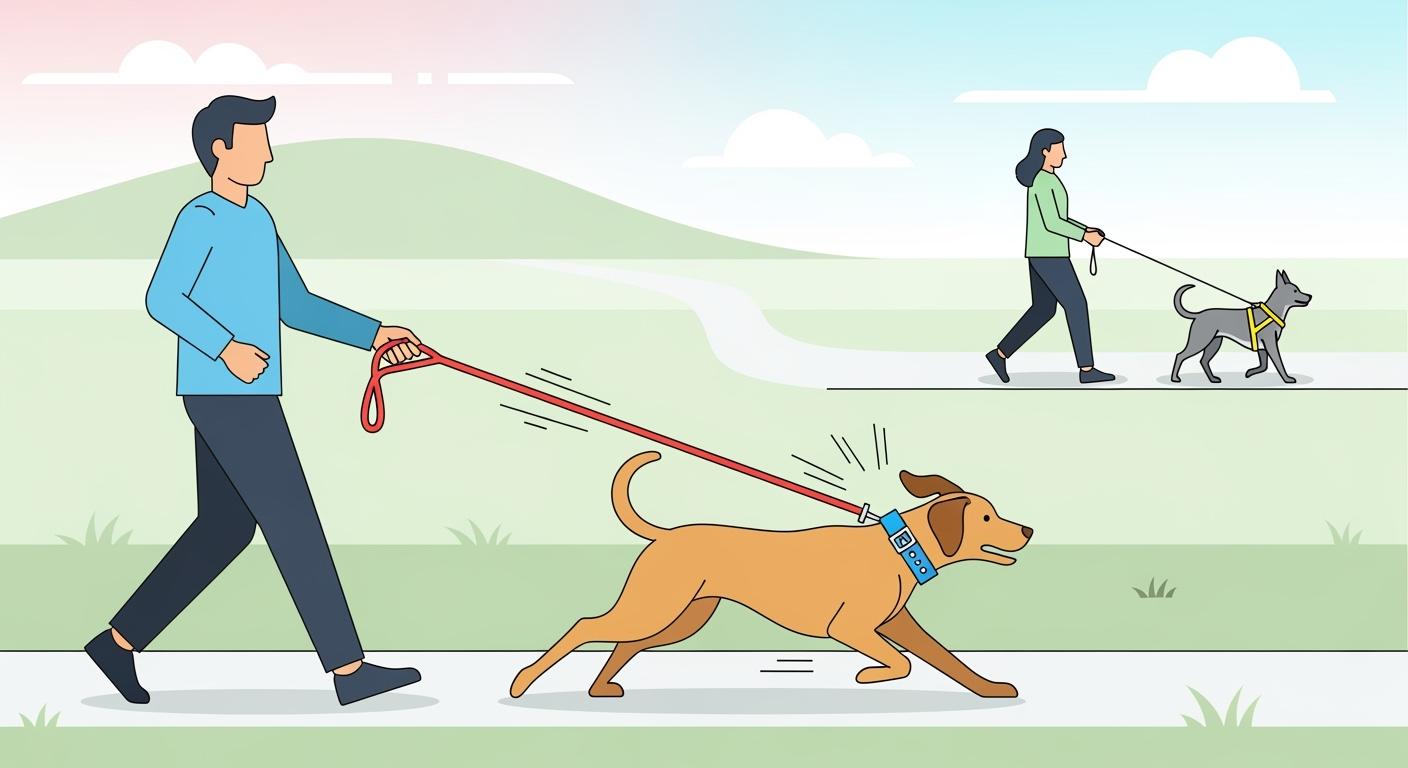
Most dogs look manageable in a quiet store and very different once the walk begins. The right collar and leash for dog walks depends less on appearance and more on what your dog actually does outside: whether the leash stays loose, whether your dog surges toward distractions, and whether the setup stays secure when the pace changes.
A flat collar can work well for calm walkers. A harness usually makes more sense for dogs that pull, cough, or still need help learning leash manners. A martingale collar fills a smaller role for dogs that slip backward out of standard collars. Even the range of harnesses and leashes becomes easier to judge once you know which of those three jobs your gear needs to handle.
Note: Gear can improve comfort and control, but it does not replace veterinary care or behavior support when a dog shows pain, breathing trouble, or severe reactivity on walks.
Start with how your dog walks in real life
Flat collars are best for dogs that already walk calmly
A flat collar works best when it is not doing much physical work. If your dog already walks on a loose leash, checks in with you, and rarely lunges or drifts hard into the line, a simple collar can stay comfortable and unobtrusive. In that situation the collar is mostly there for identification and a clean leash attachment point, not for absorbing repeated force.
Fit still matters. The collar should stay centered, lie flat, and allow two fingers underneath without gaping when your dog moves. Collar width can also change comfort under tension, which is why the tradeoffs covered in flat collar width and control matter before a collar becomes your everyday walking setup.
If the collar rotates toward the ears, slips backward during turns, or your dog starts coughing and bracing into the leash, the setup is telling you it is being asked to do more than it should.
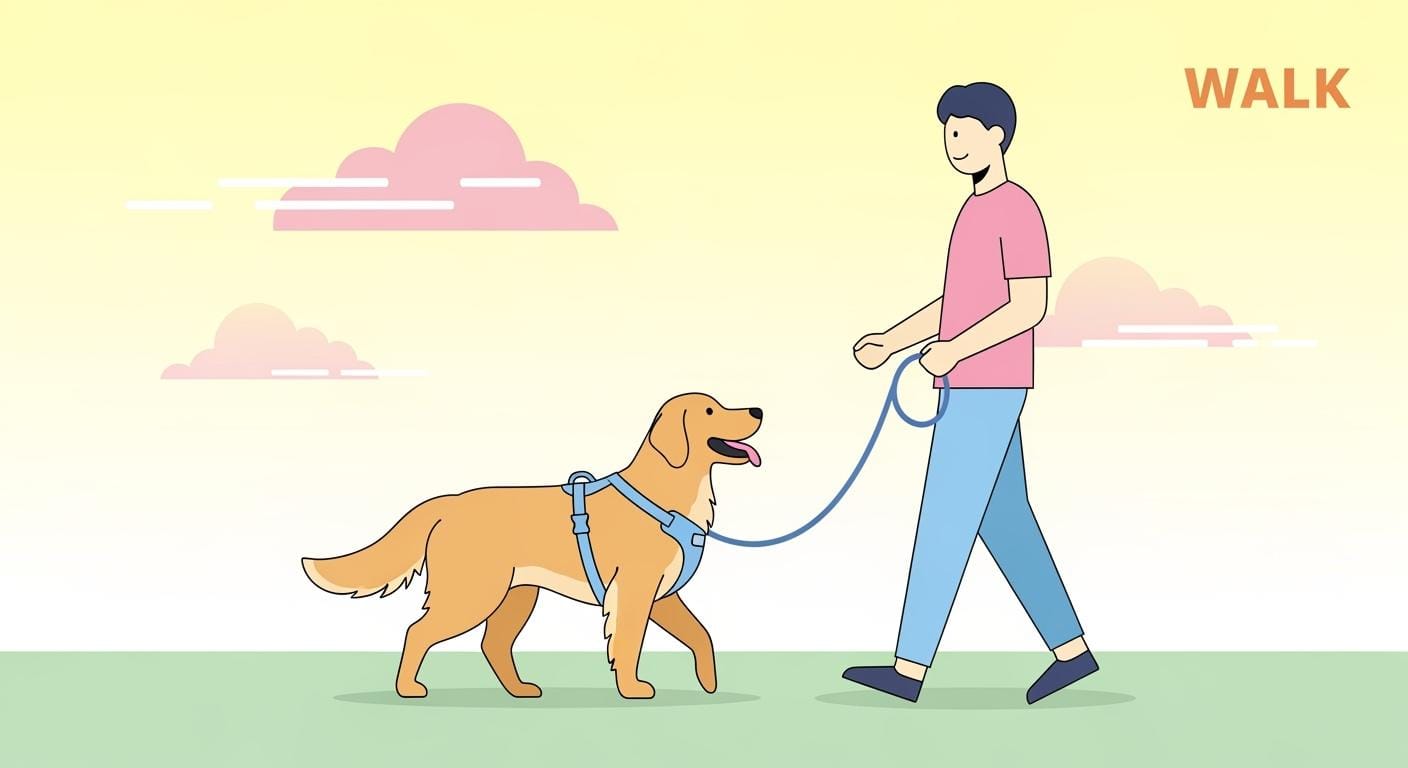
Tip: Reward the moments when the leash hangs in a loose J shape. Reinforcing that pattern usually changes the walk faster than waiting to react after pulling starts.
Harnesses usually make more sense once pulling enters the picture
A well-fitted harness shifts leash force away from the throat and across the chest and shoulders. That alone does not teach loose leash walking, but it usually makes daily practice easier on dogs that pull, lunge, or have any neck sensitivity. If your dog leans into the leash regularly, spreading that force out is often the cleaner starting point.
The clip position changes how the harness behaves. Front-clip models can redirect momentum back toward you, while back-clip models tend to feel simpler for dogs that are already steady. For dogs still learning, the step-by-step routine in front clip harness training guide fits naturally with a daily front-clip setup.
Check the harness while your dog is moving, not only while standing still. Straps should sit flat, clear the armpits, and stay stable through a stop, a turn, and a short backward pull. A more detailed strap-by-strap check appears in dog training harness sizing guide, which matches the same everyday walking questions most owners run into.
Martingale collars solve escape risk, not heavy pulling
A martingale collar is most helpful for dogs whose necks are nearly as wide as their heads. Those dogs can slip out of an ordinary flat collar even when the fit seems reasonable at rest. The limited-slip design tightens enough to reduce escape risk without needing the collar to stay tight all the time.
That does not make a martingale the best answer for a dog that pulls hard. Sustained tension still tightens the collar around the neck, so the real advantage is escape prevention, not load distribution. Dogs that both slip out and pull hard often do better in a harness first. The checks described in collar and leash fit checks for safer walks are the same kinds of checks that expose those problems early.
A quick comparison of the three common setups
| Gear type | Best match | What it does well | What to watch |
|---|---|---|---|
| Flat collar and leash | Calm dogs that already walk on a loose leash | Simple, light, easy to wear every day | Repeated neck pressure if the dog pulls or lunges |
| Harness and leash | Dogs that pull, are still training, or have neck sensitivity | Distributes force away from the throat | Chafing or shifting if the fit is off |
| Martingale collar and leash | Dogs prone to slipping out of flat collars | Adds security without a constantly tight fit | Not a good answer for sustained pulling |
Leash length and hardware matter too. A shorter fixed leash often gives cleaner handling for dogs that pull, and a lighter clip can feel noticeably better on smaller dogs. The details in choosing the best leash for a pulling dog fit into that part of the decision once you know which attachment style you need.
What changes once the leash gets tight
Pressure builds gradually, not only during big lunges
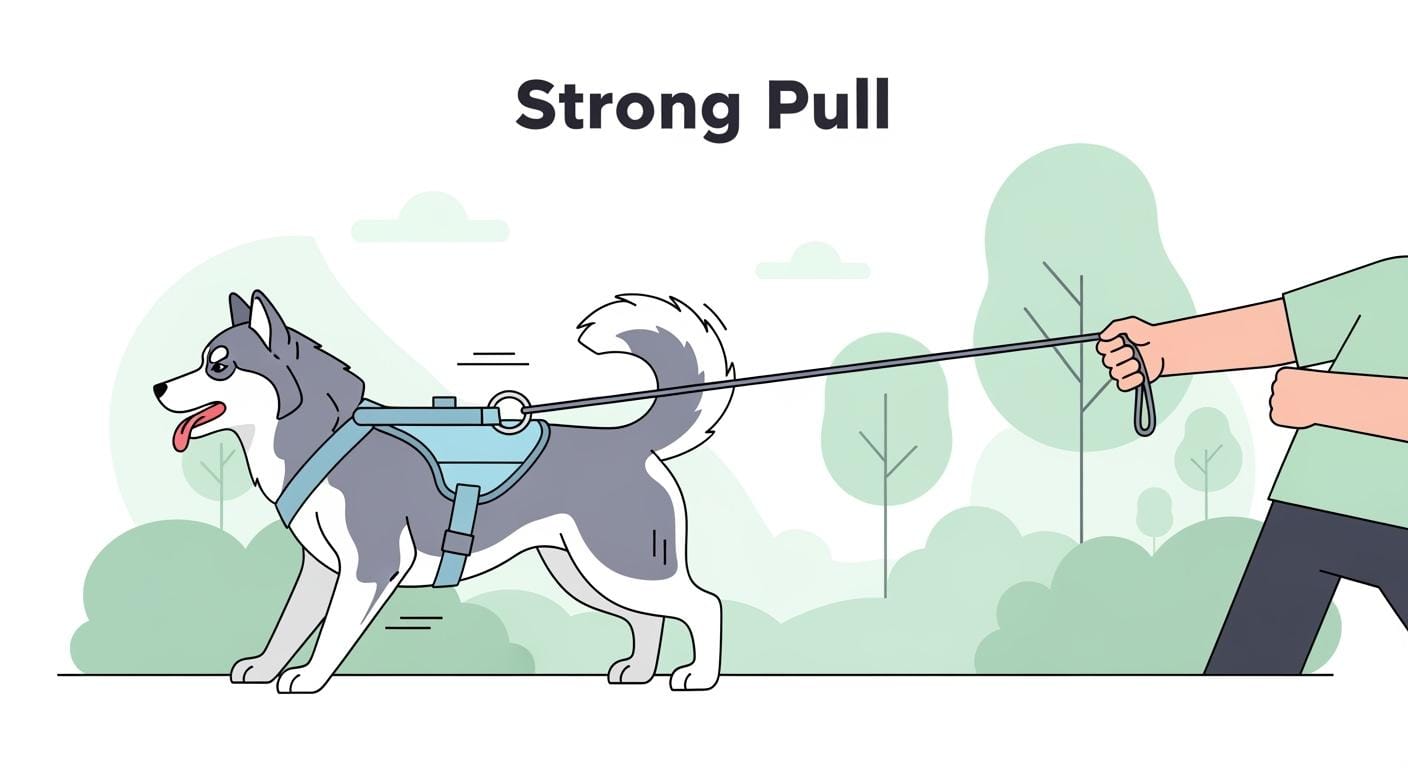
One dramatic lunge is obvious. What people often miss is the slow buildup from light to moderate tension repeated over a full walk. On a collar, that force lands at the neck and throat every time the leash tightens. Dogs do not need to be extreme pullers for that pattern to become uncomfortable.
If your dog coughs during the walk, shakes the head after you unclip the leash, or seems slower than usual on a route they normally enjoy, it is worth treating that as information about the setup rather than as a random habit.
Disclaimer: Coughing, labored breathing, or repeated head and neck shaking can have causes beyond leash pressure. Stop and talk with your veterinarian if those signs show up or keep returning.
Slip risk usually shows up during backward movement
Many escapes happen when a dog startles, braces, and moves backward rather than forward. A collar that looks secure when the dog is standing still can suddenly loosen enough for the head to slip through once the body twists and pulls in reverse. That is why the safest fit check includes a gentle backward test before the walk starts.
Wide-strap Y-back harnesses, secure chest pieces, and properly fitted martingales usually handle that moment better than a standard buckle collar. If your dog has slipped out once, treat that as a setup problem that needs solving before the next walk.
Small hardware choices affect daily handling
Leash weight, clip size, and overall drag change the feel of the walk more than many owners expect. A heavy clip on a small dog can bump the chest or collar every few steps. A leash that is longer than your dog can handle cleanly often turns ordinary turns into rushed corrections. A manageable setup should feel stable in your hand and predictable at the attachment point.
Test the setup before you trust it
The fastest way to avoid a bad everyday setup is to test it in stages instead of deciding after one short outing.
- Indoor fit check: Put the gear on at home and make sure straps or collar edges lie flat without rubbing the neck, chest, or armpits.
- Short outdoor loop: Walk one block at a normal pace and watch for rotation, drifting straps, coughing, or a clip that feels too heavy.
- Repeat on several walks: Problems often appear after 15 to 20 minutes, not in the first 30 seconds outside the door.
Across those walks, notice the leash shape, where the gear sits at the end of the route, whether your dog checks in with you, and whether you feel like you are managing the setup or fighting it.
| Check item | Good sign | Problem sign | First adjustment |
|---|---|---|---|
| Collar or harness position | Stays flat and centered | Rotates, rides up, or drifts | Refit the gear or switch styles |
| Leash handling | Feels balanced and easy to shorten | Twists, drags, or bumps the dog | Use a shorter leash or lighter clip |
| Dog movement | Steady pace with a relaxed leash | Pulling, coughing, or lagging | Move force off the neck and reward calm steps |
| Security | No slipping during turns or backward motion | Dog backs out or nearly escapes | Use a better-fitting harness or martingale |
| Responsiveness | Dog checks in and follows direction changes | Constant lunging or bracing | Tighten the handling plan, not just the gear |
When the setup is wrong, the walk usually tells you quickly
Most bad setups do not fail quietly. They usually show up as coughing, neck shaking, rotating hardware, resistance at the door, or a dog that feels harder to handle with each outing instead of easier.
- Coughing during the walk or shortly afterward
- Labored breathing that seems out of proportion to the pace
- Gear rotating, sliding upward, or shifting backward during turns
- Backing out of the collar or harness
- Heavy clip drag or tapping that distracts the dog
- Reluctance to let you put the gear on after it was previously accepted
Hard turns often expose the problem first. If the collar twists, the clip swings, or the harness shifts across the chest every time direction changes, the issue is probably in the fit or layout rather than in your timing alone.
Common mistakes that keep the walk harder than it needs to be
- Using a retractable leash for a dog that already pulls and then wondering why tension keeps paying off
- Choosing a leash length based on comfort in your hand instead of your dog’s real walking radius
- Keeping a collar too tight because the dog once slipped backward out of it
- Assuming one successful walk proves the setup works under normal conditions
- Using a back-clip harness for a dog that still needs frequent redirection at the front end
Tip: If the walk feels like a strength contest every day, the setup is probably asking the wrong piece of gear to solve the problem.
| Symptom | Likely cause | Fast check | Beheben |
|---|---|---|---|
| Coughing on walks | Repeated neck pressure | Notice whether it happens during pulling moments | Move to a well-fitted harness |
| Backing out of gear | Fit is too loose for reverse pressure | Test a gentle backward pull before leaving | Refit or switch to a martingale or secure harness |
| Hard turns feel messy | Leash is too long or hardware is too heavy | Watch how the clip behaves on a normal corner | Shorten the leash and reduce excess hardware |
| Gait changes or obvious discomfort | Pressure, rubbing, or a separate physical issue | Compare movement on and off leash | Stop using the setup and check with your veterinarian |
| Harness rubbing or drifting | Strap placement or sizing is off | Inspect chest and armpit contact points after the walk | Readjust the fit or change the harness cut |
For many dogs, the right answer is simpler than it looks
A flat collar is usually enough for a dog that already walks with a loose leash and does not test the limits of the setup. A harness is usually the safer daily tool for dogs that pull, lunge, or seem uncomfortable with neck pressure. A martingale makes sense when escape risk is the main problem and the dog is not also driving hard into the leash.
Once you know which lane your dog falls into, the wider set of harnesses and leashes is easier to narrow by clip position, coverage, and hardware instead of guessing from looks alone.
- Choose a flat collar for steady dogs that already know how to walk on a loose leash.
- Choose a harness when force needs to move away from the throat.
- Choose a martingale when the main concern is slipping out, not strong pulling.
Häufig gestellte Fragen
How do I know whether a collar and leash for dog walks still fits correctly?
The gear should stay flat, centered, and stable while your dog moves. If it rotates, slips, digs in, or shifts backward during turns, the fit or the gear type is probably wrong for your dog.
Is a harness always better than a collar?
No. A calm dog that already walks on a loose leash can do well on a flat collar. A harness usually becomes the better choice when pulling, coughing, escape risk, or neck sensitivity is part of the picture.
What should I change first if my dog keeps pulling?
Start by moving pressure off the neck, tightening up leash length, and checking whether the clip position matches your dog’s behavior. From there, consistent practice usually matters more than buying more hardware.