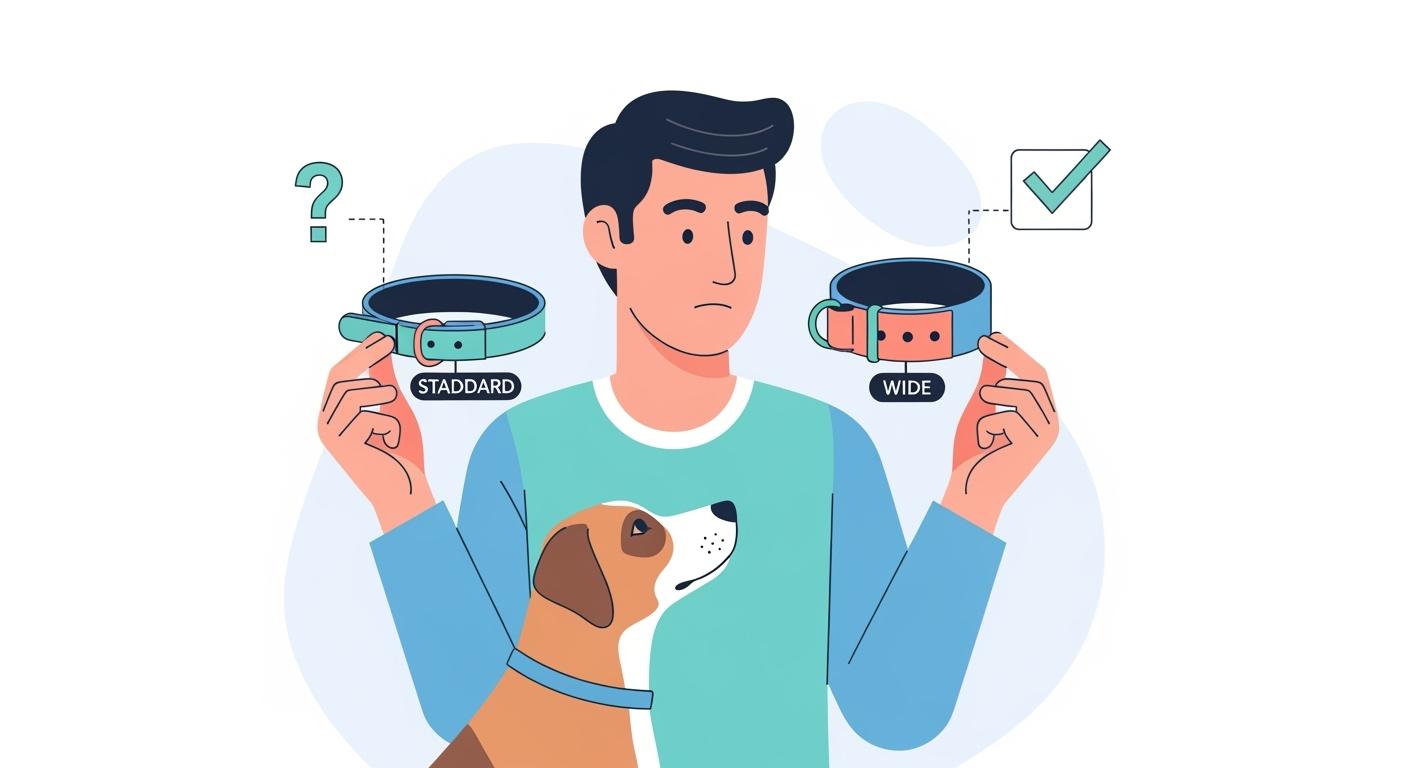
Choosing a flat collar dog setup is not only about color or hardware. Width changes how pressure feels, how the collar sits on the neck, and how likely it is to twist, rub, or slip during ordinary walks. A wider collar can spread pressure more gently for some dogs, while a narrower collar may feel lighter and less bulky for others. The better choice depends on the dog’s neck shape, coat, walking style, and how the collar is actually used day to day.
That is easier to judge when you compare flat collars as part of your broader collar and leash setup instead of assuming wider always means better control.
What collar width really changes
Width changes how pressure spreads across the neck and how stable the collar feels during movement. A wider collar usually covers more surface area, which can help reduce sharp pressure points for some dogs. A narrower collar often feels lighter, less bulky, and easier to wear for calm daily use. Neither width fixes pulling by itself, and neither one is automatically the safer choice for every dog.
When a wider flat collar often helps
- Dogs with sensitive skin or short coats that show rubbing easily.
- Dogs that get pressure spots from narrower straps.
- Dogs that do not pull hard but still benefit from a more stable feel on the neck.
- Dogs with thicker fur where a little more surface contact improves comfort.
When a narrower collar often makes more sense
- Small dogs or fine-necked dogs that look crowded by bulkier collars.
- Dogs that walk calmly and mainly need a light everyday collar.
- Dogs that overheat or mat easily under broader contact areas.
- Owners who want less bulk around tags and hardware for normal daily wear.
Quick rule: width affects comfort and control feel, but it does not replace good fit or change the dog’s pulling habits on its own.
How wide and narrow collars feel different in real use
The collar that feels “better” is usually the one that stays stable without creating new problems. A wide collar may feel smoother under light pressure, but it can also feel hotter or bulkier on some dogs. A narrow collar may feel simpler and easier to wear, but it can twist more or create sharper contact if the dog pulls or turns quickly.
| Collar width | Usually feels like | What to watch for |
|---|---|---|
| Wide | More stable, broader contact on the neck | Bulk, heat, matting, or awkward fit on smaller necks |
| Narrow | Lighter, simpler, less bulky in daily use | Twisting, sharper pressure, or more obvious hardware hot spots |
| Regular width | Balanced middle ground for many dogs | May not solve rubbing for sensitive dogs or bulk issues for smaller ones |
Why control feel is not the same as behavior change
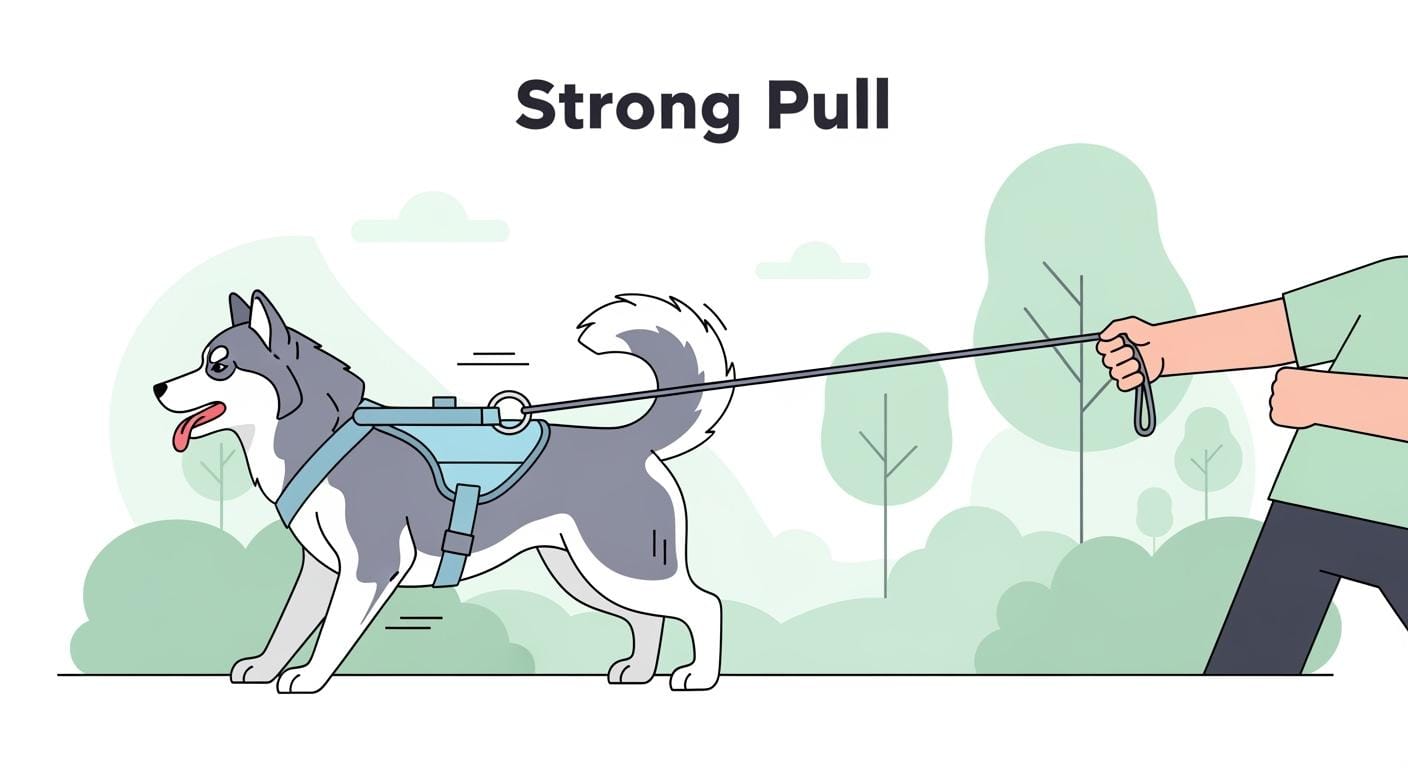
A wider collar can feel steadier in the hand, but that does not mean it stops pulling. It only changes how pressure is spread and how the leash feedback feels. For strong pullers, repeated neck pressure is still not ideal, which is why a steadier walking and control routine matters more than collar width alone.
How coat type changes the decision
Short coats often show rubbing faster, so a wider collar with smoother edges can sometimes feel better. Long or thick coats may handle width differently, especially if a broad collar traps heat or increases matting along the neck line. The right width should work with the coat, not against it.
Use fit checks before deciding the width is wrong
Many width complaints are really fit complaints. A collar that is too loose can twist whether it is wide or narrow. A collar that is too tight can create discomfort even if the width is otherwise appropriate. That is why width should always be judged together with fit, position, and daily movement.
Use these basic fit checks
- Measure the neck where the collar actually sits.
- Use a two-finger check after putting the collar on.
- Let your dog walk, turn, and lower the head normally.
- Do a gentle backward slip check over the widest part of the head.
- Look for twisting, rubbing, or drifting after a short walk.
Signs the collar width may not be the real issue
- The collar keeps rotating because it is too loose.
- The dog coughs because the collar is being used for strong pulling.
- Hardware sits in the wrong place and creates one pressure point.
- The collar sits too low or too high on the neck.
If the collar still feels wrong after basic fit checks, it helps to compare the setup against broader collar fit guidance before assuming the answer is simply to go wider or narrower.
When a flat collar is no longer the best walking choice
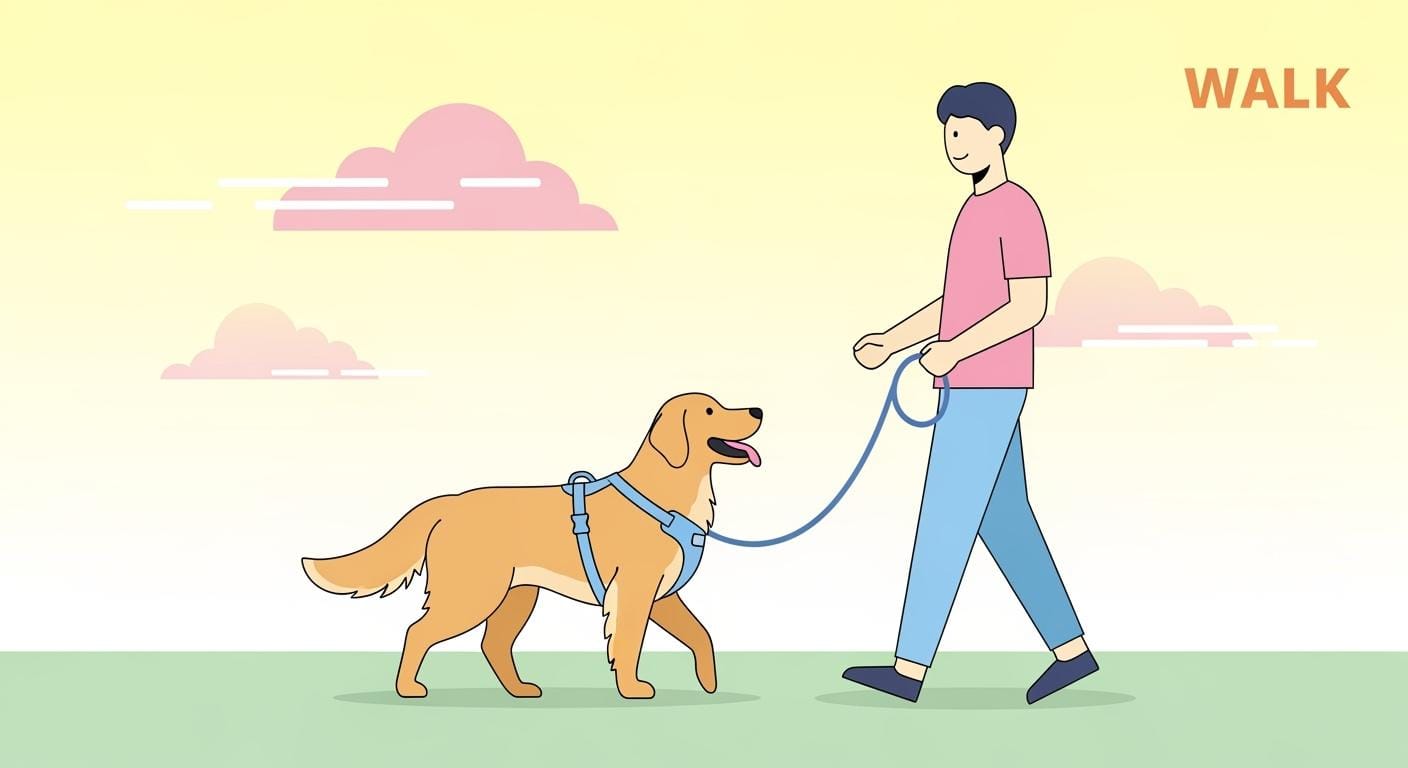
A flat collar is often fine for tags, calm walks, and ordinary daily wear. But if your dog pulls hard, backs out easily, coughs under leash pressure, or shows ongoing neck discomfort, the real problem may be the job the collar is being asked to do. In those cases, changing width alone usually does not solve the bigger issue.
Warning signs to stop and reassess
- Repeated coughing, gagging, or throat pressure.
- Redness, missing fur, or rubbing that keeps returning.
- The collar slips too easily during backward movement.
- The dog pulls hard enough that neck pressure becomes the main control method.
What to change first
- Recheck the actual fit and collar position.
- Notice whether the problem is width, hardware placement, or daily use pattern.
- Reduce situations where the collar takes strong pull force.
- Reassess whether a harness is the better walking tool for this dog.
A wide collar can feel better for some dogs, and a narrow collar can be the cleaner answer for others. The best choice is the one that stays comfortable, stays secure, and matches what the dog is really being asked to do on a walk.
Häufig gestellte Fragen
Is a wider flat collar always better?
No. A wider collar can spread pressure more gently for some dogs, but it can also feel bulky, warmer, or less suitable for smaller necks and certain coat types.
Does a narrow collar mean less control?
Not necessarily. A narrow collar may feel lighter and easier for everyday use, but if the dog pulls hard it can also twist more or create sharper pressure. The real issue is fit and how the collar is being used.
How do I know if the collar width is wrong for my dog?
Watch for rubbing, twisting, matting, bulk that crowds the neck, or a collar that feels unstable during normal movement. Those signs matter more than the width label itself.
What is the biggest mistake when choosing collar width?
One of the biggest mistakes is blaming width before checking basic fit. A collar that is too loose or badly positioned can feel wrong no matter how wide it is.
When should I stop relying on a flat collar for walks?
Reassess if your dog pulls hard, coughs, slips backward, or shows repeated neck discomfort. In those cases, the walking setup may need more than a width change.