A weighted dog harness sounds simple: add resistance, build conditioning, and make exercise more productive. In real use, the first mistake usually happens before any load goes in. The wrong dog, the wrong fit, or the wrong expectation can turn “conditioning gear” into a rubbing, overheating, or movement problem very quickly.
This is why a weighted harness should not be treated like a regular walking harness with extra pockets. It is a niche tool for controlled work, not a default choice for daily walks, hot-weather use, or dogs that are already struggling with comfort, gait, breathing, or recovery. The better question is not “how much can it carry?” but “should this dog be doing weighted work at all?”
This page is not medical advice. If your dog has a current limp, repeated coughing, noisy breathing, heat intolerance, or a history of orthopedic or spinal problems, get veterinary clearance before using any added load.
Key Takeaways
- Use weighted work as controlled conditioning gear, not as an everyday harness category.
- Begin with an empty harness. Slowly add weight over time. Make sure the harness fits your dog well. It should not make your dog feel uncomfortable.
- If the harness rides up, crowds the shoulder, rubs near the elbow, shifts to one side, or makes your dog shorten stride, the problem is not “conditioning level.” The setup is wrong.
When a weighted dog harness is the wrong tool
A weighted dog harness should be judged first by candidate suitability, not by fabric, pocket count, or hardware. This type of gear makes the most sense for a healthy, already active adult dog doing short, deliberate conditioning work. It is a poor choice when the dog still needs basic harness fit solved, has trouble regulating heat, shows breathing strain, or is using a harness mainly for ordinary leash control.
Buyers often make two avoidable mistakes here. The first is using weighted gear as a shortcut for a dog that pulls. Added load does not fix leash mechanics, reactivity, or poor front-end fit. The second is assuming that a calm dog automatically makes a good candidate. A quiet dog can still be a poor candidate if it already tires quickly, moves unevenly, or braces against the harness instead of moving freely.
If you are still deciding how cautiously to introduce a weighted dog harness, start with a simple screen: does the dog move cleanly in an unweighted harness, recover well after ordinary exercise, and tolerate cooler-weather sessions without obvious stress signals? If the answer is unclear, do not treat extra load as the next logical step.
Candidate Screening Table
| Dog or Situation | Good Candidate? | Main Concern | Better First Step |
|---|---|---|---|
| Healthy adult dog already comfortable in structured exercise | Sometimes yes | Still needs fit and progression control | Start with empty harness and observe movement first |
| Dog that mainly needs a no-pull walking solution | Usually no | Weighted work does not solve leash-handling problems | Fix walking fit and training plan before adding load |
| Dog with current limp, stiffness, or uneven gait | No, unless medically cleared | Load can magnify an existing movement issue | Get veterinary or rehab guidance first |
| Dog with noisy breathing, coughing, or poor heat tolerance | Usually no | Extra effort may outpace breathing comfort and cooling | Work on safe exercise limits before considering load |
| Dog that already struggles in a plain harness | No | Added weight will not rescue poor geometry | Correct the base harness fit first |
Fit signals that added load will not stay comfortable
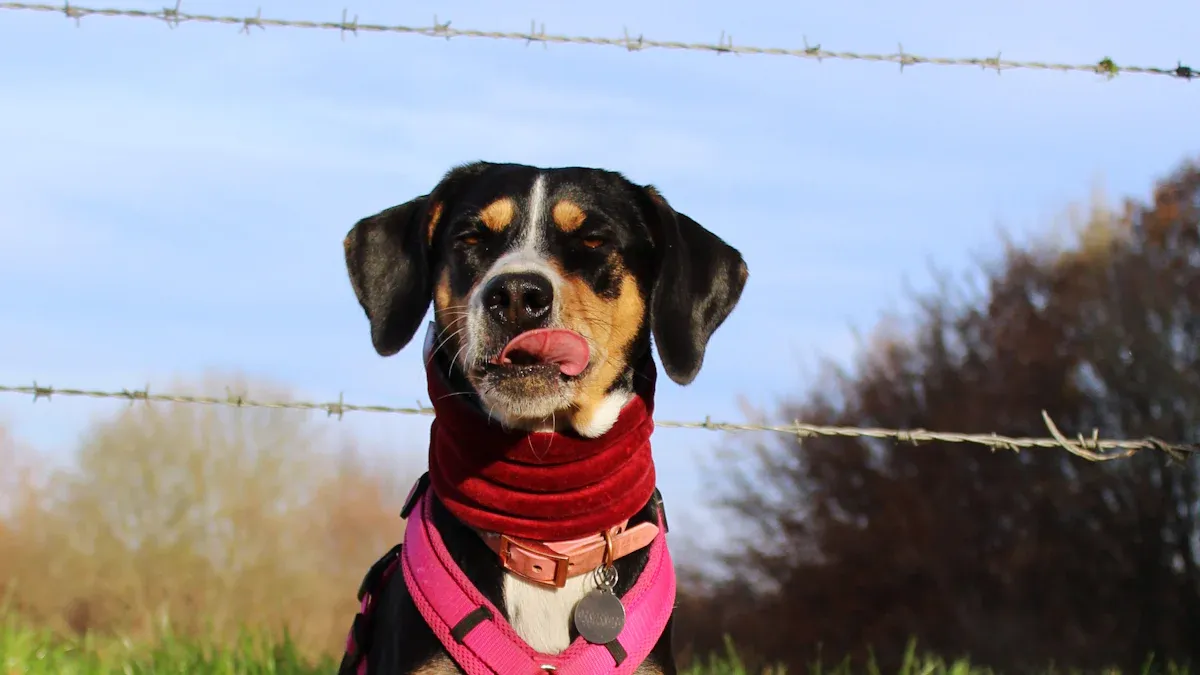
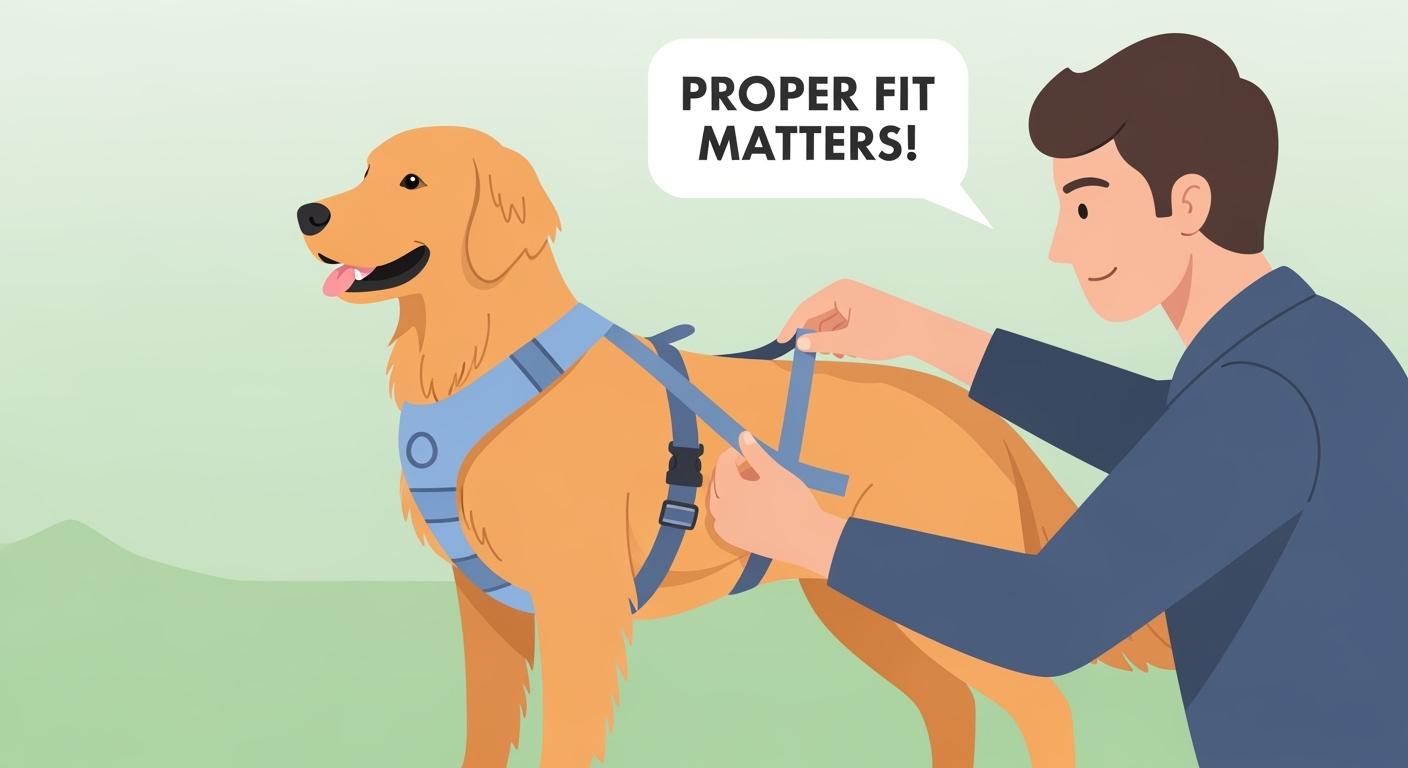
A weighted harness must do more than feel padded in your hands. The load path has to stay centered and the dog must keep a natural stride. If the front section drifts up toward the throat, the side straps crowd the elbow, or the harness rolls to one side once the dog starts moving, do not call that a minor adjustment issue. Those are fit failures that added load will exaggerate.
Materials still matter, but only after the layout passes movement checks. Smooth webbing, clean seam finishing, breathable lining, and stable weight pockets help. Thick padding alone does not fix a bad strap path. In fact, bulky padding can hide movement problems because the harness feels soft while still crowding the shoulder or shifting under motion.
Fit Red-Flag Table
| Red Flag | What You Notice | Why Added Load Makes It Worse | What To Do Instead |
|---|---|---|---|
| Neck area rides high | Front section creeps toward the throat in motion | Extra load increases pressure where you want clearance | Lower the front geometry or change harness shape |
| Shoulder crowding | Stride shortens or the front leg swings awkwardly | Load increases resistance against normal movement | Choose a layout with clearer shoulder range |
| Elbow rubbing | Hair wear, redness, or repeated licking after use | More effort means more repeated friction | Reset strap placement or change size and pattern |
| Side-to-side rotation | Harness drifts or twists when the dog turns | Uneven loading becomes more pronounced | Stop weighted use until the base fit stays centered |
| Unbalanced pockets or inserts | One side feels heavier or settles lower | Asymmetry changes how the dog carries force | Use matched loading or skip the setup entirely |
| Loose outer shell with soft padding | Looks comfortable but lifts off the body in motion | Soft bulk can hide instability instead of fixing it | Prioritize stable contact over thick cushioning |
A properly fitted weighted harness should not force your dog to “learn to move differently.” It should allow normal movement first, then add carefully monitored resistance.
Start empty and watch the first stop signs
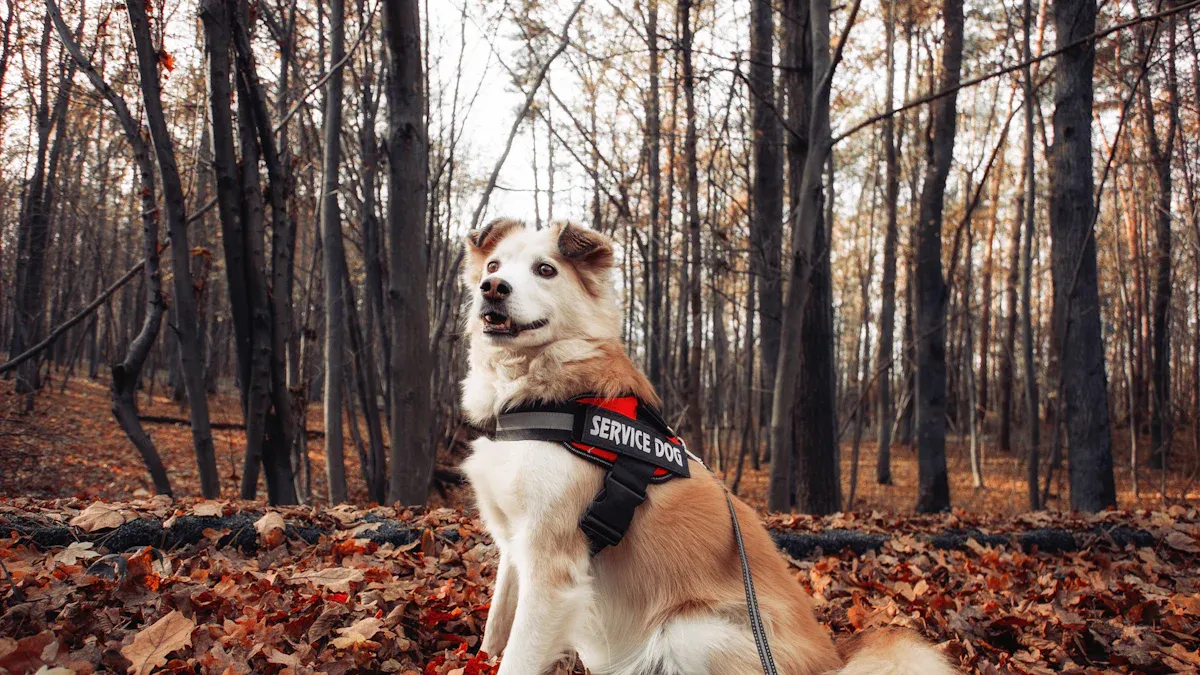
The safest first session is usually uneventful. Start with an empty harness, a short controlled session, and a cooler time of day. Watch the dog from the side and from behind. You want steady rhythm, even tracking, and a dog that is still willing to move naturally. If you have to persuade the dog to keep going, that is already useful information.
Do not lock yourself into a fixed marketing percentage. Public veterinary and biomechanics sources are much clearer on fit, gait, heat, and medical screening than on one universal number for consumer weighted harness use. That is why observation matters more than chasing a preset load target.
Recheck the dog after the session, not only during it. Look for hot spots under the straps, increased panting that lingers, awkward turning, repeated body shaking, slower sit-to-stand movement, or reluctance to wear the harness again. Those are more useful than a product claim about what the harness is “designed for.”
Start/Stop Monitoring Table
| Stage | What To Do | Pass Signal | Stop Signal |
|---|---|---|---|
| First wear | Use the empty harness only | Dog walks normally and ignores the gear | Freezing, scratching, crouching, or twisting out |
| First controlled session | Choose short, easy work in cooler conditions | Even stride and calm recovery | Shortened stride, repeated stopping, or uneven movement |
| Breathing and heat check | Watch the dog closely during and after effort | Panting settles normally after the session | Heavy panting, drooling, wheezing, weakness, or distress |
| Skin and pressure recheck | Inspect chest, shoulders, underarms, and belly strap area | No redness, swelling, or hair damage | Rubbing, redness, swelling, or repeated licking |
| Next-session readiness | Judge the dog the next day, not only the same hour | Normal willingness to move and wear the harness again | Stiffness, avoidance, slower movement, or obvious soreness |
Stop immediately and seek veterinary care if your dog develops breathing difficulty, collapse, marked weakness, or severe heat signs. Do not wait for the next session to “see if it improves.”
The best weighted setup is not the one with the most pockets or the thickest build. It is the one that stays centered, preserves normal movement, and remains easy to stop or scale back the moment the dog gives you a reason. That is what makes this category useful instead of risky.
FAQ
Can a weighted dog harness replace a regular walking harness?
Usually no. A weighted harness is better treated as occasional conditioning gear. Daily walks still need a harness that prioritizes ordinary movement, handling, and comfort without added load.
How much weight should I add at the start?
Start with no added weight. Public veterinary and biomechanics sources support cautious progression, but they do not give one universal consumer load formula that fits every dog. Your dog’s movement, recovery, breathing, and heat tolerance matter more than copying a percentage from a product page.
Does more padding make a weighted harness safer?
Not by itself. Padding can improve comfort, but it cannot fix a harness that rides high, rotates, crowds the shoulder, or rubs behind the elbow. Stable geometry matters first.
Should I try weighted work for a dog that pulls hard on walks?
Usually no. Pulling is a handling and training problem first. If the base harness fit and leash mechanics are not already working, adding load can make the setup harder on both the dog and the gear.