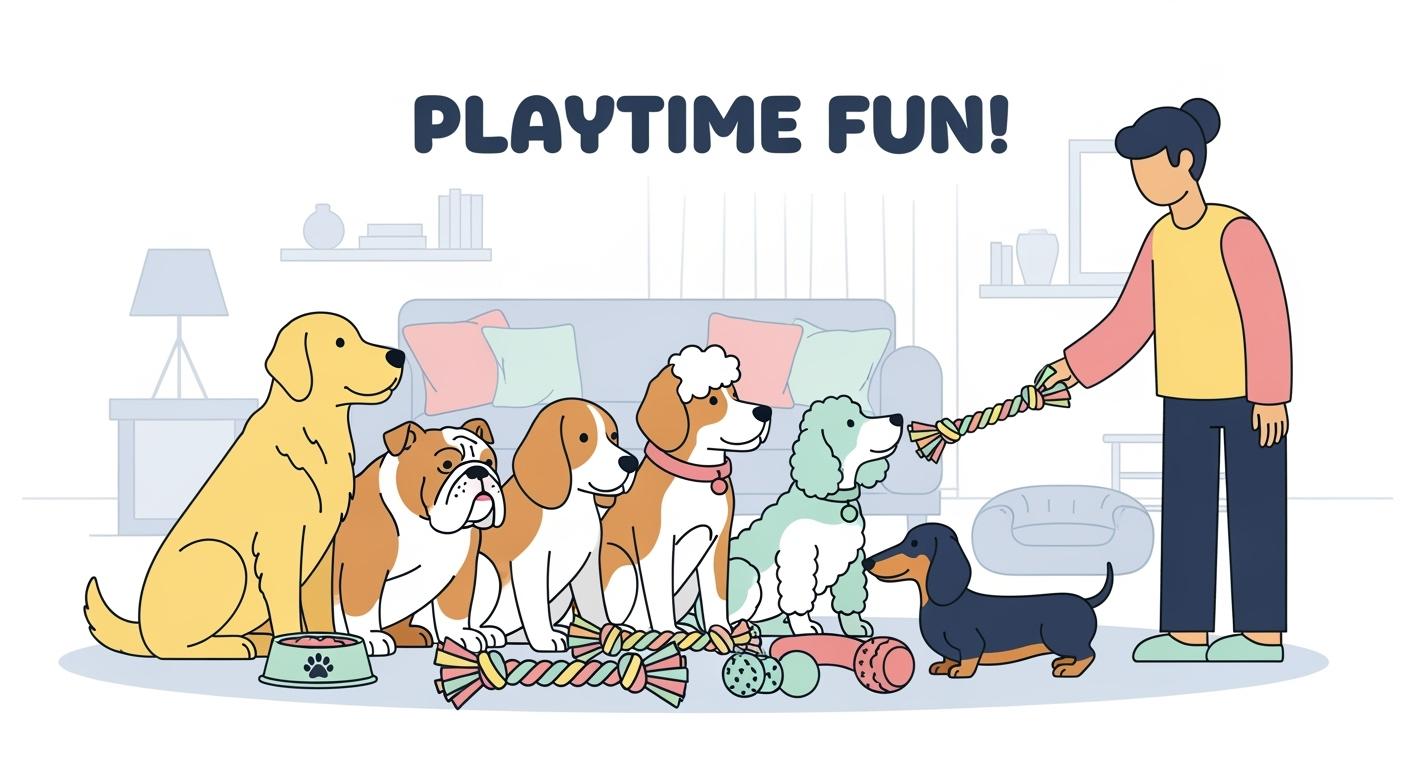
A tug of war dog toy can be fun in a multi-dog home, but only when the toy fits the dogs, the play stays structured, and you step in before excitement turns into tension. The main problems are usually easy to miss at first: one dog freezes over the toy, another keeps rushing back to reclaim it, or the material starts fraying where the dogs bite and pull hardest. The better choice usually comes from checking toy size, material, and play style together instead of choosing the toughest-looking option and hoping it works.
That is easier when you compare different training and activity gear by how they fit the kind of play you actually allow at home rather than treating every tug toy the same way.
Start with the dogs, not the toy
Multi-dog tug only works well when the dogs involved can stay engaged without becoming possessive, overwhelmed, or unsafe around each other. That means the right toy depends on the dogs’ size difference, bite style, arousal level, and ability to pause when you interrupt play.
Good candidates for shared tug
- Dogs that can take turns without rushing back in immediately.
- Dogs that release toys when asked.
- Dogs that stay loose and wiggly instead of stiff and fixed on the toy.
- Dogs with similar enough size and play style that one dog is not constantly overpowered.
When shared tug is more likely to go wrong
- One dog freezes, stares, body-blocks, or growls over toys.
- One dog keeps winning by strength while the other gets more frustrated each round.
- The toy is so short that mouths and hands get crowded together.
- Play gets faster and louder every minute instead of settling between turns.
Quick rule: if you need to keep breaking up tension every few seconds, the problem is not only the toy. The dogs may not be good candidates for shared tug in that setup.
Choose size, shape, and material that reduce crowding and breakage
The best toy for a multi-dog home usually gives each dog enough space to grip without crowding the other dog’s face or your hands. It also needs to hold up where force concentrates: at the bite zones, handle attachments, and any stitched joins.
What to check before you buy
| Check point | What good looks like | What causes trouble |
|---|---|---|
| Toy length | Enough distance between mouths and hands | Short toy that crowds faces and increases conflict |
| Material | Dense rubber, tightly woven rope, or reinforced handled design | Loose fibers, weak fleece, or cracking surfaces |
| Grip zones | Clear areas for both dogs to hold without sliding together | One narrow center point that forces competition |
| Join points | Strong stitching and secure handle attachments | Weak seams, loose knots, or exposed edges |
How to match toy style to the dogs
Rope toys can work for gentler tuggers, but they need frequent inspection because fraying can escalate quickly once multiple dogs are biting and twisting. Solid rubber or handled tug toys often hold shape better and make it easier to control the session. Longer designs usually reduce crowding in multi-dog homes because each dog gets a cleaner grip and you have more room to interrupt safely.
Do not ignore breakage warning signs
A toy does not need to split in half to become unsafe. Early warning signs include loose fibers, cracked rubber, stretched stitching, exposed stuffing, or handles that feel less stable than before. Once those changes appear, the toy is no longer a “watch it and see” item. It is already moving toward failure.
Watch for guarding signs before play turns into conflict
Resource guarding during tug rarely begins with a full fight. It usually starts with smaller body-language changes that are easier to stop if you notice them early. The goal is not to wait for growling and then react. It is to catch the tension while the dogs are still able to disengage cleanly.
Early signs that play is becoming possessive
- Freezing over the toy instead of bouncing back into play.
- Hard staring or body-blocking another dog’s access.
- Rushing back to reclaim the toy the second it drops.
- Low growling, lip tension, or guarding the toy between rounds.
What to do the moment you see those signs
- End that round immediately and create space.
- Do not force the dogs to “work it out” around the same toy.
- Switch to individual play or separate toys if arousal is still high.
- Reset only if both dogs calm down and can respond normally to interruption.
Shared tug stays safer when it follows the same clear interruption and reward pattern many owners already use in a structured walking routine: stop, reset, reward calm choices, and only continue if the dogs are still thinking clearly.
When duplicate toys help and when they do not
Two matching toys can reduce crowding for some households, especially when both dogs are excited by the same type of play. But if one dog guards any high-value toy, duplicates alone do not fix that issue. In those cases, the real solution is more structure, shorter sessions, and a cleaner stop before the dog feels the need to possess the toy.
Set simple play rules and know when tug should stop
A good toy helps, but house rules do most of the real work. Multi-dog tug should feel controlled enough that you can start it, pause it, and end it without chaos. If you cannot interrupt play without a scramble, the session is already too intense.
Simple rules that make tug safer
- Keep sessions short enough that arousal does not keep building.
- Use clear breaks between rounds instead of nonstop pulling.
- Stop before the dogs look tired, frustrated, or overamped.
- Inspect the toy before every session, not only after it breaks.
What usually means tug should stop for the day
- The dogs stop taking turns cleanly.
- One dog keeps targeting the other dog instead of the toy.
- The toy shows fraying, cracking, or loose attachments.
- Interruptions no longer bring the dogs back down quickly.
If you use food rewards to practice “drop,” “trade,” or pause-and-reset moments, it helps to keep the reward step just as clean and predictable as the game itself. A guide to treat pouch access and spill control fits naturally here because fast, calm reward timing is often what keeps shared tug from escalating into a grabbing contest.
FAQ
What makes a tug toy better for multi-dog homes?
A better tug toy usually gives both dogs enough grip space, uses durable materials, and stays structurally sound under repeated pulling. It should reduce crowding rather than force both dogs onto one narrow section.
Are rope toys safe for two dogs to tug together?
They can be, but they need frequent inspection. Rope toys often fray faster in multi-dog play, so loose fibers, stretched knots, or rough bite zones should be treated as warning signs, not as normal wear.
How do I know if tug is triggering guarding?
Watch for freezing, hard staring, body-blocking, growling, or one dog rushing back to reclaim the toy every time it drops. Those are signs the session is becoming possessive instead of playful.
Should I buy two identical tug toys for two dogs?
Sometimes that helps, especially when both dogs are playful but crowd each other around one toy. It does not solve true guarding on its own, but it can reduce unnecessary competition in lower-tension homes.
When should I throw a tug toy away?
Replace it when you see frayed rope, cracked rubber, weak stitching, loose handles, exposed filler, or any wear that changes the toy’s structure. Once the toy starts breaking down, it is no longer worth “one more session.”