
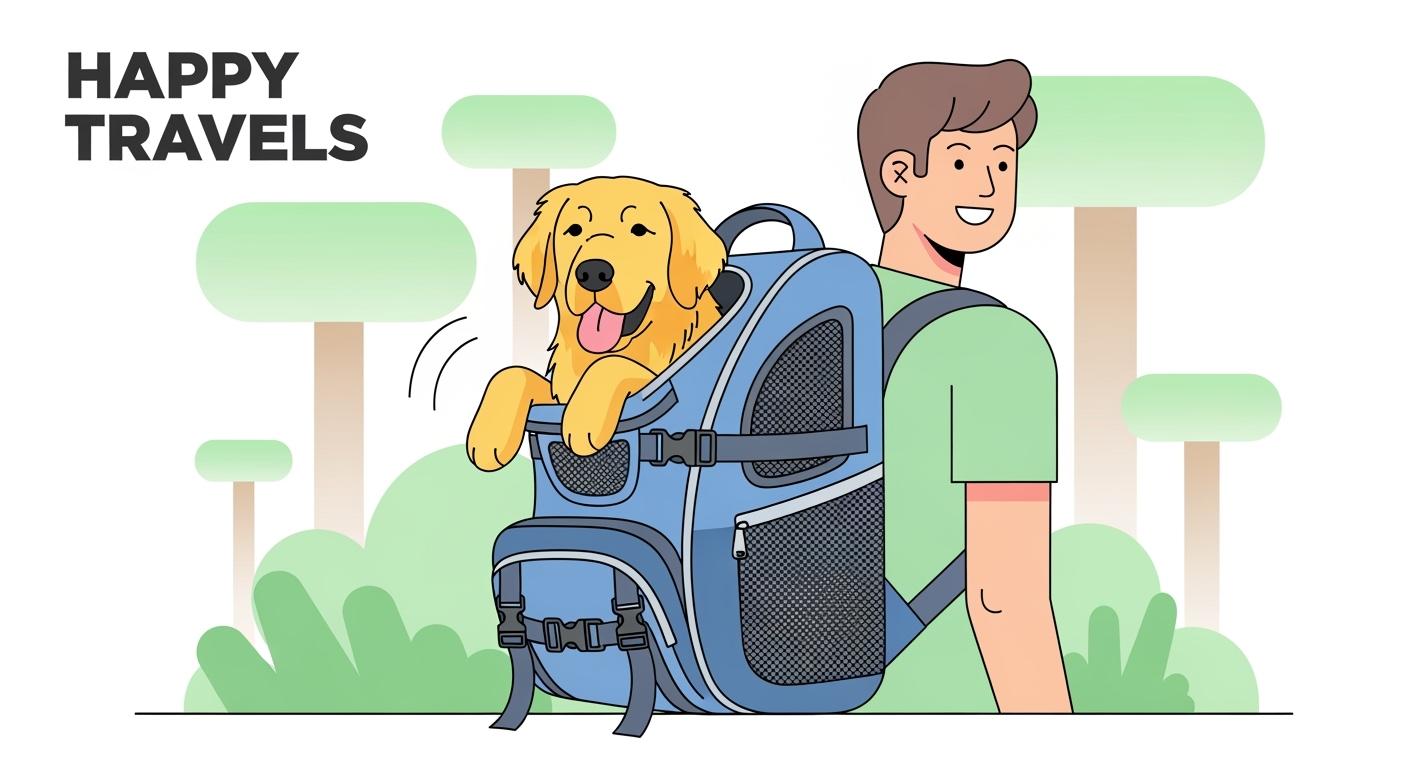
A pet carrier backpack for bigger dogs has less margin for error than a carrier for very small dogs. Once the dog is heavier, small problems become obvious fast: the base sags, the opening crowds the shoulders, the backpack pulls backward on your body, or the dog cannot settle into a natural position. The better choice usually comes from checking support, posture, airflow, and carry balance together instead of assuming a larger size label is enough.
That is easier when you compare larger-size options within the wider backpack carrier range instead of treating every backpack as if it suits heavier dogs equally well.
Start with body support, not just the weight label
A backpack may claim to fit a certain weight range, but larger dogs often expose the real problem much sooner: body length, chest depth, and how the dog sits inside matter more than weight alone. Two dogs at the same weight can fit very differently if one is longer-bodied, broader through the chest, or less comfortable sitting upright.
What good support should look like
- The spine stays reasonably neutral instead of curling into the bottom.
- The base supports the torso instead of collapsing under the middle.
- The opening leaves enough space around the shoulders and neck.
- The dog can settle without constantly bracing against one side.
Warning signs the backpack is undersupported
- Your dog sinks lower after only a short carry.
- The body leans noticeably to one side.
- The front opening pulls into the throat or chest.
- The dog keeps shifting because the interior feels unstable.
Quick rule: if the dog looks technically inside the backpack but not actually supported by it, the fit is not good enough for real use.
Check ventilation and structure under real carry conditions
Heavier dogs usually create more heat, more pressure on the base, and more movement against the side panels. That means ventilation and structure matter even more. A carrier that looks sturdy when empty may lose shape as soon as the full body weight is inside, and a backpack that feels breathable in a cool room may feel much stuffier once it is on your back.
| Check point | What good looks like | What needs fixing |
|---|---|---|
| Base structure | Bottom stays stable and level under load | Sagging, folding, or deep center collapse |
| Side support | Panels help the dog stay centered | Sides bow outward or cave inward |
| Ventilation | Airflow stays open once the dog is fully inside | Mesh areas get blocked or heat builds quickly |
| Closures | Zippers and openings stay aligned and secure | Gaps, strain, or corners that pull open too easily |
Why bigger dogs reveal weak structure faster
More weight means more stress on the seams, bottom panel, shoulder straps, and zipper lines. If the structure is marginal, you usually notice it early as tilt, sway, or shape loss. This becomes much easier to judge inside a repeatable travel routine instead of relying on a quick try-on and hoping the backpack feels better later.
Do not confuse “soft” with “comfortable”
A soft carrier can feel gentle at first, but if it lacks enough structure for a bigger dog, it often becomes the less comfortable option because the dog ends up slumping, pressing into the opening, or fighting the shape during movement.
Make sure the backpack works on your body too
A backpack carrier for a bigger dog has to work for the person carrying it as well as for the dog inside. If the weight pulls backward, swings side to side, or puts too much strain into one point on your shoulders or back, the dog usually feels that instability too.
What to check on the human side
- Put the dog inside and tighten the backpack to a realistic carry position.
- Walk a few minutes at an ordinary pace.
- Notice whether the pack stays close enough to your body.
- Check if the weight feels centered or if one side keeps dropping.
- Stop immediately if you are compensating with posture just to keep the backpack under control.
Common carry-balance problems
- The backpack hangs too low and swings with every step.
- The shoulder straps feel uneven once the dog moves.
- The dog reacts every time the pack shifts on your back.
- You need frequent readjustment even during a short test.
If the fit still feels uncertain after these checks, it helps to compare your measurements and posture observations against a more detailed backpack sizing checklist before deciding the model is safe enough for regular use.
Know when to stop using the current model
Some bigger dogs simply push a borderline backpack design beyond what it can handle well. In those cases, the problem is not one small adjustment. The carrier format, size range, or support structure may no longer be the right match for that dog.
Stop and reassess if you notice
- The dog keeps slumping or leaning even after careful adjustment.
- The backpack loses shape once fully loaded.
- Heat builds up too quickly during short carries.
- The closures or seams feel strained under normal use.
- You avoid using the backpack because it feels tiring or awkward every time.
What a better result usually looks like
A good backpack carrier for a bigger dog should feel boringly dependable: the dog stays supported, the air still moves, the pack sits close to your body, and short real-world tests make it feel more trustworthy, not less.
FAQ
Is dog weight enough to choose a backpack carrier?
No. Weight matters, but body length, chest depth, posture, and how the dog settles inside are just as important, especially for bigger dogs.
What is the most common fit problem for bigger dogs in backpacks?
One of the most common problems is slumping caused by weak base support or a shape that does not match the dog’s body well enough.
Why does the backpack seem fine empty but unstable with my dog inside?
Real weight changes how the base, straps, seams, and side panels behave. Weak structure often becomes obvious only once the full load is inside.
How do I know if ventilation is not good enough?
Watch for quick heat buildup, heavier panting, restlessness, or a carrier interior that feels stuffy once the dog is inside and the backpack is on your body.
When should I stop using a backpack carrier for a bigger dog?
Reassess if the dog keeps slumping, the carrier loses shape, the closures feel strained, or the loaded backpack stays unstable even after careful adjustment.






