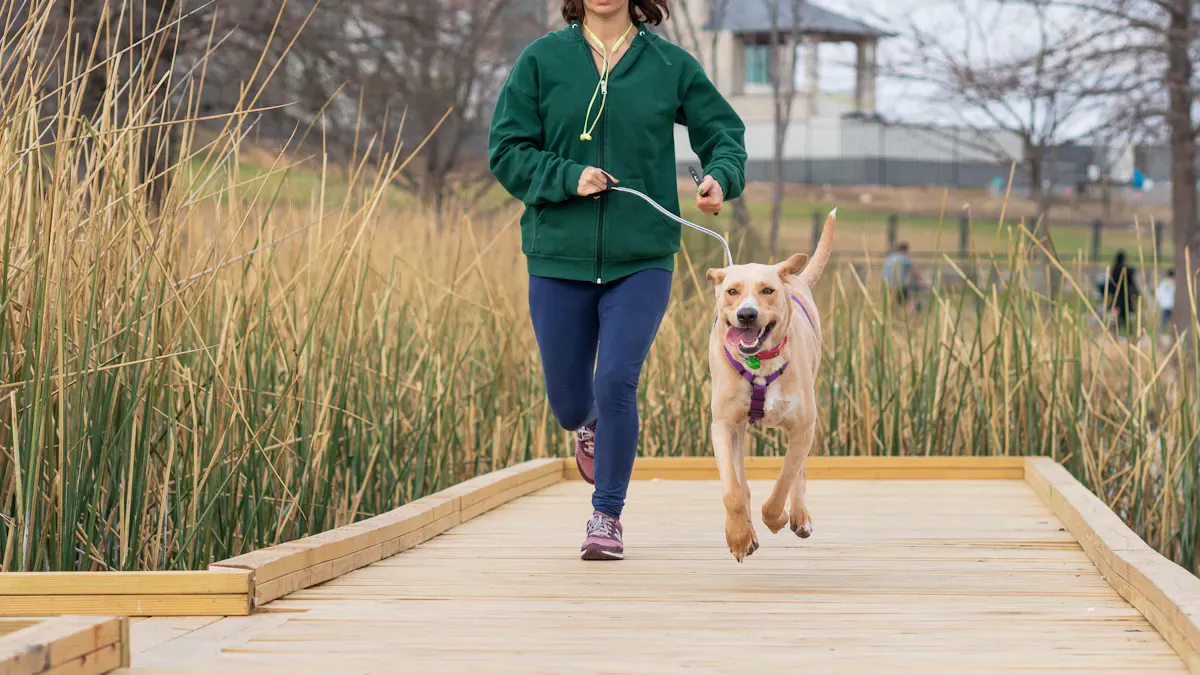
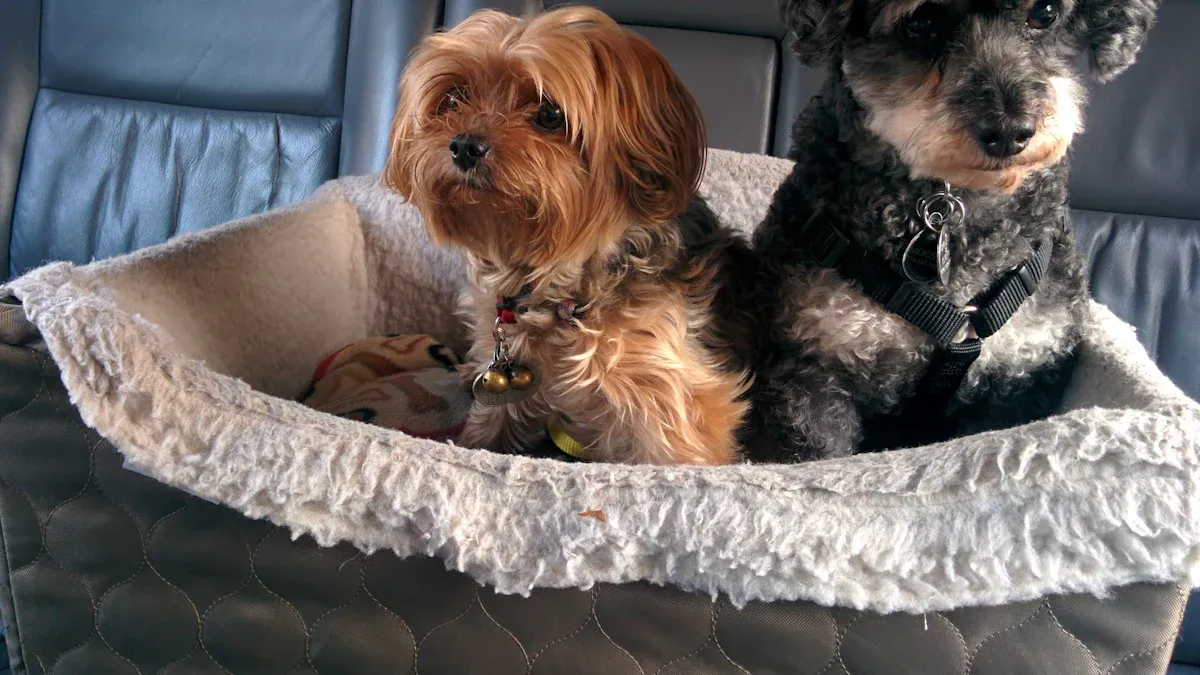
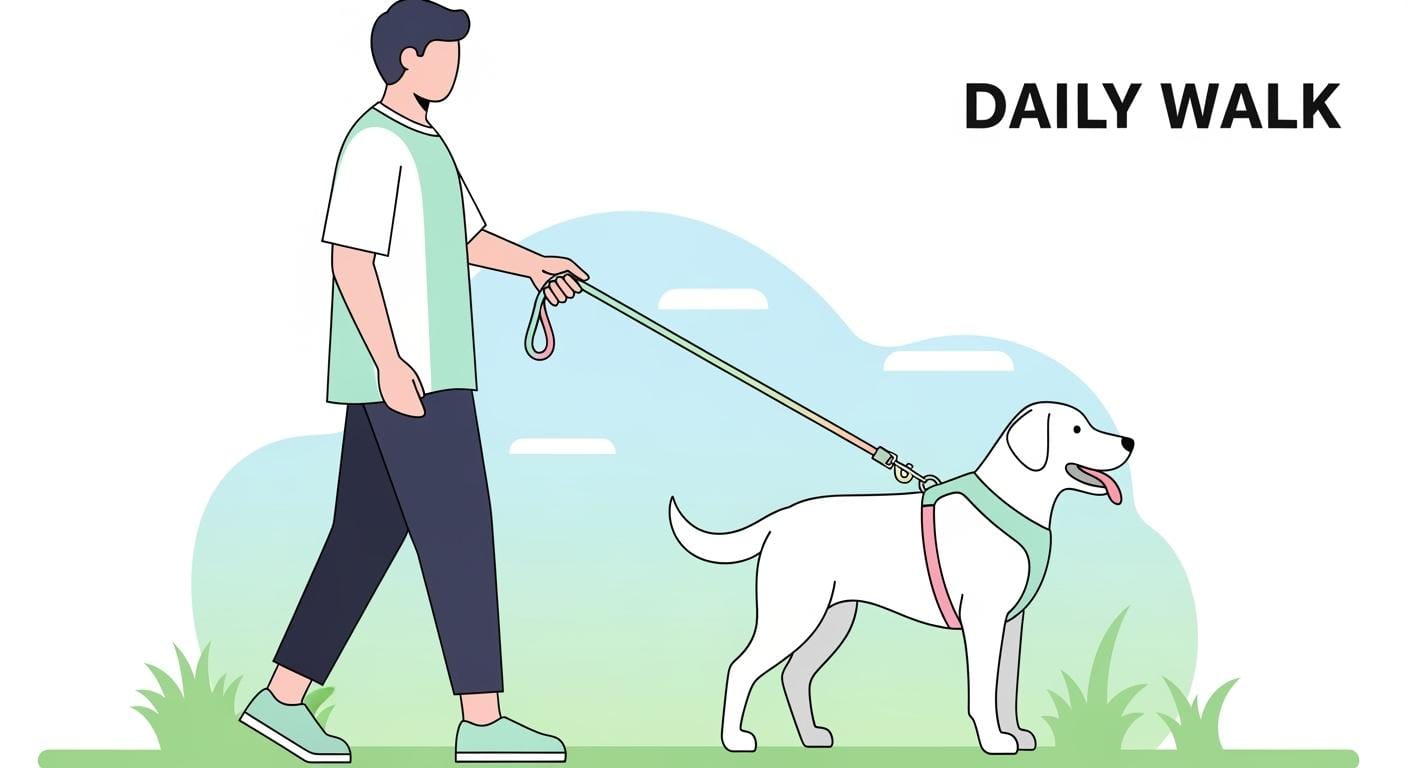
You want to know how to off leash dog training without turning it into a risky guess. The safest way to think about it is this: off-leash freedom is the final stage, not the starting point. First you build recall, check-ins, and stop cues on leash and long line. Then you test them in low-distraction places before you ever unclip in a real outdoor setting.
Beginner mistakes usually happen when the dog gets freedom before the skills are ready. A dog that comes back in the yard may still ignore you around birds, scents, or other dogs. Off-leash training works best when you stay patient, keep rewards strong, and treat each new environment as a new test rather than assuming the dog “already knows it.”
Key Takeaways
- Start with your leash setup as a safety layer. Off-leash training should grow out of reliable leash and long-line work, not replace it.
- Use a long line to practice recall safely around mild distractions before you trust real freedom. This lets you teach the skill without losing control of the session.
- Be patient and consistent. Celebrate clean recalls, practice in easier places first, and check local leash rules before you ever train fully off leash.
When to Start How to Off Leash Dog Training
Signs your dog is ready
You want your off-leash dog to stay safe and respond even when something interesting appears. Readiness is less about age and more about behavior. Before you begin true off-leash work, your dog should show several of these signs on leash or long line:
- Your dog responds to their name and recall cue without long hesitation in easy settings.
- Your dog can disengage from mild distractions and turn back toward you.
- Your dog allows you to clip the leash on after coming in, rather than dodging away.
- Your dog checks in with you on their own during walks instead of disappearing mentally into the environment.
- Your dog can stay calm enough to learn, not just race from one stimulus to the next.
If your dog is doing these things reliably, you can begin giving more freedom in carefully chosen places.
When to wait
Sometimes, you need to slow down. If your dog ignores their name, bolts after movement, panics when surprised, or completely loses focus around scents and other dogs, off-leash work is still too advanced. Rushing is one of the easiest ways to weaken recall, because the dog learns that your cue is optional once the environment becomes more exciting.
Wait longer if:
- Your dog only recalls well indoors or in the yard.
- Your dog becomes frantic around dogs, wildlife, bikes, or joggers.
- Your dog shuts down or freezes during training instead of staying engaged.
- You are relying on repeated calling instead of one clean response.
Always begin in a safe, enclosed, low-distraction space before you test more freedom. Check local leash laws before letting your off-leash dog explore.
Tip: Reward-based training in quiet places usually creates better recall than trying to “proof” recall by throwing the dog into a hard environment too soon.
Leash vs Long Line vs Off Leash Table
| Training Stage | Method Used | What It Is Best For |
|---|---|---|
| Leash | Short-distance reward-based work | Teaching cues, building focus, and preventing rehearsal of running off |
| Long Line | Reward-based proofing with distance | Practicing recall, check-ins, and safe freedom while you still have backup control |
| Off Leash | Reward-based use after strong long-line proof | Only for dogs that can recall, disengage, and stay safe in the chosen environment |
Use this table to decide when to move from leash to long line, and finally to off leash. Always choose the stage that matches your dog’s current skill, not the freedom you hope they are ready for.
Long-Line Practice for Safer Recall
Long-line practice gives you a safe way to build your dog’s recall skills before you trust them as an off-leash dog. You use a long line to create room, not to skip training. The line acts as a safety backup while your dog learns that coming back to you is always worth it.
Building reliable recall
Start your recall training in a quiet yard or open fenced space. Attach the long line to your dog’s harness. Let your dog move around while you manage the line without creating constant pressure. When you give the recall cue, use it once, then reward fast and generously when your dog turns and comes in.
Follow these steps to improve recall reliability:
- Start in a quiet place with almost no competition from the environment.
- Call your dog when they are likely to succeed, not when they are fully committed to ignoring you.
- Reward the return with something your dog truly values, such as food, play, or release back to exploring.
- Practice short recalls, then gradually add more distance on the long line.
- Only add distractions after the easier version feels clean and repeatable.
Use short, focused sessions. End before your dog gets tired or sloppy. The goal is to build a dog that expects good things when they come back, not a dog that thinks recall always ends the fun.
Tip: A long line is a safety belt, not a towing rope. Use it to prevent failure, not to drag your dog into the behavior.
Controlled freedom steps
Controlled freedom means you give your dog more space while still keeping them safe. You can use the long line to practice important off-leash skills before you ever unclip it.
- Recall: Call once, reward generously, and sometimes release your dog back to exploring so recall does not always mean “the fun is over.”
- Stay and distance work: Practice short stays while you move away, then return and reward before the dog breaks position.
- Check-ins: Reward your dog for looking back at you or choosing to return without being called.
- Harness or collar grab: Teach your dog that being reached for after recall is part of the reward sequence, not a reason to dodge away.
As your dog improves, increase difficulty slowly. Start with mild distractions far away. Move closer only when your dog can still think clearly and respond. Avoid crowded dog areas, children playing nearby, or heavy wildlife exposure during early sessions.
| Technique | Description |
|---|---|
| Building Enthusiasm | Use an upbeat voice, movement, and fast rewards so recall feels worth breaking away for. |
| High-Value Rewards | Use food or toys that easily beat the environment during training. |
| Release as Reward | Sometimes send your dog back out after a successful recall so coming in does not always end freedom. |
| Marker Training | Use a clicker or a short marker word to tell your dog exactly when they made the right choice. |
Pass/Fail Checklist Table
Use this checklist to decide if your dog is ready to become an off-leash dog. Track your dog’s progress during training sessions. Only move forward when the easier stage looks stable, not lucky.
| Criteria | Description | Pass/Fail |
|---|---|---|
| Recall Reliability | Dog comes promptly in easy and mildly distracting long-line sessions. | |
| Check-in Habit | Dog regularly notices you and reorients without being nagged. | |
| Emergency Response | Dog can turn away from a distraction and come back when cued. | |
| Handling After Recall | Dog allows you to reach, clip, or hold them after coming in. |
Note: If your dog does not pass these areas consistently, keep practicing with the long line. More freedom should come from more proof, not from optimism.
Troubleshooting Off Leash Training Mistakes
Common mistakes and consequences
You might have problems when your dog is off leash because the training sequence was rushed or made too confusing. The most common beginner mistake is testing recall where the environment is already harder than the dog’s current skill. Another mistake is calling the dog repeatedly until the cue becomes background noise.
Other common problems include:
- Rewarding too late, so the dog cannot tell which moment earned the reward.
- Calling the dog only when you are about to end the walk, clip on, or leave.
- Punishing the dog after they come back, which teaches them that returning to you can feel bad.
- Assuming friendly behavior equals reliable off-leash behavior.
- Mistaking puppy shadowing or easy-yard recalls for true proof around real distractions.
These mistakes can lead to blown recalls, dodging when you reach for the dog, or a dog that seems fine until the environment suddenly becomes more exciting than you are.
Note: If your dog shows fear, aggression, panic, or repeated unsafe behavior, pause the off-leash plan and get help from a qualified trainer or behavior professional. This blog does not give medical advice.
Troubleshooting Table
| Symptom | Likely Cause | Fast Check | Fix |
|---|---|---|---|
| Dog ignores recall | The jump in difficulty was too fast | Does the dog still recall well in easier places? | Go back to long-line work in a simpler setting |
| Dog gets distracted easily | The environment is stronger than the reward | What is pulling the dog’s focus away? | Lower distractions and use better rewards |
| Dog dodges when you reach in | Recall predicts the end of fun or restraint | Does the dog come close but avoid being clipped? | Practice grabs, reward them, and sometimes release again |
| Dog responds slowly | Reward timing or cue value is weak | Are you rewarding the turn back or only the final arrival? | Mark earlier and make recall more worthwhile |
Pass/Fail Checklist Table
| Criteria | Description | Pass/Fail |
|---|---|---|
| Recall Holds Up Outdoors | Dog responds outside with mild distractions, not only indoors. | |
| Calm Behavior Off-Leash | Dog does not spiral into frantic chasing, circling, or ignoring. | |
| Handles Restraint After Recall | Dog can be clipped or held without dodging away. | |
| Legal Compliance | Training happens only in places where off-leash work is allowed and safe. |
Always check leash laws before letting your dog off leash. Only train your dog off leash where it is both allowed and genuinely low risk.
You build off-leash success by teaching small reliable pieces first: recall, check-ins, restraint after recall, and calm choices around distractions. Long-line work is not a delay. It is the stage that prevents avoidable failures later. Stay patient, keep rewards strong, and let your dog earn freedom through proof rather than guesswork.
FAQ
How do you know your dog is ready for off-leash training?
Look for reliable recall in easy places, calm behavior around mild distractions, and a dog that allows you to clip on or reach in after they come back. Readiness is about behavior quality, not just confidence or excitement.
What should you do if your dog ignores your recall command?
Stay calm. Go back to an easier setup with the long line, reduce distractions, and make the reward more valuable. The fix is usually clearer proofing, not repeating the cue louder and louder.
Can you train off-leash in public parks?
Check local leash laws first. Only train off leash where it is allowed, low risk, and appropriate for your dog’s current skill. A public space is not the place to test a half-trained recall for the first time.