
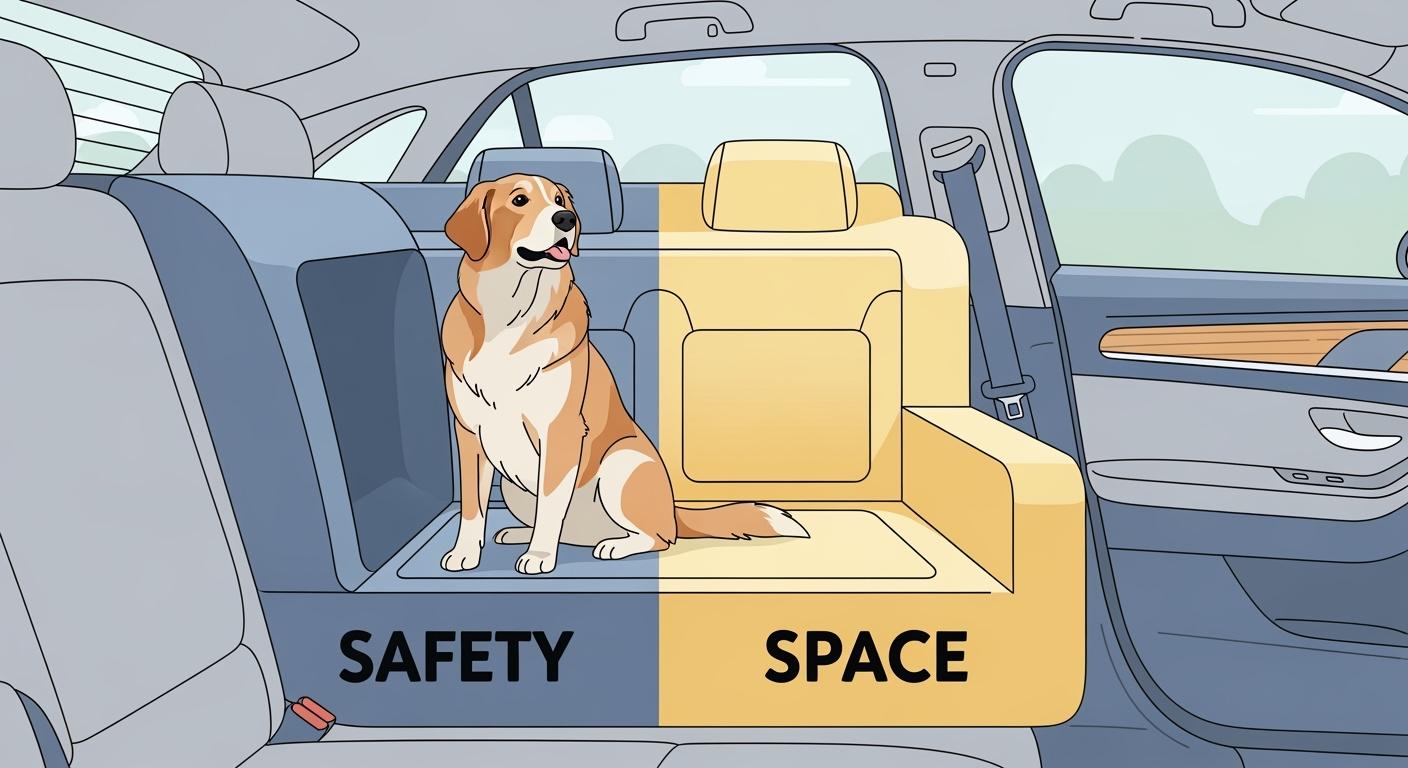
You want your extra large dog car seat to match how your dog actually rides. Deep walls can help some dogs feel more contained and give them something to lean against during normal turns. More room can help a larger dog lie flatter and change position more easily. But those are comfort and positioning differences, not the whole safety answer. A high wall does not replace a restraint path, and more room is not better if the dog keeps sliding, standing, or getting thrown off balance. For larger dogs, the real decision is how wall height, turning space, rear-seat setup, and restraint access work together.
| Safety Concern | Description |
|---|---|
| Seat Walls vs Restraint | Deep walls may help with ride position and distraction, but they do not do the same job as a properly routed restraint. |
| Rear-Seat Placement | Large dogs should ride away from the driver and front-seat airbag zone. The whole setup works better when the seat stays stable in the rear seat. |
| Blocked Restraint Paths | If the seat design makes clipping awkward or encourages extra slack, the travel setup becomes less controlled even if the seat itself looks protective. |
Key Takeaways
- Choose a dog car seat that fits your dog’s needs. Deep walls help dogs that lean, brace, or get overstimulated. More room helps dogs that settle best by lying flatter and changing posture.
- Do not treat wall height as a substitute for restraint. For larger dogs, rear-seat placement, restraint routing, and seat stability usually matter more than just deeper sides.
- Watch your dog during short drives. Leaning, blocked turning, restless shifting, or harness twisting usually tells you faster than product labels.
Deep Walls vs More Room in Extra Large Dog Car Seats
Security and comfort for large dogs
You want your dog to feel safe and relaxed in the car. An extra large dog car seat with deep walls can help some dogs settle because the sides create a more defined travel space. Dogs that curl up, brace during turns, or react to outside movement often do better when the bed gives them a clear edge to lean against.
More room works better for a different type of rider. If your dog likes to lie flat, stretch the legs, shift sides, or rest with the body lengthened out, a wider and more open seat usually makes more sense. Dogs that stay calm but keep repositioning often do not need higher walls. They need enough usable floor area to settle naturally.
When deep walls really help
Deep walls help most when your dog needs side support during everyday driving. If your dog keeps leaning into one side, standing up through turns, or losing body position every time the car changes speed, deeper walls can reduce how much balancing work the dog has to do. They can also block some visual overstimulation from windows.
But deep walls are not automatically safer just because they look more protective. If they steal too much turning room, force the restraint into an awkward angle, or make it harder for the dog to lie down normally, they start solving one problem by creating another.
When more room is the better answer
Some dogs ride better when they can settle into a flatter, more open position. If your dog lies on one hip, stretches out, or keeps trying to rotate into a more relaxed posture, extra room often matters more than deeper walls. This is especially noticeable on longer rides or with dogs that get stiff if they stay tucked too tightly.
More room becomes a weaker choice when the dog keeps standing, pacing, or sliding from side to side. In that case, the seat may look roomy but still fail to hold a usable ride position.
Comparison table: deep walls, flat beds, enclosed carriers
Here is a practical comparison for common extra large dog travel setups:
| Style | Best Use Case | Main Benefit | Main Watchout | Who Should Skip It |
|---|---|---|---|---|
| Deep-Sided | Dogs that lean, brace, or get unsettled in turns | More side support and a more defined ride space | Can feel cramped and make restraint access harder | Dogs that need to stretch out or rotate fully to settle |
| Flat Bed (Open) | Calmer dogs that prefer lie-flat comfort | More usable room and easier posture changes | Less side support if the dog keeps shifting or standing | Dogs that lose balance easily or react to every turn |
| Enclosed Carrier | Dogs that need stronger visual shielding and fuller containment | Better blocking of outside triggers | Less airflow and less room to change position | Dogs that overheat easily or dislike confined spaces |
You should pick the style that matches your dog’s real travel behavior. If your dog curls and leans, deep sides may help. If your dog stretches flat and still rides calmly, more room usually works better.
Common mistakes and real consequences
Many people make mistakes when choosing or setting up a dog car seat. Picking the wrong size is one of the biggest ones. If the seat is too large, the dog may slide and never find a stable position. If it is too tight, the dog cannot settle normally. Leaving too much slack in the restraint is another common problem. That lets the dog travel farther during a stop and can make the seat feel unstable even if the walls are high. Bad installation angle or a loose connection makes the whole setup work harder than it should.
Here is a table showing these mistakes and what can happen:
| Common Mistakes | Consequences |
|---|---|
| Choosing the wrong size | Too large lets the dog slide and brace poorly. Too small leaves the dog crowded and unable to settle normally. |
| Leaving slack in the restraint | The dog gets more forward and side movement during sudden stops or turns than the seat design can manage. |
| Bad installation angle or loose attachment | The seat becomes less stable, which makes the dog work harder to balance and often increases restlessness. |
You can avoid these problems by checking fit, using a restraint path that stays clear, and making sure the seat is secure before longer trips. Always watch your dog during the first few rides and change the setup based on what you actually see.
Tip: Start with short drives to see how your dog reacts. Make changes based on real ride behavior, not just what the product box promises.
What Matters More Than Wall Height
Rear-seat setup and the real safety boundary
For larger dogs, a seat with higher walls should not be treated as the same thing as crash protection. Public veterinary travel guidance generally places dogs in the rear seat and emphasizes proper restraint rather than allowing loose front-seat travel. For larger dogs in particular, a properly restrained harness or crate setup does the bigger safety job. The car seat mainly affects ride position, comfort, and some day-to-day stability.
If your goal is a calmer and more organized ride, deep walls can help. If your goal is true crash-level restraint, wall height is not enough by itself. This is the point many product pages blur, and it is where setup decisions need to stay realistic.
Entry, turning, and harness access
You want your dog to enter and exit the car seat with ease. Check the door opening and make sure the seat fits through without squeezing. Your dog should have enough room to turn around and settle without climbing over a wall or getting stuck halfway through the movement. Harness access matters just as much. You need to reach the clips quickly and route the restraint without the seat walls blocking your hands or forcing the tether into an awkward angle.
Rear-seat setup and restraint paths
Start by asking whether the whole setup stays stable in the back seat. Then check the restraint path. The seat should not twist the harness line, hide the clip point, or tempt you to leave extra slack because the connection is hard to reach.
Look for a setup that stays planted during turns and stops, does not tip under the dog’s weight shift, and still lets the dog settle without tangling the restraint. Wall height matters less if the harness path is blocked or the seat slides across the bench.
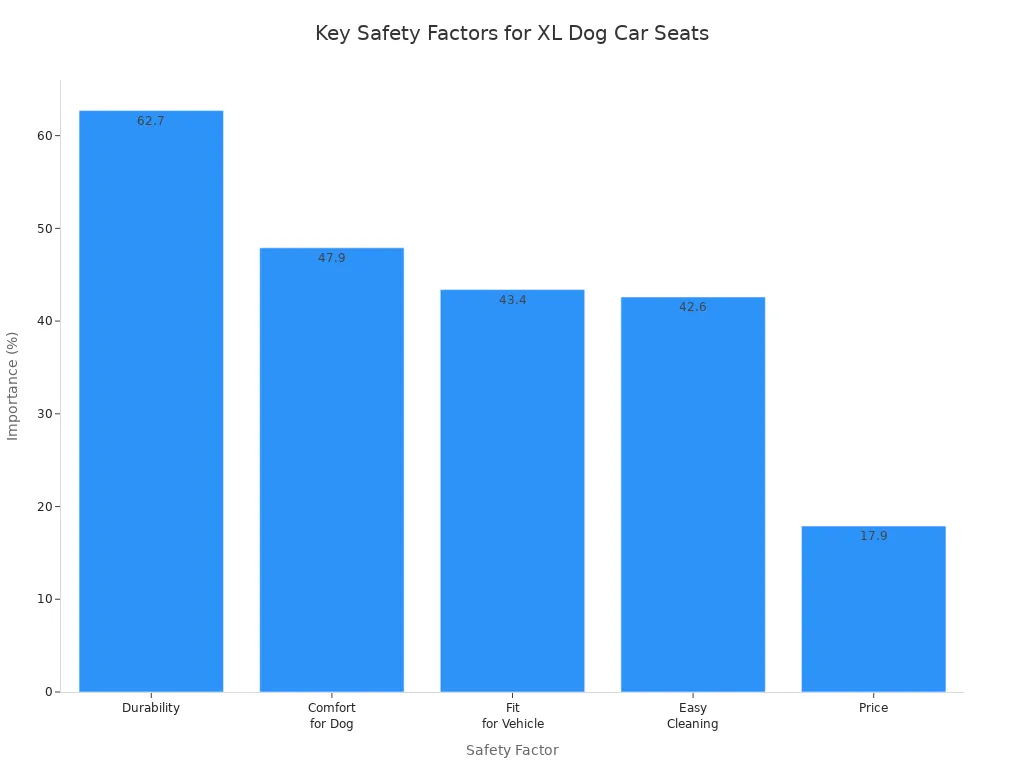
Tip: Start with short drives. Watch how your dog acts in the first few minutes and again after a turn or stop. That is usually where poor setup shows up first.
Pass/Fail checklist table
Use this checklist on the actual installed setup, not just while the seat is sitting on the floor at home.
| Check item | Pass signal | Fail signal | Fix |
|---|---|---|---|
| Door opening fits seat | Seat slides in easily and sits flat | Seat jams, tilts, or scrapes awkwardly into place | Recheck dimensions and installation position |
| Dog can turn and lie flat | Dog turns and settles without climbing the sides | Dog struggles, stalls, or cannot fully change posture | Choose a roomier seat or reduce wall interference |
| Harness clips easy to reach | Clips snap in quickly with a clear path | Clips blocked, buried, or easy to misroute | Re-route the restraint or change seat position |
| Seat stays in place during turns | Seat does not shift, tip, or rotate | Seat slides or tips when the dog leans | Reinstall and improve anchoring |
| Restraint path stays clean | Harness line stays clear and controlled | Harness twists, catches, or ends up with too much slack | Correct the path before longer travel |
You should build up travel time slowly and keep checking the setup as your dog settles into real movement. If the seat only works while the car is parked, it is not really working yet.
Signs Your Dog Car Seat Isn’t Working
Cramped turning and leaning on walls
You may notice your dog struggling to turn around or pressing hard against the walls of the car seat. That often means the seat does not match your dog’s actual body length, turning pattern, or travel style. If your dog tries to stretch but keeps hitting the walls, more room may be the fix. If your dog keeps leaning hard into one side even when there is room, the seat may not be giving enough support where it is needed.
Blocked harness or restless behavior
Sometimes the dog is not reacting to the ride itself. The dog is reacting to a bad setup. If the harness path gets blocked by the seat wall, if the clip twists, or if the restraint tightens at an odd angle every time the dog turns, many dogs will paw, whine, keep shifting, or refuse to settle. You may also notice drooling, pacing-like movement inside the seat, trembling, or repeated attempts to stand. That can reflect motion discomfort, stress, or simply a seat that never lets the dog find a workable position.
Note: If your dog shows signs of motion discomfort, heat, or breathing strain, stop the car and check on them. For ongoing problems, talk to your vet.
Troubleshooting table: symptoms and fixes
| Symptom | Likely cause | Fast check | Fix |
|---|---|---|---|
| Dog cannot turn or lies cramped | Seat too small or walls too intrusive for the dog’s posture | Watch the dog try to turn and settle | Choose a roomier seat or reduce wall interference |
| Dog leans hard on walls | Seat shape does not support the dog’s normal ride position | See whether the dog always braces to one side | Choose a deeper-sided or more supportive layout |
| Harness blocks or twists | Restraint path blocked or poorly routed | Try clipping the harness quickly before the ride | Re-route the path or reposition the seat |
| Dog restless or anxious | Motion discomfort, poor fit, or unstable setup | Look for whining, repeated shifting, drooling, or trembling | Shorten the trip, simplify the setup, and reassess the seat style |
| Fabric peels or slips | Worn cover or poor grip against the bench | Check for loose or damaged fabric | Replace worn parts or change to a more stable seat base |
You want your dog to feel secure in the car, but the better choice depends on how your dog actually rides. Deep walls help when the dog needs side support and a more defined ride space. More room helps when the dog settles best by lying flatter and changing position. In both cases, do not stop at comfort alone. Rear-seat setup, seat stability, and a clean restraint path are what turn a good-looking seat into a workable travel setup.
FAQ
How do you know if your pet car seat fits your pup?
Check whether your dog can turn, lie down, and settle without climbing the walls or fighting the harness path. A good fit feels roomy enough to rest in, but not so open that the dog keeps sliding or searching for support.
Should you use crash-tested gear for pet safety?
Use independently tested restraint gear when possible, but do not treat that as the same thing as high walls or a larger bed. A travel seat mainly affects position, comfort, and some day-to-day stability. The restraint and how it works with the vehicle do the bigger safety job.
What signs show your pet feels unsafe during a car ride?
Look for restless shifting, repeated leaning, blocked turning, whining, drooling, or a harness path that keeps twisting or catching. Those are often better warning signs than whether the dog simply stays inside the seat.
Note: This FAQ gives practical travel-use guidance. It does not replace medical advice. Always monitor your pet during car travel.






