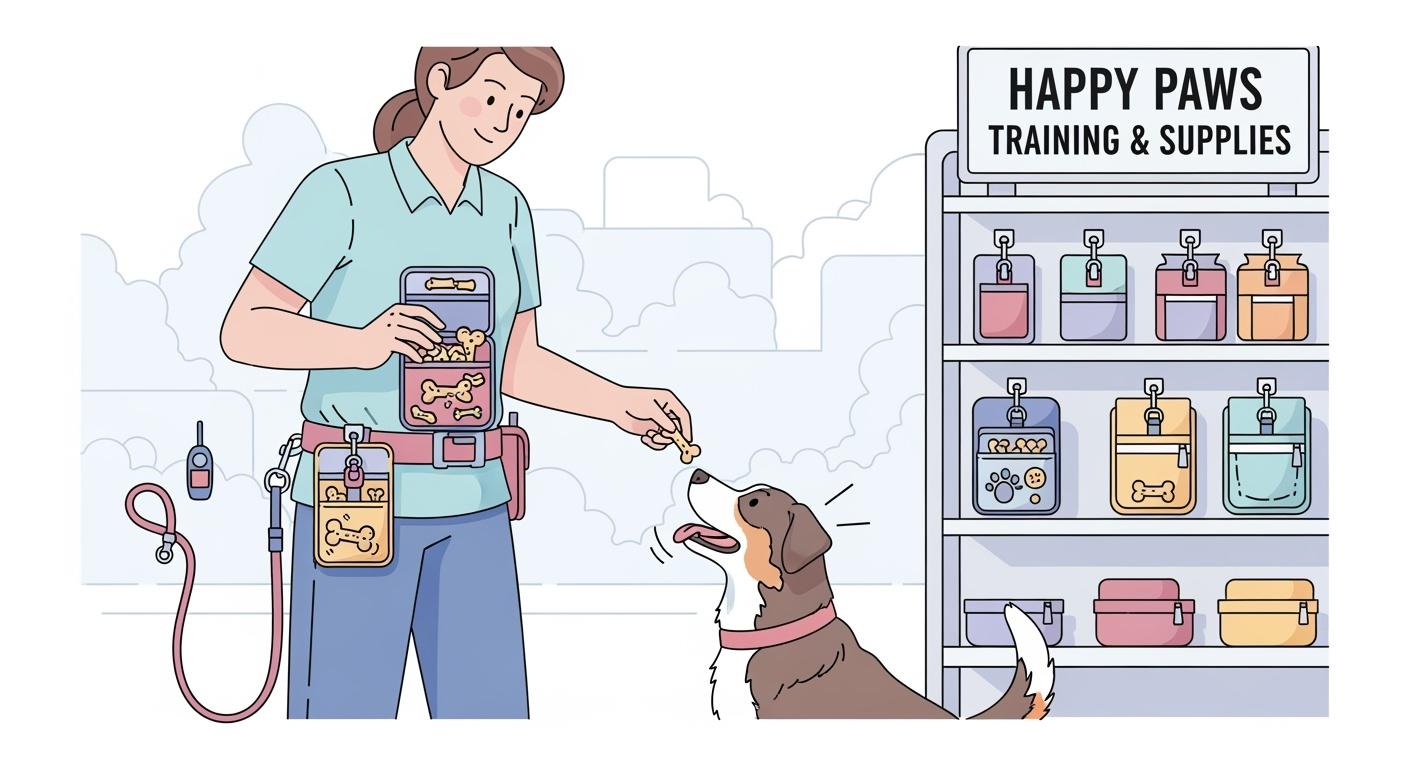
Our company builds ERP and retail operating systems for pet supply brands, training schools, and specialty retailers. Because we support their inventory, merchandising, and online orders, we see how different dog treat pouches perform across thousands of training sessions and purchases. This guide turns that behind-the-scenes operational view into a practical checklist for trainers and buyers who want reliable treat pouches.
You know that a good dog treat pouch can change your daily work as a trainer or retailer. Pocket design and clip systems are very important. They help you get treats fast, keep your hands clean, and stay neat during busy times. Many people have problems like the pouch opening by accident, treats falling out, or slow treat access. The table below shows these common problems and easy fixes:
Pain Point | Solution |
|---|---|
Accidental opening | Hybrid design with magnetic closure |
Treat spillage | Multi-compartment designs |
Need for quick access | Features for easy access during training sessions |
You can fix these problems by picking a treat pouch that fits your real needs. Look for helpful checklists and clear rules to help you choose the best tools.
Key Takeaways
Pick a dog treat pouch that closes tightly. This helps stop it from opening by accident and spilling treats. – Find pouches that let you grab treats with one hand. This makes training easier and faster. – Choose pouches made from safe materials for food. Make sure they are simple to clean and keep clean. – Think about the pouch’s design and features like extra pockets. Good design and pockets can help you train better. – Try different ways to carry the pouch, like belt clips or straps. Pick the one that feels best for you.
Why Dog Treat Pouches Matter
Professional training organizations and specialty media treat a good treat pouch as standard gear. Positive-reinforcement leaders such as Karen Pryor Clicker Training sell purpose-built treat bags designed by well-known trainers like Terry Ryan, with hinge openings and secure closures to keep rewards handy. Independent review sites and magazines, including Whole Dog Journal, The Spruce Pets, and K9 of Mine, regularly test and rank treat pouches for trainers and active dog owners, focusing on access speed, spill control, and durability. These third-party benchmarks give you a starting point when you design or select pouches for your own range.
Professional organizations in positive reinforcement, such as the Association of Professional Dog Trainers (APDT) and Karen Pryor Clicker Training, treat a sturdy treat pouch as basic equipment. Their trainers rely on fast, one-handed access to small, high-quality rewards so they can mark and reinforce behavior at the right moment.
Positive-Reinforcement Training Needs
You need to deliver treats quickly when you train dogs with positive reinforcement. A dog treat pouch helps you keep rewards close at hand. This tool lets you give treats at the right moment, which helps dogs learn faster. Trainers in many fields, including guide dog and detection dog programs, use positive reinforcement. When you use a treat pouch, you show readiness and make each training session smoother.
Treat pouches let you reward dogs right away, which is key for teaching new behaviors.
These pouches keep treats organized and easy to reach.
A well-designed pouch makes your training more effective.
Guide dogs trained with positive reinforcement have shown higher pass rates. Service industries, such as police and military, also use these methods because they work well.
Common Pain Points
You may face several problems with treat pouch options. Some pouches have pockets that are hard to reach. Others do not stay in place when you move. Cleaning can be difficult if the lining is not removable. Poor clip design can cause the pouch to fall off or spill treats.
Business Value for Trainers and Retailers
A high-quality treat pouch can help your business. When you offer better products, you build trust with customers. You also see better sales and stronger brand reputation. The table below shows key business metrics that improve with good treat pouch options:
Independent gear reviews from training-focused sites and magazines also show how treat pouches influence these metrics in real life, especially repeat purchases and word-of-mouth referrals. Models that professional trainers trust quickly become the default recommendation in classes, and your sales data will reflect that.
Metric | Description |
|---|---|
Sales Growth Rate | Shows how much your sales increase over time. |
Average Order Value (AOV) | Tells you how much customers spend each time they buy. |
Gross Profit Margin | Measures how much profit you make from each sale. |
Customer Lifetime Value (CLV) | Predicts the total profit from a customer over time. |
Customer Acquisition Cost (CAC) | Shows how much it costs to gain a new customer. |
Using Independent Reviews as a Baseline
You do not have to start from zero when you build your own treat pouch range. Third-party tests from trainers and pet gear reviewers already highlight what “good” looks like. For example, several tested pouches from brands such as PetSafe, Kurgo, West Paw, and Karen Pryor Clicker Training are praised for strong hinges, magnetic closures, double treat pockets, and machine-washable linings. Reviewers measure how quickly trainers can grab rewards, how well clips stay attached during running and bending, and how the pouch holds up after months of daily use.
Use these public reviews as a benchmark when you brief OEM/ODM suppliers: your spec should at least match the access speed, stability, and cleaning performance of the best-reviewed pouches in your target price band.
Signs of a Good Dog Treat Pouch
Look for these features when you choose a dog treat pouch:
Easy, one-handed access to treats
Stable fit that stays in place during movement
Simple cleaning, with food-safe materials
Secure closure to prevent spills
Tip: Always check if the pouch fits your daily routine and training style.
Field Test: Busy Class Scenario
To move from theory to real-world data, run a simple field test in one of your group classes and keep the results in a shared sheet.
- Set up the test – Ask two or three trainers to wear different pouch models during a 30–45 minute class with at least five dogs. Use the same type and size of treats for all pouches.
- Measure access speed – In each exercise, time how long it takes from the marker (“yes” or click) to the dog eating the treat. Record the average for each pouch over 10–15 reps.
- Track spills and stability – Before and after class, shake out and weigh any treats that fell into the pouch bottom or onto the floor. Note when clips twist, belts ride up, or pouches flip over during running and bending.
- Collect trainer feedback – After class, have trainers rate each pouch from 1–5 for comfort, one-handed use, and how confident they felt about not dropping treats.
These simple numbers turn “this pouch feels better” into evidence you can share with buyers, store staff, and OEM partners.
Dog Treat Pouch Pocket Design
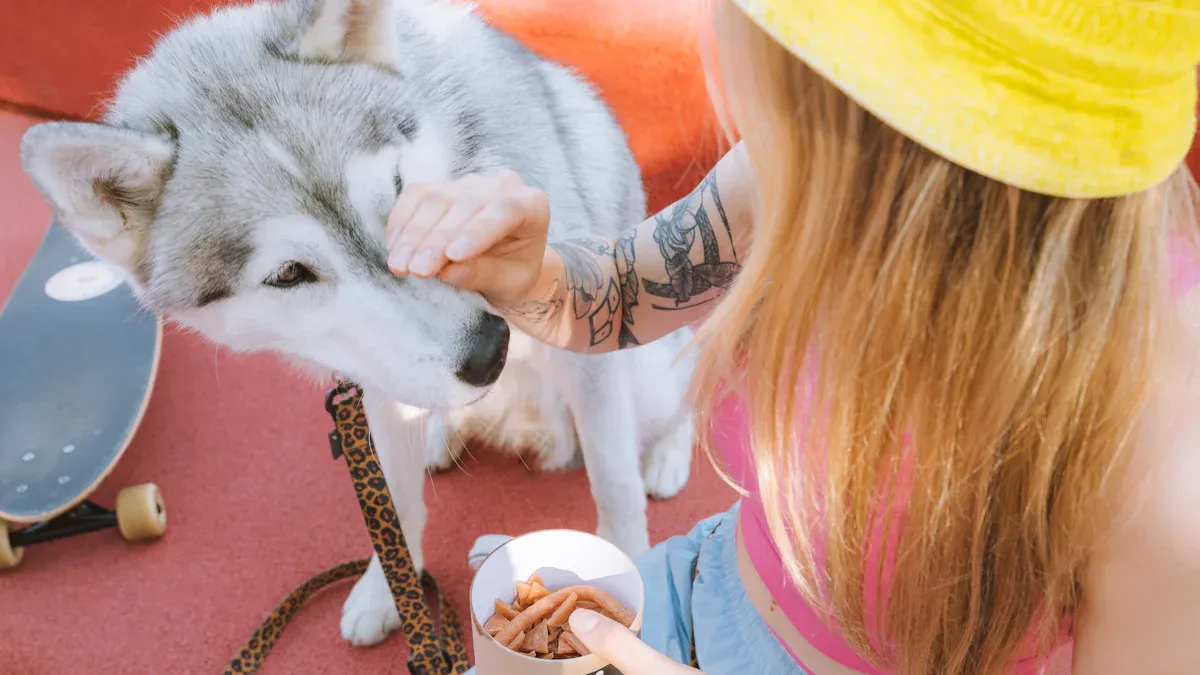
Main Compartment Features
You need a main compartment that matches your training needs. The size and shape decide how many treats you can carry. It also affects how fast you can grab treats. Many top dog treat pouch models use waterproof materials. These materials keep the pouch clean and safe for food. Some designs have removable linings. Removable linings make cleaning easier after each use.
Closure types are important for daily use. Magnetic closures let you open and close the pouch with one hand. Drawstring closures keep treats safe but can slow you down. Most trainers like magnetic closures. They are fast and keep treats secure. The table below lists the best main compartment features:
Feature | Description |
|---|---|
Ease of Access | You can open and close the pouch with one hand. This lets you get treats quickly. |
Organization | A divider keeps different treats separate. |
Additional Storage Options | There is a front pocket for keys and phones. There are also clips for tools. |
Durability | Waterproof and stain-resistant material makes the pouch last longer. |
Extra Pockets and Organization
You need more than just a spot for treats. Extra pockets help you organize your gear. This keeps training smooth and easy. Many pouches have a front pocket for special treats or toys. This lets you switch rewards quickly. Separate compartments keep high-value and low-value treats apart. Secure pockets for waste bags stop them from mixing with treats. Clicker loops on the outside help you grab your clicker fast. You can see treat types without opening the pouch.
Quick access to both treat types saves time.
Pouches that make you dig for treats slow you down and upset your dog.
One-Handed Access
You need to reward your dog at the right time. Fast treat access helps you teach good behavior right away. One-handed use lets you control your dog while giving treats. Trainers say magnetic closures are faster than other designs. This speed helps you focus on your dog. It also stops distractions. In busy training, one-handed treat grabbing helps you do better.
Fast access helps you give rewards at the right time.
One-handed use lets you stay in control.
Easy closures help you focus during training.
Pocket Layout Checklist
Use this checklist to check the pocket layout of any treat pouch:
Criteria | Description |
|---|---|
Secure closure | Keeps treats from spilling out. Powerful magnets are a good choice. |
Easy to wash | Lets you clean the pouch easily with a cloth or in a machine. |
Sturdy clip or belt | Stops the pouch from falling off while you train. |
Spacious interior | Gives you lots of room for treats and easy access. |
Extra pockets for storage | Holds keys, waste bags, or IDs in extra pockets. |
Tip: Try the pouch with gloves if you train outside. Make sure you can reach treats without looking down.
You can make training better by picking a pouch with smart pockets. Look for designs that help you get treats fast, stay organized, and keep treats safe.
Clip Systems and Carry Options
Belt Clips and Waist Belts
You can choose between belt clips and waist belts when you carry a treat pouch. Belt clips attach directly to your pants or belt. They give you flexibility and let you move the pouch easily. Many trainers prefer clip-on bags because they do not like the feel of a narrow belt around the waist. Waist belts can feel uncomfortable, especially during long sessions. They also get wet and become hard to clean. However, a waist belt can give you a hands-free experience. It keeps the pouch secure and lets you focus on your commands. Both options allow you to reinforce positive behaviors quickly.
Waist belts may cause discomfort and cleaning problems.
Belt clips offer flexibility and quick access to treats.
Shoulder and Modular Carry
You may want more options for carrying your treat pouch. Some pouches come with shoulder straps or modular systems. A shoulder strap lets you wear the pouch across your body. This method spreads the weight and reduces pressure on your waist. Modular carry systems let you attach the pouch to different gear. You can switch between belt, shoulder, or bag attachments. This flexibility helps you adapt to different training environments.
Stability and Comfort
You need a stable pouch that stays in place while you move. A sturdy clip or belt keeps the pouch from falling off. Stability is important when you bend, run, or reach for treats. Comfort matters during long training sessions. Choose a system that does not dig into your waist or shift around. Safety also plays a role. A secure closure prevents treats from spilling and keeps your hands free.
Clip System Checklist
Use this checklist to evaluate the clip and carry system of any treat pouch:
Checklist Item | Importance |
|---|---|
Secure closure | Prevents spillage of treats, keeping them contained during use. |
Sturdy clip or belt | Ensures the pouch stays attached and does not fall off during training. |
Adjustable fit | Lets you change the position for comfort and stability. |
Multiple carry options | Allows you to switch between belt, shoulder, or modular systems. |
Tip: Test the pouch by moving, bending, and reaching. Make sure it stays secure and comfortable in real training scenarios.
Clip Stability Stress Test
You can also run a quick stability test on clips and belts before you commit to a model.
- Loaded jump test – Fill the pouch with 150–200 g of treats, clip it to the waist, and have testers do ten light jumps and ten deep squats. Count how many times the pouch tilts, rides up, or pops off.
- Doorframe snag test – Walk past a doorway or gate with a narrow frame ten times to see whether the pouch catches or pulls free when it bumps the frame.
- Car-seat entry test – Sit in and out of a car seat ten times while wearing the pouch. Note whether the clip digs into the hip or the pouch blocks the seat belt.
Recording these results in a simple table gives you concrete reasons to approve or reject a clip design instead of relying only on first impressions.
Choosing and Maintaining Dog Treat Bags
Material Safety and Cleaning
Pick dog treat bags made with materials that are suitable for food contact. In the EU, many brands follow general food-contact rules such as Regulation (EC) No 1935/2004 for plastics and coatings, and in the U.S. they look to FDA food-contact guidance when choosing liners and plastics. Ask factories for written confirmation or third-party reports instead of relying only on “food grade” marketing terms. Trainers also prefer washable or removable linings so they can clean the pouch after each class. Combined with airtight storage for treats between sessions, this routine helps keep rewards fresh and reduces odor and bacteria build-up.
Photo and Video Evidence That Builds Trust
Written specs help, but real images and short clips make your claims easier to believe. When you shoot product photos or videos, try to include:
- A close-up of a trainer taking treats with one hand while holding a leash in the other.
- A side view of the pouch staying flat against the hip during jogging or recall work.
- A cleaning sequence that shows the liner being removed, washed, and air-dried.
These practical scenes show how the pouch performs in real training, and they give retailers, online shoppers, and B2B buyers a clearer picture than studio photos alone.
Durability and Style
You need a bag that can handle daily use. Strong materials like reinforced nylon or waterproof fabric last longer. They also stop stains. Some trainers like slim-fit bags for short walks. Others pick thigh bags for longer training. You can find a bag that matches your style and needs. Weather matters too. Bags that dry fast and resist water help stop treats from going bad. The best bags are tough and fit your routine.
Selection Criteria for Trainers and Retailers
When picking a treat bag, look for these things:
Enough space for treats during walks or classes
A strong clip or magnetic closure to keep it secure
Easy to open and close with one hand
Extra pockets for poop bags, clickers, or keys
Easy to wash and keep clean
A product like the stridepaw.com pet training treat pack has these features. It has a removable liner and different ways to carry it. This makes it a good choice for trainers and retailers who need gear they can trust.
Maintenance Tips
You can make your dog treat bag last longer by doing a few things:
Wash the bag after each use and dry it fully
Use a liner or cup to keep the main part neat
Store treats in airtight containers to keep them fresh and safe from bugs
Check treats often and throw out any that are old
Tip: Do not leave raw meats out for long. Cooked treats last longer and are safer.
Picking a dog treat pouch with smart pockets and a strong clip makes your training better. These features let you give treats fast and keep them safe. Use checklists to look at new pouch designs and find the best one for you. Think about how easy, safe, and comfortable the pouch is. This helps trainers and retailers get better results.
How This Guide Connects ERP Data with Training Reality
Because our ERP and retail platforms are used by pet brands, training schools, and specialty stores, we see which treat pouches actually sell through, which ones come back as returns, and which designs generate support tickets about broken clips or messy liners. We also run small field tests with partner trainers, timing how quickly they can deliver rewards and tracking clip failures or spills across different models. The conclusions in this guide are based on that aggregated operational data plus public recommendations from professional training organizations and independent gear reviews, not only on our own product marketing.
FAQ
How do you clean a dog treat pouch?
You can remove the liner if the pouch has one. Wash it with warm water and mild soap. Let it dry completely before using it again. Regular cleaning helps prevent odors and keeps treats safe.
What materials are safe for food-contact in treat pouches?
Choose pouches made from materials labeled as food-contact safe. These materials do not transfer harmful substances to treats. Look for pouches with removable, washable linings for easy maintenance.
How do you prevent treats from spilling during training?
Select a pouch with a secure closure, such as a magnetic or strong snap. Make sure the opening stays closed when you move. Test the pouch by bending and walking to check for stability.
Can you use one pouch for different types of treats?
Yes, you can use a pouch with divided compartments. This design lets you separate high-value and regular treats. You can switch rewards quickly during training sessions.
What features help with one-handed access?
Look for wide openings and magnetic closures. These features let you grab treats fast without looking down. One-handed access keeps your other hand free for handling the dog or equipment.