
A dog seatbelt restraint and a crate can both work in the car, but the better choice depends on what actually happens during the ride. A calm dog on a short errand may only need controlled tether slack and a secure harness fit, while an anxious dog may chew straps, cross seats, twist into the restraint or tangle during longer drives. A crate can help limit movement in some setups, but only if the size, anchoring and vehicle layout are suitable. This guide compares both options by temperament, trip length and real rear-seat setup problems, without treating one choice as automatically safer.
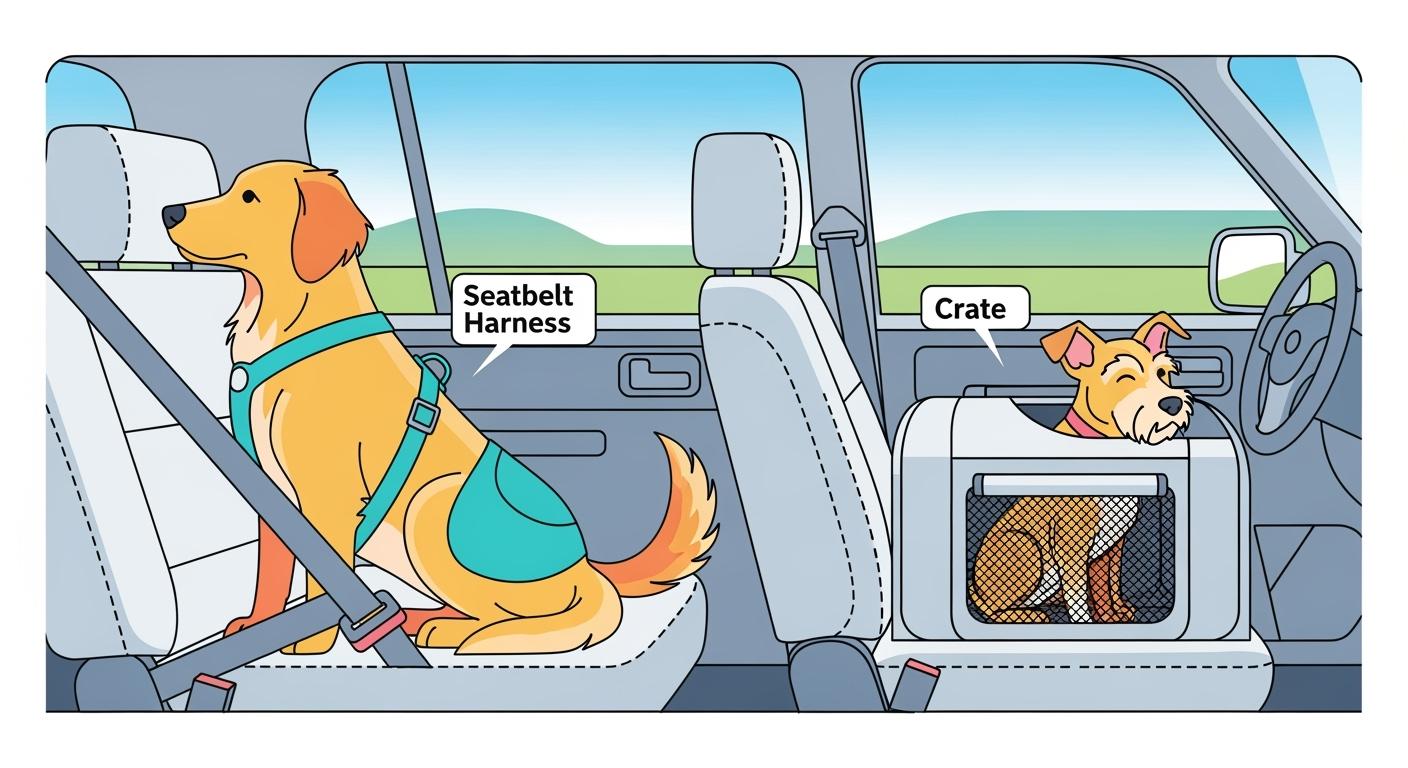
Start with temperament, trip length, and vehicle layout
The best restraint choice usually becomes clearer when you stop asking “Which is better?” and start asking “What does my dog do in the car?” Some dogs curl up and stay still. Others pace, chew, spin, bark, or try to cross seats. Those differences matter more than marketing labels.
A useful rule is to choose the setup that limits your dog’s biggest travel problem. If the problem is roaming and driver distraction on short trips, a short harness restraint may be enough. If the problem is stress, chewing, tangling, or repeated attempts to escape, a crate often gives you a more controlled and calmer environment. For dogs that ride often, the choice also sits inside a wider travel routine that includes loading, settling, and post-drive recovery.
| Dog behavior or travel pattern | Usually the better starting point | Why |
|---|---|---|
| Calm, trained, short local trips | Dog seatbelt restraint with harness | Limits movement without taking up much space and works well when the dog does not chew or panic. |
| Anxious, restless, motion-sensitive | Crate-in-car | Creates a more enclosed, predictable space that can reduce pacing, visual overload, and constant repositioning. |
| Chews straps or gets tangled easily | Crate-in-car | Keeps restraint straps out of reach and reduces the risk of spinning into a long tether. |
| Reactive to traffic, people, or passing dogs | Usually crate-in-car | Better containment helps reduce distraction and prevents seat-crossing during the drive. |
| Very small dog who does not settle in either setup | Consider a secured rear-seat carrier | A stable carrier can sometimes be easier for small dogs that need more enclosure than a harness restraint provides. |
Quick check: if your dog’s biggest issue is movement control, start with restraint range and fit. If the biggest issue is stress or overstimulation, start with containment and a quieter travel environment.
When a crate-in-car is the better choice
A crate tends to work best when your dog needs boundaries more than freedom. That often includes dogs that pace, vocalize, chew tethers, bounce between seats, or get overstimulated by everything outside the windows. A secured crate gives them one defined area instead of multiple choices that can turn into distraction or panic.
Signs a crate is the better fit
- Your dog does not settle with a harness restraint and keeps twisting or leaning into the tether.
- Your dog is prone to chewing webbing, pawing at buckles, or wrapping themselves into slack.
- Your dog becomes overstimulated by passing traffic, pedestrians, or other dogs.
- You take longer drives where your dog needs a more predictable resting space.
How to check whether the crate setup is actually safe
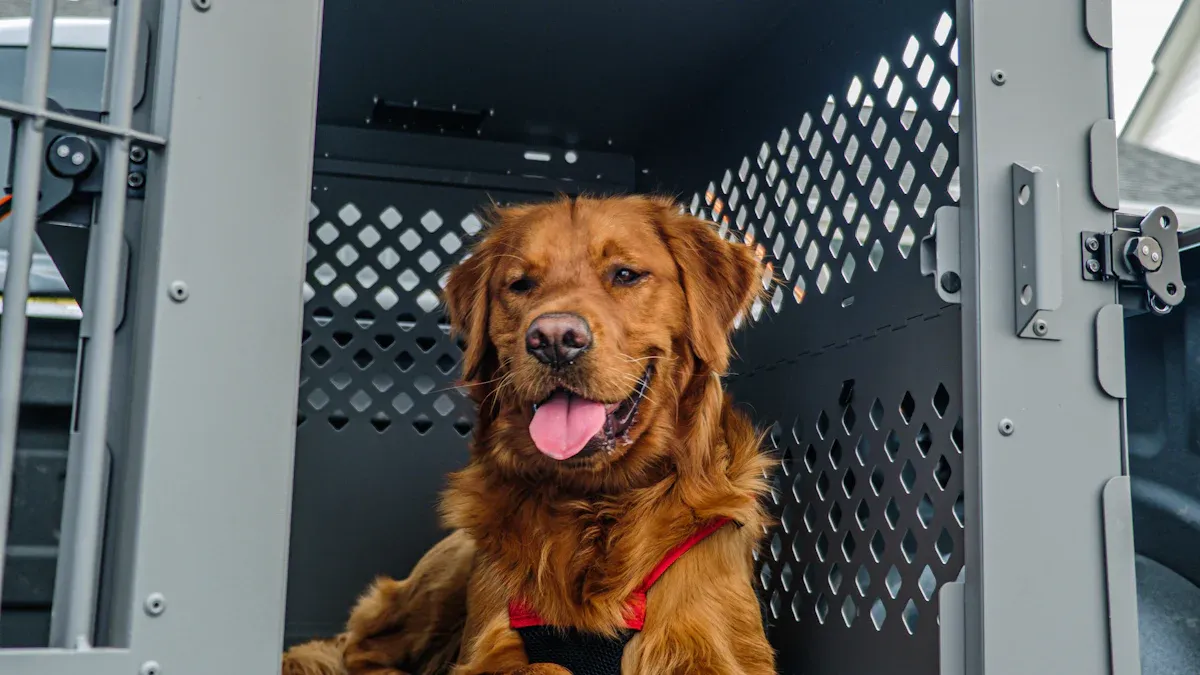
- Make sure the crate is anchored to real vehicle tie-down points so it cannot slide, tip, or roll.
- Check that the size allows your dog to stand, turn, and lie down without being thrown around in excess empty space.
- Confirm the door latch is reliable and does not shake loose during a drive.
- Keep airflow open on all needed sides and do not block ventilation with blankets or luggage.
- Test the setup on a short route before using it for a long trip.
Common crate mistakes
The most common problems are not about the idea of using a crate. They come from poor setup: a crate that is too large or too small, a crate left unanchored, weak door security, or placement in an unsafe part of the vehicle. If your dog still seems distressed in a crate, the answer may be acclimation and fit work, not immediately switching to a restraint system with even more open movement.
When a dog seatbelt restraint makes more sense
A dog seatbelt restraint works best when your dog already travels calmly, listens well, and does not try to chew, spin, or climb between seats. In those situations, a well-fitted harness paired with a short car tether can control movement without making the trip feel overly restrictive. This is usually the more practical option for short drives, quick errands, and daily commuting.
Use a harness restraint when these points are true
- Your dog can lie or sit calmly without repeatedly lunging into the tether.
- Your dog does not panic when lightly restrained.
- Your dog is not likely to chew straps during the ride.
- Your vehicle setup makes a crate impractical for your regular trip pattern.
What to check before every drive
- Clip the tether to a properly fitted harness, never to a collar.
- Keep the tether short enough that your dog cannot cross seats or build speed into a sudden stop.
- Check buckle closure, attachment point security, and strap wear before leaving.
- Use the rear seating area rather than the front seat.
- Stop using the setup if you see rubbing, twisting, loosening, or repeated escape attempts.
The seatbelt option stops being the right choice when the dog keeps hitting the end of the tether, gets tangled, or becomes more reactive because they can still watch and respond to everything around them. In those cases, a crate may be the safer next step, even if the seatbelt harness looked easier at first.
Mistakes that cause tangling, escape, or distraction
Most car-travel problems come from one of four issues: wrong restraint type for the dog, poor fit, poor anchoring, or no acclimation. This is why simply buying “car safety gear” is not enough. You need a repeatable setup and a quick pre-drive check. Restraint choice is only one part of a more stable back-seat setup, especially when space, footing, and daily cleanup also affect how calmly a dog rides.
What usually goes wrong
- Harness connected to a collar: increases neck risk and can trigger panic in sudden movement.
- Tether too long: allows spinning, seat-crossing, tangling, and secondary impact.
- Crate not anchored: turns a containment tool into a shifting object during braking or corners.
- No fit test: loose harnesses slip, and badly sized crates create either instability or cramped posture.
- No acclimation: unfamiliar gear often causes resistance that owners mistake for “my dog hates car travel.”
A better pre-trip routine
- Match the restraint type to the dog’s travel behavior, not just body size.
- Do a short driveway or neighborhood test after any setup change.
- Watch for panting, pawing, barking, leaning hard into the tether, or repeated escape attempts.
- After wet or muddy trips, remove, clean, and dry the gear fully before the next ride.
- Recheck fit and anchor points regularly because daily use loosens straps and reveals weak spots.
FAQ
Is a crate always safer than a dog seatbelt in the car?
Not automatically. A crate only works well when it is the right size, properly anchored, and matched to the dog’s behavior. A harness restraint can be the better everyday choice for calm dogs on short trips if it is fitted correctly and keeps movement controlled.
When should I choose a seatbelt restraint over a crate?
Choose a seatbelt restraint when your dog already travels calmly, does not chew or spin into the tether, and mainly rides on shorter commutes or errands where a crate feels unnecessary or impractical.
Can I attach a dog car tether to a collar?
No. A car tether should connect to a properly fitted harness, not to a collar. A collar setup can place unsafe force on the neck during braking, turning, or sudden impact.
What if my dog gets tangled in a seatbelt restraint?
Shorten the movement range first and recheck harness fit. If the dog still spins, chews, or wraps into the tether, the restraint style may not be the right match for that dog, and a crate may be the better solution.
How do I know the crate size is right for car travel?
Your dog should be able to stand, turn, and lie down naturally, but they should not be thrown around in excessive open space. A good car-travel crate also needs stable placement, secure anchoring, reliable latching, and adequate airflow.






