Many people look for a dog seat harness for car use because they want a travel setup that feels more controlled than a loose collar or an unrestrained ride. That goal makes sense. The problem starts when the harness is judged only by a size chart, a seat-belt clip, or a reassuring product label. A setup can look correct while parked and still show problems as soon as the car turns, brakes, or the dog shifts position.
This page focuses on those early problems. It does not assume that every harness sold for travel offers the same level of protection. Instead, it shows what a car harness should actually do, how to measure and fit it more honestly, what warning signs appear on the first short ride, and when a carrier or crate may be the better answer.
This guide offers general safety information, not medical or legal advice. If your dog coughs, wheezes, shows pain, or becomes distressed during travel, stop and speak with your veterinarian.
Key Takeaways
- Pick a travel harness made for cars.
- Measure your dog’s neck and chest before you buy a harness.
- The first short ride tells you more than the product page. Watch for twisting, throat crowding, too much slack, and a dog that cannot settle naturally in the back seat.
What a car harness should actually do
A travel harness is not the same as a walking harness
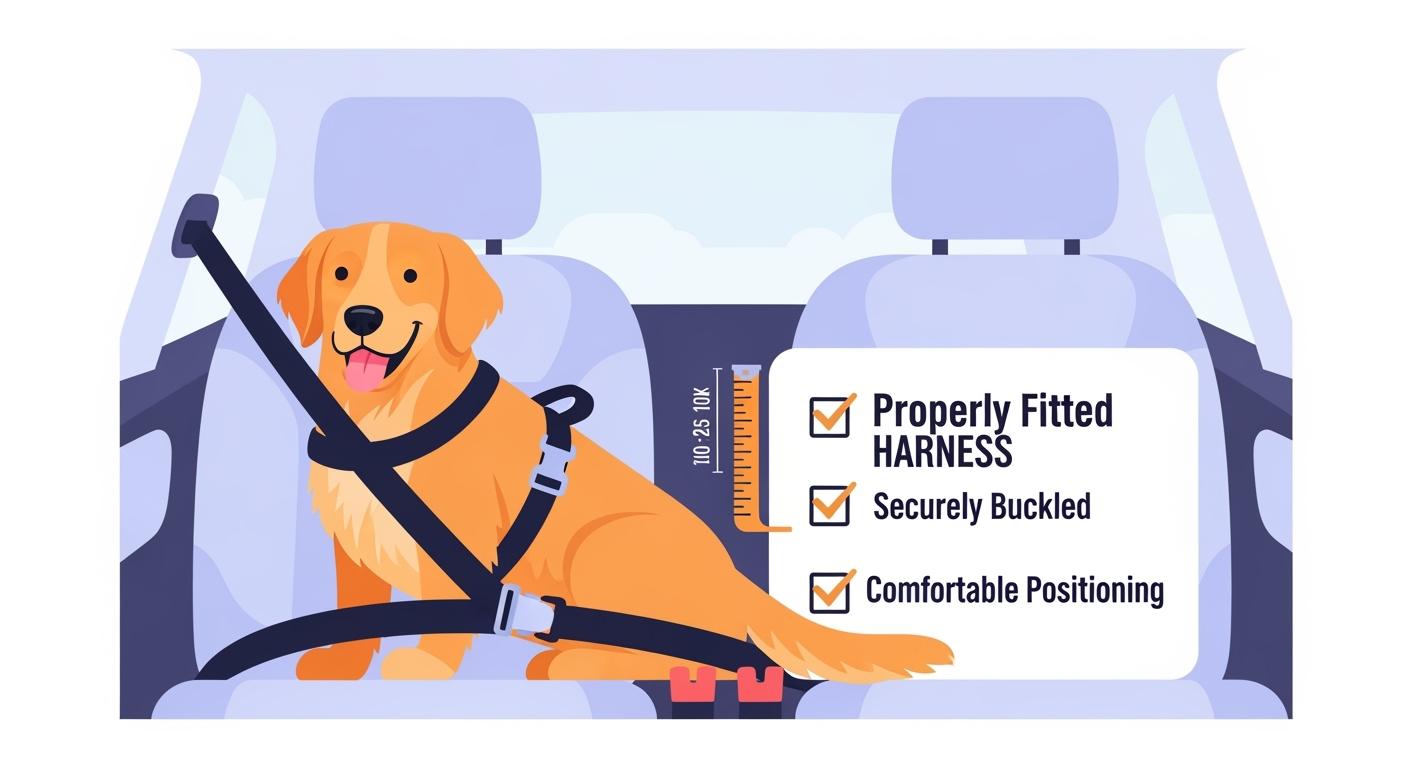
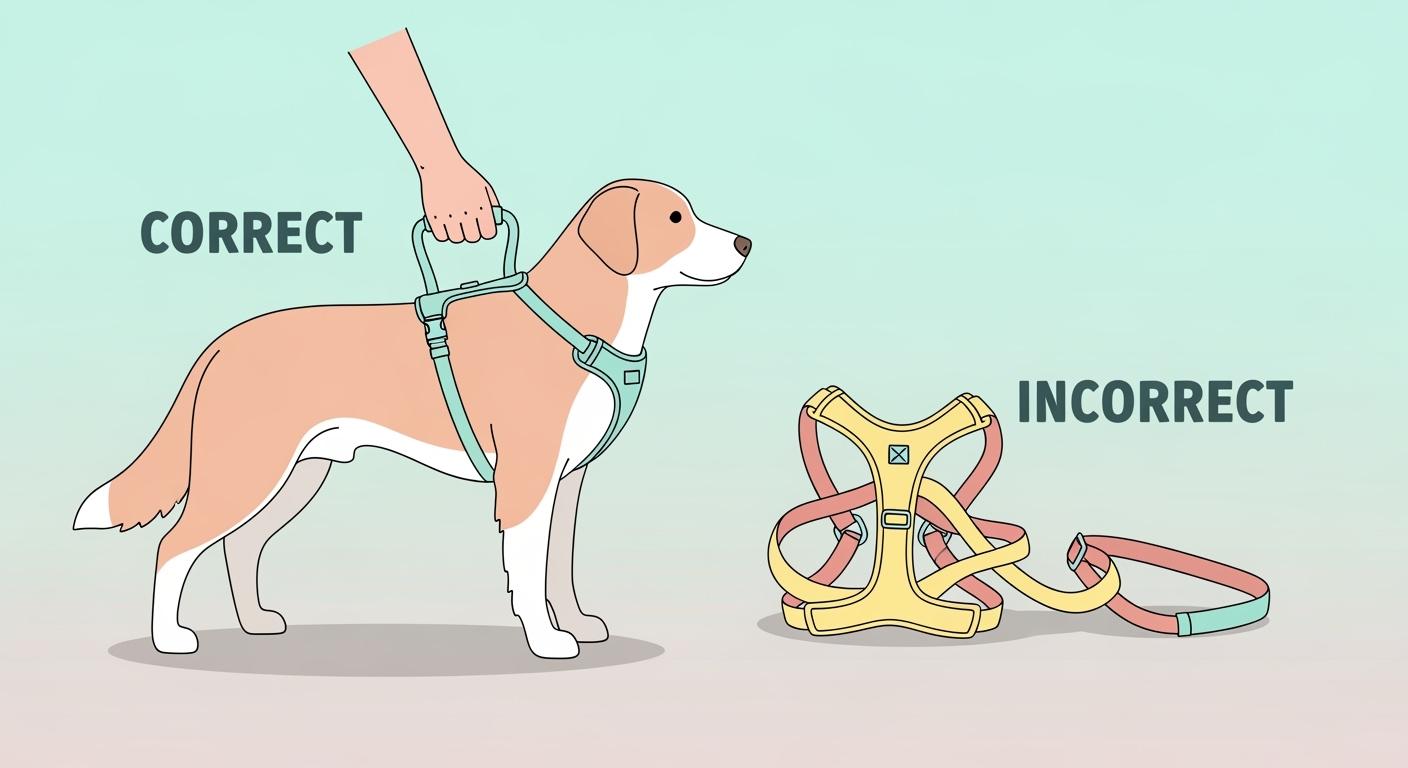
A walking harness can be comfortable for daily leash use and still be the wrong choice for vehicle restraint. A car harness should be designed to work with a travel restraint setup and keep the dog positioned more predictably in the rear seat. It should not be judged only by padding or by how easy it is to put on before a walk.
It should reduce roaming, not create false confidence
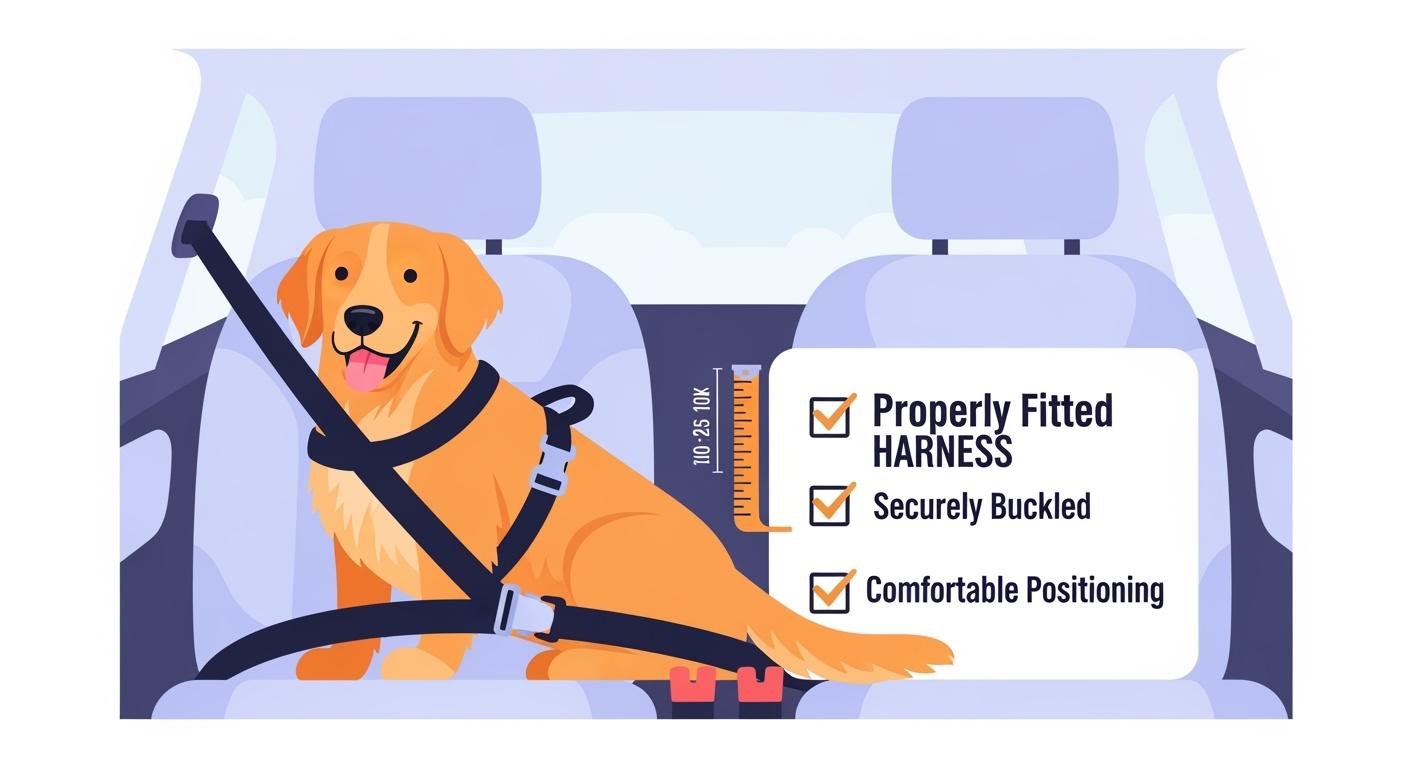
A car harness can help reduce driver distraction and keep your dog from moving too freely across the seat. That does not mean every harness with a clip or tether is automatically equivalent. What matters is how the force is managed across the chest and torso, whether the restraint path stays controlled, and whether the whole setup stays stable once the car is moving.
What to Expect from the Setup
| Expectation | Reasonable Sign | Wrong Assumption |
|---|---|---|
| Restraint | Dog stays in a controlled rear-seat zone | Any clip means full crash protection |
| Fit | Harness rests on chest and torso without throat pressure | Static fit alone proves travel readiness |
| Comfort | Dog can sit and lie down without twisting badly | Thick padding fixes poor restraint geometry |
| Security | Setup stays predictable on short real drives | Label language is enough by itself |
Tip: Put the dog in the back seat, not the front seat. That makes it easier to manage restraint and avoids front-seat airbag risk.
Measure the dog, then test the setup
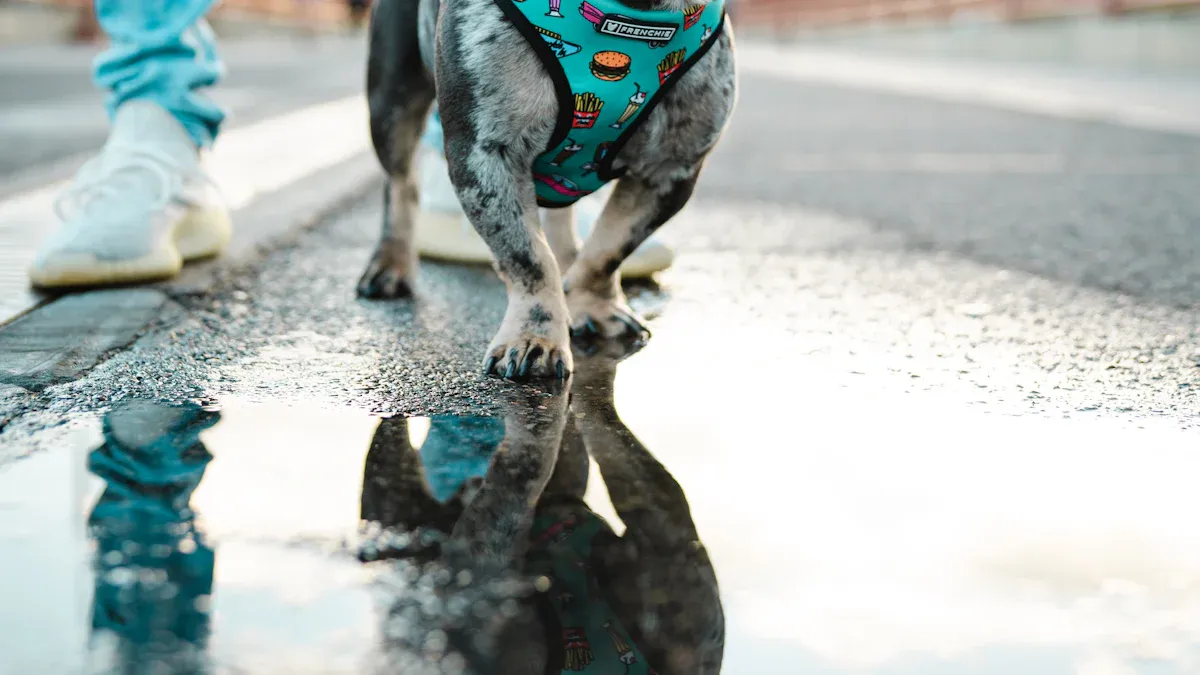
Choosing the right size harness for your dog starts with accurate measurement. Begin with the base of the neck and the widest part of the chest. Those measurements give you a more honest starting point than guessing by breed or by a small/medium/large label alone.
Chest fit matters more than a generic label
The chest area usually tells you more than the product name does. If the chest section is too loose, the harness may shift off center when the car turns or when the dog tries to reposition. If it is too tight, your dog may brace, resist, or move stiffly. A harness should lie flat against the torso without forcing the dog into a cramped posture.
The two-finger check is only the starting point
The usual two-finger space rule can help you avoid an obviously tight fit, but it is not the final test. You still need to look at where the neck opening sits, how the chest panel stays centered, and whether the harness remains stable when the dog stands, turns, and settles. A setup that passes a finger test can still fail as a travel restraint.
Sizing and Fit Table
| Check Point | Pass Signal | Fail Signal | Better Response |
|---|---|---|---|
| Neck opening | Sits low at the base of the neck | Rides up toward the throat | Refit or change harness shape |
| Chest fit | Centered and flat on the torso | Twists, gaps, or slides sideways | Adjust size or change layout |
| Body posture | Dog can sit and lie down naturally | Dog braces, crouches, or resists | Reduce restriction and retest |
| Initial snugness | Secure without pinching | Too loose or too tight | Reset all straps before travel |
Watch what changes once the car moves
Too much slack creates new problems fast
A common mistake is giving the dog extra room because the the dog extra room because the setup looks kinder that way. In practice, too much slack can let the dog reach the seat edge awkwardly, turn repeatedly, or lose balance on braking. Controlled restraint is usually more useful than extra roaming room.
Twisting and forward lurching are not small details
The first short ride tells you whether the harness setup is really working. Look for the dog lunging forward harder than expected, the harness shifting off center, the neck area creeping upward, or the dog repeatedly trying to brace against the seat. Those signs mean the sizing, restraint path, or overall setup still needs work.
First-Ride Pass/Fail Table
| What You Notice | Likely Problem | Fast Check | Best Next Move |
|---|---|---|---|
| Harness twists off center | Chest fit is loose or poorly balanced | Check panel position after a short turn | Refit before the next ride |
| Dog reaches the seat edge too easily | Too much slack in the restraint path | Watch how far the dog can lean forward | Shorten the usable travel zone |
| Neck area rides upward | Harness shape or setup is wrong | Inspect where the upper section sits after braking | Stop using that fit as-is |
| Dog cannot settle after a few minutes | Posture or restraint mismatch | Watch for bracing, crouching, or constant turning | Reassess harness size or travel type |
| Dog backs out or slips loose | Fit is too loose or geometry is wrong | Check neck and chest security while parked | Do not trust the setup for travel |
Reminder: Do not attach a travel tether to a collar. Restraint should work from a chest-and-torso harness, not from the neck.
When a harness is not the right travel setup
Some dogs do better in a carrier or crate
A harness is not automatically the best answer for every dog. Small dogs, dogs that cannot settle, or dogs that keep spinning, chewing, or escaping may travel better in a secured carrier or crate. The right travel setup depends on the dog’s size, behavior, and the vehicle layout, not only on what sounds convenient.
Stop using the same setup if the same failures keep returning
Repeating the same adjustment is not the same as fixing the setup. If the harness keeps twisting, riding upward, allowing too much reach, or making the dog panic, the better answer may be a different restraint category rather than more strap changes.
Decision Table
| Travel Situation | Harness Setup a Good Match? | Main Watchout | Better Direction |
|---|---|---|---|
| Calm dog on short rear-seat trips | Often yes | Still needs correct fit and short controlled slack | Use a travel harness and recheck routinely |
| Small dog that cannot settle | Maybe not | Open rear-seat restraint may be too stimulating | Consider a secured carrier |
| Dog that keeps backing out or spinning | Often no | Repeated failure signs lower trust in the setup | Use a different restraint category |
| Large dog with poor rear-seat space | Maybe | Posture and reach may still be wrong even in the right size | Recheck layout or move to crate travel if practical |
A dog seat harness for car use should make travel more controlled, not just more complicated. If the fit stays centered, the dog can settle, the restraint path stays short and predictable, and the same problems do not keep returning, the setup is moving in the right direction. If not, the safer answer is to change the setup before treating it as solved.
FAQ
When should you use a carrier instead of a harness for car travel?
Use a carrier when your dog is small, cannot settle in an open harness setup, or keeps spinning, escaping, or chewing during travel. Some dogs simply do better with more containment.
Is a walking harness enough for car rides?
Usually no. A walking harness may work well for daily leash use but still be the wrong tool for vehicle restraint. Car travel needs a setup intended for restraint in the vehicle.
How much slack should a car harness setup have?
Enough for your dog to sit and lie down comfortably, but not so much that the dog can lunge forward, fall off the seat edge, or keep turning into tangles. Controlled space is more useful than extra roaming room.
What if your dog still looks uncomfortable after sizing carefully?
Stop assuming the size chart solved the problem. Recheck neck position, chest centering, restraint length, and rear-seat posture. If the same issues keep returning, another restraint style may be a better fit.