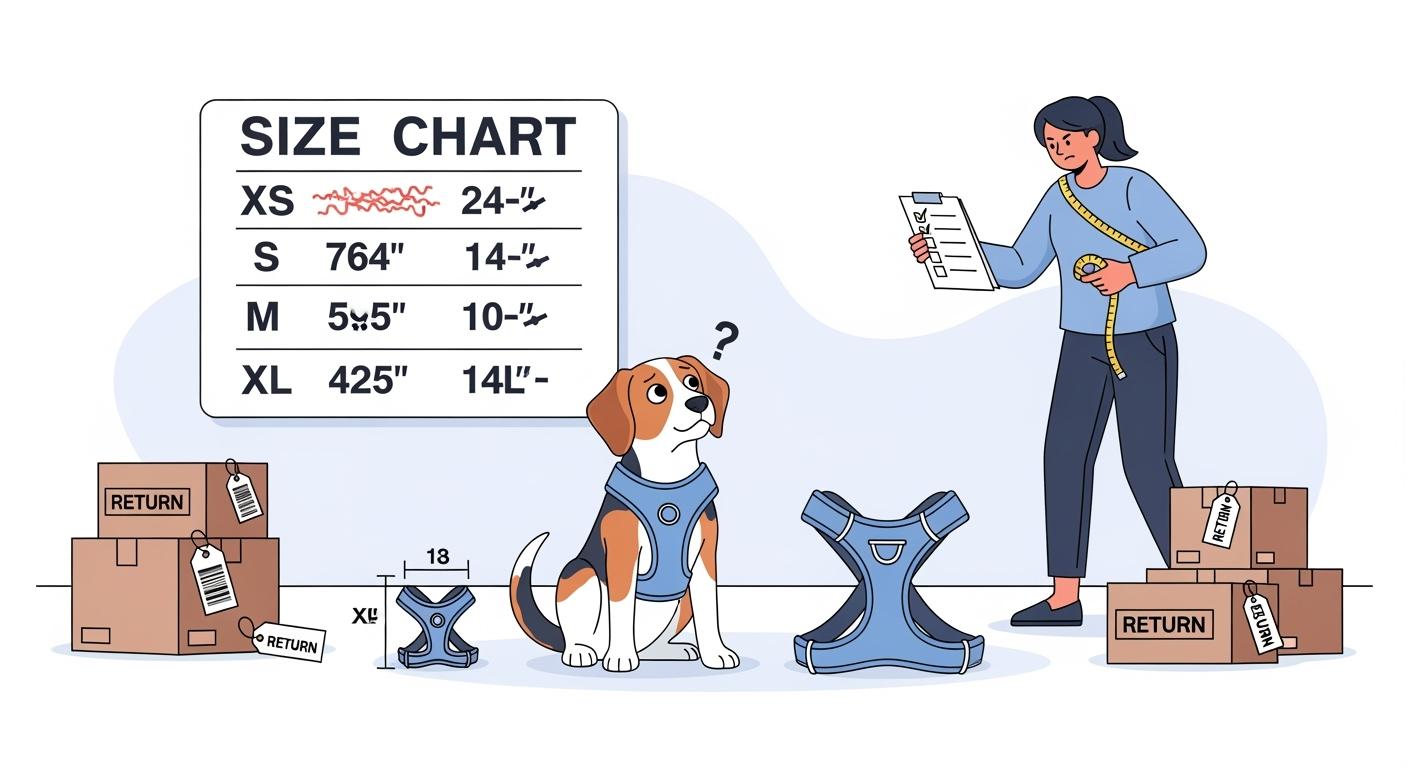
Most harness returns come down to fit. Use this dog harness size chart as a starting point, then measure chest girth and neck carefully, choose the correct size when your dog falls between sizes, and confirm comfort with a quick two-finger check and a short movement test.
Key Takeaways
- Measure your dog’s chest at the widest spot. This spot is right behind the front legs. This helps you get the right size.
- Follow the boundary rule. If your dog is between sizes, pick the bigger size. You can make it smaller for a better fit.
- Do a two-finger check at every spot the harness touches. Make sure the harness is snug but not too tight.
- Check the harness fit every week for dogs that are growing. Also check after your dog’s coat changes. This keeps your dog safe and comfy.
- Do not guess your dog’s size. Always use exact measurements. This stops discomfort and returns.
Common harness sizing mistakes
Guessing instead of measuring
You might think you know your dog’s size, but guessing leads to harness-sizing mistakes. Dogs come in many shapes, so guessing often causes poor fit and discomfort. Always measure your dog’s chest girth at the widest part just behind the front legs. Measure three times to get the most accurate sizing. Use a soft tape measure and write down the numbers in both inches and centimeters. This step helps you avoid common fit mistakes and supports safety.
Tip: Never choose a harness by weight alone. Chest girth gives you the best sizing result.
Ignoring breed and body shape
Different breeds have unique body shapes. A harness that fits a slim dog may not work for a broad-chested breed. Ignoring breed and body shape causes harness-sizing mistakes and returns. Look at your dog’s chest and neck. Use the sizing chart and check if your dog falls between sizes. If so, apply the boundary rule: choose the larger size and adjust down for a better fit.
Measuring at the wrong spot
Measuring too high on the chest or neck leads to sizing errors. Always measure the chest girth just behind the front legs and the neck at the base where a collar sits. Wrong measurements cause harness-sizing mistakes and discomfort. Repeat the measurement if your dog moves or wiggles.
Tip: Add two inches (5 cm) for thick coats or planning for puppy growth.
Choosing style over fit
Picking a harness for looks instead of fit can cause discomfort and returns. Overlooking comfort and sizing leads to harness-sizing mistakes. Make sure the harness is adjustable and fits your dog’s body. Try a short movement test to check for twisting or rubbing.
Overlooking adjustability
Some harnesses are not adjustable enough. If your dog is between sizes, look for adjustable straps. Adjustable features help you get a better fit and reduce returns. Always use the two-finger rule at contact points.
Not accounting for growth or coat changes
Dogs grow and their coats change. Planning for puppy growth is important. Recheck the fit every 7 days until your dog’s size is stable. Adjust the harness for seasonal coat changes or weight gain.
Skipping fit checks
Skipping fit checks leads to harness-sizing mistakes and discomfort. Always do a two-finger check at contact points. Make sure the harness does not cause distress. Do a short movement test to confirm comfort and safety.
- What to avoid:
- Measuring in the wrong place
- Choosing by weight only
- Picking smaller at the boundary
- Skipping the movement test
- Leaving a damp or dirty harness on
- How to reduce returns:
- Follow buyer-friendly measurement steps
- Use the boundary rule
- Refer to the embedded specs table
- Use a short checklist
- Recheck fit timing every 7 days for growth
Why dog harness size charts confuse buyers
Size labels vs. actual measurements
When you look at a harness size chart, you often see labels like S, M, or L. These labels seem simple, but they do not match every dog’s body. If you rely only on these labels, you may choose the wrong harness. The best way to avoid mistakes is to measure your dog’s chest girth at the widest part just behind the front legs. Use both inches and centimeters, such as 18-29 in (46-74 cm) for a medium harness. Neck measurement at the base where a collar sits also helps you find the right fit. Many returns happen because buyers pick a harness by label, not by measurement.
Here is a table showing how sizing discrepancies affect returns:
| Issue Identified | Impact on Returns |
|---|---|
| Sizing Discrepancies | High return rates due to incorrect fits |
| Lack of Detailed Size Info | Customers unable to find suitable sizes |
| No guidance for in between sizes | Buyers pick the wrong size when measurements sit between sizes |
Weight vs. body shape differences
You may think weight helps when choosing a dog harness, but dogs with the same weight can have very different shapes. A broad-chested dog needs a different harness than a slim dog of the same weight. Always use chest girth and neck measurements instead of weight. This method gives you a more reliable way to choose the right harness. If you skip measuring, you risk discomfort and returns.
Harness type and measuring method
Different harness types need different measuring points. Step-in harnesses focus on chest girth, while overhead harnesses may need both chest and neck measurements. Y-front and H-back harnesses often require extra attention to strap placement. When choosing a dog harness, check the measuring instructions for each type. Use the function of the two-finger fit check to confirm comfort and safety. If you measure at the wrong spot, the harness may twist or rub, leading to returns.
Tip: Always measure at the widest chest just behind the front legs and at the neck base. Repeat measurements if your dog moves.
How to measure for a dog harness fit
Chest girth measurement point
You need to measure your dog at the correct spot to get the best harness fit. Start by having your dog stand straight. Use a soft, flexible measuring tape. Wrap the tape around the widest part of the chest, just behind the front legs. Make sure the tape is snug but not tight. You should be able to slide two fingers between the tape and your dog’s body. Record the measurement in both inches and centimeters. For example, a medium harness may fit a chest girth of 18-29 in (46-74 cm). Repeat the measurement three times to confirm accuracy. Avoid guessing the size or measuring too high on the chest. Many people make mistakes by estimating or measuring at the wrong spot. Always measure your dog at the widest chest point for the best results.
- Step 1: Measure your dog at the widest chest just behind the front legs.
- Step 2: Use a soft tape and check with the two-finger rule.
- Step 3: Record the girth in inches and centimeters.
Common errors include assuming the size, measuring incorrectly, and ignoring how the harness distributes weight. Always measure your dog carefully to avoid discomfort and returns.
Neck measurement point
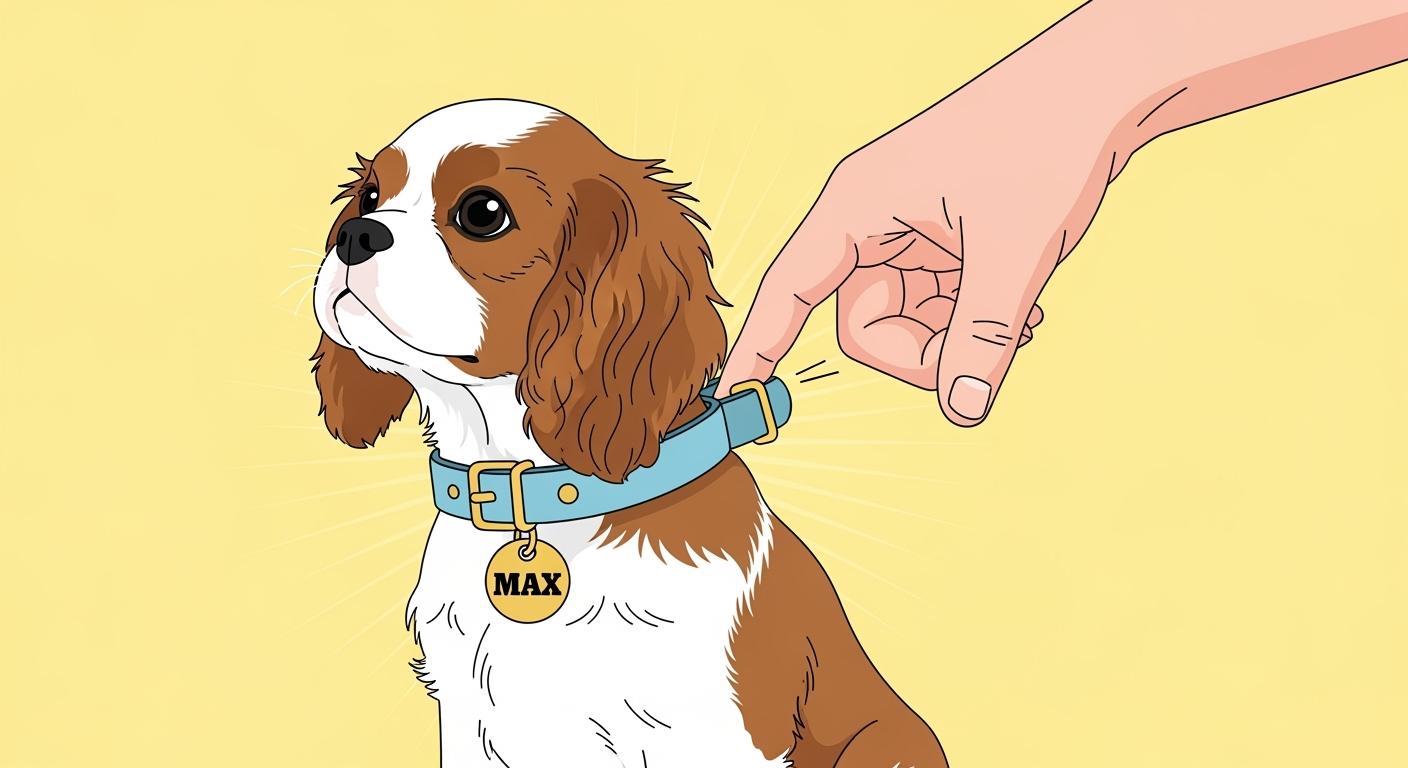
You also need to measure your dog’s neck for a proper harness fit. Find the base of the neck where a collar would sit, not high near the head. Wrap the tape around this spot snugly. Make sure you can slide two fingers between the tape and your dog’s neck. Record the measurement in both inches and centimeters. This step helps you choose a harness that supports your dog and prevents chafing or restricted movement. If you rely only on neck measurement, you may miss the right fit for the chest strap. Always measure both chest girth and neck for the best harness fit.
- Step 1: Measure your dog at the base of the neck where a collar sits.
- Step 2: Use the two-finger rule for comfort.
- Step 3: Record the neck measurement in inches and centimeters.
An incorrect harness fit may contribute to stress, restricted movement, rubbing, or skin irritation. Measure your dog at the correct points to support safety and comfort.
Tips for thick coats and active dogs
Dogs with thick coats or high activity need extra attention when you measure for a harness. Start with the girth measurement at the widest part of the chest. Make sure the tape is snug but not too tight, so you account for thick fur. Measure the neck circumference where the harness will sit. Use harnesses with adjustable straps for a tailored fit. This helps your dog move freely and stay comfortable. If your dog is active, repeat the measurement after exercise to check for changes. For growing dogs or those with changing coats, recheck the fit every 7 days until stable.
- Add 2 in (5 cm) to the girth for thick coats or puppy growth.
- Choose harnesses with adjustable straps for comfort and mobility.
- Recheck the fit every 7 days for growing or active dogs.
If you notice redness, hair loss, or sores, stop using the harness and consult a veterinary professional. Comfort depends on fit, hygiene, and activity level. This blog does not provide medical advice.
Step-by-step summary for measuring and fitting a dog harness:
- Measure your dog at the widest chest just behind the front legs and at the base of the neck.
- Record all measurements in both inches and centimeters.
- Use the size chart to select the correct harness size. If your dog is between sizes, choose the larger size and adjust down.
- Fit the harness and use the two-finger rule at contact points.
- Perform a short movement test to check for twisting or rubbing.
- Recheck the fit every 7 days for growing dogs or after coat changes.
Safety tip: Always measure your dog before buying a harness. Proper measurement and fit checks reduce discomfort and returns.
Choosing a size and avoiding returns
Applying the boundary rule
When you select a harness, you need to focus on choosing the right size for a tailored fit. If your dog’s chest girth falls between two size bands, use the boundary rule. Choose the larger size and make an adjustment to tighten the straps for a properly adjusted fit. For example, if your dog’s chest girth measures 22 in (56 cm), and the chart shows Medium as 18-29 in (46-74 cm) and Large as 22-39 in (56-99 cm), you should select Large and adjust down for a tailored fit. This method helps you avoid a harness that is too tight or too loose.
Scenario A: You have a deep-chested dog that weighs 30 lb (14 kg), but the chest girth is 23 in (58 cm). The weight might suggest a Medium, but the girth measurement fits better in the Large band. By using girth-first sizing, you get a harness that fits and supports comfort and safety.
Using the two-finger fit check
After you put the harness on your dog, always use the two-finger fit check at every contact point. Slide two fingers between the harness strap and your dog’s skin. You should feel a snug fit, not too tight or too loose. Many trainers and veterinarians recommend this check because it prevents pressure injuries and chafing. A properly adjusted harness can support natural movement and help reduce rubbing. A loose harness can make slipping out more likely, especially when a dog backs up or pulls suddenly. Regular adjustment and fit checks help you avoid these problems.
- Two-finger fit check prevents discomfort and escape.
- A snug fit supports comfort and movement.
- Always check after each adjustment.
Rechecking for growth or changes
Dogs grow and their bodies change. You need to recheck the harness fit every 7 days until your dog’s size is stable. Puppies and thick-coated breeds need frequent adjustment. After grooming or seasonal coat changes, measure again and adjust for a tailored fit. If your dog gains or loses weight, repeat the measurement and fit check. This routine keeps the harness properly adjusted and maintains safety.
Scenario B: You measure a puppy with a thick coat and get a chest girth of 15 in (38 cm). After a week, the puppy grows and the girth increases to 17 in (43 cm). You recheck the fit, adjust the harness, and keep your dog comfortable. Weekly adjustment prevents oversizing and supports a tailored fit.
Tip: Always measure at the widest chest just behind the front legs and use the two-finger fit check for every adjustment.
Harness-sizing mistakes: cause, problem, solution
You want your dog to feel safe and happy in their harness. Sizing mistakes can make your dog uncomfortable and lead to returns. You can stop these problems if you know the main causes and use easy fixes. The table below lists common mistakes, what problems they cause, and how you can fix them.
| Cause | Problem | Solution |
|---|---|---|
| Guessing the size | Harness is too tight or loose, causing discomfort | Measure chest girth at the widest part just behind the front legs and neck at the base |
| Measuring at the wrong spot | Harness rubs or slips, leading to returns | Use a soft tape at the correct points; confirm with the two-finger check |
| Ignoring breed/body shape | Poor fit for broad or slim dogs | Apply the boundary rule and choose adjustable harness straps |
| Choosing by weight only | Harness does not fit chest or neck properly | Use chest girth and neck measurements, not weight alone |
| Skipping fit checks | Harness causes chafing or escape risk | Perform a two-finger fit check and a short movement test |
| Not accounting for growth | Harness becomes too tight as dog grows | Recheck fit every 7 days until stable; adjust for coat changes |
| Overlooking adjustability | Harness cannot be customized for comfort | Select harnesses with adjustable straps for a tailored fit |
| Skipping instructions | Harness is worn incorrectly, reducing safety | Read and follow the size chart and fitting guide |
| Ignoring special needs | Harness does not support unique requirements | Choose special fit harnesses and consult experts if needed |
- Always measure your dog’s chest girth and neck with a soft tape.
- Check that you can slide two fingers under the harness.
- Recheck the fit every 7 days if your dog is growing or after coat changes.
- Pick a harness with adjustable straps to help comfort and safety.
- Follow the size chart and fitting steps for the best fit.
Tip: If you see rubbing, twisting, or your dog tries to escape, adjust the harness and check the fit again. This helps your dog stay safe and comfortable.
Dog harness size chart: parameter/value table
You need a clear harness size chart to make the right choice for your dog. A parameter/value table helps you compare measurements and features. This table shows the most important sizing rules and values you should check before buying a harness. You can use these details to avoid mistakes and improve safety.
- Measure your dog’s chest at the widest part, just behind the front legs.
- Measure the neck at the base, where a collar sits.
- If your dog is between sizes, pick the larger harness and adjust down.
- Always use the two-finger fit check at contact points.
- Recheck the fit every 7 days if your dog is growing or after coat changes.
Here is the key parameter/value table for harness sizing:
| Parameter | Value |
|---|---|
| Primary measurement used by many size charts | Chest girth, widest chest just behind front legs |
| Secondary measurement used by many size charts | Neck at base where collar sits |
| Boundary rule | If between sizes, choose the larger size and adjust down |
| Fit check | Two-finger check at contact points |
| Recheck cadence for growth or body change | Every 7 days until stable |
| Example girth band, M | 18-29 in (46-74 cm) |
| Example girth band, L | 22-39 in (56-99 cm) |
| Example strap width reference, M | 3/4 in (19 mm) |
| Example strap width reference, L | 1 in (25 mm) |
You can see how harness size bands compare in chest width, girth, and weight in the chart below.
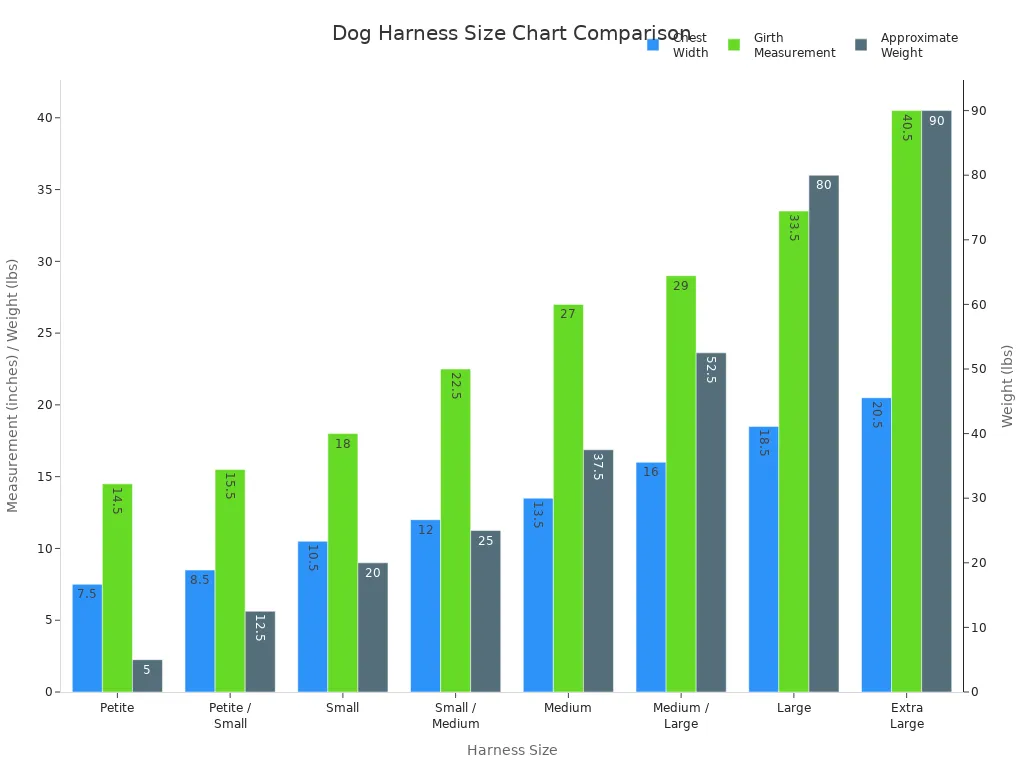
A parameter/value table makes it easier for you to match your dog’s measurements to the right harness. You avoid guessing and reduce the risk of discomfort. You also help prevent returns by following the sizing rules. Always check the chest girth and neck measurement first. Use the two-finger fit check to confirm comfort. If your dog is between sizes, choose the larger harness and adjust down. Recheck the fit every week for growing dogs or after coat changes. These steps improve safety and help your dog stay comfortable.
Decision guide for tricky sizing cases
You may face tricky sizing situations when choosing a harness for your dog. These cases include size boundaries, broad chests with narrow necks, thick coats, dogs between girth ranges, escape risks, and chafing. You need clear steps to make the best decision and keep your dog safe and comfortable. Use the table below to guide your choices.
| Sizing Case | What You Should Do |
|---|---|
| Size boundary | Choose the larger size if your dog is between bands, such as Medium (18-29 in / 46-74 cm) and Large (22-39 in / 56-99 cm). Adjust straps down for a snug fit. Use the two-finger check at contact points. |
| Broad chest, narrow neck | Measure chest girth at the widest part just behind the front legs. Measure neck at the base. Pick a harness style that allows separate adjustment for chest and neck. Confirm fit with the two-finger check. |
| Thick coat | Press gently through the fur to get an accurate body measurement. Add up to 2 in (5 cm) for thick coats. Take multiple measurements for consistency. Recheck fit every 7 days until stable. |
| Between girth ranges | If your dog falls between two girth bands, consider activity level and coat thickness. Active dogs may need a larger harness for movement. Calm dogs may prefer a snugger fit. Always use the boundary rule. |
| Escape risk | Check that you can slide two fingers under every strap. Perform a short movement test. If the harness twists or rotates, re-center and adjust straps evenly. Repeat the fit check. |
| Chafing | Confirm you measured at the correct chest girth point. Reassess harness type and strap routing. Adjust fit and retest with the two-finger check. Look for signs of redness or hair loss. |
- Accurate measurements help you avoid sizing mistakes.
- Make sure your dog stands naturally on a flat surface when you measure.
- Take chest girth, neck circumference, and back length from the base of the neck to the start of the tail.
- For broad chests or narrow necks, pick a harness that allows separate adjustments.
- Safety features, such as strong materials and reflective stitching, improve effectiveness.
- Always check for comfort after fitting the harness.
Tip: Take multiple measurements for consistency. Recheck fit every 7 days for growing dogs or after coat changes.
Dog harness type comparison
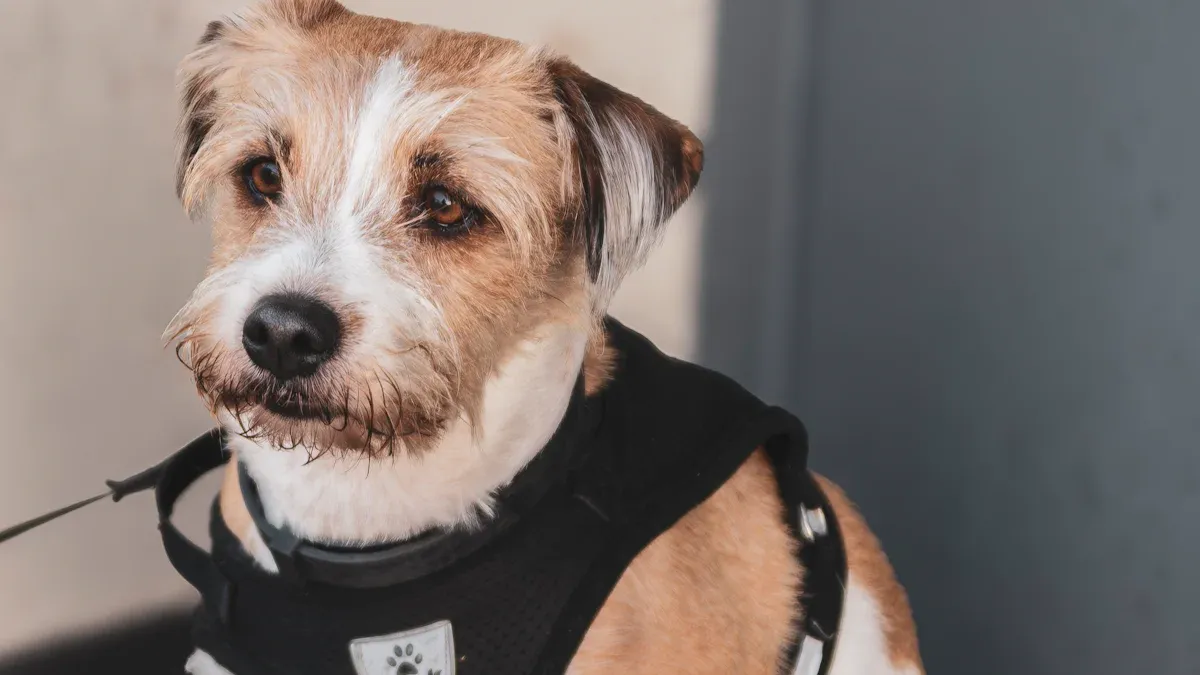
You need to choose the right harness type for your dog. Each harness style has a unique fit and measurement focus. You want to make sure you measure at the correct points and check for comfort and safety. The table below helps you compare the main harness types. You can see how each style affects fit, adjustment, and return risk.
| Harness Type | Measurement Focus | Common Fit Issues | Fit Check Method | Return Risk Description |
|---|---|---|---|---|
| Step-In | Chest girth at widest part just behind front legs | Can twist if not adjusted evenly | Two-finger check at straps | Higher if dog is excited |
| Overhead | Chest girth and neck at base | May be tight near face for some dogs | Two-finger check at neck | Moderate for dogs with broad heads |
| Y-front | Chest girth and neck, focus on movement | Can rub sensitive skin if not fitted well | Two-finger check at chest | Moderate for active dogs |
| H-back | Chest girth, secure fit for gentle dogs | Limits movement for strong pullers | Two-finger check at chest | Lower for calm dogs |
| Vest | Chest girth, neck at base, back length | May overheat in warm weather | Two-finger check at all points | Moderate for thick-coated dogs |
You want to measure your dog’s chest girth at the widest part just behind the front legs. For overhead and vest harnesses, you also measure the neck at the base where a collar sits. Y-front harnesses give your dog more freedom of movement, but you need to check for rubbing. H-back harnesses work best for small or gentle dogs and provide a secure fit. Vest harnesses cover more of your dog’s body, which can help with control but may cause overheating for dogs with thick coats.
You should always use the two-finger fit check at every contact point. Slide two fingers between the harness and your dog’s body. This step helps you confirm comfort and safety. If you notice twisting, rubbing, or your dog tries to escape, adjust the straps and repeat the fit check. You want to reduce return risk by choosing the harness type that matches your dog’s body and activity level.
- Step-in harnesses work well for dogs that dislike overhead styles.
- Overhead harnesses provide strong support but may not suit every dog.
- Y-front harnesses allow for better movement and control.
- H-back harnesses fit securely but may limit movement.
- Vest harnesses offer extra coverage and control.
Tip: Always measure at the correct points and use the two-finger fit check. Recheck the fit every 7 days for growing dogs or after coat changes.
Harness fit checklist
- Measure your dog’s chest girth at the widest part just behind the front legs using a soft tape. Record the measurement in inches and centimeters.
- Measure your dog’s neck at the base where a collar sits. Write down the measurement in both inches and centimeters.
- Check the size chart for the correct harness size using your dog’s chest girth and neck measurements.
- If your dog is between two size bands, choose the larger size and adjust down for a better fit.
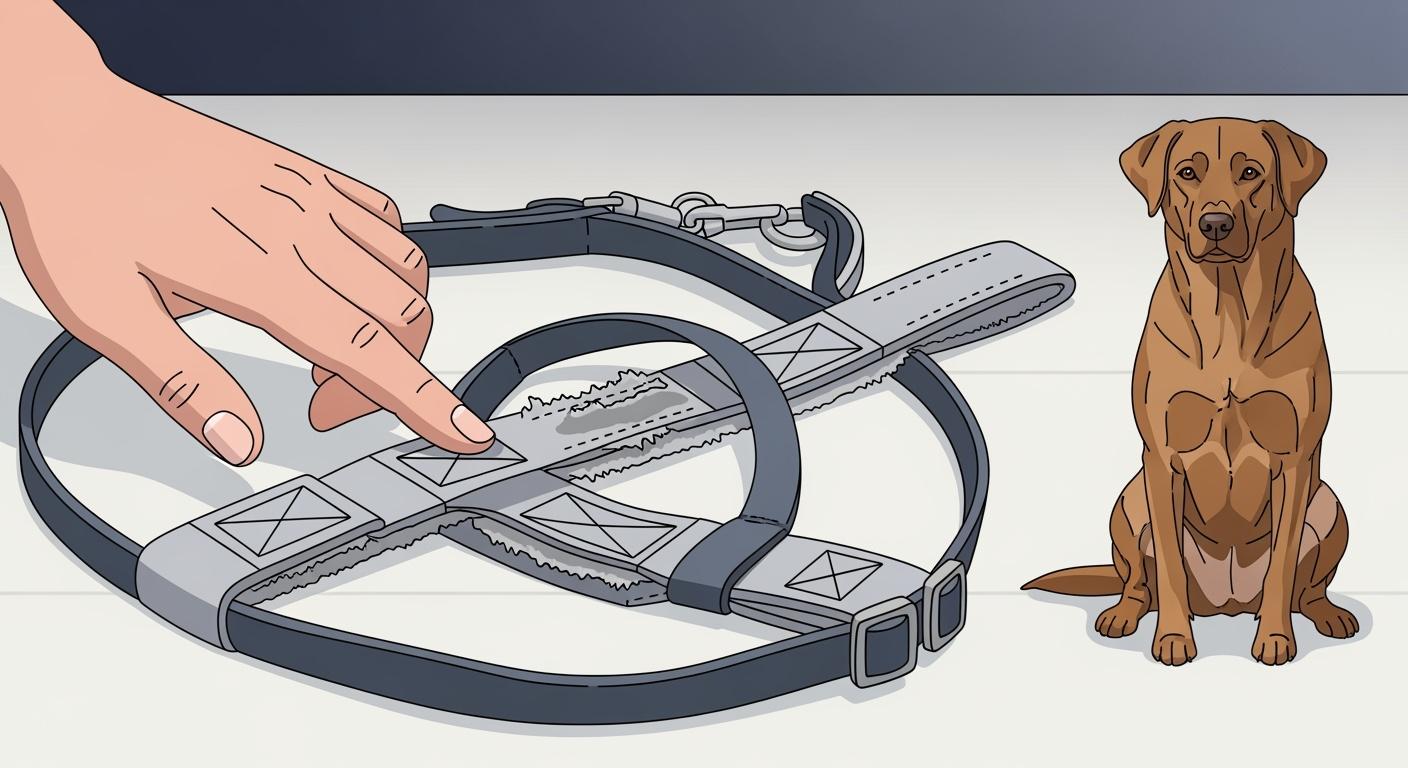
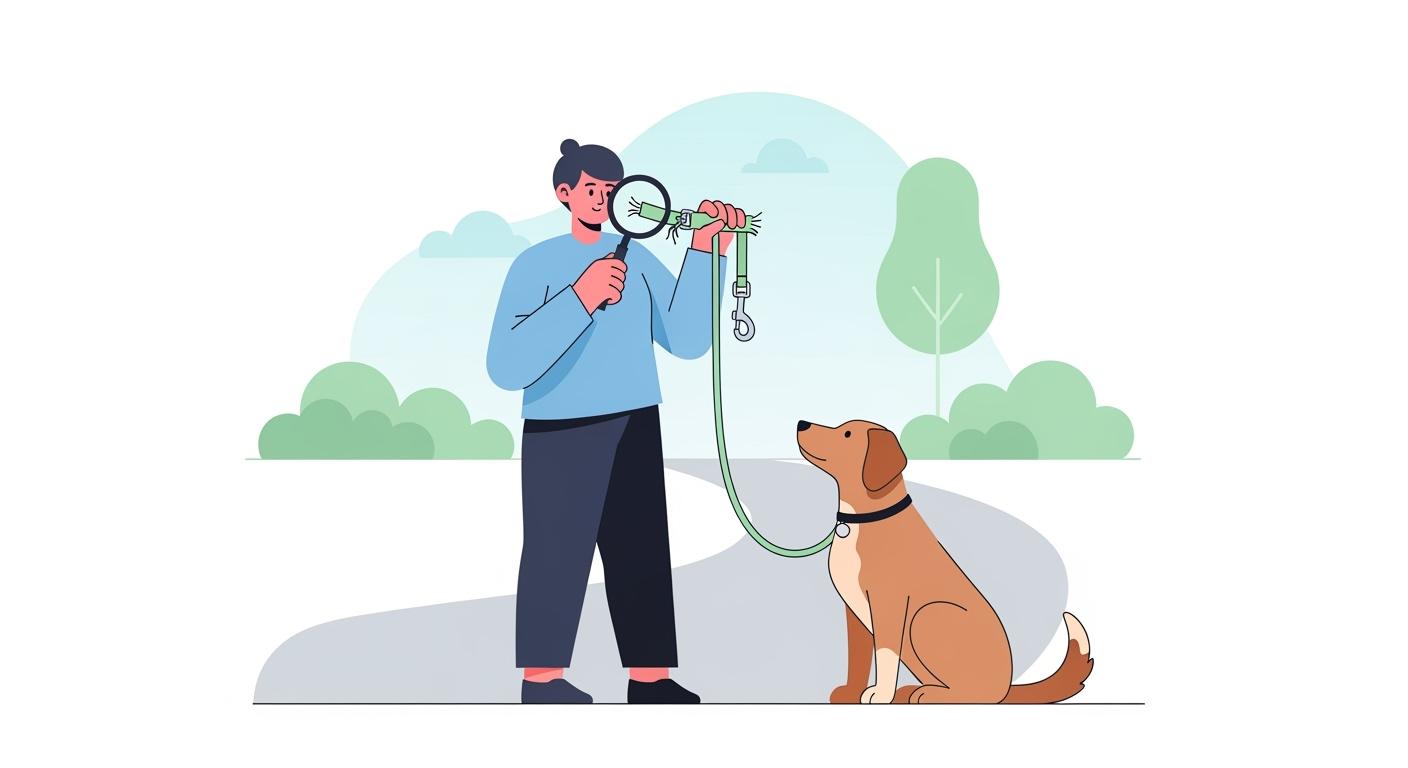
- Inspect the harness straps for any cuts, frays, or stiffness before fitting.
- Test every buckle to make sure it works and holds securely.
- Adjust the shoulder straps so they run evenly and vertically down your dog’s body.
- Buckle the chest strap at mid-chest level, making sure it is not too high or too low.
- Position the back D-ring between your dog’s shoulder blades and adjust straps as needed.
- Slide two fingers between each harness strap and your dog’s body to check for a snug fit.
- Stand your dog up straight and check that the harness does not restrict movement.
- Perform a short walk test to see if the harness twists, rubs, or causes discomfort.
- Recheck the fit every 7 days for growing dogs or after coat changes.
- Look for signs of redness, hair loss, or sores at contact points after each use.
- Make sure all labels on the harness are present and easy to read.
- Confirm that the harness allows for easy adjustment at both chest and neck.
- Use a mirror or ask someone to check the harness alignment and fit.
- Remove tags only after you confirm the fit and comfort during a short walk.
Tip: Following this checklist helps you get the best fit, improves comfort, and reduces the chance of returns. Accurate fit checks support your dog’s safety and happiness.
SKU planning notes for sellers
You want fewer returns and happier buyers. Clear size charts help buyers pick the right harness. Measurement diagrams show where to measure on the dog. Buyer guides make it easy to check fit and avoid mistakes.
- Use a soft measuring tape for sizing. Show how to measure the neck at the base. Measure the chest at the widest part behind the front legs. For some harnesses, measure the back from neck to tail.
- Always show chest girth and neck sizes in inches and centimeters. For example, Medium is 18-29 in (46-74 cm). Large is 22-39 in (56-99 cm). This helps buyers match their dog’s size to the harness.
- Make size charts simple and highlight the boundary rule. If a dog is between sizes, tell buyers to pick the bigger harness and adjust down.
- Add diagrams to show the right measuring spots. Use easy pictures to guide buyers step by step. Diagrams help buyers avoid mistakes when measuring.
- Give every SKU a buyer self-check guide. Include steps for the two-finger fit check and a short movement test. Remind buyers to check the fit every 7 days for growing dogs or after coat changes.
- Sort your SKUs by measurement bands, strap width, and harness type. This helps buyers find the best harness for their dog’s shape and activity.
- Check buyer feedback often. Look for common sizing questions or reasons for returns. Update your charts and guides to fix these problems and make harnesses safer and more comfortable.
When you plan SKUs with clear info and helpful guides, you get fewer returns and build trust. You help buyers choose better harnesses and keep dogs safe and comfortable.
You can avoid harness-sizing mistakes by following these steps. First, measure your dog’s chest girth at the widest part just behind the front legs and neck at the base, using both inches and centimeters. Next, use the dog harness size chart and select the right harness. Always check fit with the two-finger rule and adjust straps for comfort and safety. Use the checklist and tables for every harness purchase and recheck fit as your dog grows or changes. Share these harness tips with other pet owners.
| Key Aspect | Explanation |
|---|---|
| Adjustable Straps | Allow for a snug fit that can be modified as the dog grows or changes shape. |
| Regular Fit Checks | Ensures the harness remains comfortable over time, preventing discomfort from improper fit. |
| Measuring Techniques | Accurate girth measurement is crucial for selecting a harness that fits well and is comfortable. |
- Choose the correct harness size using the chart and your measurements.
- Adjust straps so you can slide two fingers under each harness strap.
- Inspect the harness regularly for wear and proper fit.
Measure your dog today and help others learn how to keep their dogs safe and comfortable with the right harness.
FAQ
How do I measure my dog for a harness?
You measure your dog’s chest at the widest part just behind the front legs. Use a soft tape. Record the chest girth in inches and centimeters. Measure the neck at the base where a collar sits.
What if my dog is between two harness sizes?
You choose the larger harness size and adjust the straps down. This method helps you avoid tightness and supports comfort. Always use the two-finger check at contact points.
How often should I check the harness fit?
You recheck the harness fit every 7 days for growing dogs or after coat changes. Regular checks help maintain safety and prevent discomfort.
Why does my dog’s harness twist or rub?
You may have measured at the wrong spot or need to adjust the straps. Make sure the harness sits at the widest chest and neck base. Perform a short movement test after fitting.
Can I use weight alone to pick a harness size?
You should not use weight alone. Dogs with the same weight can have different chest girths. Always measure chest and neck for the best harness fit.