
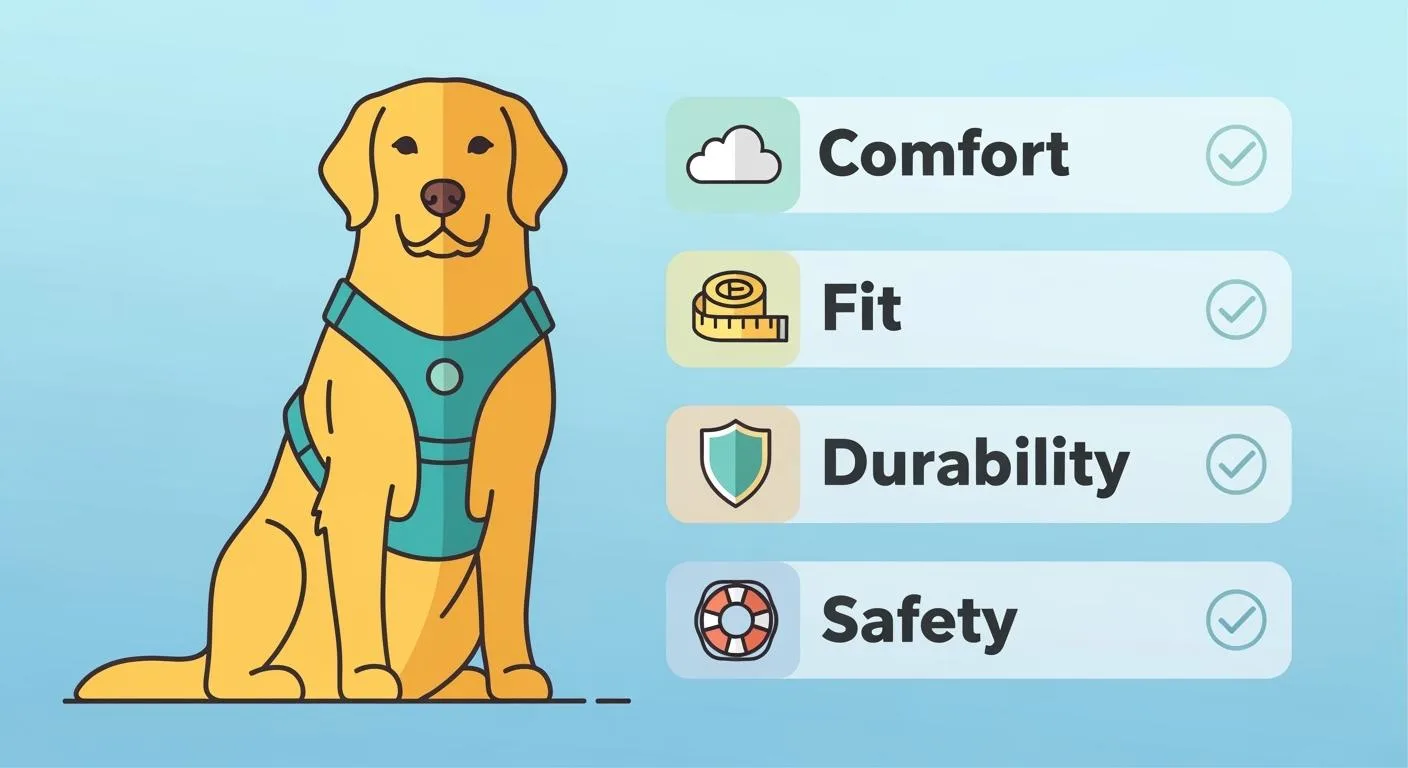
A dog harness large label is only a starting point. It can tell you which size range to try, but it cannot explain your dog’s chest shape, shoulder movement, coat thickness, walking behavior, or how the harness structure behaves after a real walk. For large dogs, the better question is not simply whether the label says large. It is whether the harness gives useful coverage, clear adjustment, stable hardware, and comfortable movement.
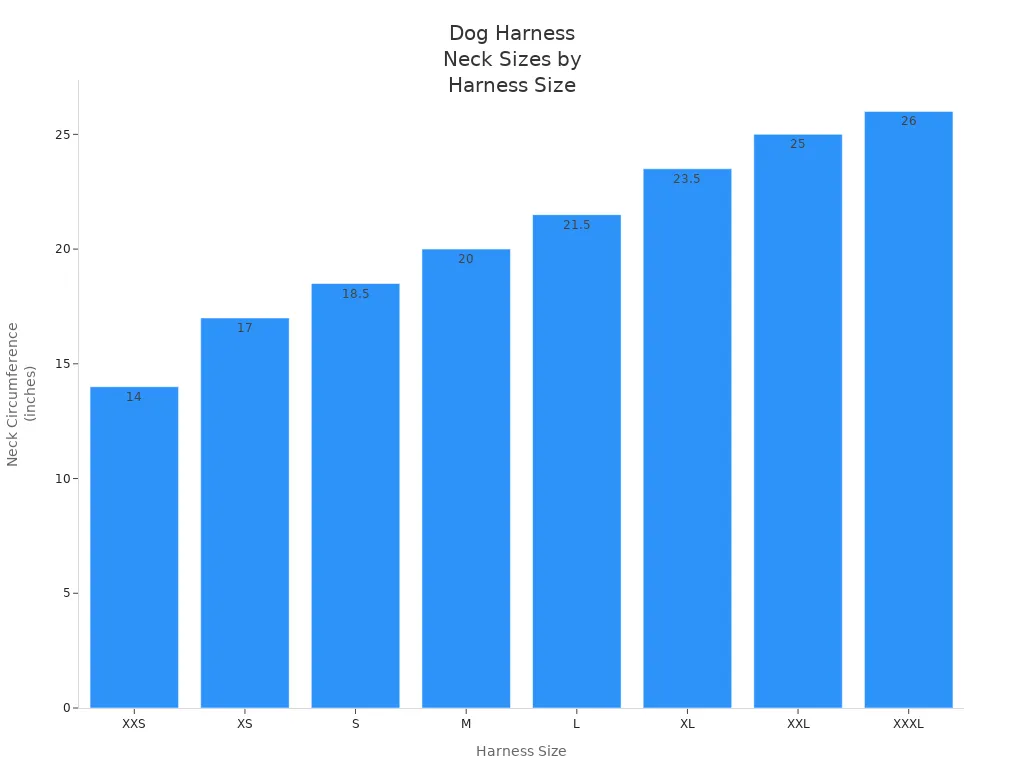
This page is not a measuring tutorial. Use your dog’s measurements before buying, then judge whether the large-size harness actually matches the dog’s body and daily use. A good large-size harness should feel readable and stable after movement, not just look correct on a chart.
Why Large Size Still May Not Fit
Large harness labels vary between designs. One large harness may be shaped for a deep chest, while another may assume a straighter body, narrower shoulders, or a different strap path. That is why two harnesses with the same size label can feel very different on the same dog.
A large size also does not tell you how the harness will sit once the dog turns, lowers the head, stops suddenly, or leans into normal leash pressure. Large dogs make these small design differences easier to notice because weight, strength, and body shape place more demand on the harness layout.
| What the large size tells you | What it does not tell you | What to check instead |
|---|---|---|
| Basic size range | Whether the chest shape matches your dog | Chest coverage and panel position after movement |
| Approximate body category | Whether the shoulders stay free | Front-leg movement during turns and stops |
| General strap length range | Whether adjustment stays balanced | Left-right strap symmetry after a short walk |
| Product size option | Whether hardware feels stable | Clip, buckle, and ring behavior under leash pressure |
If you need a wider comparison before choosing a harness type, use this right fit guide to compare general harness materials, sizing, and daily-walk use cases.
What Large Dogs Need From the Harness Shape
A dog harness large size should support the dog’s body shape instead of forcing every large dog into the same layout. Broad shoulders, deep chests, short bodies, long backs, thick coats, and strong necks all change how the same harness size behaves.
Chest coverage should stay useful
Chest coverage should spread pressure without riding high or crowding the front legs. A large harness can still feel wrong if the chest section floats, folds, or sits where the dog needs shoulder freedom.
Shoulder space should stay open
Large dogs need room to turn, stop, and extend the front legs naturally. If the harness shape blocks the shoulders, the size label does not matter much. Watch for shortened stride, stiff turns, or hesitation after the harness is on.
Adjustment should be easy to read
Adjustment points should help the harness match the dog’s body without making the setup confusing. If one strap has to be stretched to its limit while another sits almost closed, the size may technically fit but the layout may not be the best match.
Features That Matter More Than the Size Word
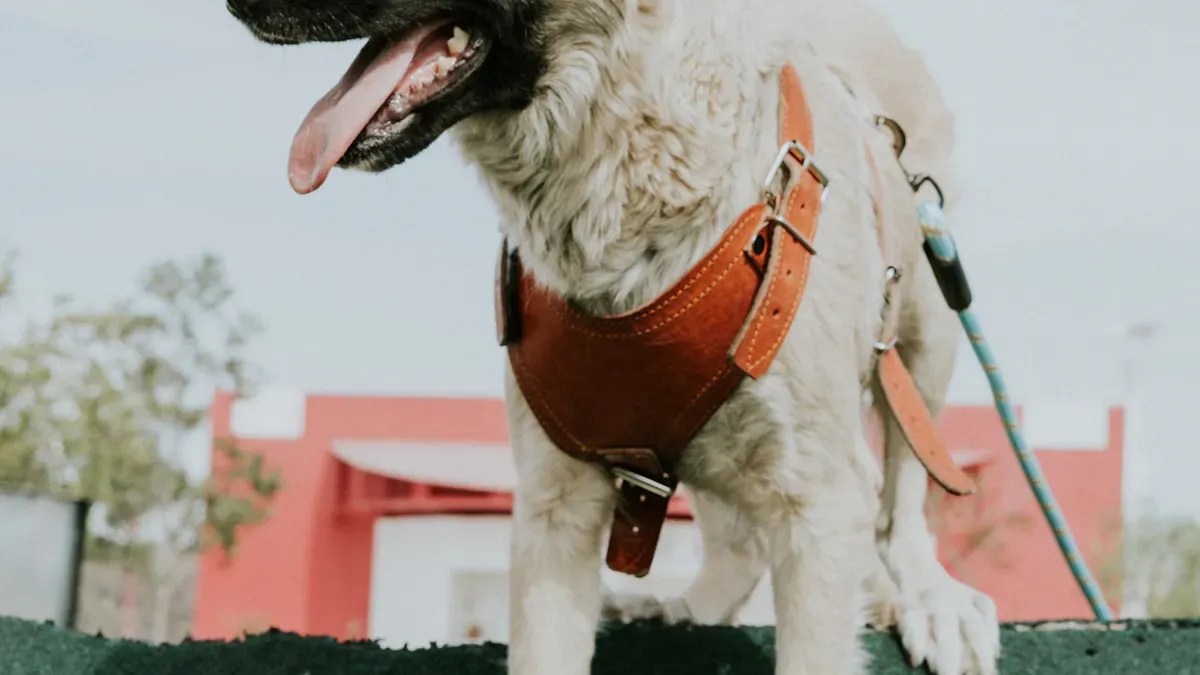
After you choose the size range, the next decision is about structure. A large-size harness should have features that make real walks easier to manage, not just more product details on the page.
| Feature | Why it matters for large dogs | Warning sign |
|---|---|---|
| Strap layout | Controls where pressure lands on the chest and shoulders | Straps sit too close to elbows or front-leg movement |
| Adjustment points | Help match broad, narrow, or deep body shapes | Only one area can be adjusted well |
| Clip position | Affects leash pressure and handling feel | Clip pulls the harness off balance |
| Hardware | Needs to stay secure without adding awkward weight | Buckles or rings swing, twist, or press into the body |
| Padding and coverage | Can soften contact points and spread pressure | Extra material traps heat or limits movement |
The right features should make the harness easier to inspect after each walk. You should be able to see where pressure landed, whether the harness stayed centered, and whether the dog moved normally. If the design hides these checks, it is harder to judge whether the large-size option is working.
Real-Walk Checks Before You Commit
Do a short real-walk check before treating any large harness as a final choice. Stand-still fit can look clean, but movement shows whether the harness shape, coverage, and hardware make sense for your dog.
- Walk in a straight line, then turn both directions to see whether the harness stays centered.
- Let your dog lower the head and change pace to check chest and shoulder freedom.
- Look for rubbing behind the elbows or pressure marks under panel edges.
- Check whether clips, rings, and buckles stay flat during normal movement.
- After the walk, check whether the dog seems relaxed or guarded while wearing the harness.
A dog harness large size should pass these checks without constant readjustment. If the harness only works when every strap is carefully forced into one exact position, it may not be the most practical large-size choice for everyday walks.
When a Different Large-Size Design Is Better
Sometimes the answer is not a different number on the size chart. It is a different design. A dog with a deep chest may need a different front shape. A broad-shouldered dog may need more open shoulder space. A heat-sensitive dog may need less padding. A strong dog may need more stable hardware but not necessarily more coverage.
Choose another design when the harness repeatedly makes the same compromise: better coverage but worse movement, stronger hardware but more awkward weight, or more padding but more heat. A good dog harness large option should make the fit easier to understand, not turn every walk into another adjustment test.
FAQ
Does a dog harness large size mean it fits all large dogs?
No. Large dogs can have very different chest depth, shoulder width, coat thickness, and body length. The size is only a starting point.
What should I check after choosing a large harness size?
Check shoulder freedom, chest coverage, hardware stability, strap balance, and how the harness behaves after a short walk.
Can more padding make a large harness worse?
Yes. Padding can help at real contact points, but too much material can trap heat, add bulk, and make the harness harder to inspect.
Should I pick a harness by breed size?
No. Breed labels are too broad. Use your dog’s actual body, movement, and daily walking needs to judge whether the large-size option makes sense.
When should I try a different large harness design?
Try a different design when the current harness keeps limiting movement, causing pressure marks, trapping heat, or needing constant adjustment after normal walks.






