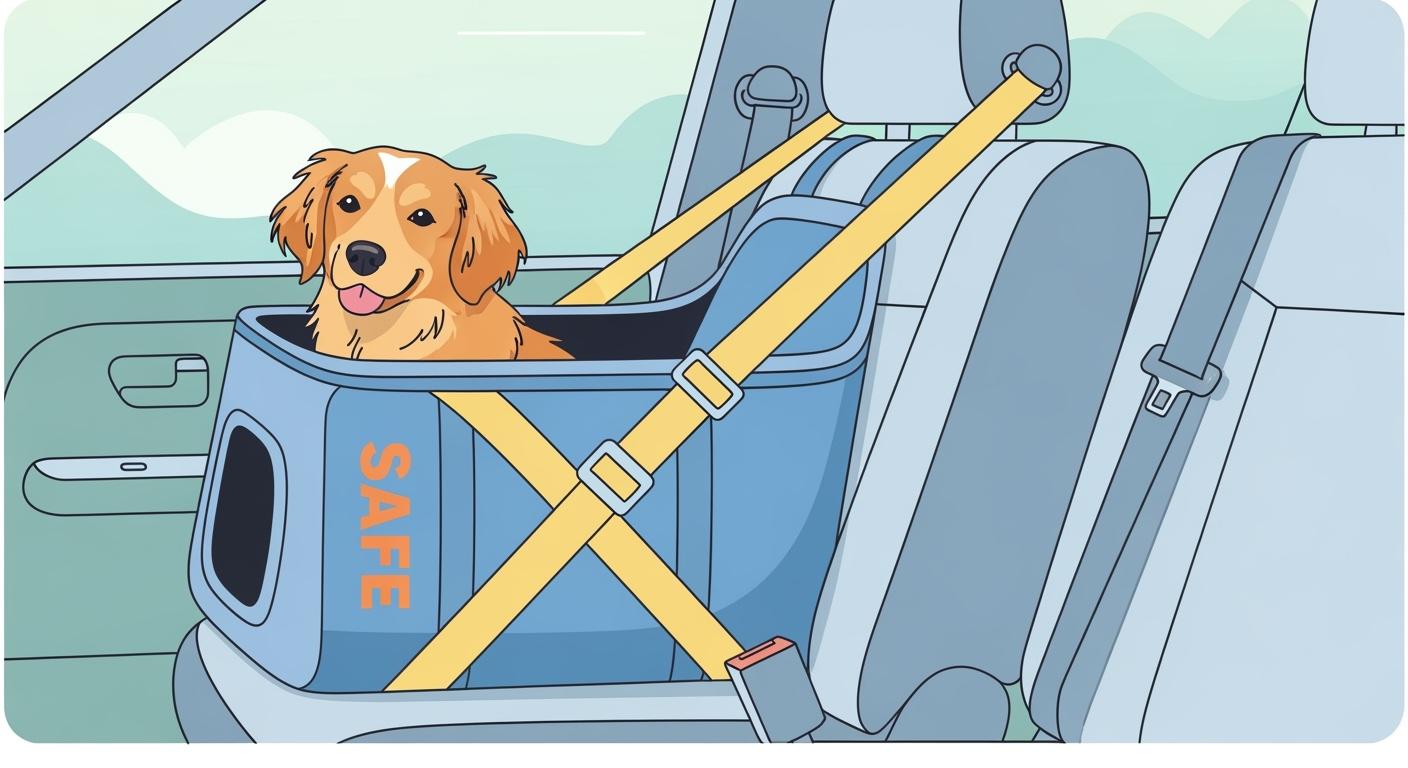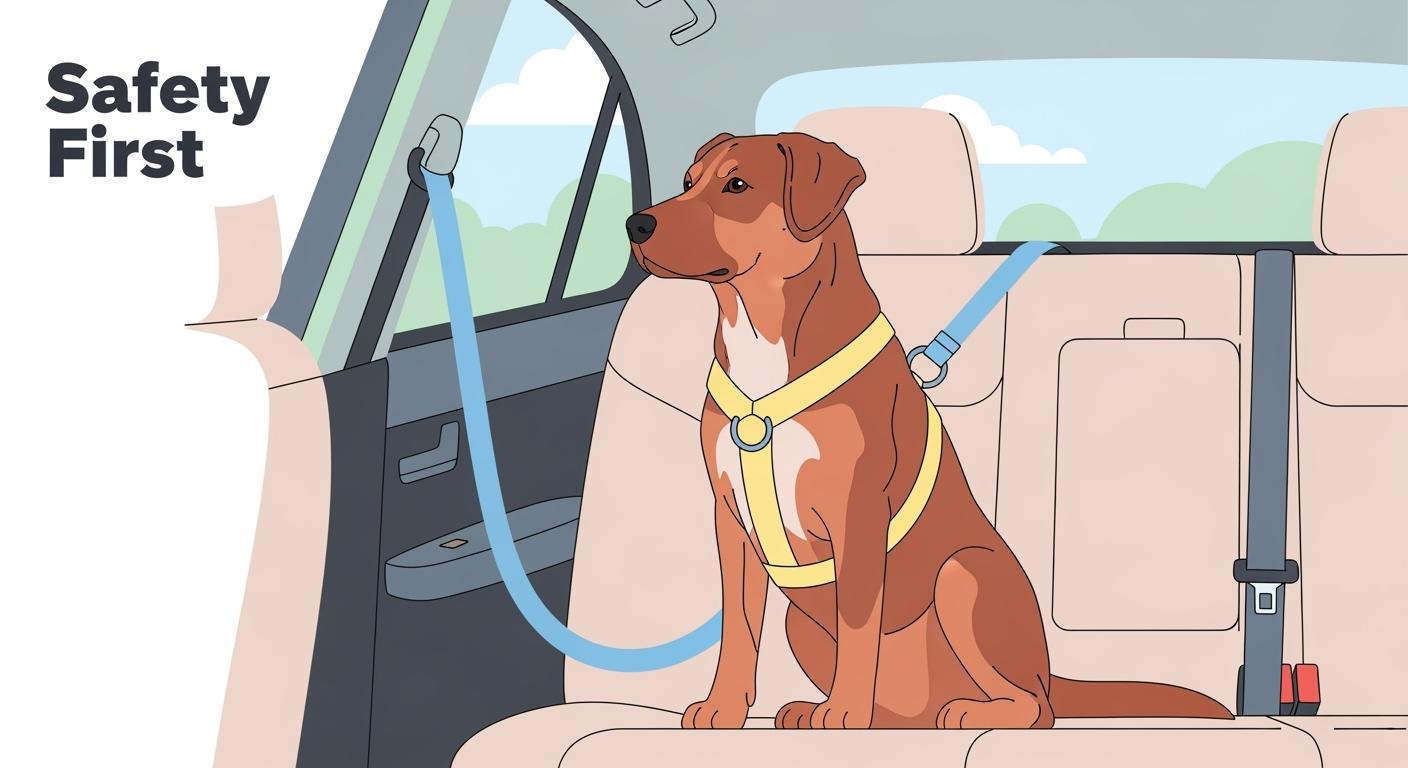
A dog car tether can help reduce roaming, distraction, and sudden movement during normal driving, but it only works well when the tether length, clip style, and harness setup match the dog and the seat position. Most car-tether problems come from simple mistakes: the tether is too long, it clips to a collar, the seat position is awkward, or the setup is treated like full crash protection when it is really just one part of a safer travel routine.
If you want to compare the broader category first, start with pet car travel. It helps separate booster seats, back-seat covers, beds, and tethers before you decide what your dog actually needs for regular rides.
What a dog car tether should actually do
A car tether should help keep your dog in a more controlled part of the seat so the dog is less likely to climb forward, jump across the cabin, or distract the driver. It can also make shorter trips calmer when your dog already rides fairly well but still needs clearer movement limits. The most useful setups let the dog sit, stand a little, or lie down without giving so much range that the dog can tumble off the seat edge or reach the front area.
What a car tether should not do is create a false sense of certainty. A tether is not automatically crash protection just because it clips into the car. Safety depends on the whole setup: the harness, the tether hardware, the seat position, and how much movement the system still allows. If one weak point fails, the rest of the setup becomes much less useful.
That is why it helps to think of a tether as movement control first and protection support second. The better the fit and the more realistic the expectations, the more useful the setup becomes in everyday driving.
Why the harness matters more than the tether alone
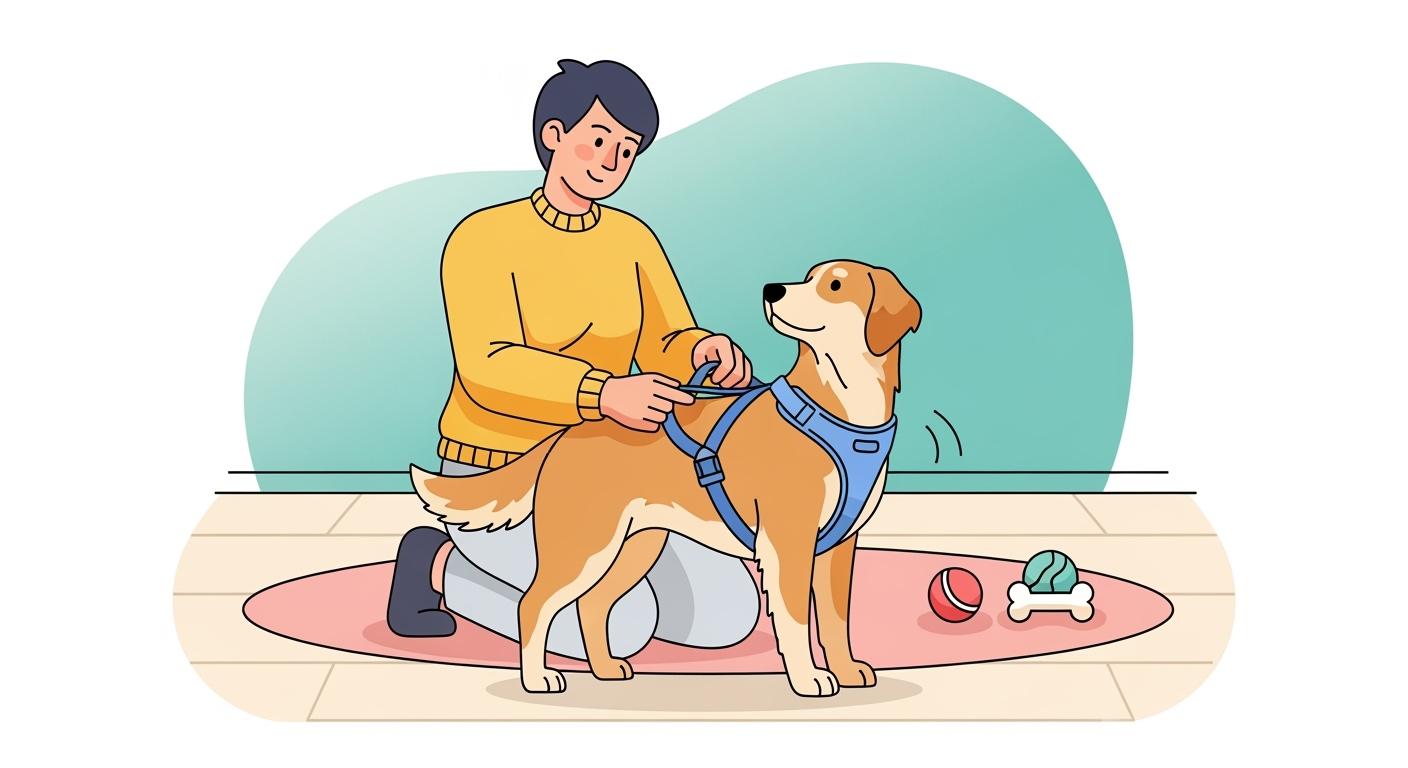
A dog car tether should clip to a harness, not a collar. A collar concentrates force on the neck and can become dangerous if the dog lunges, slips, or is thrown forward in a hard stop. A harness spreads force across more of the body and usually gives the dog a steadier, more comfortable point of attachment.
The harness also affects how well the tether works. If the harness rides into the throat, twists on the body, or shifts sideways during normal movement, the tether will not feel stable even if the strap itself looks strong. A poor harness fit can make the dog brace, turn awkwardly, or keep trying to reposition throughout the ride.
If you are still choosing the walking-and-travel setup together, this dog harness and leash set guide is the best next step for checking fit, strap placement, and how the harness should sit before you attach any restraint system.
How to choose the right tether length and seat position
The right tether length usually gives your dog enough room to settle without letting the dog roam. Too long, and the dog can reach the front seat area, slide off the seat edge, or build momentum in turns and stops. Too short, and the dog may feel pinned in one awkward position, unable to lie down or shift naturally.
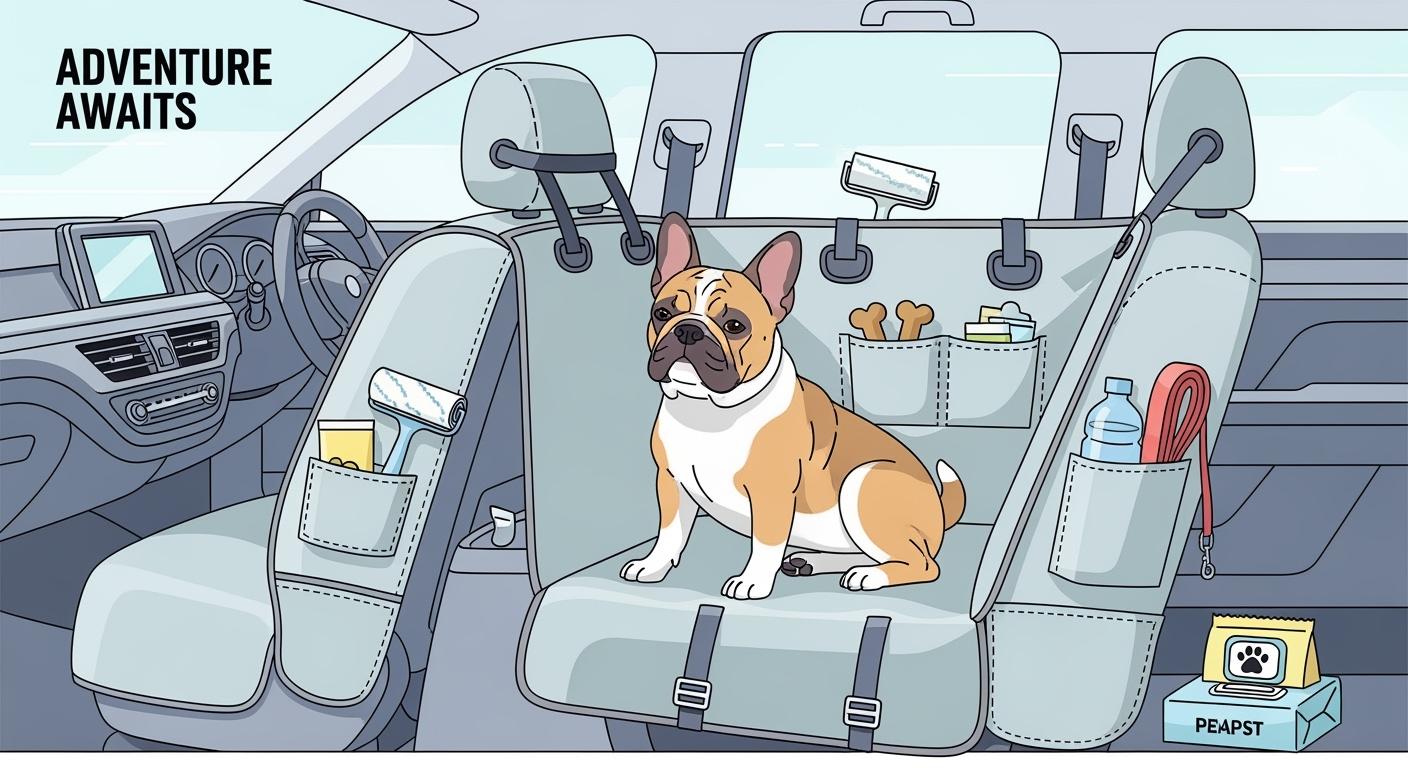
For most everyday rides, the back seat is the most practical position because it keeps your dog farther from airbags and farther from the driver. The tether should be adjusted so your dog can sit and rest comfortably while staying in that zone. If the dog can climb onto the center console, lean into the front seat gap, or hang heavily into the footwell, the tether is too loose or the attachment point is not working well.
Do a short parked-car test before you drive. Let your dog get into position, then check whether the tether lets the dog turn comfortably without tangling around the legs or pulling the harness upward. If the clip point twists badly or the strap drags into an awkward angle, change the routing before that becomes a moving-car problem.
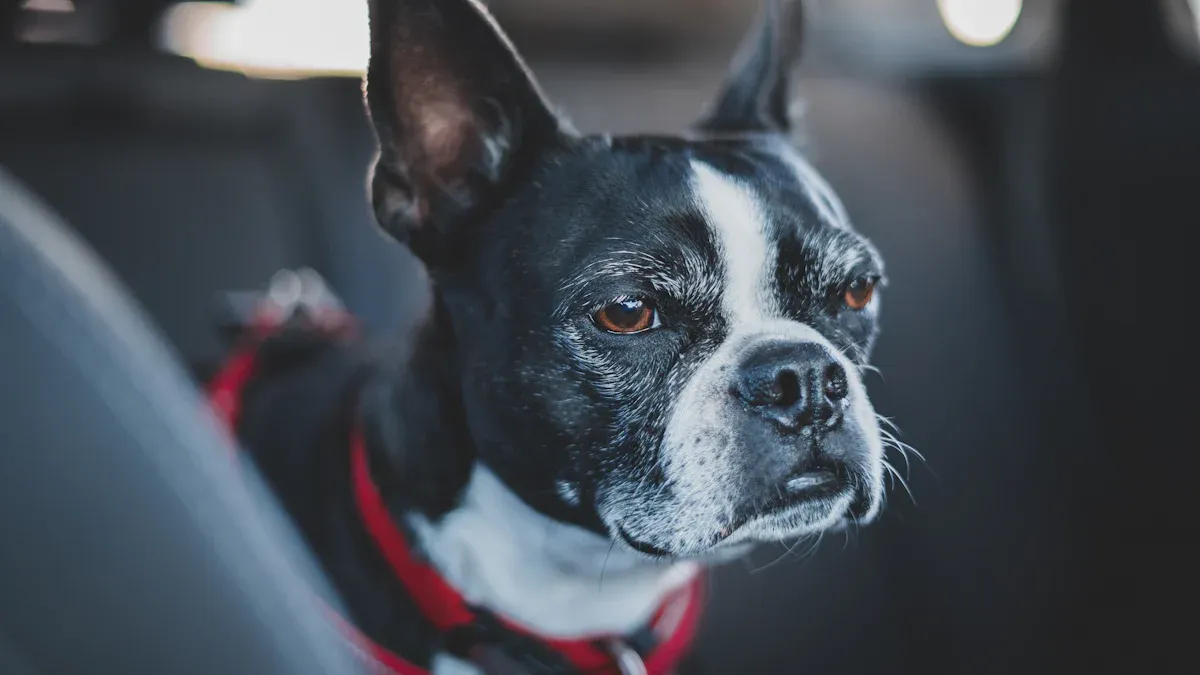
Fit and safety checks before every trip
Check the harness first. The chest area should stay centered, the neckline should not pull into the throat, and the straps should feel secure without pinching. Then check the tether hardware: clips should close fully, stitching should lie flat, and the adjustment point should hold its length instead of slowly slipping looser over time.
Next, check the seat setup itself. The tether should not be routed in a way that rubs sharply against edges, tangles around the dog’s legs, or leaves the dog balancing near the seat edge. On the first few rides, stop after a short stretch and look again. Some setups seem fine at the start and then reveal sliding, twisting, or overly long slack once the dog has shifted around a few times.
Body language matters too. If your dog keeps scrambling, leaning hard against the harness, pawing at the tether, or panting heavily without settling, that is useful information. The problem may be fit, tether length, seat placement, or the dog simply not being comfortable enough with the setup yet.
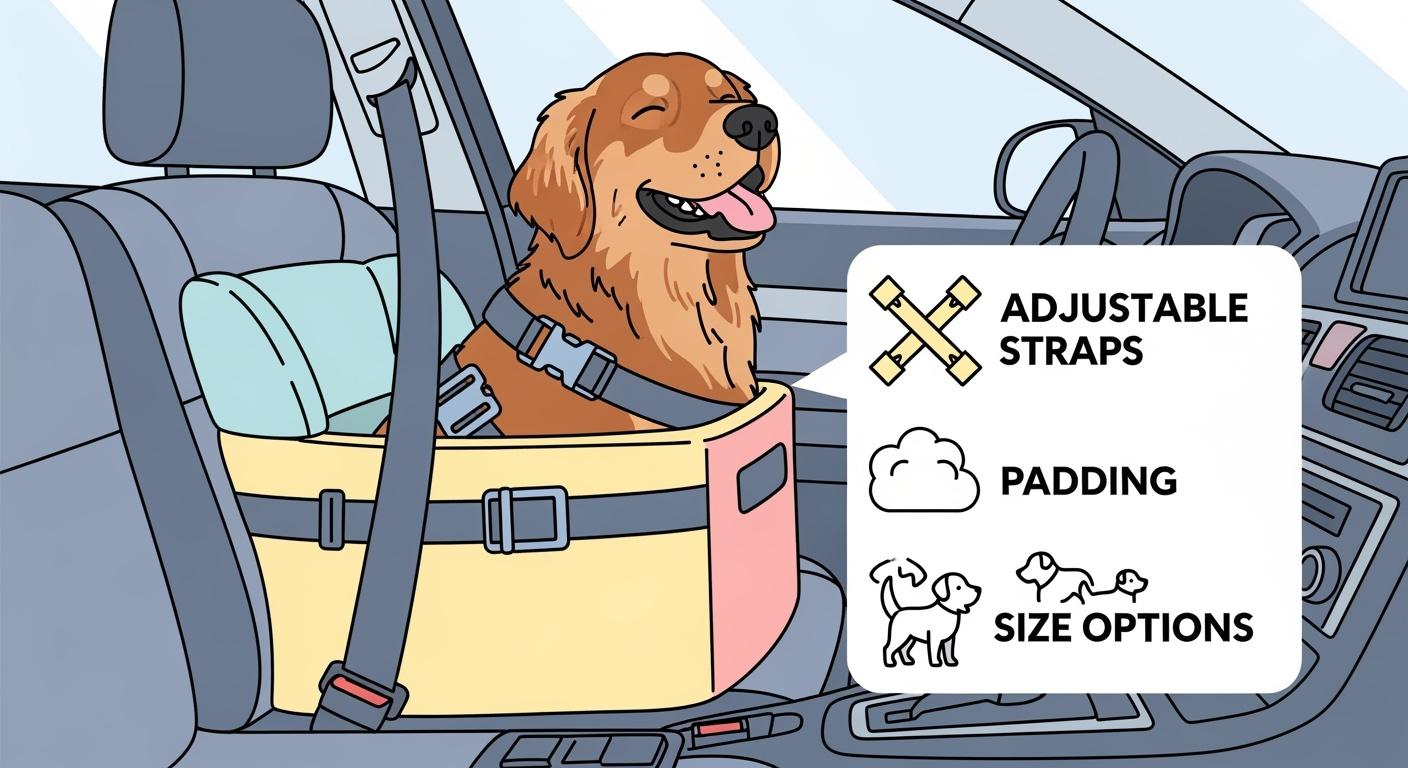
If you are building out the rest of the travel setup around the tether, this dog car booster seat guide helps if you are comparing whether a booster-style boundary would suit a smaller dog better than a tether-only arrangement.
Common dog car tether mistakes and easy fixes
Using a collar instead of a harness: switch to a well-fitted harness so force is spread across the body instead of the neck.
Setting the tether too long: shorten it until your dog can settle comfortably but cannot climb into the front area or fall off the seat edge.
Assuming any harness will do: check that the harness stays centered and does not ride up or twist once the dog moves around in the car.
Treating the tether as a full safety solution by itself: remember that a tether is only one part of a safer setup. Seat position, harness fit, and realistic expectations still matter.
Skipping inspection after messy or frequent trips: car gear wears faster than many owners expect. Dirt, moisture, and repeated tension can weaken stitching and hardware over time.
FAQ
Should a dog car tether attach to a collar or a harness?
It should attach to a harness. A collar puts too much force on the neck if the dog lunges, slips, or gets pulled suddenly during driving or braking.
How long should a dog car tether be?
Long enough for your dog to sit or lie down comfortably, but short enough that your dog cannot reach the front seat area or fall heavily off the seat edge. The right length depends on the dog, seat position, and harness fit.
Is a dog car tether enough for safe travel?
It helps, but it should not be treated as the only safety plan. The harness, attachment point, seat position, and overall travel setup all affect how useful the tether really is.
Why does my dog keep getting tangled in the tether?
This usually means the tether is too long, the clip angle is awkward, or the dog has too much room to turn repeatedly without the strap staying in a stable position.
When should I stop using that tether?
Stop using it if you see fraying, loose stitching, bent clips, slipping adjustment points, or a setup that no longer keeps your dog in a stable position even after you recheck the fit.