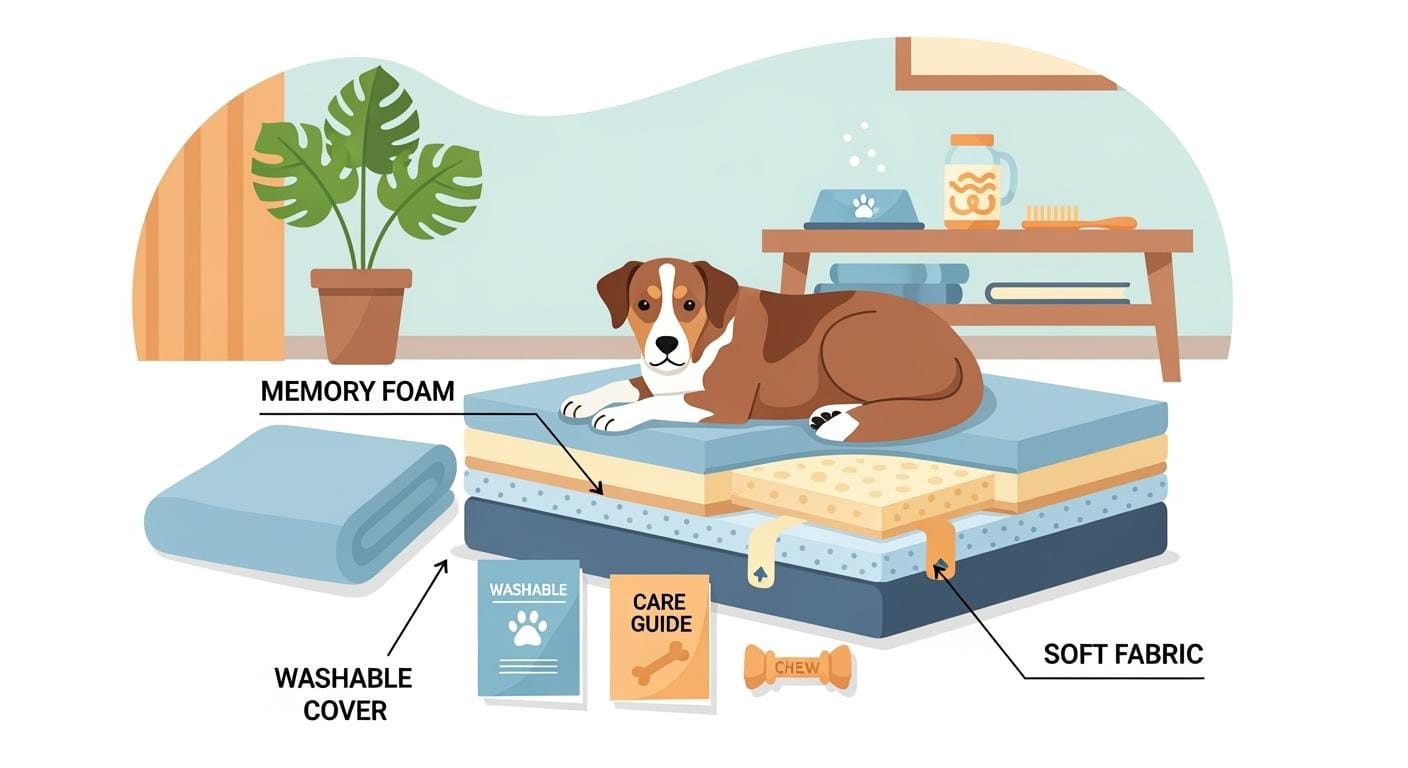
You see your dog moving around and looking for a soft place. Many people say comforting dog bed when they mean a bed that feels safe, soft, and simple to wash. The material you pick affects your dog’s comfort and health. Orthopedic memory foam helps joints and lowers pressure. Removable covers make it easy to keep the bed clean.
Key Takeaways
Pick a dog bed made with safe materials. Check for certifications like CertiPUR-US to make sure there are no bad chemicals.
Pick the best bed style for your dog’s sleep habits. Dogs that curl up may like bolstered beds. Dogs that stretch out need flat, open beds.
Make sure the bed is easy to clean. Removable covers make washing easy. This helps keep your dog’s bed fresh.
What a comforting dog bed really means
True comfort vs. marketing claims
When you look for a comforting dog bed, you may see many claims about health or special features. Not all of these claims mean real comfort for your dog. You should focus on what actually matters for your pet’s rest. Some features show true comfort and safety:
Third-party certifications like CertiPUR-US for foam and OEKO-TEX for fabrics show the bed avoids harmful chemicals.
Foam density and thickness help support your dog’s body, especially for older dogs.
Warranty details and how the bed is built tell you more than just the words on the label.
The word “orthopedic” is not regulated, so always check the actual materials and construction.
You can use these points to judge if a bed offers real comfort or just clever marketing.
Cozy feel and practical comfort
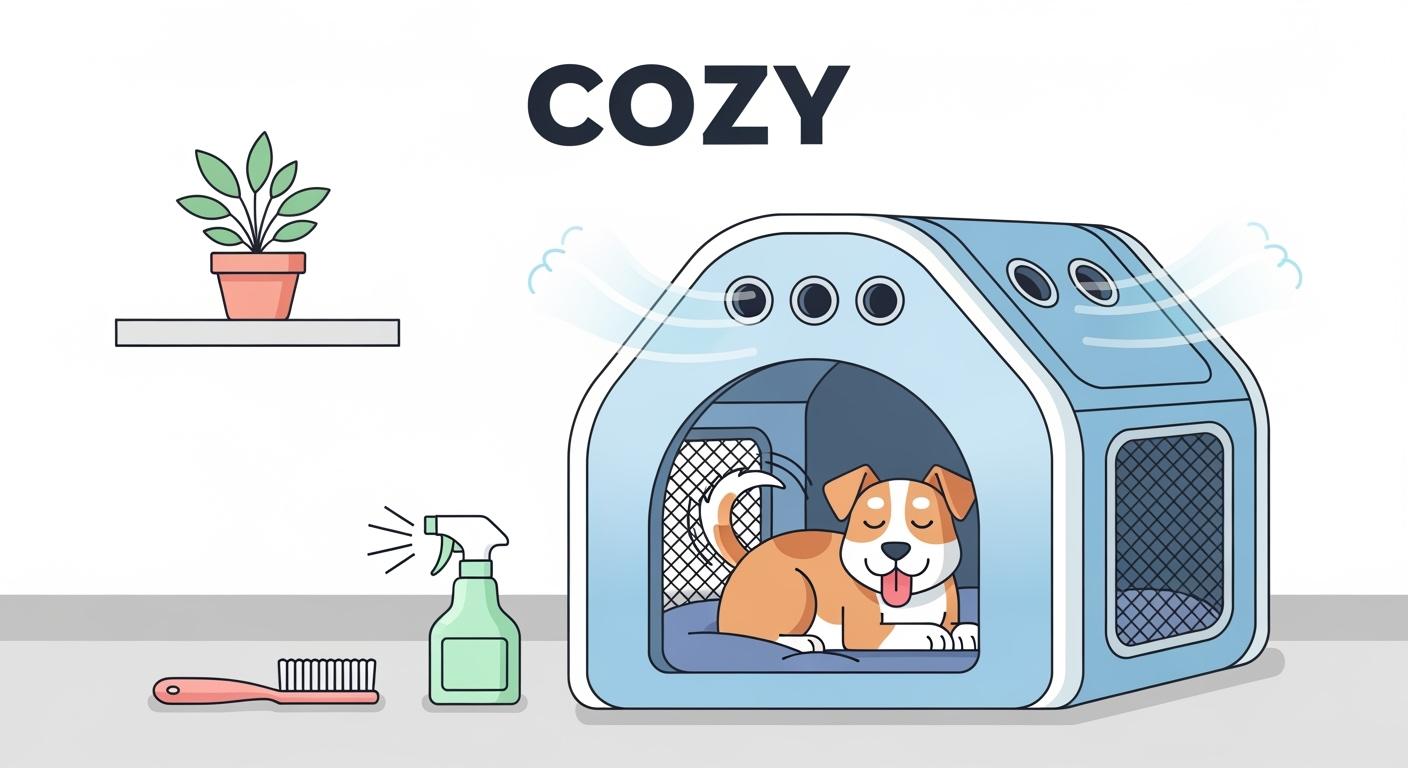
A comforting dog bed should feel soft and secure. It should also fit your dog’s size and sleep style. Good airflow keeps your dog cool and fresh. Easy entry helps dogs of all ages get on and off the bed without trouble. Washable covers make cleaning simple and keep the bed fresh.
Here is a quick guide to match bed types and materials to your dog’s needs:
Dog Type | Best Bed Type | Why It Works |
|---|---|---|
Senior dogs | Orthopedic beds | Thick, supportive foam relieves joint pressure. |
Large breeds | High-density fill beds | Holds shape and supports weight. |
Heavy chewers | Ripstop beds | Resists tearing and rough use. |
Crate users | Low-profile crate beds | Fits well and stays in place. |
Outdoor use | Water-resistant beds | Easy to clean and good for patios or travel. |
Tip: Always check that the bed fits your dog’s body and allows for easy cleaning. Comfort comes from both the feel and the function.
Materials and build details that matter
Surface feel, support, and washability
When you choose a comforting dog bed, start by touching the sleep surface. Soft, smooth fabrics like cotton or microfiber feel gentle on your dog’s skin. Check for padding that holds its shape when you press down. This helps your dog rest without feeling the floor underneath. Look for beds with removable covers. You can wash these covers every week to keep the bed fresh and clean. Beds with strong seams and zippers last longer and stay safe for your pet.
Use this checklist when you shop:
Touch the surface. Does it feel soft and cool?
Press the sides. Do they support your dog’s head or body?
Check the tag. Can you remove and wash the cover?
Look at the seams. Are they strong and even?
Tip: Washable covers make cleaning much easier and help control odors.
Covered vs. open beds and airflow
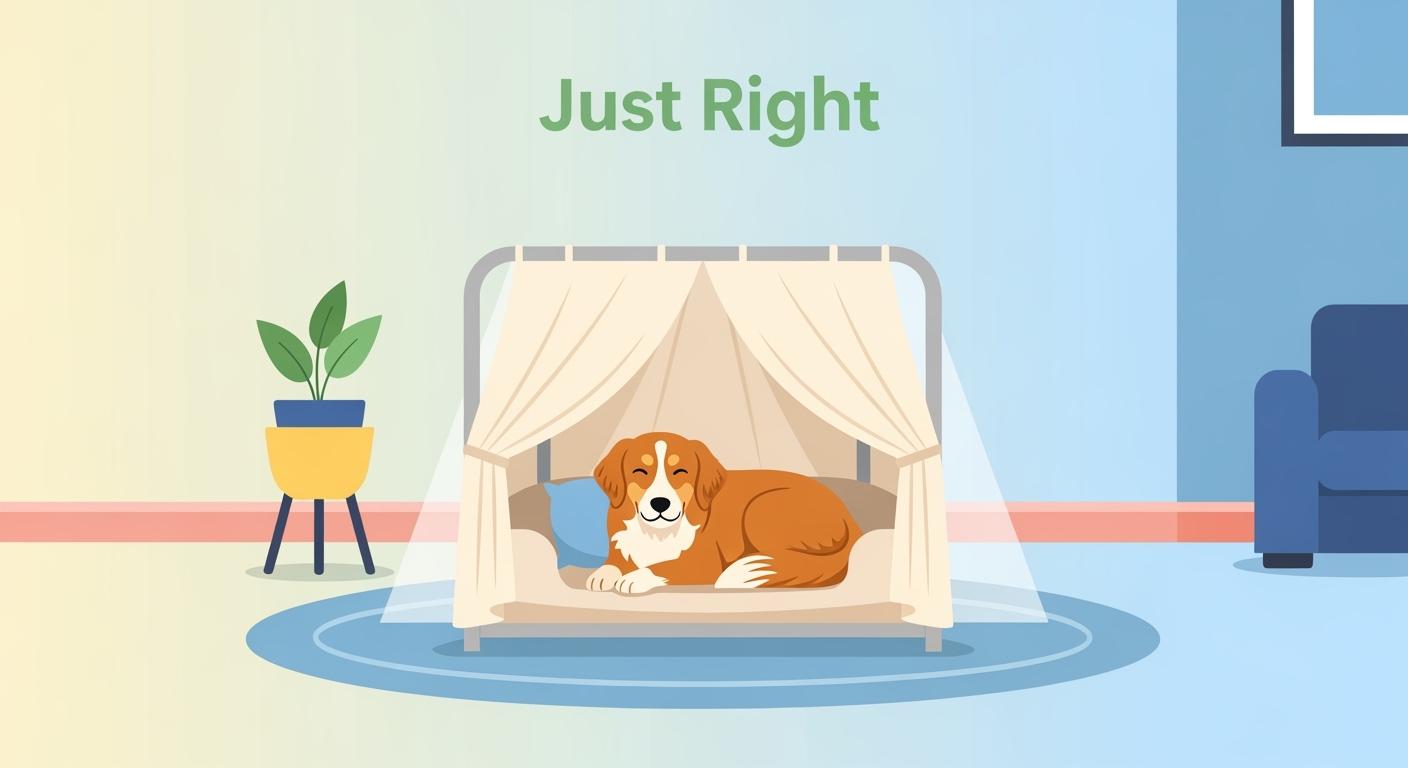
Some dogs like to curl up in covered beds. These beds can block light and make a cozy spot. Open beds give more airflow and space for dogs who stretch out. If your dog gets warm or pants often, choose an open bed with breathable fabric. Covered beds may trap heat, so use them only if your dog likes to burrow and does not overheat.
Bed Style | Best For | Airflow | Cleaning Ease |
|---|---|---|---|
Open | Stretchers, hot dogs | High | Easy |
Covered | Burrowers, shy dogs | Lower | Medium |
Note: This article does not give medical advice. If your dog shows signs of overheating, coughing, skin irritation, distress, stiffness, or unusual sleep, talk to your veterinarian.
Choosing the right comforting dog bed for your dog
Matching bed style to sleeping habits
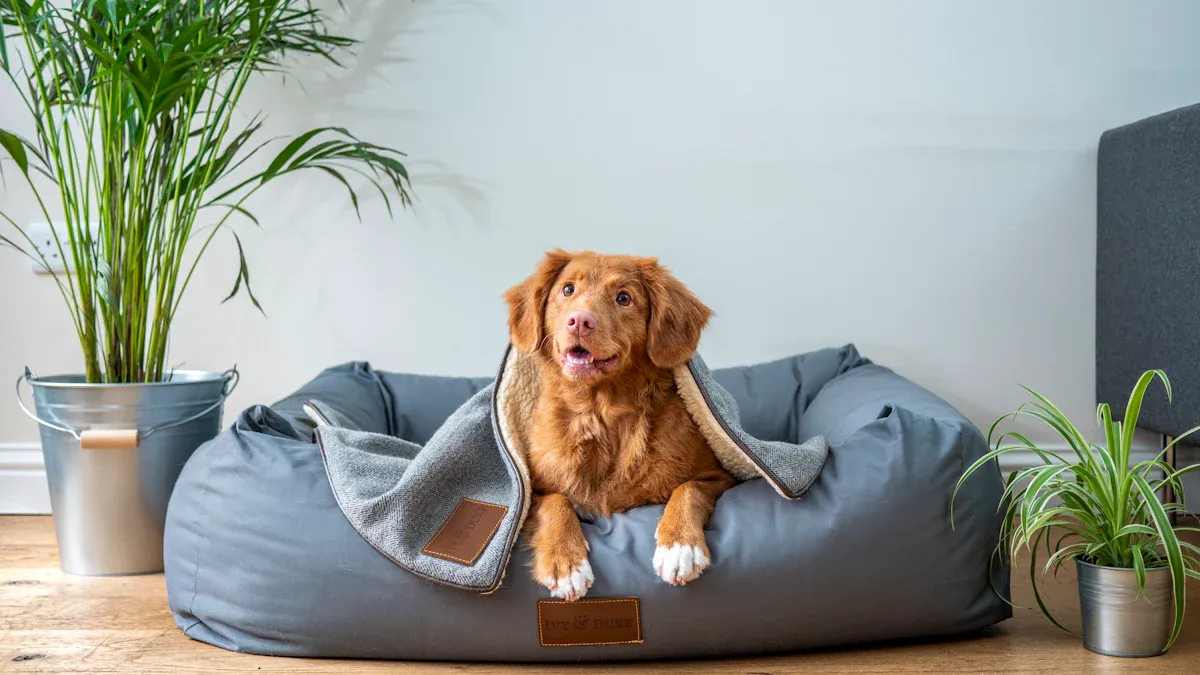
Dogs sleep in many ways. Some curl up, some stretch out, and some like to burrow under covers. You need to watch how your dog rests during the day and at night. If your dog likes to curl up, a round bed with raised sides can give a sense of security. Stretchers need a flat, open bed with plenty of space. Burrowers or light-sensitive dogs may prefer a covered bed, but you should check that the cover does not trap heat or block airflow.
Here is a table to help you match bed style to your dog’s habits:
Sleeping Habit | Best Bed Style | Why It Works |
|---|---|---|
Curler | Bolster or donut bed | Raised sides support the head and body. |
Stretcher | Flat mattress bed | Open space lets your dog stretch out fully. |
Burrower | Covered or cave bed | Extra coverage offers a cozy, sheltered spot. |
Light-sensitive | Hooded or covered bed | Blocks light for better rest. |
Tip: Always check that extra coverage does not make your dog too warm or limit airflow. Comfort comes from both the feel and the safety of the bed.
Sizing, placement, and home use tips
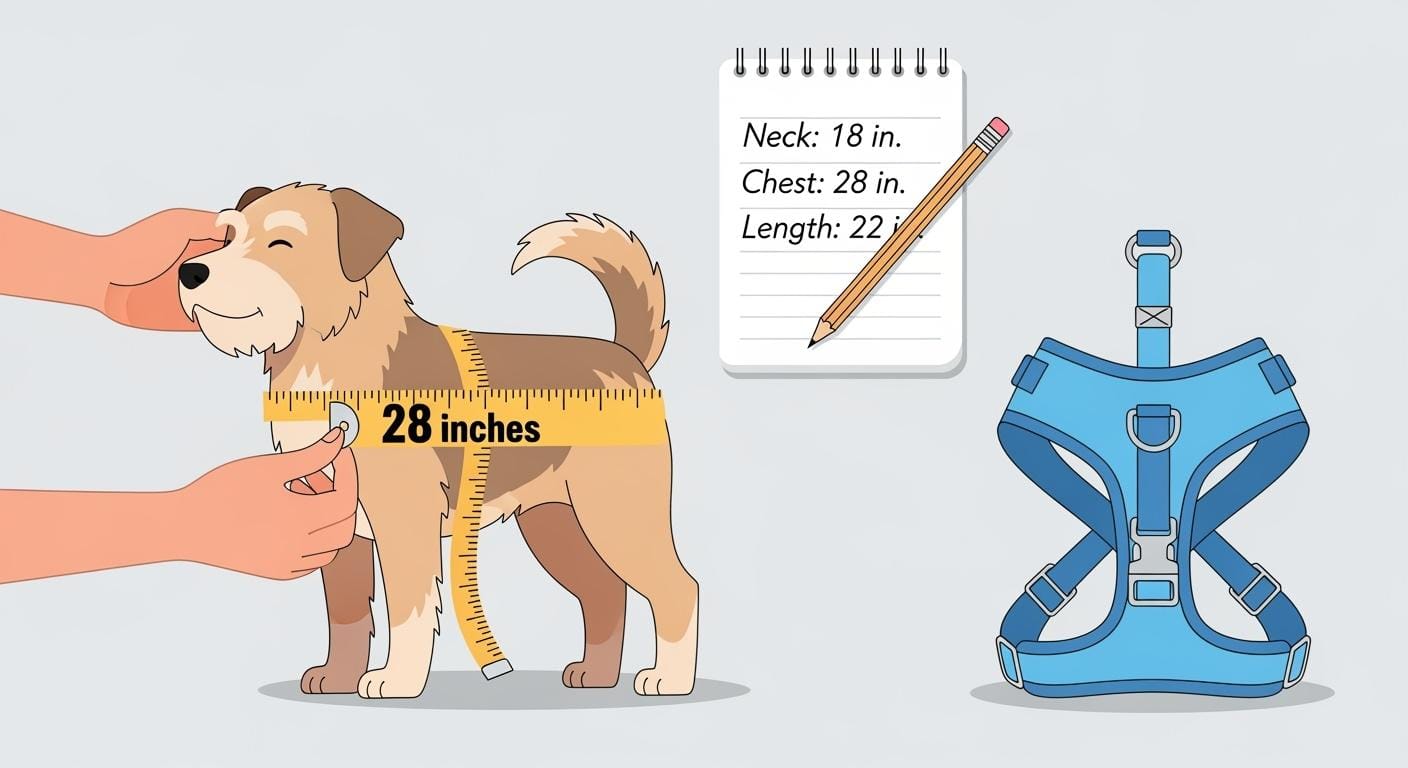
Choosing the right size is one of the most important steps. Many owners pick a bed that is too small. You should measure your dog when stretched out and add 6 to 12 inches to find the right size. A bed that fits well supports your dog’s joints and helps them sleep better. If the bed is too small, your dog may avoid it or sleep halfway off the edge.
Common mistakes include:
Not measuring your dog before buying a bed.
Picking a bed that is too small for your dog’s full length.
Choosing a bed that is hard to clean or has a cover that does not come off.
Forgetting to check if the bed fits your dog’s favorite sleeping spot in your home.
You should place the comforting dog bed in a quiet area away from drafts and direct sunlight. Many dogs like to have more than one bed in the house. You can use a main bed for deep sleep and a second bed for resting in another room. Senior dogs need extra support, so pick a bed with thick padding and easy entry. Anxious dogs may feel safer with more than one bed in different spots.
You should wash the bed cover every week to keep it clean and fresh. Removable covers make this task much easier. If your dog spends time outdoors or sheds a lot, you may need to wash the cover more often.
Note: Always check that the materials are easy to clean and that the bed dries quickly after washing. This helps keep your dog’s sleeping area healthy.
A comforting dog bed should match your dog’s sleep style, fit their size, and stay easy to clean. Extra coverage can help some dogs feel safe, but you should always make sure your dog stays cool and can breathe easily. If you notice your dog panting, scratching, or avoiding the bed, try a different style or move the bed to a new spot.
Checks, mistakes, and troubleshooting
Picking a dog bed seems easy, but small mistakes matter. These mistakes can make your dog less comfortable or even hurt their health. Do not pick a bed just because it looks nice. Avoid beds with covers that are hard to wash. Thicker beds are not always better for your dog. Covered beds might look warm and safe, but they can get too hot if air cannot move well. Always choose a bed that matches how your dog likes to sleep. Remember, a soft bed does not take the place of seeing a vet.
Pass/fail checklist table
Check this table to see if your dog’s bed is good for comfort and care:
Check Item | Pass Signal | Fail Signal | Fix |
|---|---|---|---|
Size fits your dog | Dog can stretch out fully | Dog hangs off or curls tight | Choose a larger bed |
Easy to clean | Removable, washable cover | Hard to remove or wash cover | Pick a bed with a simple cover |
Fast-dry design | Bed dries quickly outdoors | Bed stays wet or soggy | Look for mesh or elevated design |
Stable on ground | Bed does not tip or slide | Bed wobbles or slips | Add non-slip feet or move location |
Durable seams and fabric | No loose threads or tears | Seams split or fabric frays | Choose reinforced, abrasion-resistant |
Material comparison table
Bed Style or Feature | Best Use Case | Main Comfort Benefit | Main Watchout |
|---|---|---|---|
Open flat bed | Stretchers, hot dogs | High airflow, easy entry | Less shelter for burrowers |
Covered/cave bed | Burrowers, shy dogs | Cozy, blocks light | Can trap heat, harder to clean |
Orthopedic foam | Seniors, joint support | Even support, soft surface | Foam can settle over time |
Ripstop fabric | Chewers, rough use | Resists tearing | May feel less plush |
Troubleshooting table
Symptom | Likely Cause | Fast Check | Fix |
|---|---|---|---|
Bed stays wet | Poor drainage | Press for water | Move to dry spot or use raised bed |
Bad odor | Needs cleaning | Smell the bed | Wash cover and dry in sunlight |
Fabric tears | Rough use or chewing | Look for holes or frays | Switch to more durable material |
Bed is lumpy | Fill or foam settled | Feel for flat spots | Replace or fluff the fill |
Tip: Shake off dirt and hair after your dog uses the bed. Wash the covers every week. If the bed gets flat, the seams break, or cleaning does not help, it is time for a new bed.
Choosing the right dog bed means picking safe materials, a good fit, and easy cleaning. You help your dog stay healthy and happy by keeping their bed clean and well-matched to their needs.
Dog Type | Best Bed Type | Why It Works |
|---|---|---|
Senior dogs | Orthopedic beds | Support joints and ease pressure. |
Large breeds | High-density beds | Hold shape and give lasting support. |
Wash covers weekly to lower allergen risks.
Use pet-safe detergents for sensitive skin.
Give your dog more than one bed for comfort and hygiene.
Note: If your dog shows ongoing discomfort or health changes, ask your veterinarian for advice.
FAQ
When should you choose an open bed instead of a covered bed?
You should pick an open bed if your dog stretches out, gets warm easily, or needs more airflow. Open beds help your dog stay cool and comfortable.
How do you know if burrowing behavior means your dog needs a different bed style?
If your dog digs or hides under blankets, try a covered or cave bed. Make sure the bed allows easy exit and does not trap heat.
When does washability matter more than plushness in a dog bed?
Washability matters most if your dog sheds, gets dirty, or has allergies. You should choose a bed with a removable, washable cover for easy cleaning.