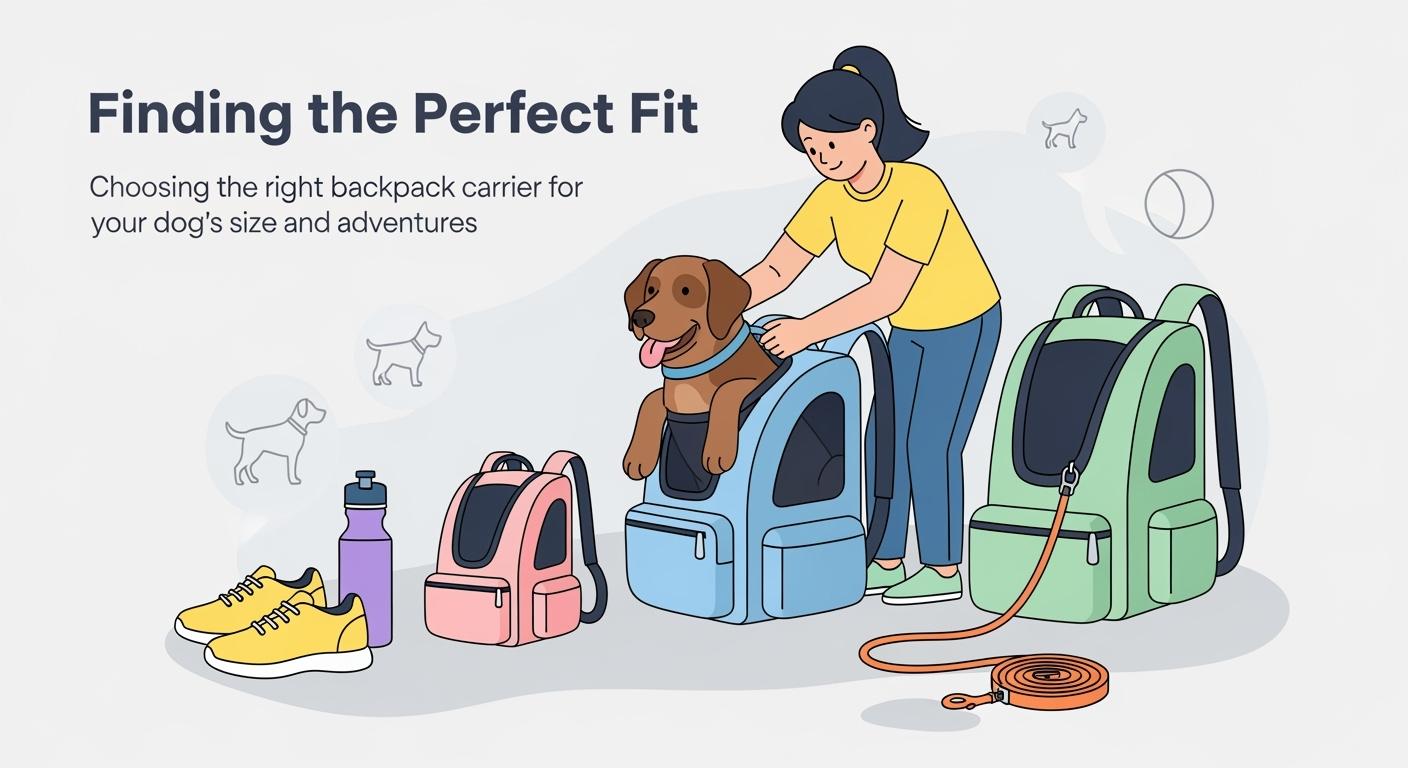
A dog backpack carrier should fit more than your dog’s weight. If the inside space, base support, or airflow is wrong, your dog may slump or overheat. That leads to discomfort, complaints, and returns. Use measurements, internal dimensions, and activity level to choose a carrier that supports posture and ventilation.
Key Takeaways
- Measure your dog accurately. Check chest girth, back length, and seated height. Always add a 2-4 inch buffer for comfort.
- Choose a carrier that matches your dog’s activity level. Active dogs need strong support and ventilation, while calm dogs benefit from easy entry and extra comfort.
- Ensure proper posture and ventilation. Your dog should sit with a neutral spine. Look for carriers with mesh panels for airflow and comfort.
- Conduct fit checks before use. Place your dog in the carrier for 5-10 minutes. Watch for signs of stress or discomfort.
- Request detailed specs from suppliers. Clear size charts and fit checks help customers choose the right carrier and reduce returns.
Key Points for Selecting a Dog Backpack Carrier
Match Carrier to Dog’s Size and Activity
Match the dog backpack carrier to your dog’s measurements and daily activity. Measure chest girth, back length, and seated height, then add a comfort buffer of 2-4 in (5-10 cm). Use weight only as a secondary check. Active dogs usually need a firmer base, wider straps, and strong ventilation. Calm or older dogs often benefit from easier loading and steady airflow.
Note: If your dog has mobility limits, breathing concerns, or heat sensitivity, choose a carrier that minimizes stress and supports an easy posture. For complex cases, ask a veterinarian which transport option is appropriate.
Focus on Posture, Support, and Ventilation
Posture, support, and ventilation matter for comfort. Your dog should be able to sit or rest with a neutral spine, without curling tightly or being forced into a crouch. Look for a firm base that resists sagging and mesh panels on multiple sides for airflow. Choose mesh openings that are small enough to prevent paws or noses from pushing through.
Use Fit Checks and Specs to Reduce Returns
You can reduce returns by following a clear fit check process. Measure your dog, compare to internal carrier dimensions, and add the buffer. Place your dog in the carrier for a 5-10 minute (5-10 min) test. Watch for signs of stress or discomfort. Adjust straps for a snug fit. For B2B buyers, request supplier specs, show size charts in both inches and centimeters, and highlight misuse risks in product descriptions.
Quick Checklist for Selecting a Dog Backpack Carrier:
- Measure chest girth, back length, and seated height.
- Add 2-4 in (5-10 cm) buffer to each measurement.
- Check internal carrier dimensions match your dog’s needs.
- Confirm ventilation on at least three sides.
- Test fit with a short carry (5-10 min).
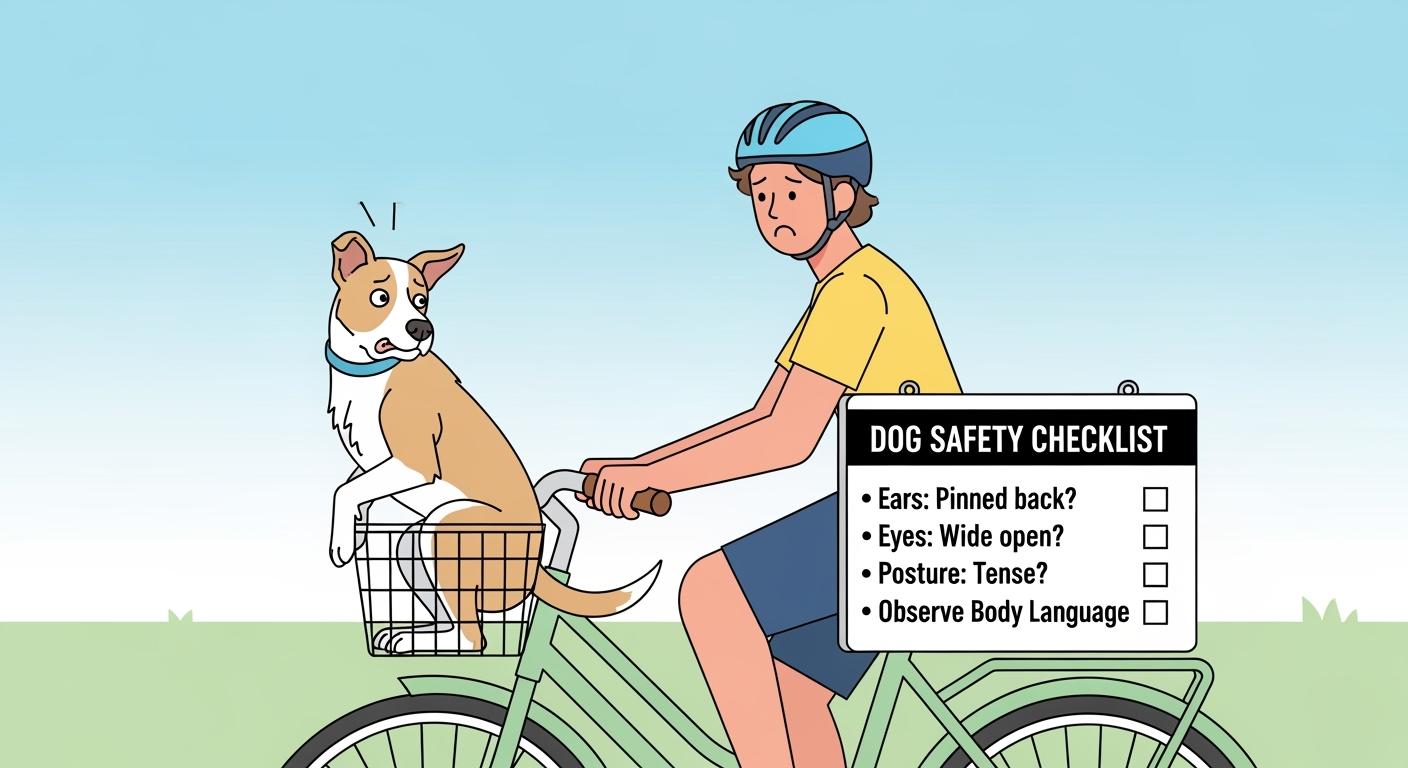
- Watch for signs of stress or discomfort.
- For B2B: Request specs, show size charts, and warn about misuse.
Safety Note: Stop use if your dog shows signs of distress, heat, or poor posture. Carriers are not for every dog or every activity.
Support Features and Limitations of Dog Backpack Carriers
Comfort vs. Restraint
You want your dog to feel safe but not trapped. A good dog backpack carrier should give comfort and some restraint. It needs to help both you and your dog. The table below lists support features and what they do:
| Feature | Impact on Comfort and Safety |
|---|---|
| Internal Frame | Gives strong support, making the carrier steady and comfy. |
| Padded Hip Belt | Spreads weight out, so it is easier to carry. |
| Size Range | Fits many dog sizes, so the fit is safe. |
| Designed for All Environments | Good for long trips, keeps your dog safe on adventures. |
| Eight Adjustment Points | Lets you change the fit, so your dog feels better. |
| Ergonomic Spine Support | Follows your dog’s back, making it more comfortable. |
| Reflective Trim | Makes your dog easier to see in the dark. |
| Padded Handle | Helps you hold and move your dog safely. |
Tip: Help your dog acclimate slowly. Start with short, low-stress sessions and increase carry time only if posture and breathing remain normal.
A good fit should not rub or press on your dog’s back, shoulders, or hips. Your dog should move easily and look happy when you show the carrier.
Posture and Ventilation Issues
Posture and ventilation are important for your dog’s health. If you only check the weight label, your dog might feel squished or stressed. Always measure the inside and add extra space. Mesh panels on many sides help your dog breathe and stay cool. Big mesh windows also help your dog feel less worried.
| Mistake | What it causes | How to fix it |
|---|---|---|
| Only using weight label | Dog feels cramped or stressed | Measure inside and add extra space |
| Ignoring internal dimensions | Dog cannot turn or stand | Measure nose-to-tail and floor-to-shoulder |
| Overloading the carrier | Unsafe, tips over, not comfy | Stay under weight and size limits |
When to Switch Carrier Types
If your dog is older or has limited strength, keep loads light and sessions short. Watch for changes in gait, stiffness, or reluctance to move, and stop if you see discomfort.
Checklist for Safe Use:
- Check the fit every two weeks.
- Watch for changes in your dog’s muscles, especially if your dog is old.
- Stop using the carrier if your dog looks stressed, hot, or sits wrong.
Safety Note: Carriers have limits. If your dog pants a lot, slumps, or tries to get out, stop and let your dog rest. For B2B buyers, ask for supplier specs, show clear size charts, and warn about misuse to lower returns.
Measuring Your Dog for a Proper Fit
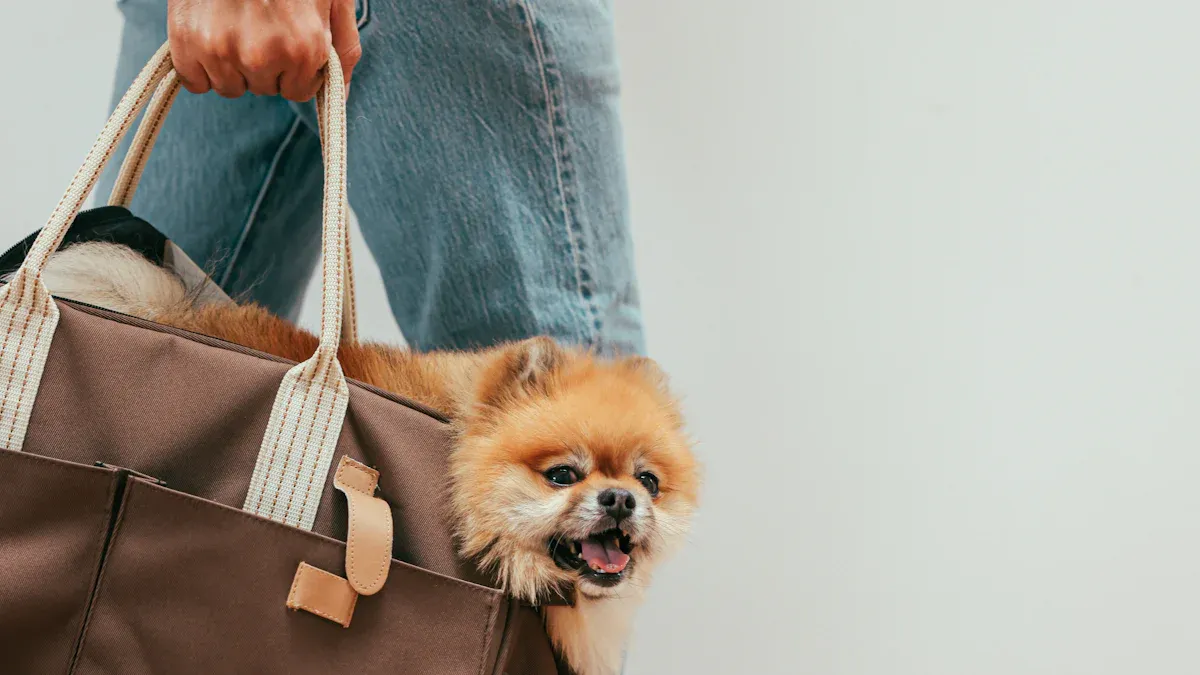
To get the right fit, measure chest girth, back length, and seated height first. These steps help you pick a dog backpack carrier that supports posture and ventilation. For B2B buyers, clear measurement steps and internal-dimension charts can reduce fit-related returns.
Chest Girth, Back Length, Seated Height
Here is how you measure your dog:
- Measure Chest Girth
Use a soft tape. Wrap it around the widest part of the chest, just behind the front legs. Write down the number in inches and centimeters. - Measure Back Length
Make sure your dog stands up straight. Measure from the neck’s base to the tail’s base. Record this in inches and centimeters. - Measure Seated Height
Let your dog sit. Measure from the floor to the top of the shoulder. Write this height in inches and centimeters. - Add Buffer for Comfort
Add 2-4 inches (5-10 cm) to back length and seated height. This extra space helps your dog move and breathe well. - Check Internal Carrier Dimensions
Compare your dog’s size plus buffer to the inside of the carrier. The inside space is more important than the outside.
Tip: Use your dog’s latest weight for the label. Do not use weight alone.
Why Posture Matters Most
Posture is key when picking a carrier. Your dog should sit or rest with a straight spine. Good posture keeps your dog happy and healthy. Here is why posture matters:
- Posture spreads weight across the back and hips. This lowers stress on the spine.
- A good carrier lets your dog keep a natural pose. This stops soreness and injury.
- Bad posture can make your dog slump or hunch. This causes stress and discomfort.
A carrier that helps posture is good for both dog and handler. It keeps weight balanced and lowers strain on your back and shoulders.
Common Measurement Mistakes
People often make mistakes when measuring for a carrier. Try not to do these things:
- Using a tote bag or non-pet pack. These do not have support or safety.
- Forgetting about airflow and temperature. Dogs can get hot fast, especially in dark or vinyl carriers.
- Carrying your dog too long without stopping. This tires your dog’s muscles and hurts your back.
- Not securing the harness or tether. A loose dog can jump out.
- Skipping breaks. Dogs need time to move, go potty, and drink.
Safety Note: Watch for stress, heat, or bad posture. Stop if your dog pants a lot, slumps, or tries to get out. Carriers are not for every dog or every activity.
Parameter Table for Measurement and Fit
Use this table to help measure and check fit. Share it with customers or team members to lower mistakes and returns.
| Parameter | Target Range or Option | Why It Matters |
|---|---|---|
| Chest girth | Widest part behind front legs | Needed for harness and carrier fit |
| Back length cue | Base of neck to base of tail | Sets the inside length |
| Seated height cue | Floor to shoulder area while seated | Stops head and neck squeeze |
| Dog weight baseline | Recent weight used for labels | Stops guessing size |
| Length buffer rule | Add 2-4 in (5-10 cm) | Stops cramped posture |
| Height buffer rule | Add 2-4 in (5-10 cm) | Stops head and neck squeeze |
| Internal dimensions | Internal L x W x H | Inside fit is better than outside size |
| Base support | Firmer insert preferred | Stops slumping and tipping |
| Ventilation | Keep panels open | Stops heat build-up |
| Short test carry | 5-10 minutes | Quick safety check before longer use |
| Short checks | Every 15-20 minutes | Stops missed signs of distress |
| Longer reset | Every 45-60 minutes | Helps recovery and comfort |
| Tether setup | Tether to harness point | Stops escape risk |
For B2B buyers: Ask for full supplier specs, show clear size charts in inches and centimeters, and warn about misuse in product info. This helps customers pick the right size and lowers returns.
Sizing and Structure for Support and Stability
Internal Space and Base Support
First, check the inside length, width, and height of the carrier. Add 2-4 inches (5-10 cm) to your dog’s back length and seated height for comfort. Next, look for a strong base insert. This keeps your dog upright and stops slumping. Pick a carrier with soft padding and straps you can adjust. These help spread your dog’s weight and make them less tired. Use the harness point inside to clip your dog in. This keeps your dog steady and stops bouncing. Choose a carrier with thick mesh panels and fabric that lets air through. These materials pull sweat away and keep your dog cool.
- Soft padding and adjustable straps help spread weight and stop tiredness.
- Harness points inside keep your dog safe when you move.
- Thick mesh and airy fabrics make your dog feel better.
- Raised bases keep your dog off hot ground and warm in cold weather.
Entry Openings and Loading Ease
Pick a carrier with a big opening. This makes it easy to put your dog in and take them out without hurting their legs. Make sure the zipper or closure works well and stays shut. Try the opening with your dog before you travel. Your dog should go in and out without getting scared.
Tip: A bigger opening helps stop injuries and keeps your dog calm when getting in.
Ventilation and Airflow
Find mesh panels on at least three sides of the carrier. Check that the mesh has 120-150 holes in each square inch. This lets air move and keeps paws safe. Make sure there is a gap of at least 1.5 inches (about 4 cm) between the mesh and your dog’s back. Look for two mesh panels-one over the ribs and one on the lower back. Pick a carrier with a frame that is a little stiff. This keeps the mesh from folding in and helps air flow.
| Feature | Description |
|---|---|
| Mesh density | 120-150 holes per square inch-keeps paws safe and lets air in |
| Panel depth | At least 1.5 in (4 cm) gap for cooling |
| Positioning | Two panels over ribs and lower back |
| Frame rigidity | Stiff frame keeps air moving |
| Testing tip | Hold the carrier 6 in (15 cm) from your face and blow gently to check airflow |
Table: Measurement Item, Method, Importance
| Measurement Item | Method | Importance |
|---|---|---|
| Internal length | Measure inside from back to front, add buffer | Stops cramped posture |
| Internal width | Measure side to side, check shoulder space | Lets your dog move naturally |
| Internal height | Measure floor to top, add buffer | Stops head and neck squeeze |
| Base support | Check for strong insert | Stops slumping and tipping |
| Entry opening | Measure how wide the opening is | Makes loading and unloading easy |
| Mesh panel area | Measure mesh on three sides | Keeps air moving and cools your dog |
Safety Note: Always watch your dog for stress, heat, or bad posture. Stop using the carrier if your dog pants, slumps, or tries to get out. Not all dogs or activities are right for carriers.
For B2B buyers: Ask for full supplier details, show size charts in inches and centimeters, and warn about misuse in product info. This helps customers pick the right carrier and lowers returns.
Matching Activity Level to Carrier Choice
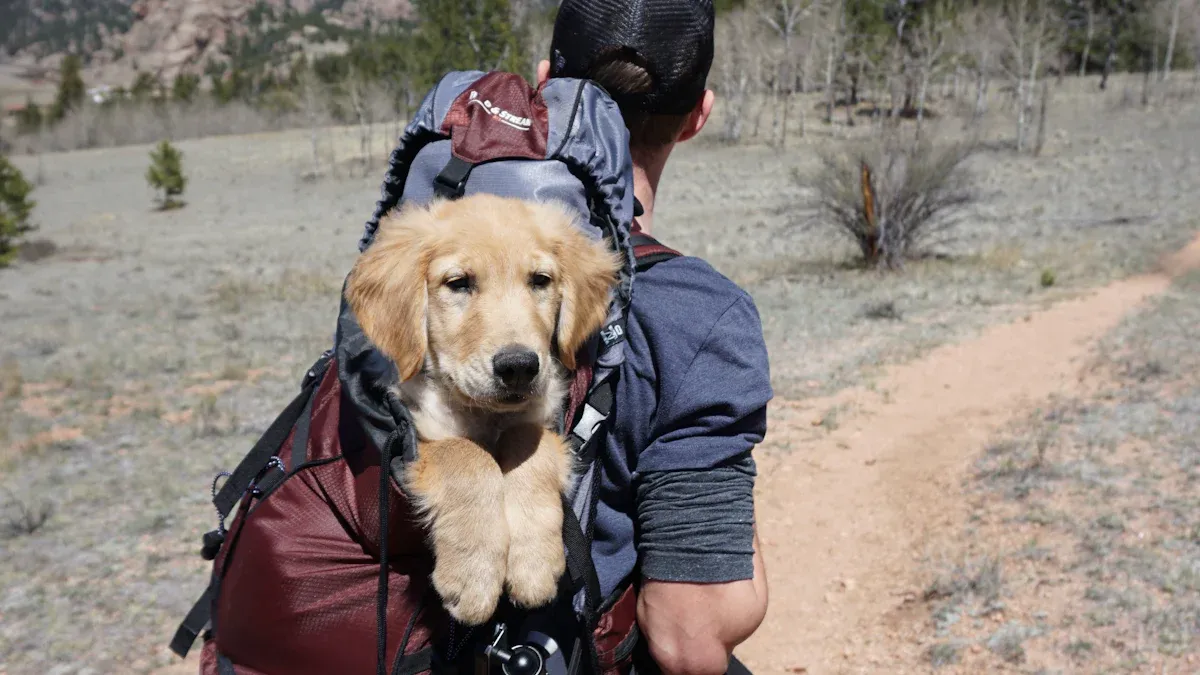
Calm, Moderate, and Active Carry
You need to match your dog’s daily activity to the right carrier setup. Dogs with calm or low activity levels often enjoy short, gentle outings. Active dogs need more ventilation, support, and regular checks. Use the following steps to guide your choice:
- Assess Your Dog’s Activity Level
Watch how your dog behaves at home and outside. Calm dogs move slowly and shift posture less often. Active dogs wiggle, shift, and may get hot quickly. - Select the Right Features
For calm dogs, choose a carrier with a soft base, easy entry, and extra ventilation. For active dogs, look for a firmer base, wide padded straps, and mesh panels on at least three sides. - Plan Carry Segments
For calm dogs, keep carry sessions short-5-10 minutes (5-10 min). For active dogs, check posture and breathing every 15-20 minutes (15-20 min). Let your dog out every 45-60 minutes (45-60 min) for a reset.
Worked Scenario A: Calm, Small Dog
You have a small dog who fits the label size for a carrier. You measure chest girth, back length, and seated height, then add a 2-4 inch (5-10 cm) buffer. You select a carrier with a soft base and easy entry. On your first outing, you notice your dog collapses into a tight curl. The base sags, and your dog cannot keep a neutral spine. You stop, check the base, and realize it needs a firmer insert. You switch to a carrier with a stronger base support. Your dog now sits upright and breathes comfortably.
Worked Scenario B: Active, Medium Dog
You have a medium dog who loves to move and gets warm quickly. You measure and add the buffer as before. You pick a carrier with mesh panels on three sides, a firm base, and wide straps. You do a short test carry for 5-10 minutes (5-10 min). Your dog shifts posture often but stays cool. Every 15-20 minutes (15-20 min), you pause and check for heat or stress. After 45-60 minutes (45-60 min), you let your dog out for a break. The carrier stays stable, and your dog remains comfortable.
Tip: For B2B buyers, show these scenarios in product descriptions. This helps customers understand fit and reduces returns.
Short Test and Regular Checks
You should always test the carrier before long use. Follow these steps:
- Short Test Carry
Place your dog in the carrier for 5-10 minutes (5-10 min). Watch for signs of stress, slumping, or heat. - Regular Checks
Every 15-20 minutes (15-20 min), pause and check your dog’s posture, breathing, and comfort. - Longer Reset
Every 45-60 minutes (45-60 min), take your dog out. Let them walk, stretch, and cool down. - Stop-Early Rule
If your dog shows distress, heat, or poor posture, stop the session. Do not push for longer times.
Safety Note: Carriers have limits. Not all dogs or activities are right for a dog backpack carrier. Always watch for signs of discomfort or stress.
Acclimation and Training Tips
Help your dog feel safe and happy in the carrier. Use these steps for smooth training:
- Choose a carrier with mesh panels, a firm base, and adjustable straps. Make sure your dog can stand, turn, and lie down inside.
- Place the open carrier in a common area. Toss treats inside. Let your dog explore without pressure for 2-3 days.
- Lure your dog in with treats or a favorite toy. Reward them as soon as they enter. Never force entry.
- Once your dog enters willingly, close the flap for a few seconds. Offer treats. Slowly increase the time inside from 10 seconds to several minutes.
- Gently rock the carrier or carry it around the house. Praise calm behavior.
- Take short trips outside, starting with 5 minutes. Begin in quiet areas before moving to busier places.
- Watch your dog’s body language. If you see stress, slow down and return to the last comfortable step.
For B2B buyers: Request full supplier specs, present clear size charts in both inches and centimeters, and highlight misuse risks in product descriptions. This helps customers choose the right carrier and lowers returns.
Common Fit Issues and Solutions
Table: Cause, Result, Next Step
You may notice some common problems when using a dog backpack carrier. These issues can affect your dog’s comfort and safety. Use this table to spot problems quickly and take the right action.
| Cause | Result | Next Step |
|---|---|---|
| Carrier too small inside | Dog slumps or curls tightly | Step 1: Re-measure chest girth, back length, and seated height. Step 2: Add 2-4 in (5-10 cm) buffer. Step 3: Choose a larger carrier with correct internal space. |
| Weak or sagging base | Dog slides or cannot sit upright | Step 1: Check for a firm base insert. Step 2: Replace with a carrier that has a stronger base. |
| Poor ventilation | Dog pants, overheats, or drools | Step 1: Inspect mesh panels on at least three sides. Step 2: Make sure mesh is clean and open. |
| Tight entry or exit | Dog resists loading or unloading | Step 1: Test entry opening size. Step 2: Pick a carrier with a wider opening. |
| Harness or tether not used | Dog tries to escape or jumps out | Step 1: Attach tether to harness point. Step 2: Never use collar point for tethering. |
Tip: For B2B buyers, always request full supplier specs, show clear size charts in both inches and centimeters, and highlight misuse risks in product descriptions. This helps reduce returns and improves customer satisfaction.
Pass/Fail Fit Checks and Red Flags
You can use simple checks to see if your carrier fits well. These checks help you spot problems before they cause discomfort or returns.
| Action | Pass Criteria | Fail Criteria |
|---|---|---|
| Ventilation | Mesh is visible, clean, and unobstructed. | Covers or flaps over vents are present. |
| Lid Closure | Lid closes flush with no gap. | Gaps greater than 1/16 in (about 2 mm) exist. |
| Pet Restraint | Straps are anchored to rigid points. | Leashes are clipped to exterior handles. |
| Weight & Size | Carrier and pet weight match label. | Size exceeds limits or dog looks cramped. |
Checklist for Fit Checks:
- Place your dog in the carrier for a 5-10 minute (5-10 min) test.
- Check that mesh panels are open and clean.
- Make sure the lid closes with no gaps.
- Confirm the tether attaches to a harness point.
- Watch for signs of stress, slumping, or heat.
Safety Note: Carriers have limits. Stop use if your dog pants, slumps, or tries to escape. Not every dog or activity is right for a carrier.
Decision Guide for Daily Use
Small Dogs and Anxiety
Small dogs often feel nervous in new places. You can help them feel safe in a dog backpack carrier by following these steps:
- Measure your dog’s chest girth, back length, and seated height. Add 2-4 in (5-10 cm) for comfort.
- Choose a carrier with a soft, firm base and mesh panels on at least three sides.
- Use treats and short sessions to help your dog get used to the carrier.
- Watch for signs of stress, like whining or pawing. Stop and let your dog rest if needed.
Tip: For B2B buyers, show size charts in both inches and centimeters. Highlight the need for acclimation in product descriptions.
Medium Dogs and Support Needs
Medium dogs need more support. Follow these steps to keep them comfortable:
- Check that the carrier has a strong base insert and wide, padded straps.
- Confirm the internal space matches your dog’s measurements plus buffer.
- Test the carrier with a 5-10 minute (5-10 min) carry. Watch for slumping or heat.
- Pause every 15-20 minutes (15-20 min) to check posture and breathing.
Note: Request full supplier specs and show clear fit checks to reduce returns.
Special Cases (Mobility, Breathing, Anxiety)
Some dogs have special needs. If your dog has trouble moving, breathing, or gets anxious:
- Pick a carrier with easy entry and extra ventilation.
- Use a harness tether, not a collar tether.
- Limit carry time and check your dog every 15-20 minutes (15-20 min).
- Stop use if you see heavy panting, slumping, or escape attempts.
Safety: Carriers have limits. Not all dogs or activities are right for carriers. Always watch for signs of distress.
Decision Table: Dog, Use Case, Features, Avoid
| Dog & Environment | Best Carrier Features | What to Avoid |
|---|---|---|
| Small, anxious dog | Soft base, mesh on 3 sides, easy entry | Tight fit, poor ventilation |
| Medium, active dog | Firm base, wide straps, strong tether | Weak base, narrow straps |
| Dog with mobility needs | Large opening, extra ventilation | High step-in, small entry |
| Dog with breathing issues | Mesh panels, short carry times | Vinyl panels, long sessions |
Comparison Table: Options, Pros, Cons, Best For
| Options | Pros | Cons | Best Practice |
|---|---|---|---|
| Soft-sided carrier | Light, easy to store | Less support for big dogs | Calm, small dogs |
| Structured carrier | Strong base, stable | Heavier, less flexible | Medium, active dogs |
| Front-facing pack | Dog can see you, easy access | Less back support | Short trips, anxious dogs |
For B2B: Request supplier specs, present clear size charts, and warn about misuse to help customers choose the right carrier and reduce returns.
Retail and Wholesale Sizing Tips
Presenting Size Charts and Fit Checks
You help customers choose the right dog backpack carrier when you show clear size charts and fit checks. Use both inches and centimeters for every measurement. List chest girth, back length, and seated height. Add a buffer of 2-4 inches (5-10 cm) to each value. Show internal dimensions, not just external ones. Use a simple table like this:
| Measurement | How to Measure | Target Range |
|---|---|---|
| Chest Girth | Widest part behind front legs | in/cm |
| Back Length | Base of neck to base of tail | in/cm + 2-4 in (5-10 cm) buffer |
| Seated Height | Floor to shoulder area while seated | in/cm + 2-4 in (5-10 cm) buffer |
Tip: Always include a checklist for fit checks. Ask customers to measure their dog, add the buffer, and compare to internal carrier space.
Setting Expectations in Descriptions
You set clear expectations when you describe the carrier’s fit and use. Tell buyers to measure their dog and add the buffer. Explain that internal space matters more than outside size. List support features like firm base inserts, wide straps, and mesh panels. Warn about misuse risks, such as using only weight labels or skipping fit checks.
Checklist for Product Descriptions:
- State all measurements in inches and centimeters.
- Highlight the need for a buffer of 2-4 in (5-10 cm).
- Describe support and ventilation features.
- Warn about common misuse risks.
Supplier Specs: Dimensions, Support, Ventilation
You lower returns when you request full specs from suppliers. Ask for internal length, width, and height in both units. Request details about base support, strap width, and mesh panel coverage. Confirm the carrier has a firm base insert and mesh panels on at least three sides. Ask for photos of the inside space and entry opening.
Supplier Specs Request Steps:
- Request internal L x W x H in inches and centimeters.
- Ask for base support details and insert type.
- Confirm mesh panel area and ventilation features.
- Request photos of inside space and entry opening.
B2B Merchandising and SKU Planning
For merchandising and staff training, link measurement steps and fit-check tables directly on product pages. Use step-by-step measurement guides so customers can self-check sizing before purchase.
| Merchandising Tip | Action Step |
|---|---|
| Group by internal size | Use L x W x H and buffer rules |
| Highlight support features | List base insert, strap width, mesh panels |
| Use fit check tables | Add to product pages and training guides |
| Train staff | Teach measurement and fit check steps |
Safety Note: Stop use if your dog shows stress, heat, or poor posture. Not every dog or activity fits a carrier. Always check fit before each use.
You make the best choice when you match a dog backpack carrier to your dog’s size, posture, and activity level. Follow these steps for success:
- Measure chest girth, back length, and seated height. Add 2-4 in (5-10 cm) for comfort.
- Use fit checks and tables before each use.
- Request full specs and clear size charts from suppliers.
- Watch for stress or poor posture. Stop use if needed.
Safety: Not every dog or activity fits a carrier. Always check for signs of discomfort.
FAQ
How do you measure your dog for a backpack carrier?
Step 1: Measure chest girth at the widest part behind the front legs.
Step 2: Measure back length from neck base to tail base.
Step 3: Measure seated height from floor to shoulder.
Step 4: Add 2-4 in (5-10 cm) buffer to each.
What signs show a poor carrier fit?
Look for slumping, tight curling, heavy panting, or escape attempts.
If you see these, stop use.
B2B tip: Add fit check tables and misuse warnings to product pages to help reduce returns.
How often should you check your dog during use?
Check posture, breathing, and comfort every 15-20 minutes (15-20 min).
Let your dog out every 45-60 minutes (45-60 min).
Safety: Stop if you see stress or heat.
B2B: Show these time checks in product descriptions.
What features help reduce returns for retailers?
Request full supplier specs, including internal dimensions and support details.
Present size charts in inches and centimeters.
Highlight fit checks and misuse risks in product info.
This helps buyers choose the right carrier and lowers returns.
Can all dogs use a backpack carrier safely?
Not every dog or activity fits a carrier.
Stop use if your dog shows stress, heat, or poor posture.
Always check fit before each use.
B2B: Remind customers about carrier limits and signs to stop in product descriptions.