Carrier bag returns happen when shoppers read sizes wrong. You can lower exchanges by using clear sizing words. Show exact measurements to help people pick right. Accurate labels and same labels stop confusion. If you add a nutritional adequacy statement, you meet pet safety needs. Always list ingredients and give feeding directions. Give ingredient statement and claims that follow rules. When you say complete and balanced nutrition, you help customers know feeding steps. Use clear directions and show measurements to stop mistakes with any canine bag.
Key Takeaways
Use simple sizing words and exact sizes to help customers pick the right canine bag. Always show both inside and outside sizes to stop confusion about space. Give clear steps for measuring dogs, like length and chest size, to make sure the bag fits. Keep the same labels and order of sizes for all products to lower mistakes. Show sizes in both inches and centimeters to help everyone and avoid errors.
Sizing Language Pitfalls for Canine Bags
Internal vs External Space
You need to know the difference between the space inside the bag and the space the bag takes up on the floor. Internal space means the area your dog can use. External space means the full size of the bag, including handles and pockets. If you mix these up, you might order a bag that looks big but feels small inside. Always check both measurements before you decide.
Tip: Ask your supplier to show the maximum assembled size for product dimensions. This helps you avoid confusion and keeps your catalog accurate.
Footprint Confusion
Many teams see the word “footprint” and think it means the inside area. In fact, footprint means the space the bag covers when placed on a flat surface. If you list only the footprint, customers may not know how much room their dog will have. You should always show both the footprint and the internal space. This makes your sizing clear and helps shoppers pick the right bag.
Term | What It Means |
|---|---|
Footprint | Area the bag covers outside |
Internal | Space inside for the dog |
“Fits My Dog” Misunderstandings
You may see product pages that say “fits my dog” or “fits small dogs.” These phrases cause mistakes. Dogs come in many shapes and sizes. You should give clear instructions about what to measure. Ask customers to measure their dog’s length from neck to tail and chest width. This helps them match their dog to the right bag. Avoid using only weight as a guide.
Note: OEM means a company makes products for another brand. ODM means a company designs and makes products for another brand. These terms help you talk with suppliers about custom bags.
Sizing mistakes often lead to returns and unhappy customers. You can lower this risk by using clear words and showing what to measure.
Canine Bag Dimension Glossary
Length, Width, Height Defined
You need to know how to measure a canine carrier bag. Length runs from the front to the back along the base. Width goes side to side across the base. Height measures from the bottom to the top at the tallest point. These three numbers help you compare bags and choose the right one for your dog.
Here is a simple table to show how these measurements look for a typical carrier bag:
Dimension | Measurement (inches) | What to Measure |
|---|---|---|
Length | 18 (exterior), 16 (interior) | Front to back on the base panel |
Width | 11 | Side to side on the base panel |
Height | 9 | Bottom to top at the tallest point |
Tip: Always check both exterior and interior measurements. The outside size tells you how much space the bag takes up. The inside size shows how much room your dog will have.
External vs Internal Space
External dimensions mean the full size of the bag, including handles and pockets. This tells you how much space the bag will use in your car, home, or under a seat. Internal usable space means the area inside where your dog can sit or lie down. You should look at both numbers before you buy. Some bags look big on the outside but feel small inside.
External dimensions: The footprint and height of the whole bag.
Internal usable space: The area your dog can use inside the bag.
Entry Opening Size
The entry opening size matters for comfort and safety. You need to measure the width and height of the opening where your dog enters. Measure at the entry point, not at the roof or sides. If the opening is too small, your dog may not fit or may feel squeezed.
Note: Always match the opening size to your dog’s chest width and height. This helps prevent wrong orders and keeps your dog comfortable.
Sizing Format Rules for Canine Bags
Consistent Order: L x W x H
It is important to show measurements in the same order every time. Always write length first, then width, and then height. This way, everyone knows what each number means. If you change the order, people can get confused and make mistakes. Use this order on your website, in your catalog, and on your packaging. This rule makes it easy to compare sizes and keeps your information neat.
Length (L): Measure from the front to the back on the base.
Width (W): Measure from one side to the other on the base.
Height (H): Measure from the bottom to the top at the tallest spot.
Tip: Always use the same order for every product. This helps your team and customers avoid mistakes.
Dual Units: Inches and Centimeters
Some people use inches, and others use centimeters. Always show both units for every measurement. This helps everyone understand the size, no matter what system they use. Shoppers do not have to guess or change the numbers themselves. Your team will also make fewer mistakes when adding data.
Here is a simple table that shows both units:
Dimension | Inches | Centimeters |
|---|---|---|
Length | 18 | 46 |
Width | 11 | 28 |
Height | 9 | 23 |
Note: Give clear steps for how to measure each part of the bag. This keeps your labels the same everywhere.
Soft-Goods Tolerance Language
Soft-sided bags can change shape a little. The size might be different when you pack or carry the bag. Always say that these sizes are close but not exact. This helps people know what to expect and lowers returns. Do not promise that the size will always be perfect. Use words that show the size can change a bit.
Say, “All dimensions are approximate because soft-sided bags can change shape.”
Remind people that the size may be a little different.
Use clear labels to show which sizes might change.
Callout: Always read the directions on your product page. Good labels and clear steps help people pick the right bag and avoid mistakes.
You can stop mistakes by using the same labels, showing both units, and giving honest size info. These rules help your team keep your catalog neat and your customers happy. When you use clear labels and steps, it is also easier to give feeding directions and other important info on your product pages.
Fit Language That Prevents Wrong Orders
What to Measure on Your Dog
You want to make sure every canine bag you sell matches the correct size for your pet. To do this, you need to give clear directions for measuring. Do not rely on vague terms like “fits small dogs.” Instead, use measure-first instructions that help your customers get the best size and fit.
Start by asking your customer to measure the length of their dog from the base of the neck to the base of the tail. This gives you the main body length. Next, have them measure the circumference of your pet’s chest at the widest point, usually just behind the front legs. This is sometimes called the girth. You should also ask for the circumference of your pet’s neck if the bag has a neck opening or collar feature. These measurements give you a full picture of the dog’s size.
You can use a simple sizing chart to show which bag matches which measurements. Always remind your customers to check the dog’s weight against the maximum allowed on the label. If the dog is close to the weight limit, suggest sizing up for comfort. Look for signs of comfort or discomfort when the dog tries the bag. If the dog seems squeezed or cannot turn around, recommend a different size.
Tip: Give step-by-step directions for measuring. Use plain words and show where to measure with a diagram or photo if possible. This helps your team and your customers avoid mistakes.
Recommended Dog Size Wording
You need to write clear and honest labeling for recommended dog size. Avoid phrases like “fits most pets” or “fits small breeds.” Instead, use specific sizing and measurement references. For example, say, “Recommended for dogs with a body length up to 16 inches and chest circumference up to 20 inches.” This makes it easy for shoppers to match their dog to the right bag.
When you write the recommended size, always include both the length and the chest measurement. If the bag has a weight limit, state it clearly. If a dog is near the top of the range, advise sizing up for peace of mind. This helps prevent returns and keeps your catalog clean.
List the maximum body length and chest circumference for each bag.
State the weight limit and remind customers to check it.
Suggest sizing up if the dog is close to the limit.
Use the same labels and measurement order on every product page.
You can also add a note about the intended use. For example, say, “This carrier is designed for short errands, not long travel.” If you see signs of discomfort or the dog cannot move easily, recommend a different size or style.
A good sizing and measurement reference helps your team answer questions and supports your customers. When you use clear directions and honest wording, you lower the risk of wrong orders. You also build trust with your shoppers.
Note: Always include a reminder to supervise your pet while using the carrier. This keeps your directions complete and supports safe use.
Copy Blocks for Product Pages
Sizing Paragraph Example
You want to choose the right canine bag for your pet. Check the measurements below before you order. All sizes are approximate because soft-sided bags can change shape. Always follow the directions for measuring your dog to help you find the best fit.
Dimension Bullet Block
Length (L): Front to back along the base panel
Width (W): Side to side across the base panel
Height (H): Bottom to top at the tallest point
Entry Opening: Measured at the entry, not the roof
You see these labels on every product page. Measurements appear in both inches and centimeters for easy comparison.
How to Measure Your Dog Block
To find the right size, measure your dog’s body length from the base of the neck to the base of the tail. Measure the chest at its widest point, just behind the front legs. If your bag has a neck opening, measure the neck circumference. Use these numbers to match your dog to the recommended size.
Tip: Always check the weight limit and sizing chart before you buy. If your pet is close to the limit, choose a larger size for comfort.
“What This Bag Is Not” Block
This bag is not designed for long travel or airline use. It does not guarantee a fit for every seat or space. Always read the labeling and feeding directions before use. Supervise your pet while using the carrier to keep them safe.
Visual Sizing Cues for Canine Bags
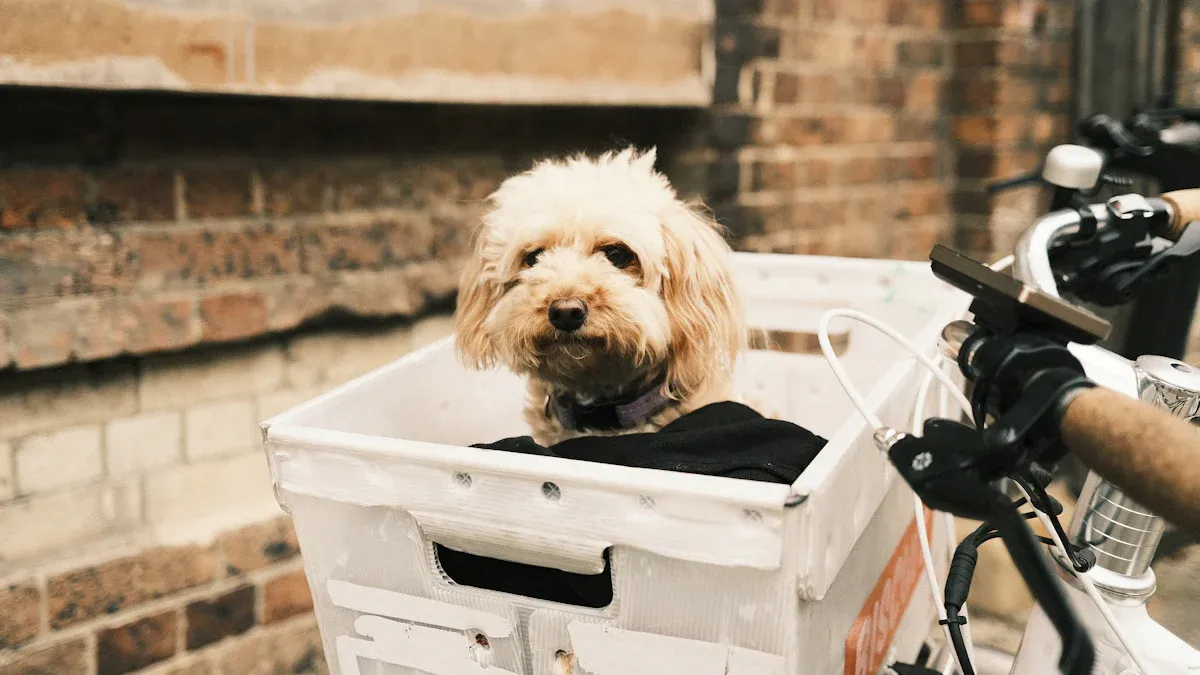
Photo Scale and Angles
You help customers choose the right bag when you show clear photos. Use images that display the whole bag from different angles. Take pictures from the front, side, and top. These views let shoppers see the real size and shape. Place a ruler or a common object, like a water bottle, next to the bag. This gives a sense of scale. You make it easier for buyers to imagine the bag in their own space.
You should avoid photos that hide parts of the bag or make it look bigger or smaller than it is. Show the bag as it appears when ready to use. If you use a model dog, pick one with known measurements. List those measurements in the caption. This helps your team and your customers compare sizes quickly.
Tip: Use natural lighting and plain backgrounds. These choices keep the focus on the bag and its features.
Image Labels: External, Internal, Opening
You add value when you label images with clear dimension markers. Mark the external size on one photo. Show the internal usable space on another. Highlight the entry opening with arrows or lines. Use simple words like “External Size,” “Internal Space,” and “Entry Opening.” These labels help shoppers understand what each measurement means.
You can use a table to summarize what each label shows:
Label | What It Shows |
|---|---|
External Size | Full footprint and height |
Internal Space | Area for the dog inside |
Entry Opening | Width and height at entry |
You should keep labels easy to read. Avoid crowded images. Place labels near the measurement points. This practice reduces confusion and lowers the risk of wrong orders.
Note: Always match your image labels to the measurement fields on your product page. Consistent labeling builds trust and helps your catalog team keep data clean.
Catalog Alignment for Canine Bags
Consistent Product Type Naming
You help your team and customers when you use the same product type name for every canine bag across all channels. If you pick one naming convention and stick with it, you lower the risk of wrong orders and catalog errors. Decide on a structure that includes key product details, such as type, color, and size. Keep it simple so everyone can understand it. For example, you might use a format like BAG-GRN-MED-2024, where each part stands for a feature. This method makes it easy to spot differences between products and helps you track inventory.
Tip: Assign a unique SKU to every product and variant. Each combination of features needs its own code. This practice keeps your catalog clean and prevents mix-ups.
Dimension Order Across SKUs
You need to show dimensions in the same order for every SKU. Always list length, width, and height in that sequence. If you change the order, you create confusion for your team and shoppers. Use the same labels for every product page and catalog entry. This rule helps you compare products quickly and lowers mistakes. When you keep the order and labels consistent, you make it easier for buyers to match the right pet to the right bag.
SKU Example | Length | Width | Height |
|---|---|---|---|
BAG-GRN-MED-2024 | 18 in | 11 in | 9 in |
BAG-BLU-SML-2024 | 15 in | 9 in | 8 in |
You should check your catalog often to make sure every entry follows these rules. Consistent naming and dimension order help your team avoid duplicate SKUs and keep your data accurate.
Note: Clear labels and naming conventions build trust with your customers and support smooth catalog management.
QA and Consistency Checks
Supplier Measurement Method
You must make sure suppliers use the same steps each time. Tell them to measure the bag at its biggest points when it is put together. They should measure length, width, and height from the outside edges. Handles and pockets count in these measurements. Suppliers also need to measure the inside space for the pet. Ask them to record the entry opening size at the real entry spot. Clear labels on every measurement help keep your catalog correct.
Give written directions to your suppliers for measuring each part. Use easy words and pictures if you can. Ask for photos of how they measure each new style. This helps you find mistakes before bags ship out. Remind suppliers that soft-sided bags can change shape, so sizes are close but not exact. Using the same measuring steps lowers wrong orders and returns.
Receiving QC Spot Checks
When you get a shipment, your quality team should check some bags from each batch. Use the same tools and steps as your suppliers. Compare the real bag sizes to the numbers on your labels. Check the outside size, inside space, and entry opening. Make sure the labels match the measurements. If you see a big difference, set those bags aside and call your supplier.
Your team should also check that all labels and directions are easy to read. Look for missing or confusing information. If your product has feeding directions, make sure they are there and correct. Keep a checklist for every spot check. This helps you find problems and fix them fast.
Tip: Regular spot checks help you find mistakes early. You keep your catalog right and build trust with your customers.
Sizing Field Table
You need clear sizing fields for every canine bag. Good labels help your team and customers avoid mistakes. If you use the same fields for each product, your data stays neat. This lowers the chance of wrong orders.
Here is a table with the main sizing fields for every canine bag. Each field has a simple meaning, an easy way to measure, and a common mistake to watch for.
Field Name | What it means in plain English | How to measure | Common mistake |
|---|---|---|---|
External Length | How long the bag is from front to back | Measure base panel from end to end | Measuring only inside or ignoring handles |
External Width | How wide the bag is side to side | Measure base panel from side to side | Mixing up width and length |
External Height | How tall the bag is at the highest point | Measure from bottom to top, including handles | Measuring only the main body |
Internal Length | Usable space for the dog, front to back | Measure inside base from end to end | Using outside size instead |
Internal Width | Usable space for the dog, side to side | Measure inside base from side to side | Not accounting for padding or lining |
Internal Height | Usable space for the dog, bottom to top | Measure inside from bottom to top | Ignoring soft sides or roof shape |
Entry Opening Size | Size of the entry for the dog | Measure width and height at entry point | Measuring at the roof or side |
Neck Range | Dog’s neck size that fits the bag | Measure dog’s neck at widest part | Using collar size instead |
Chest Range | Dog’s chest size that fits the bag | Measure dog’s chest behind front legs | Measuring too far forward or back |
Dog Weight Limit | Maximum dog weight for safe use | Check product label and weigh dog | Ignoring weight or rounding up |
Tip: Use the same order and labels for every product. This makes your catalog simple to manage and helps shoppers compare bags.
These fields match real dog measurements. For example, a bag with a neck range of 17–24 inches and a chest range of 27–40 inches fits many medium dogs. When you add these fields to product pages, buyers can pick the right size and avoid returns.
Clear sizing fields and honest labels help build trust with customers. You keep your catalog tidy and make your team’s work easier.
Risky Sizing Language Table
You want to help your customers pick the right bag. Clear words on product pages make shopping easier. If you use risky sizing language, people get confused. This can lead to more returns and unhappy buyers. You can stop these problems by using safer, direct phrases. Detailed sizing charts and honest descriptions show shoppers what to expect. This lowers complaints and helps your team earn trust.
Below is a table with common risky phrases. It explains why each one causes trouble. It also gives you safer lines to use instead. You can use this table when you check your catalog or update product pages. It is also helpful for training your team. Good labeling helps everyone know the real size and fit.
Risky wording | Why it confuses | Safer replacement line |
|---|---|---|
Fits small dogs | “Small” means different things to different people | Recommended for dogs with body length up to 16 inches and chest up to 20 inches |
Universal fit | Suggests every dog will fit, which is not true | Check your dog’s measurements against the chart before buying |
Airline approved | Implies all airlines accept the bag | Designed for travel; check airline rules for seat space |
Lightweight | Does not explain what makes it easy to carry | Features padded straps for comfortable carrying |
Secure | Sounds like a guarantee | Designed to help keep dogs positioned when used correctly; supervise your pet |
One size fits all | Overlooks differences in dog shapes and sizes | See sizing chart for best fit based on your dog’s measurements |
Approximate size | Leaves room for guessing | All dimensions are approximate due to soft-sided construction |
Tip: Check your product pages for risky phrases. Change them to clear, direct lines from the table. This helps your customers make better choices and lowers returns.
You can stop wrong orders by using simple sizing words and clear labels. Show what to measure for each pet. Keep your catalog neat and easy to read. Update product pages with the checklist below. This helps buyers find the nutritional adequacy statement, ingredients, feeding directions, and claims for complete and balanced nutrition.
Category | Checklist Items |
|---|---|
Pre-travel reminders | Check ID tags, microchip info, and vet paperwork |
Safety must-haves | Carriers, harnesses, seatbelts, and pet-friendly stops |
Meal prep | Pack food, water, and collapsible bowls for on-the-go feeding |
Health and comfort | Medications, first-aid items, favorite toys, and calming items |
Hygiene essentials | Litter, potty bags, grooming wipes, and absorbent liners |
Pro travel tips | Motion sickness prevention, emergency vet info, and praise-based reward ideas |
You build trust and get fewer returns when you work with suppliers. Use the table below to keep sizing details right.
Standardization Points | Description |
|---|---|
Chest girth | Measure the widest rib area behind the front legs. |
Neck | Measure at the base of the neck, not the collar line. |
Back length fit check | Confirm the harness does not sit on soft tissue. |
Strap adjustment range | Confirm slack for winter coats and body variance. |
Keep checking your catalog and how suppliers measure. You help customers pick the right bag and keep your data correct.
FAQ
How do you measure a canine carrier bag correctly?
Measure the bag at its biggest points when it is put together. Use a tape measure to check length, width, and height. Always count handles and pockets in your measurements. Check both outside and inside sizes to be sure.
What should you measure on your dog before buying a carrier?
Measure your dog’s body from neck to tail. Also, measure around the chest behind the front legs. If the bag has a neck opening, measure the neck size too. These numbers help you pick the right bag.
Why do you need both inches and centimeters on product pages?
People in different places use different units. Some use inches, and some use centimeters. Showing both makes it easy to compare and helps stop mistakes.
What does “soft-sided bag dimensions are approximate” mean?
Soft-sided bags can change shape when you pack or carry them. The size listed might be a little different. Expect small changes because the material is flexible.
How can you prevent wrong orders with sizing language?
Use clear and simple words. Do not say things like “fits small dogs.” Give exact steps for measuring the bag and the dog. This helps buyers match the right bag to their pet and lowers returns.