
A flat dog bed on a vestibule floor is a sponge you keep paying for. It pulls moisture from the ground, traps condensation from the air, and holds every bit of dirt your dog tracks in. By morning, your dog is sleeping on cold, wet padding.
A camping dog bed designed for tent vestibule use breaks that cycle. The two design features that actually change the outcome are ground separation and fabric that does not hold water. Everything else — thickness, color, brand label — is secondary. Get those two wrong and the bed fails the first damp night.
What Happens to a Flat Bed on a Vestibule Floor
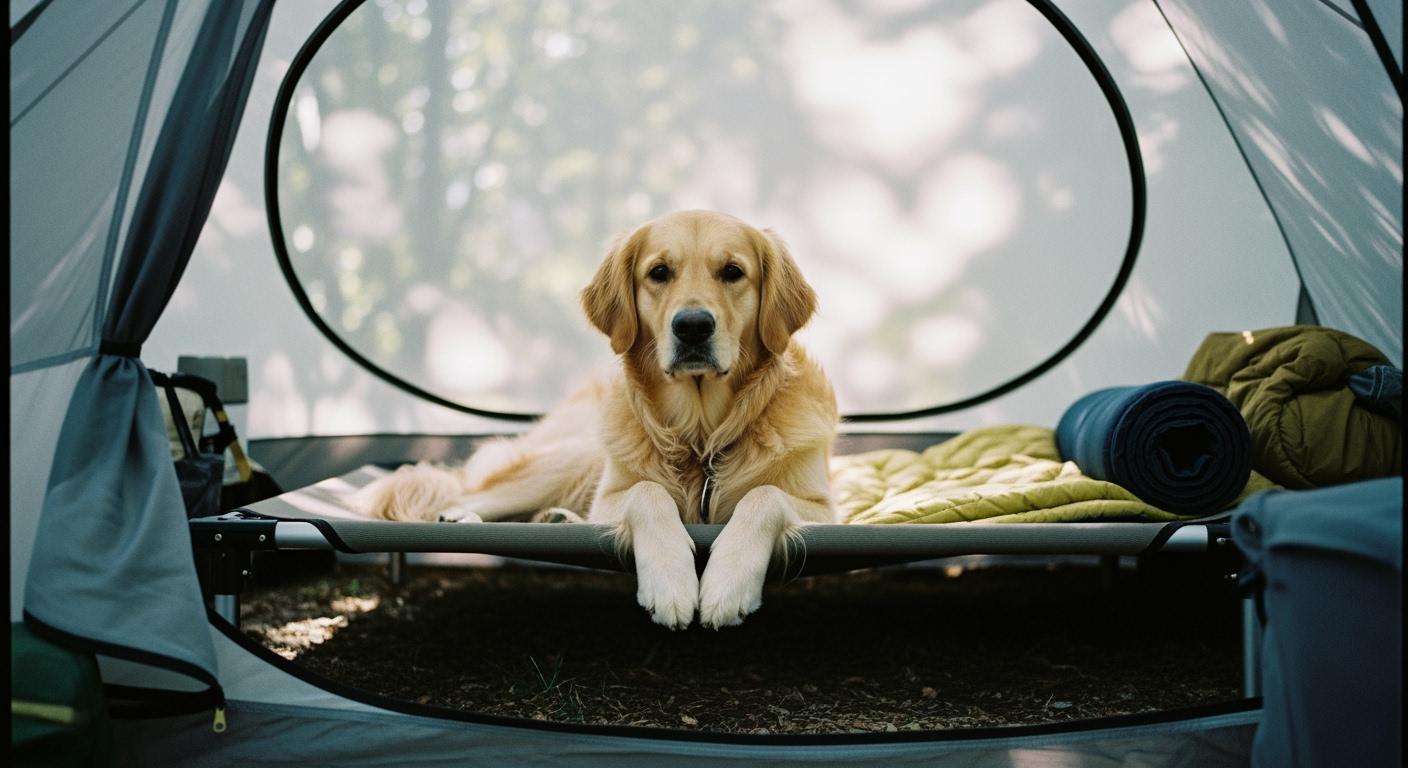
A tent vestibule is a bad floor. It sits directly on the ground. After sunset, the flysheet cools and water vapor in the trapped air condenses on every surface — including the floor your dog’s bed rests on. Add exhaled moisture from two people and one dog breathing inside the tent body, and the humidity inside a zipped-up vestibule climbs fast.
Ground moisture moves upward too. Even a bathtub-floor tent passes moisture when the soil underneath is saturated. The result: a thin layer of dampness forms between the floor and anything sitting on it. A flat dog bed pressed against that floor acts like a wick.
Observable check: After one night of camping, lift the bed and feel the underside. If it is cooler and damper than the top surface, ground moisture is transferring through. That same moisture was against your dog all night.
The problem compounds across multiple nights. A bed that stays damp never fully dries inside a packed tent. By night three, your dog is sleeping on padding that has been wet for 72 hours. Dirt, shed fur, and saliva from chew toys accelerate the breakdown. The bed starts to smell. Your dog starts to avoid it.
| Vestibule Condition | Flat Bed Failure | Design That Works |
|---|---|---|
| Cold, damp floor | Padding absorbs ground moisture like a wick | Raised frame with air gap underneath |
| Condensation buildup overnight | Fabric stays wet, no airflow to dry it | Breathable mesh that vents trapped moisture |
| Mud, dirt, debris tracked in | Dirt embeds in fabric, odor builds within days | Wipe-down surface, fast-rinse fabric |
How a Raised Frame Changes What Happens Under Your Dog
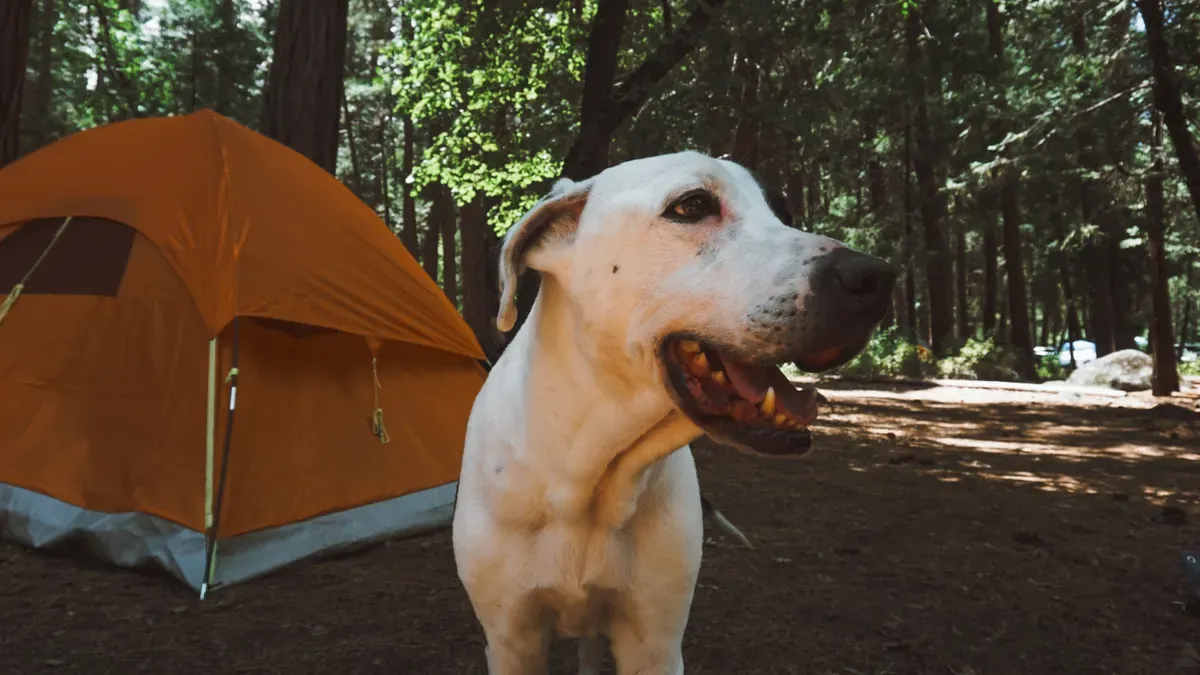
Lift a dog bed 4 to 6 inches off the vestibule floor and you break the moisture bridge. That is the entire mechanism. No wicking. No cold transfer. No pooled condensation trapped under a foam pad.
The physics is straightforward. A raised frame creates an air channel between the floor and the sleeping surface. Air moves — slowly, but it moves. That movement pulls moisture away from the fabric underside through convection. The tighter the tent pitch, the less air moves. But even in still air, the separation alone stops direct moisture transfer.
The frame also changes how the dog’s weight interacts with the bed. On a flat bed, the dog’s body compresses the padding against the cold floor, thinning the only insulation layer at the exact moment it is needed most. On a raised cot, the tensioned fabric supports the dog without creating a thermal bridge to the ground. The dog’s body heat warms the fabric, not the dirt underneath.
In practice: A taut tent pitch and cross-ventilated vestibule reduce condensation, but only ground separation stops moisture wicking. Even the best-vented tent cannot prevent a flat bed from absorbing ground moisture on saturated soil.
Observable check: After the dog has been on the bed for an hour, slide your hand between the fabric underside and the vestibule floor. If the air feels cooler than ambient but the fabric underside is dry, the frame is doing its job. If the fabric underside feels damp, the elevation is too low or the vestibule airflow is blocked.
| Design Difference | Why It Matters | Main Limitation |
|---|---|---|
| Raised frame (4–6 in clearance) | Stops ground moisture transfer and creates convective drying channel | Adds packed weight and requires vestibule headroom |
| Flat pad (no frame) | Packs small and fits any vestibule height | Absorbs ground moisture; stays wet across multi-day trips |
| Inflatable mattress | Lightweight, compact when deflated | Puncture risk on rocky ground; surface still traps condensation without airflow underneath |
Why Fabric Choice Determines Whether the Bed Is Dry by Morning
A raised frame solves ground moisture. But what about the moisture that lands on top — rain spray through a half-open vestibule, wet paws, a dog that just swam in a lake?
The fabric on the sleep surface determines how long that moisture stays. Solid nylon or canvas holds water in its weave. Mesh — specifically open-weave polyester like Texteline — lets water pass through or evaporate from both sides. This is not about “waterproof” versus “not waterproof.” A waterproof surface traps sweat and body vapor underneath the dog, creating a different wetness problem. The right fabric for a vestibule bed is hydrophobic and air-permeable: it sheds liquid water but lets vapor escape.
From a manufacturing standpoint, fabric density is the key tradeoff. A tighter weave holds more weight and resists abrasion longer — important for dogs that dig or scratch before settling. A looser weave dries faster but frays sooner under repeated clawing. The best balance for camping use lands on a medium-density polyester mesh with a denier in the range that holds tension without becoming a water trap. Most elevated dog cots use a PVC-coated polyester that hits this middle ground: the coating rejects water, and the open weave between coated threads allows air through.
Tip: Shake the bed out before packing. Water beads that sit on the surface from overnight dew will dry in minutes once exposed to moving air. Packing the bed while those beads are still present traps moisture against the fabric in a stuff sack — and that is when mildew starts.
Observable check: After a rainy night, pour a small amount of water onto the bed surface. If it beads and rolls off within seconds, the hydrophobic coating is intact. If it spreads and darkens the fabric, the coating has worn and the bed will hold moisture longer. This test takes 10 seconds and tells you whether the bed is ready for a wet trip — or whether your dog is about to sleep on a slow-drying surface.
The downstream benefit of fast-drying fabric is logistical, not just about comfort. When breaking camp, a dry bed goes straight into the stuff sack. A damp bed needs separate storage or it wets everything else in the pack. On a multi-day trip where you move camp each morning, that difference compounds. A bed that dries in 15 minutes of morning sun is packed and gone. A bed that needs an hour holds up the entire departure — or gets packed wet, guaranteeing a cold, damp sleep surface by evening. The fabrics that clean fast and resist odor are the same ones that dry fastest — the design priorities converge.
When a Raised Camping Bed Makes Vestibule Life Harder
A raised cot is not the universal answer. Three conditions make it the wrong tool.
Low-clearance vestibules. Some ultralight tents have vestibules that peak at 30 inches and slope to near zero at the edges. A cot with 6 inches of leg height plus a dog on top may not fit. Measure your vestibule height at the spot where the bed will sit — not at the peak — before committing to a raised frame.
Dogs that need cushioned support. A tensioned fabric surface does not conform to pressure points the way foam does. Senior dogs with joint stiffness, dogs recovering from injury, or very lean breeds with prominent hips and elbows may find a taught mesh surface uncomfortable after several hours. The same design attribute that keeps the bed dry — a firm, tensioned surface — is the one that offers the least pressure relief. For these dogs, a closed-cell foam pad inside a waterproof shell, placed on top of a raised frame, splits the difference: ground separation from the frame, cushioning from the foam, moisture protection from the shell.
Disclaimer: A taut mesh cot keeps most dogs dry and comfortable, but if your dog has diagnosed arthritis, hip dysplasia, or another orthopedic condition, the tensioned fabric alone may not provide enough pressure redistribution. Dogs with very deep chests and narrow hips — typical of sighthounds — may also find the flat, unyielding surface uncomfortable over a full night. Check for restlessness or repeated repositioning as signs that the surface is not working.
Vestibules too small for the frame footprint. A raised cot with legs needs a flat rectangular footprint. Irregular vestibule shapes — common on trekking-pole tents — may not accommodate even a compact frame. Before buying, template the bed footprint with a piece of cardboard or a stuff sack laid flat. If the shape does not fit without pressing against tent walls, condensation from the flysheet will drip directly onto the bed edge.
The features that matter in an outdoor dog bed shift depending on whether you car-camp or backpack. A steel-frame cot that works perfectly next to a vehicle becomes dead weight on a hiking trip. The material and frame decisions that make camping shelter work for dogs depend on how you get to camp and how many nights you stay.
FAQ
Why does a raised frame matter more than bed thickness in a vestibule?
Thickness only insulates if the material stays dry. On a vestibule floor, a 3-inch foam pad compresses to half an inch under the dog’s weight and pulls moisture from the ground through the compressed layer. A raised frame eliminates the moisture source entirely. Without ground contact, even a thin tensioned fabric stays warmer than a thick wet pad. The difference between an elevated frame and a ground pad is the presence or absence of a moisture bridge, not the amount of fill.
What fabric dries fastest after a wet night in the vestibule?
Open-weave polyester mesh with a PVC or similar hydrophobic coating. The coating sheds liquid water, and the open weave lets air pass through from both sides. Solid nylon and canvas dry significantly slower because water sits in the tighter weave with airflow from only one face. Uncoated cotton is the worst choice — it absorbs water into the fiber itself and can take hours to dry even in direct sun.
Can a raised cot fit in any tent vestibule?
No. Vestibules on ultralight trekking-pole tents often have low, sloped ceilings and irregular floor shapes. A raised cot with 4 to 6 inches of leg clearance may not fit under a vestibule that slopes to ground level at the edges. Measure both the peak height and the height at the exact spot the bed will sit. If the dog cannot sit up on the bed without brushing the flysheet, the cot is too tall for that vestibule. The discussion of ground pad versus cot for wet campsites starts with whether the vestibule geometry even allows a raised frame.
Does a raised bed help with tent cleanliness beyond keeping the dog dry?
Yes — in a way that is easy to miss. A dog on a raised cot sheds fur and shakes off dirt onto the vestibule floor, not onto the sleep surface. The fur and debris land on the ground where they can be swept out, rather than embedding into bedding fabric. Over multiple nights, this difference is significant: a flat bed accumulates whatever the dog brings in, while a raised bed stays cleaner because the dog is not pressing the fabric into the dirt on the floor every time it shifts position. Whether warmth or cleanliness matters more depends on the trip — in wet conditions, cleanliness is what preserves warmth.






