
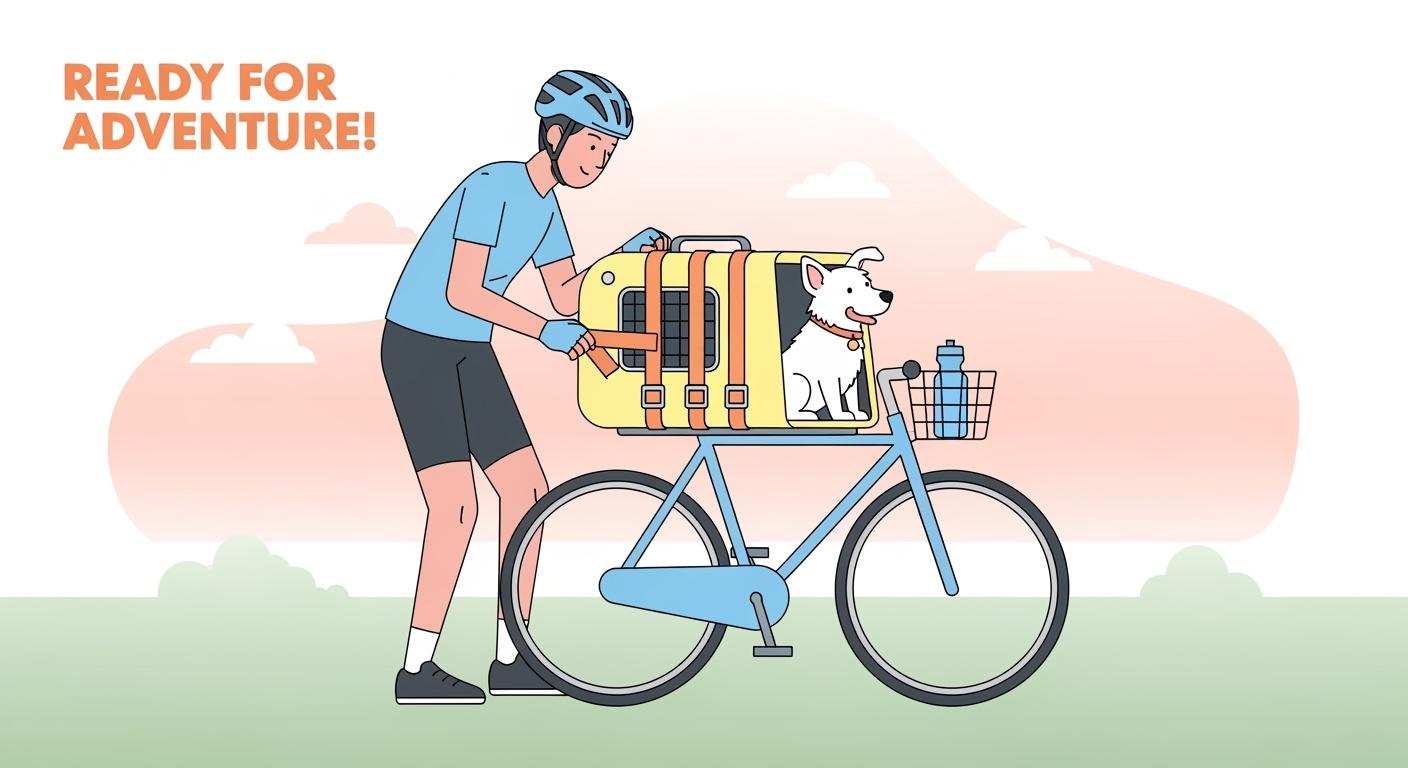
A carrier that can hold a dog is not always stable enough for bike use. During turns, braking or rough pavement, a bike pet carrier can wobble at the mount, sag at the floor, pull from the wrong tether angle, trap heat, or place the dog’s weight too high. This article compares front basket, rear rack, trailer and backpack carrier setups by mount stability, base support, tether layout, airflow and practical ride limits.
For bike use, carrier stability depends on more than size. The mount, base panel, tether position and airflow need to work together so the dog does not shift forward, lean into the side wall, overheat or pull the carrier off balance during real riding.
Key Takeaways
- Choose carrier style by riding stability, dog posture, and weight position, not only by the labeled weight range.
- Front baskets are sensitive to handlebar wobble, while rear rack carriers and trailers need stronger mounting checks.
- A rigid floor, short harness tether, breathable panels, and secure attachment points matter more than soft comfort alone.
- Heat buildup, escape risk, and high center of gravity are the main failure points to judge before sourcing.
Choose the carrier style by balance, not just dog size
Front basket, rear rack, trailer, and backpack each solve a different problem
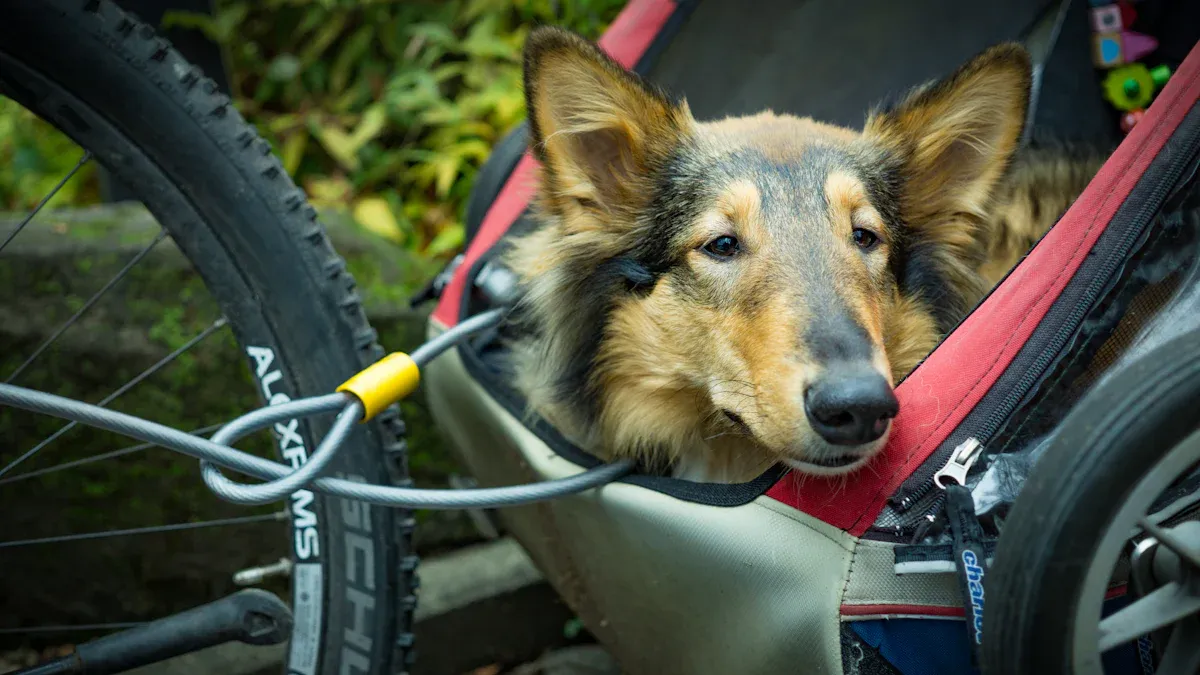
Bike pet carriers for dogs are often grouped together, but each style creates a different riding experience. A front basket keeps a small dog visible, but it puts weight near the steering path. A rear rack carrier moves the dog away from the handlebar, but it raises the rear load and can feel unstable if the base is narrow. A trailer keeps weight lower and farther from the rider, but it needs good hitch strength, ventilation, and turning space. A backpack carrier may work for very small dogs, but it depends heavily on rider comfort, heat control, and short-trip use.
For small-dog riding products, dog bike baskets for small pets should not be judged only by soft padding or cute shape. Buyers should check whether the basket floor stays level, whether the side walls prevent leaning, and whether the mounting hardware can resist side-to-side movement.
Carrier style comparison for product decisions
| Carrier style | Best-fit use case | Main trade-off | What buyers should check first |
|---|---|---|---|
| Front basket | Small, calm dogs on short rides | Can affect steering and front balance | Mount stiffness, floor support, side-wall height, tether position |
| Rear rack carrier | Small dogs that sit steadily | Higher rear load can tip or sway | Rack compatibility, base width, anti-sway connection, anchor points |
| Trailer | Medium dogs, older dogs, or longer rides | Needs more turning room and storage space | Hitch security, low center of gravity, ventilation, visibility details |
| Backpack carrier | Tiny dogs and very short trips | Heat and rider fatigue can limit safe use | Back support, airflow, posture room, closure security |
If a dog is close to a carrier’s upper limit, the safer product decision is usually not to push the smallest carrier style. A wider base, lower load position, and stronger restraint design often matter more than squeezing into a compact format.
Product details that decide whether a bike carrier feels safe
Mounting strength and anti-wobble structure
The first product check is how the carrier connects to the bike. Thin straps alone may look convenient, but they can loosen, slide, or let the carrier swing when the rider turns. A better design uses stable mounting points, reinforced base support, and a layout that keeps the carrier level under movement.
For front baskets, buyers should check handlebar compatibility and whether the basket twists when weight shifts to one side. For rear rack carriers, check rack width, bottom support, and whether the carrier corners lift during side movement. For trailers, check the hitch, frame alignment, and whether the trailer tracks straight behind the wheel.
Interior room, floor support, and dog posture
A bike carrier can pass a weight check and still fail fit. The dog needs enough usable interior room to sit naturally, turn slightly, and avoid being pressed against the roof or side wall. Soft bags can lose usable space once the dog sits inside, especially if the floor pad bends.
Before choosing a model, buyers should measure the dog’s weight and seated height against the real interior space, not only the outside product size. For bike use, the floor should stay flat enough to prevent slumping, twisting, or repeated paw pressure against the same edge.
Restraint layout and escape control
A bike carrier should not rely on closed zippers alone. A short internal tether that clips to a harness helps keep the dog from jumping or leaning too far out of the carrier. The tether should limit escape without forcing the dog into an awkward sitting position.
For B2B product evaluation, check clip strength, tether length, anchor location, zipper direction, and top-opening security together. A strong-looking carrier can still create risk if the dog can lean over the side wall or if the tether pulls from a poor angle during braking.
Ventilation and heat control
Heat buildup is one of the easiest risks to miss in bike pet carriers for dogs. Enclosed shapes, thick padding, dark fabrics, and limited mesh can trap warmth quickly, especially during slow rides or stops. Good ventilation should come from usable mesh placement, not just small decorative panels.
For warm-weather markets, buyers should check airflow from the front, sides, and upper area. A shade cover can help, but it should not block the main air path. Breathable structure is especially important for trailers, backpacks, and any carrier designed for longer outdoor use.
Where bike pet carriers for dogs usually fail in real use
Failure point: high load and unstable steering
When the dog sits high or too far from the bike’s centerline, the carrier can make steering feel twitchy. This is most common with front baskets and narrow rear carriers. The product may look stable while parked but feel very different once the bike turns or brakes.
Failure point: soft base collapse
A soft carrier floor can bend under the dog, making the dog lean, slide, or press against one side. For bike use, floor stability is not only a comfort detail. It affects balance, posture, and how much the dog moves during the ride.
Failure point: poor restraint geometry
If the tether is too long, the dog may climb or lean out. If it is too short or badly placed, it can twist the harness and create stress when the bike stops. The restraint should hold the dog inside the carrier while still allowing a natural seated or lying posture.
Failure point: blocked airflow
Mesh panels that sit too low, face the wrong direction, or collapse against the dog do not provide enough airflow. This matters more for enclosed trailers and backpack carriers, where heat and moisture can build up faster.
| Product issue | What happens in use | Better specification direction |
|---|---|---|
| Weak front mount | Basket wobbles and affects steering | Reinforced mount, lower load position, anti-sway design |
| Narrow rear base | Carrier feels top-heavy on turns | Wider base, stronger rack support, stable lower frame |
| Soft floor | Dog slumps, slides, or shifts weight | Rigid or semi-rigid floor with removable pad |
| Poor mesh placement | Heat and moisture build up inside | Large usable mesh panels and airflow around the head area |
| Loose tether system | Dog can lean out or jump | Short harness tether with secure anchor point |
What to check before choosing a bike carrier model
Check the use boundary first
Not every bike pet carrier is suitable for every riding scene. A compact front basket may fit city rides with a small calm dog, but it is not the right answer for heavier dogs, rough paths, or long outdoor trips. A trailer may offer better balance for larger dogs, but it requires more space, more visible safety details, and stronger hitch quality.
Check the product structure, not only the marketing claim
- Does the carrier stay level when weight shifts to one side?
- Does the floor resist bending under the dog?
- Can the dog sit without pressing against the roof or front wall?
- Does the tether clip to a harness from a safe angle?
- Are the mesh panels large enough to support real airflow?
- Can the carrier attach securely to common bike setups?
- Are reflective details, flags, or visibility elements included where needed?
Check whether the design matches the buyer’s market
For short city rides, buyers may prioritize compact shape, quick attachment, and easy cleaning. For outdoor or weekend riding, structure, ventilation, visibility, and trailer stability become more important. For small-dog comfort, interior room and posture support matter. For higher-speed or uneven routes, the product should not be positioned beyond its safe use boundary.
The best bike pet carriers for dogs are not simply the softest or most lightweight options. They are the models with clear fit limits, stable attachment, usable ventilation, and a restraint layout that helps prevent predictable use failures.
FAQs about bike pet carriers for dogs
Are front baskets a good choice for bike pet carriers for dogs?
Front baskets can work for small, calm dogs on short rides, but they need careful stability checks. Buyers should pay attention to handlebar compatibility, mounting stiffness, floor support, and whether the basket affects steering when loaded.
When is a trailer better than a basket?
A trailer is usually a better match when the dog is heavier, nervous, older, or needs more enclosed room. The lower weight position can help riding stability, but the trailer still needs a secure hitch, good airflow, visible safety details, and enough turning space.
What feature should buyers check first?
Mounting stability should come first because a comfortable carrier still fails if it wobbles, swings, or changes bike control. After that, check floor support, tether layout, usable interior room, and ventilation.
Can a regular pet carrier be used on a bike?
Not always. A regular soft carrier may lack a bike-safe mounting system, rigid floor, stable base, and safe restraint layout. For bike use, the carrier must be judged as part of the bike setup, not as a standalone travel bag.






