Air travel with a pet compresses handling into a series of high-stakes moments. The TSA checkpoint. The boarding gate. The under-seat stow. Each asks you to load or unload quickly while other travelers wait.
A single-door carrier gives you one approach angle. If the pet turns away from that opening — and stressed pets often do — you are stuck. The only option is to reach in, twist your wrist, and pull from an awkward angle. In an airport, where time pressure is real and space is tight, that single point of failure cascades. A carrier that performs fine at home can fail at the airport because the use conditions are fundamentally different from living-room practice.
Why a Single Entry Point Becomes a Handling Bottleneck During Air Travel
The physics is straightforward. A pet that backs into the far corner of a carrier creates a reach problem: your arm enters along one vector, but the pet’s body is oriented along another. To extract the animal, you must either rotate the carrier — difficult under a seat with inches of clearance — or reach across the pet’s body to find a grip point and pull at an angle the animal resists.
This is not just slow. It amplifies the animal’s stress, which in turn makes the next loading attempt harder. A pet forced out through a single opening learns that the carrier means being dragged. On the return trip, it hesitates longer. The single-entry design does not merely slow you down once. It trains resistance into the animal across multiple trips.
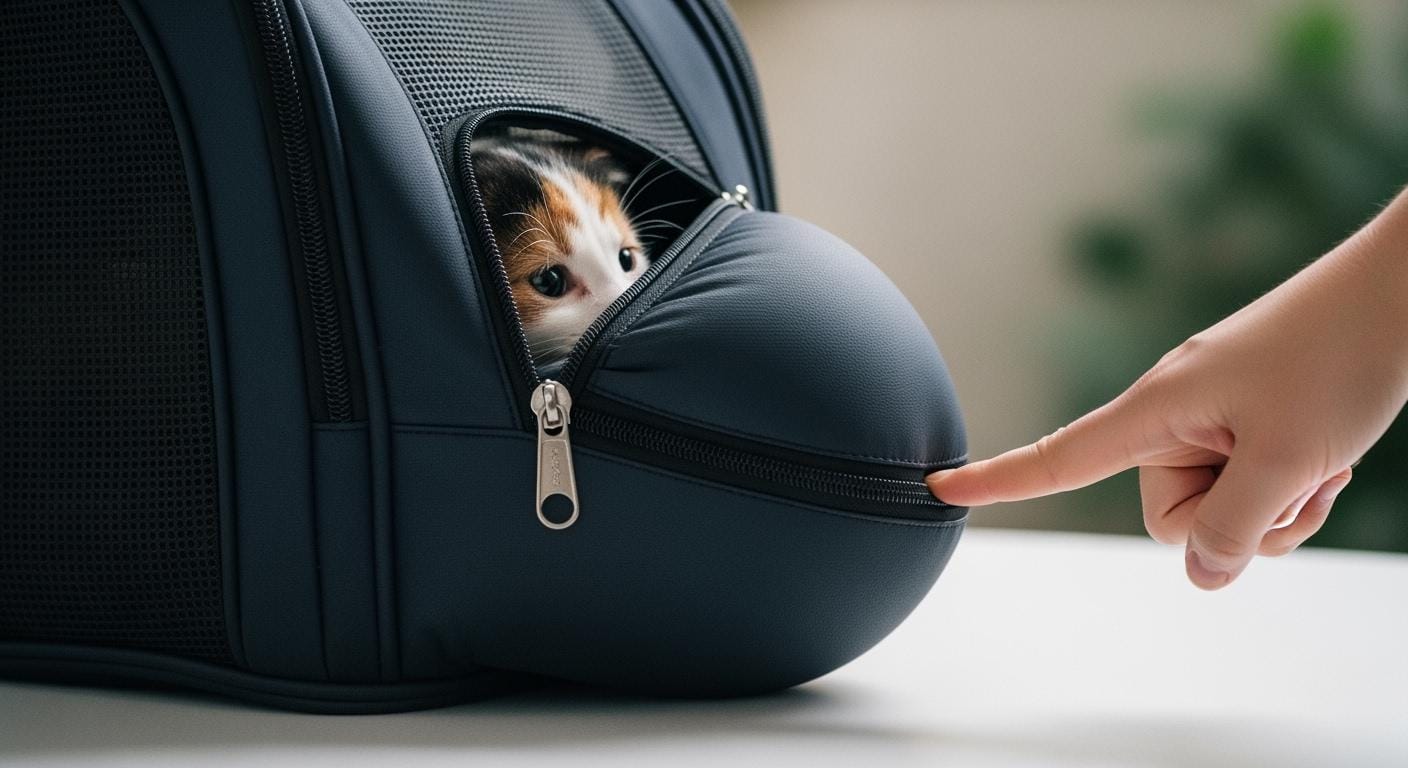
The reach-angle problem tightens further when the carrier is positioned under an airplane seat. The side opening may face a seat support strut or the passenger’s bag in the adjacent footwell. You cannot open the door fully. Your hand enters at a shallow angle, and your leverage drops. If the pet has shifted to the back of the carrier during the flight, you are now fishing blind with two fingers through a half-open zipper gap.
What separates a carrier that handles these transitions cleanly from one that does not often comes down to this single variable: how many access angles the design provides. One entry means one solution for every situation. When that solution does not fit the geometry of the moment, you improvise — and improvisation at a TSA checkpoint while a line forms behind you is not a plan.
| Design Difference | Why It Matters | Main Limitation |
|---|---|---|
| Single entry point | Simpler construction, fewer zipper tracks to maintain | One access angle; fails when pet blocks opening or space constrains door swing |
| Dual entry points (top + side) | Two independent access angles; redundancy under constraint | Slightly higher manufacturing cost; second zipper track adds a potential failure point if not maintained |
How Dual-Entry Geometry Changes What You Can Do in Tight Spaces

Two entry points are not a convenience feature. They are a geometry solution. Each opening addresses a different loading problem, and having both means choosing the right approach for the situation instead of forcing one approach to handle every scenario.
Top Entry for Vertical Placement
A top-opening carrier lets you lower the pet straight down into the carrier body. The motion is gravity-assisted — the animal descends into a stable base rather than being pushed horizontally through a side panel. This matters most with pets that resist forward movement into confined spaces. Lowering from above bypasses the visual trigger of a dark opening, which some animals find aversive.
The causal chain runs like this: a resisting pet braces its legs against forward pressure. With a side door, the handler pushes horizontally, and the pet pushes back — equal and opposite forces, zero progress. With a top entry, the handler lowers the pet vertically. Gravity provides the downward force. The pet’s legs find the carrier floor and settle onto it. No horizontal opposition. No struggle. The handler’s arms do positioning work, not persuasion work.
Top entry also lets you place the pet in the correct orientation on the first attempt — head toward the mesh panel, body centered on the pad — eliminating the need to reach in and rotate a disoriented animal. An airline-approved carrier’s under-seat fit and sizing only help if the pet is settled correctly inside. A crooked animal in a perfectly sized carrier is still uncomfortable.
Side Entry for Autonomous Walk-In
A side door supports the opposite strategy: letting the pet enter under its own volition. For animals that prefer self-directed movement, the side entry preserves that agency. The pet walks forward into a familiar orientation. This works particularly well during boarding when you want the pet settled without lifting. Open the side. The pet steps in. Zip it closed. One motion. No struggle.
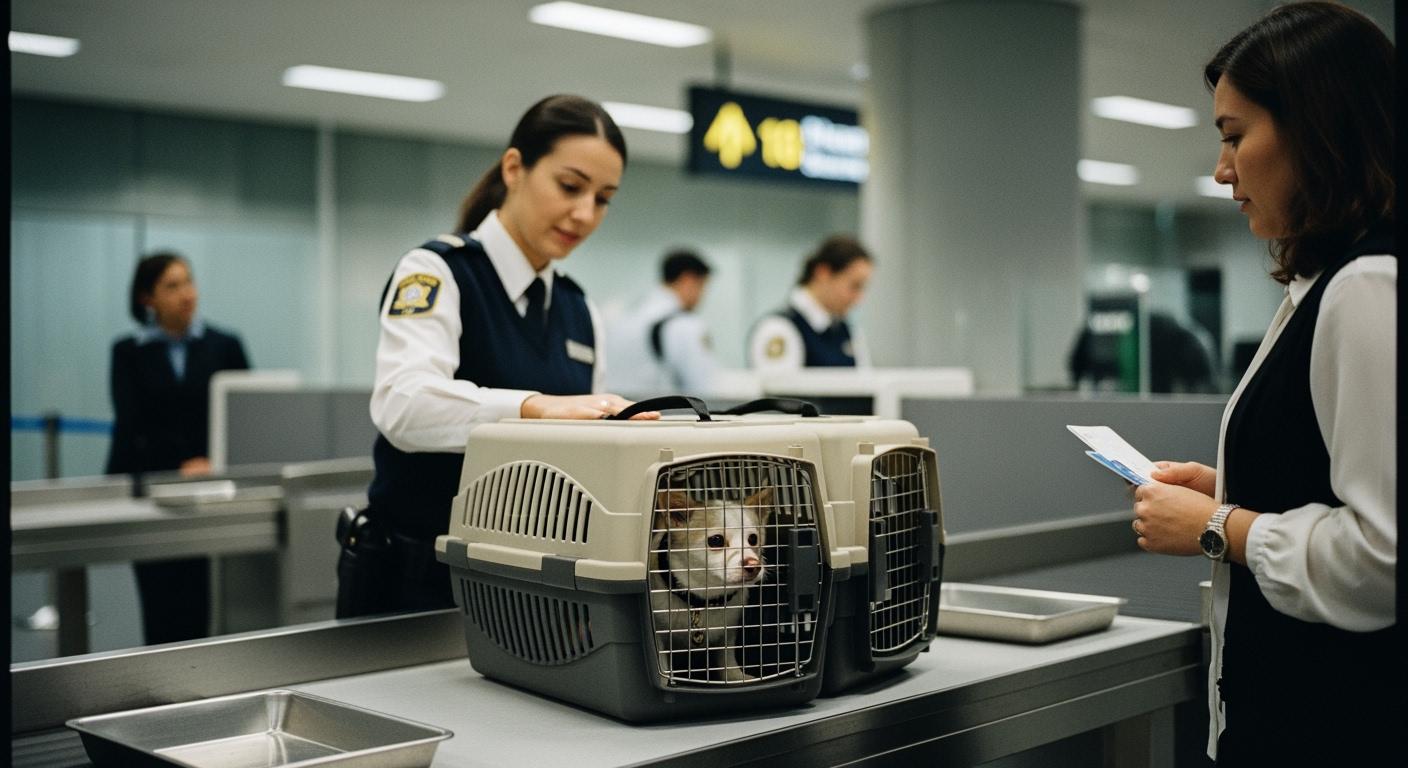
The side entry carries a measurable advantage at security checkpoints. You can open the side door, let the pet walk out onto the exam table, and reload through the same door — or switch to top loading if the animal has grown nervous from the scanner noise. Time this. A handler who can remove and reload a cooperative pet through a side door in under 30 seconds faces a different experience than one who wrestles with a single-door carrier for 90 seconds while TSA agents and passengers wait.
Zipper Load Distribution
The zipper system benefits from the same redundancy. Every open-close cycle wears on zipper teeth and slider mechanisms. A single-entry carrier concentrates all cycles on one track. After 20 to 30 airport trips, that single zipper may start catching at the curve or separating under tension. A dual-entry airline-approved pet carrier distributes those cycles across two independent zipper tracks. Neither track sees the full load, so both degrade more slowly.
| Design Difference | Why It Matters | Main Limitation |
|---|---|---|
| Single zipper track | Lower manufacturing complexity | All wear concentrated on one track; failure locks you out of the carrier entirely |
| Dual zipper tracks | Wear distributed; one functional track remains if the other jams | Two tracks to inspect and maintain; a misaligned second track can snag if not checked before travel |
An observable check: after a trip, unzip each entry fully and re-zip at normal speed. If one track catches, requires noticeably more force, or produces a different sound than the other, the wear is concentrating on that track. The carrier is telling you which entry has been doing most of the work. Alternate entries on the next trip to rebalance.
Where the Design Holds Up — and Where It Does Not
Two entry points add measurable value when three conditions overlap: the carrier must be stowed in a confined space, the pet must be loaded or unloaded under time pressure, and the handler may not have both hands free. Airport travel checks all three.
The advantage narrows for car-only travel where the carrier sits on a seat with open access on all sides. In that scenario, a single side entry is rarely blocked, and the time-pressure variable is absent. The extra zipper track adds marginal benefit but also adds a potential failure point — a second zipper that could fail if debris or pet hair accumulates in the track.
Carriers with expandable side panels introduce a separate concern. An expandable side may create frame flex that, when the panel is deployed, shifts the seam alignment on the adjacent entry point. If the top entry’s zipper track runs across a seam that moves when the side panel expands, the zipper may bind. This is a manufacturing tolerance issue: the alignment between panel seams and zipper tracks must hold across both the carrier’s collapsed and deployed states. A pet carrier bag designed for the full airport checklist accounts for these transitions; a carrier designed only for static home use may not.
Material choice interacts with entry-point design in ways that show up after repeated use. Mesh panels on top entries see less abrasion than side-entry mesh, which drags against seat fabric and luggage during transit. In production, the cutting table may use the same mesh roll for both panels to reduce SKU complexity. That trades long-term side-panel durability for manufacturing simplicity — the side mesh frays sooner than the top mesh because it is subjected to higher shear forces but built from the same material gauge.
A practical verification: after three to four trips, run your hand along the mesh on the side entry and compare it to the top entry mesh. If the side mesh feels rougher or shows visible pilling while the top mesh is still smooth, the material is taking more abrasion than it was spec’d for. The carrier still functions, but the wear gradient tells you which panel will fail first — and when to start checking your travel carrier against a pre-flight checklist that includes zipper and mesh inspection.
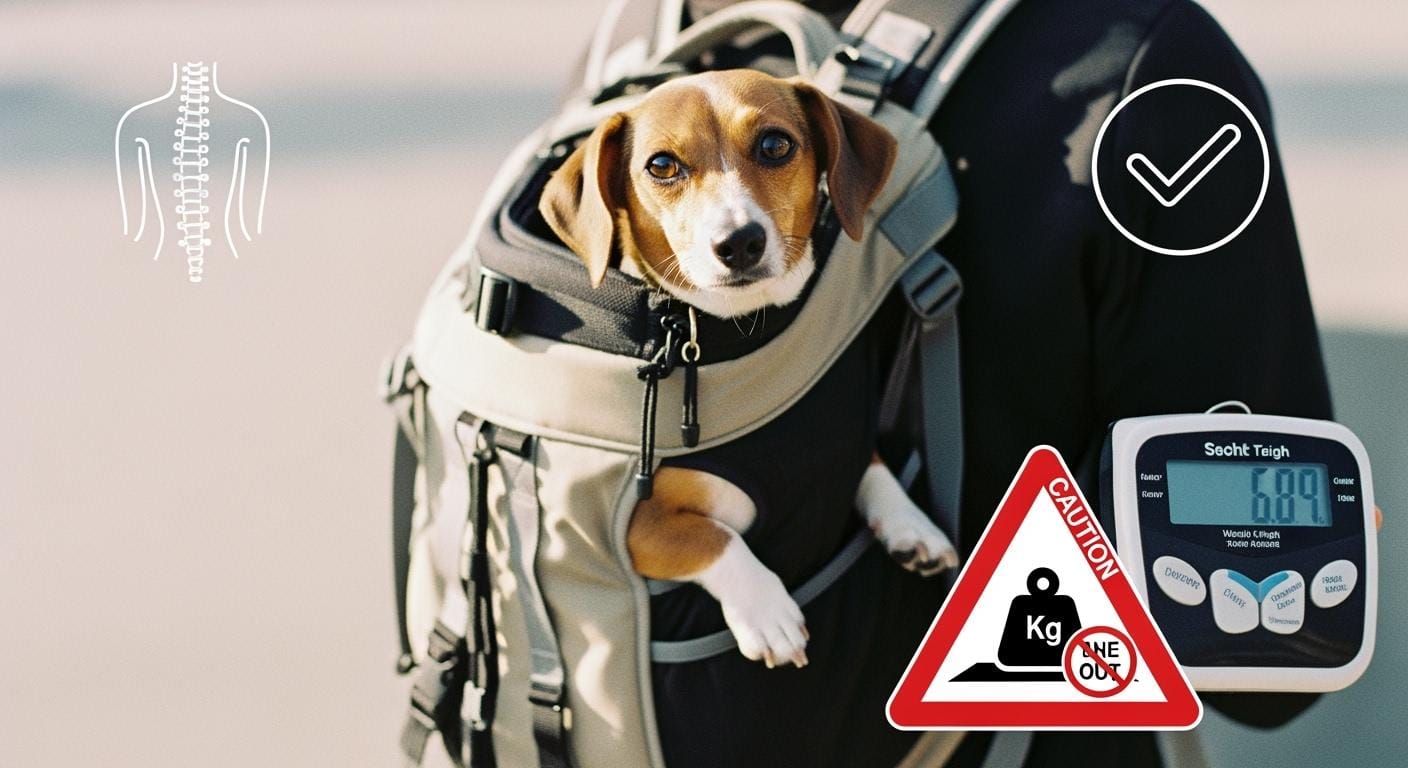
Disclaimer: The access-angle advantages described here assume a pet that is physically capable of being lifted or that will walk into a carrier voluntarily. A pet with mobility issues, extreme travel anxiety, or a body shape that makes vertical lifting unsafe — particularly brachycephalic breeds or dogs with spinal conditions — may not benefit from top entry and may require a carrier designed specifically for horizontal loading only. The zipper-wear observations also assume nylon coil zippers on soft-sided carriers; metal-tooth zippers on hard-sided carriers follow a different wear pattern and are not covered by the checks above.
Frequently Asked Questions
How do two entry points change what happens at a TSA checkpoint?
They give you a fallback. If the pet hesitates at the side door, you open the top and lift them out. The TSA agent does not wait while you coax. The screening line moves. The difference is not theoretical — it is the gap between a 30-second removal and a 90-second struggle, repeated on every leg of every trip.
Does a dual-entry carrier still work under an airplane seat?
Yes, and that is where the top entry proves its value most directly. Under-seat clearance is tight. If the side door faces a seat strut or a bag in the adjacent footwell, you cannot swing it open fully. The top entry remains accessible regardless. Soft-sided carriers flex to fit the space; the top zipper track sits above the obstruction.
What design features matter beyond entry points?
Mesh panel placement and gauge affect ventilation and durability differently on each panel. A stable base with a non-slip bottom keeps the carrier from rotating when the pet shifts weight inside — a stable carrier is easier to load through any entry. Zipper pulls should be large enough to grip with one hand while the other holds the carrier steady.
Are two entry points worth it if I only take one flight a year?
The geometry advantage still applies, but the value calculation shifts. For infrequent travel, a well-built single-entry carrier with a wide door opening may be adequate — provided the pet loads willingly from that one angle. The zipper-wear argument matters less at low cycle counts. The real question is whether your pet loads and unloads smoothly from one entry under pressure. If it does not, dual entry solves that problem regardless of trip frequency.