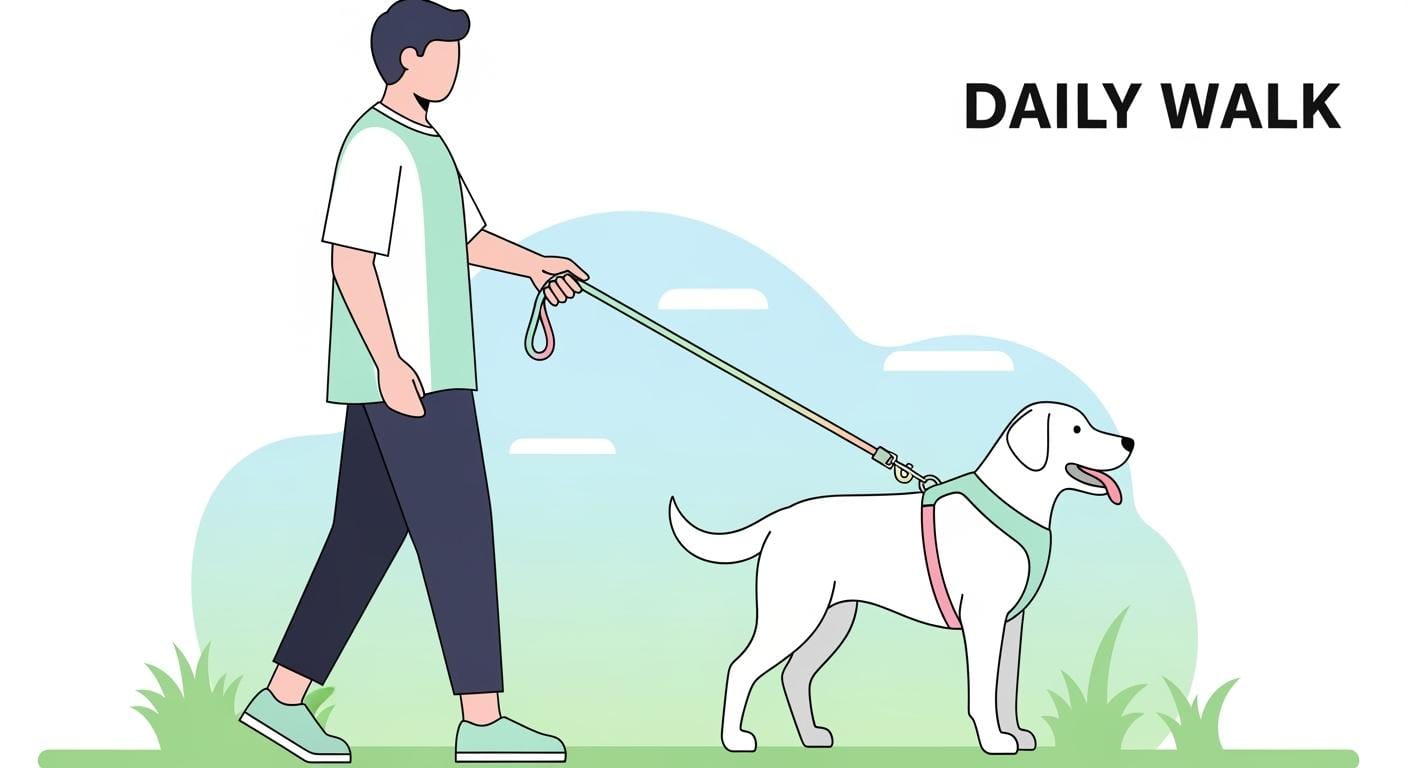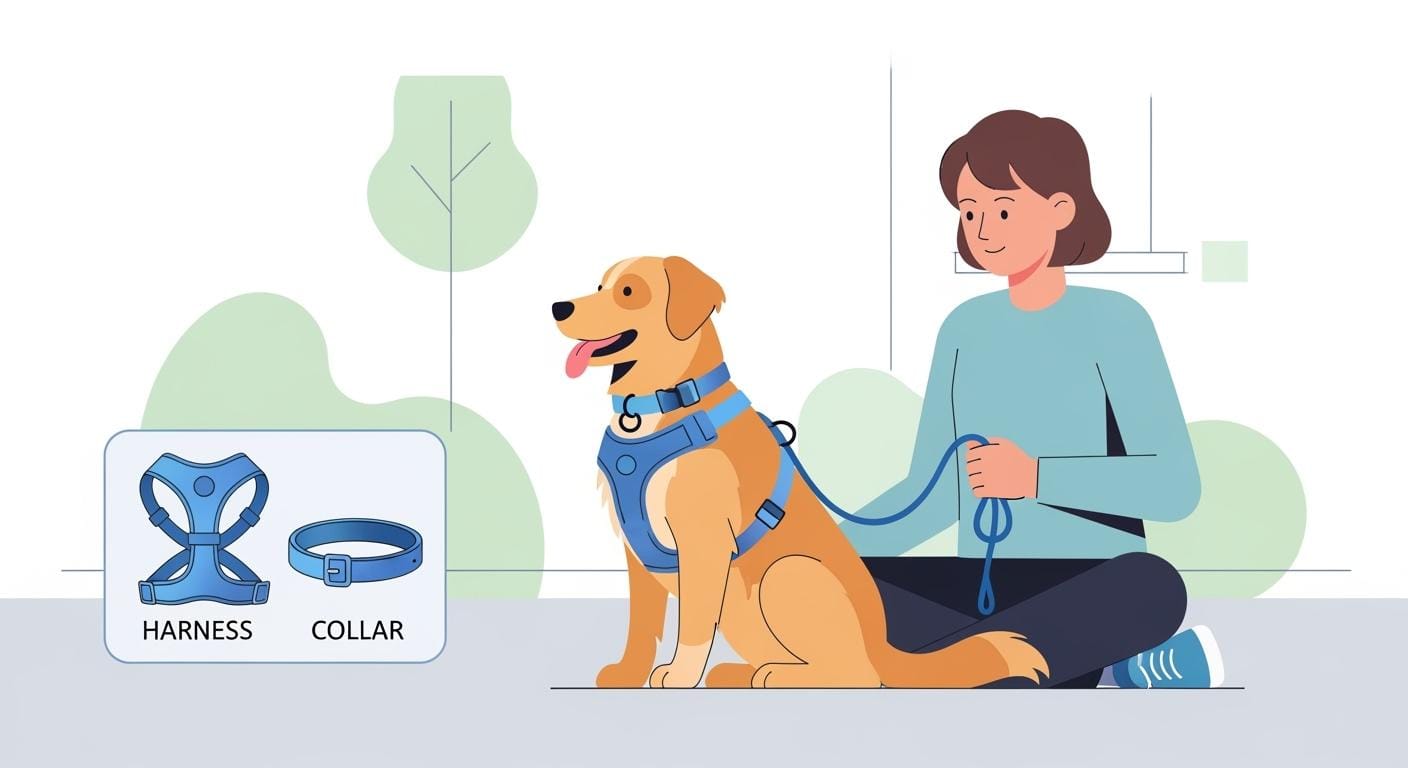
For most everyday walks, a dog leash with a fixed length is the easier starting point because it gives you steadier control in normal routes, busier sidewalks, and training moments that happen fast. A retractable leash can still be useful, but it works best as a lower-risk tool for calmer dogs in more open spaces where you can see problems before they happen. The real decision is not “which leash sounds better.” It is whether the leash helps you shorten distance quickly, guide your dog through distractions, and keep the walk predictable once the route gets tighter or busier.
Key Takeaways
A fixed-length leash gives you more consistent control and is usually the better daily-walk default for training, sidewalks, and crowded areas. Retractable leashes offer more roaming distance, but they ask for a more controlled environment and a dog that already handles leash freedom well. Always inspect the leash, clip, and handle before each walk so you do not find damage only after you need quick control.
Fixed-Length Leash vs Retractable Leashes: Everyday Use
Key Features of a Dog Leash
When picking a dog leash for daily walks, you want it to help you control your dog. A fixed-length leash usually does that more clearly because the walking distance stays consistent. You do not need to guess how much line is out, and your dog does not keep moving between “close to me” and “far out in front” every few seconds. That consistency matters on ordinary routes, especially when you need quick shortening at curbs, parked cars, doorways, or other dogs.
Retractable leashes change the dog’s working distance throughout the walk. That can feel convenient in very open places, but it also means your dog can reach farther before you can reorganize the situation. Adjustable leashes sit in the middle. They let you change length intentionally, but they still keep the leash feel more predictable than a retractable line.
Tip: If you are training a puppy, rebuilding leash manners, or teaching recall foundations, a fixed-length leash gives you cleaner timing and a more predictable distance to work with.
Safety and Control Differences
Safety is where the everyday difference really shows up. A fixed-length leash makes it easier to guide your dog around traffic, people, bikes, and sudden distractions because the distance stays manageable. When something changes quickly, you can shorten, stop, or redirect without first dealing with excess line.
Retractable leashes can work in calmer open spaces, but they give your dog more room to build speed, wrap around objects, or reach trouble before you are back within handling range. The line itself can also create problems when it crosses a path, catches a leg, or tightens suddenly.
That is why many owners end up using fixed leashes for routine daily walks even if they keep a retractable as a second tool for specific settings.
Comparison Table: Fixed, Retractable, Adjustable Leash
Here is a practical comparison for everyday use:
| Feature/Aspect | Fixed Leash | Retractable Leash | Adjustable Leash |
|---|---|---|---|
| Control | High and consistent | Variable and slower to recover in fast situations | Moderate to high, depending on how it is set |
| Best Use Case | Daily walks, training, busier routes | Open, lower-risk spaces with calmer dogs | Mixed routes where you want some controlled flexibility |
| Safety Considerations | Fewer moving parts and less excess line | More tangling, line burn, and distance-management risk | Safer than retractable if adjusted intentionally |
| Training Use | Strong everyday baseline | Not ideal for routine leash training | Useful when you want controlled variation |
Who Should Avoid Each Leash Type
Puppies, dogs still learning loose-leash walking, strong pullers, and dogs that lunge at people or other animals usually do better on a fixed-length leash. You want a stable setup when the dog is still learning what the walk should feel like.
Retractable leashes are a poor fit for crowded sidewalks, traffic-heavy routes, reactive dogs, or handlers who already feel like the walk gets messy quickly. They make more sense only when the dog is calmer, the space is more open, and you still have a clear way to shorten distance before it becomes urgent.
Note: Fixed-length leashes are usually the safer default for daily walks, puppies, and most training situations.
Real-World Handling: Shortening, Tangles, and Route Control
Quick Adjustments with a Leash
Everyday walks are full of small moments where leash handling matters more than leash marketing. You may need to shorten quickly when a cyclist comes up behind you, when you pass outdoor tables, when another dog appears at a narrow corner, or when your dog suddenly locks onto a smell near the curb. A fixed leash usually handles those moments better because the working distance is already known.
A traffic handle helps even more because you can bring the dog in close without wrapping extra line awkwardly around your hand. That matters in café zones, parking lots, and busy crossing points where you want a cleaner, closer hold for a short stretch.
Pass/Fail Checklist Table: Everyday Use
| Check Item | Pass Signal | Fail Signal | Fix |
|---|---|---|---|
| Quick leash shortening | Dog comes in close without confusion | Dog keeps drifting out or you lose grip rhythm | Use a simpler fixed length or a traffic handle |
| Tangle prevention | Leash stays clear of legs, poles, and other people | Leash wraps, knots, or crosses traffic lines | Shorten earlier and reduce excess slack |
| Route control | Dog follows turns and slow-downs predictably | Dog ignores directional changes or outruns them | Use clearer leash signals and a more controlled leash type |
Troubleshooting Table: Common Leash Problems
| Symptom | Likely Cause | Fast Check | Fix |
|---|---|---|---|
| Constant pulling | The dog expects forward tension and more distance | Watch whether the line stays tight most of the walk | Return to a fixed leash and rebuild walking rhythm |
| Lunging at distractions | Overexcitement, fear, or too much working distance | Notice whether lunges start farther out than you can manage | Increase distance sooner and shorten the leash earlier |
| Tangles or knots | Too much slack or poorly timed shortening | Inspect what happens near benches, poles, and corners | Use less line in busy spaces |
Common Mistakes and Consequences
- Choosing leash style by convenience alone instead of by route and dog behavior.
- Using a retractable leash while still training leash manners.
- Letting too much line out before you know the next stretch is safe.
- Using hardware that feels too light for the dog or too bulky for the handler.
- Skipping quick hardware checks before each walk.
Note: Harnesses should improve control and comfort, not become an excuse to ignore leash handling quality.
Leash Safety: Failure Signs and Hazards
Warning Signs with Retractable Leashes
You need to watch for warning signs when using a retractable leash. If the brake slips, the line frays, the handle feels unreliable, or your dog routinely reaches the end of the line at speed, the setup is already asking too much from the route. In crowded places, the leash can wrap around objects or people before you have time to shorten it properly.
Thin lines also become harder to see, especially in busier spaces or lower light. That can make a retractable leash riskier than it first appears, because the danger is not only what your dog is doing. It is also what other people do not see in time.
Tip: Always check your leash before each walk. Small hardware problems are much easier to fix before the route starts than after control is already slipping.
Injury Risks and Fast Response
Retractable leashes can increase injury risk for both the handler and the dog when the line tightens suddenly or wraps around skin. Rope burns, cuts, panicked pull-backs, and hard stops at full extension are the problems owners usually underestimate. If your dog gets startled and runs, the handle can also drop and chase behind them, which can make the panic worse.
Never wrap leash line around your hand or wrist. If a walk is getting messy, shorten distance sooner instead of trying to recover from a fully extended line after the dog is already moving hard.
Note: This advice does not replace medical care. If you or your dog are injured, seek appropriate professional help.
When to Replace Your Leash
You should replace your leash when you see signs that reliability is fading, such as:
- fraying, exposed inner material, or thinning sections
- a clip that sticks, twists oddly, or no longer closes cleanly
- a retractable brake that hesitates or fails to hold
- cracks in the handle or signs the leash has been overloaded
- repeat tangling, stretching, or wear that keeps getting worse
Replace the leash based on condition, not on a fixed calendar claim. A leash that still looks fine but feels less trustworthy in the hand is already a warning sign.
A dog leash with a fixed length works best for most daily walks because it keeps the distance more predictable and the handling cleaner. Retractable leashes can still have a place, but only when the dog is calm, the route is open, and the safety risk is genuinely low. The better everyday leash is not the one that gives the most distance. It is the one that lets you guide your dog clearly, shorten fast, and finish the walk without preventable confusion.
| Leash Type | Best For |
|---|---|
| Fixed Length | Daily walks, puppies, training, busier routes |
| Retractable | Calm dogs in open, lower-risk spaces |
- A dog leash around the familiar daily-walk range gives comfort and control.
- Retractable leashes offer more range, but they also ask for better conditions and better timing.
- Most owners end up preferring fixed-length leashes because the communication feels clearer once the walk gets real.
FAQ
What is the best way to hold a leash for control?
Grip the main handle firmly without wrapping the leash around your wrist. If your leash has a traffic handle, use it when you need a short, close hold near roads or crowded areas.
Can you use a retractable leash for training a puppy?
It is usually a poor choice for early leash training. A fixed-length leash gives clearer timing, steadier distance, and fewer chances for the puppy to learn that pulling creates more space.
How often should you check your leash for wear?
Check it before every walk. Look for fraying, clip wear, brake problems, cracks, or anything that makes the leash feel less reliable than it should.