
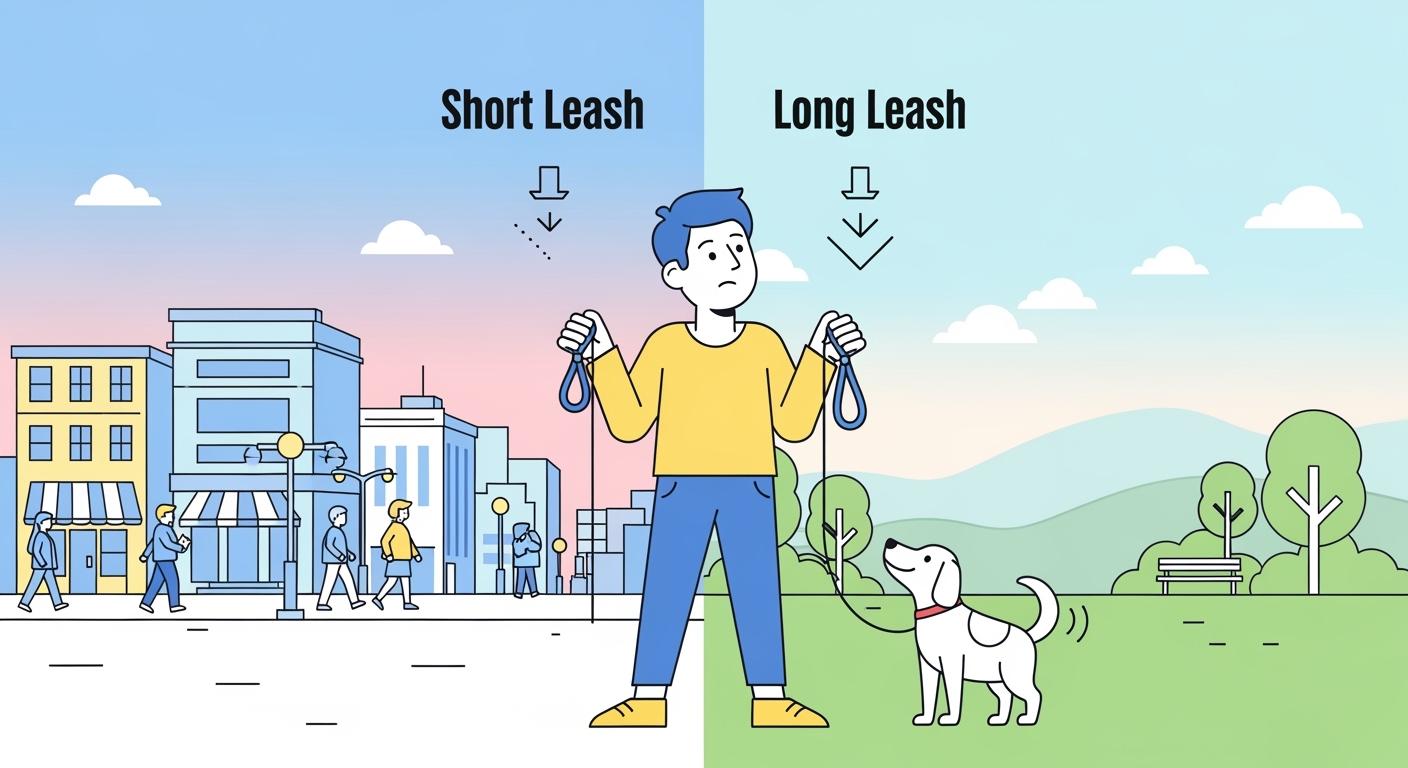
You want the best dogs leash length for your dog. Use a shorter dogs leash on crowded city streets and crowded sidewalks to keep your dog safe and close. Switch to a longer dogs leash only in open areas where your dog can explore without risk. Crowded means busy places with bikes, cars, or people. Open means fields or wide trails. Always match dogs leash length to your environment and your dog’s recall skills. If you feel unsure, check with a trainer or follow local rules. Take action: check your dog’s leash before your next walk.
Key Takeaways
Use a short leash in busy places. It keeps your dog close. It helps keep your dog safe from things that can distract them.
In open areas, use a longer leash. Your dog can explore more. You still have control over your dog.
Check if your dog listens well before using a long leash. Only let the leash get loose if your dog follows commands.
Change the leash length when you go to new places. This keeps you and your dog safe and comfortable.
Look at your leash often to see if it is worn out. Make sure your leash fits where you are walking for the best time.
Quick Answer: Match Leash Length to Environment
Choosing the right leash for your dog depends on where you walk and how much control you need. Use this quick guide to match leash length to your environment and keep every walk safe and enjoyable.
Control in Crowded City Streets
In crowded places, you need more control over your dog. Busy sidewalks, parking lots, and store entrances have many distractions and risks. A shorter leash keeps your dog close and prevents tangling with people, bikes, or other dogs.
Animal behaviorists recommend a sturdy, fixed-length leash for crowded areas.
Retractable leashes can cause tangling and loss of control in busy zones.
A leash length of 4-6 feet works best for daily walks in crowded environments.
Tip: Hold the leash with both hands if your dog pulls or zigzags. This gives you better control and helps prevent sudden lunges.
Action Call: Before your next walk, check your leash type and length. Make sure it matches your usual environment.
Freedom in Open Areas
Open spaces like wide trails or fields give your dog more room to explore. Here, you can use a longer leash to let your dog sniff and roam while you still keep control.
Veterinary guidelines suggest an 8-10 foot leash for open parks or fields.
Longer leashes allow more freedom but only use them if your dog responds well to recall.
Always scan the area for other dogs, wildlife, or hazards before giving more slack.
Safety Note: If your dog pulls hard or lunges, stick to a shorter leash even in open areas. This reduces the risk of accidents.
Action Call: Think about your dog’s recall skills and the space around you. Adjust the leash length before letting your dog explore.
When to Switch Leash Lengths
Switch leash length as you move between environments. Shorten the leash in crowded spots. Give more length in open areas if it is safe.
Environment | Goal | Recommended Length | Leash Handling Tips |
|---|---|---|---|
Crowded Streets | Maximum control | Short | Hold leash close, avoid slack |
Everyday Walks | Balance control | Medium | Keep manageable slack, stay alert |
Open Fields | More freedom | Long | Only if recall is strong, watch surroundings |
Dogs that pull, lunge, or zigzag need extra control. Use a shorter leash and consider professional training.
Avoid switching to a longer leash if your dog gets overexcited or ignores commands.
Quick Reminder: Always watch for signs of stress or discomfort in your dog. Stop and reassess if you see repeated lunging, coughing, or frantic behavior.
Action Call: Review your dog’s leash habits and main issues. Choose the right length for each environment to prevent common mistakes.
Business Note: For retailers or trainers, wholesale and OEM/ODM support is available for bulk leash orders. Contact us for details.
Action Call: Stay alert on every walk. Adjust your leash length as your environment changes for the safest experience.
Dogs Leash Decision Guide by Environment
Shorter Leash for Crowded City Streets
A shorter leash gives you the most control in busy places. You keep your dog close when you walk through sidewalks, parking lots, or store entrances. This reduces the risk of your dog getting tangled with people, bikes, or other dogs. Most experts recommend a sturdy leash with a fixed length for crowded areas. You should avoid slack in the leash, as loose lines can trip you or others.
Tips for crowded environments:
Hold the leash with both hands if your dog pulls or zigzags.
Keep your dog on your side, not out in front.
Watch for sudden stops or changes in direction from people or bikes.
If your dog is strong or reactive, choose a leash with a padded handle for comfort.
Action Call: Check your current leash before heading out. Make sure it is short enough for crowded city streets and gives you full control.
Medium Leash for Everyday Walks
A medium-length leash works well for most daily walks. This length gives your dog some freedom to sniff and explore, but you still keep control. You can use a medium leash in neighborhoods, parks, or on wider sidewalks. It is important to manage slack so your dog does not trip you or get tangled.
How to use a medium leash:
Let out just enough length for your dog to walk beside you.
Keep a gentle “U” shape in the leash, but do not let it drag.
If your dog starts to pull, shorten the leash and bring them closer.
Use treats or praise to reward calm walking.
Action Call: Think about your dog’s size and strength. Choose a medium leash if your dog walks calmly and you want a balance between control and freedom.
Longer Leash for Open Spaces
A longer leash lets your dog explore more in open areas. You can use this length in fields, wide trails, or parks with clear sight lines. Only use a longer leash if your dog listens well and comes back when called. Always scan the environment for other dogs, wildlife, or hazards before giving more length.
Safety tips for longer leashes:
Hold the handle firmly and watch for slack that could cause tripping.
Do not use a long leash in crowded or high-traffic areas.
If your dog starts to pull or ignore commands, shorten the leash right away.
Practice recall skills in safe, open spaces before using a longer leash.
Action Call: Test your dog’s recall before using a longer leash. Make sure you can call your dog back quickly if needed.
Stretch/Bungee Leash Handling
A stretch or bungee leash adds comfort by absorbing sudden pulls. This type of leash can feel longer when your dog pulls, so you need to pay extra attention in crowded spaces. Use the stretch feature as support, not as your main way to control your dog.
How to handle stretch/bungee leashes:
Use in open or medium spaces where you expect less sudden stopping.
Keep your hand close to the dog in busy areas to reduce the stretch effect.
Check the leash for wear and tear often, especially at the bungee section.
If your dog is a strong puller, combine the bungee leash with a harness for better control.
Action Call: Inspect your stretch or bungee leash before each walk. Replace it if you see fraying or damage.
Table: Quick Guide to Leash Length by Environment
Environment | Recommended Leash Length | Key Handling Tips |
|---|---|---|
Crowded City Streets | Shorter | Hold close, avoid slack, stay alert |
Everyday Walks | Medium | Manage slack, reward calm walking |
Open Spaces | Longer | Only if recall is strong, watch for risks |
Any (with bungee) | Stretch/Bungee feel | Use for comfort, not main control |
Business Note: If you are a retailer or trainer, you can ask about wholesale and OEM/ODM support for dogs leash orders.
Remember: Always match leash length to your environment and your dog’s behavior. Adjust as needed for safety and comfort.
How to Use and Match Leash Length Safely
Hand Position and Slack Control
Start every walk by checking your grip. Hold the leash handle firmly with your dominant hand. Place your other hand closer to your dog for extra control in crowded areas. Keep the leash short enough to prevent slack from forming a loop on the ground. This helps you avoid tripping and keeps your dog close. Trainers recommend a six-foot leash with a traffic handle for city walks. Adjust your grip as you move between environments.
Action Call: Before you leave home, check your leash for wear and test your grip.
Passing People and Dogs
Stay alert when you see others approaching. Shorten the leash and bring your dog to your side. Use a calm voice to keep your dog focused. Give enough space for others to pass safely. If your dog gets excited or nervous, stop and reassess. Look for signs like lunging, spinning, or pulling. These mean you need more control or a shorter leash length.
Reward your dog for calm behavior.
Practice passing drills during training sessions.
Preventing Tangles and Tripping
Watch your dog’s movements and adjust leash handling often. Improper leash length can cause tangling, especially if your dog moves too freely. Tangles can wrap around legs or objects and lead to tripping. If your dog jumps or spins, step back and untangle the leash right away. Always attach the leash to the correct point on your dog’s harness or collar.
Tip: If you notice repeated tangling, switch to a shorter leash or practice more training.
Car-to-Walk Transitions
When you move from the car to your walk, check the leash attachment. Make sure the leash is not tangled with the seatbelt or car seat. Hold your dog close as you exit the vehicle. Use a shorter leash for busy parking lots. Once you reach an open environment, adjust the leash length for more freedom if it is safe.
Inspect the leash webbing and hardware after each trip.
Wipe the leash clean and let it air-dry.
Action Call: Think about your dog’s size, strength, and main walking environment. Choose the right leash for each situation.
Business Note: Retailers and trainers can ask about wholesale and OEM/ODM support for dogs leash orders.
Common Mistakes in Crowded and Open Environments
Tripping and Entanglement Risks
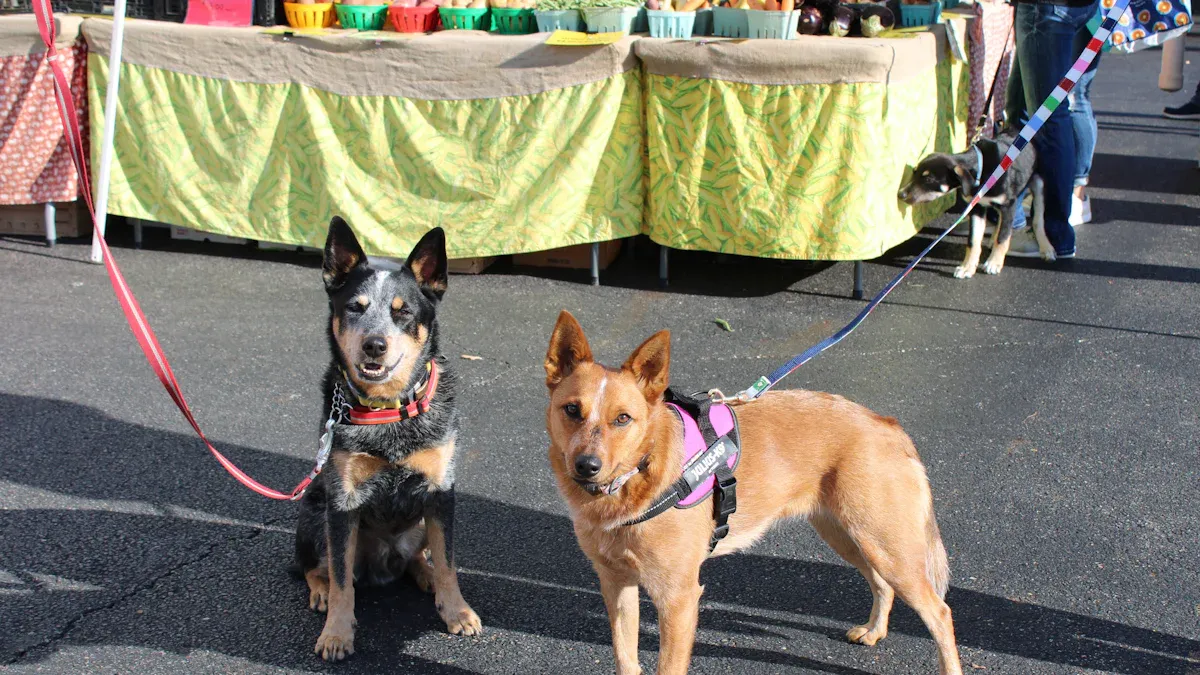
You can trip or get tangled if you do not manage your leash well. In crowded places, a loose leash can wrap around your legs, poles, or other people. In open areas, too much slack lets your dog run in circles, which can cause falls.
Quick Fixes:
Hold the leash close in crowded spots.
Watch your dog’s movements and adjust the leash length often.
Practice walking with your dog in quiet areas before busy walks.
Tip: Always check for slack before crossing streets or entering parking lots.
Reinforcing Pulling Behavior
Using the wrong leash length can teach your dog to pull, bark, or lunge. A long leash in a busy area gives your dog too much freedom. A short leash all the time can make your dog bark or jump from excitement. You want your dog to walk calmly, not drag you or react to every distraction.
Quick Fix:
Use a medium leash for everyday walks and adjust as needed.
Do-Not List for Crowded City Streets
Do not use a leash that is too long.
Do not keep the leash tight at all times.
Do not skip introducing a traffic leash slowly.
Do not let your dog walk far ahead in busy zones.
Do not ignore signs of stress or discomfort.
Action Call: Check your current leash before each walk. Make sure it fits crowded city streets.
Do-Not List for Open Areas
Do not use a short leash if your dog wants to explore safely.
Do not let your dog run without recall skills.
Do not forget to scan for other dogs, wildlife, or hazards.
Do not use a traffic leash for regular walks in open spaces.
Tip: Test your dog’s recall in a safe, open area before using a longer leash.
Action Call: Think about your dog’s size, strength, and main walking environment. Adjust your leash for safety and comfort.
For business readers: Wholesale and OEM/ODM support is available for bulk dogs leash orders.
Product Notes for Dogs Leash (StridePaw Example)
Reflective and Bungee Features
You want a leash that stands out in both safety and comfort. The StridePaw leash uses reflective stitching to help drivers and cyclists see you and your dog at night or in low light. The shock-absorbing bungee section softens sudden pulls, making walks easier on your arm and your dog’s neck. The thick anti-slip handle gives you a steady grip, even if your dog lunges or changes direction quickly.
Here is a quick look at the most recommended features for urban walking:
Feature | Description |
|---|---|
Waterproof materials | Keeps the leash dry and odor-free, even in rain. |
Durable construction | Handles rough play and daily use. |
Lightweight design | Feels comfortable for long walks. |
Easy-to-clean surface | Rinses off dirt and mud quickly. |
Traffic handles | Gives you extra control in busy areas. |
Adjustable length | Lets you change leash length for different environments. |
Tip: Use the reflective stitching and traffic handle for safer walks at night or in crowded places.
Car Seat Belt Clip Use
The StridePaw leash includes a car seat belt clip for travel safety. Always attach the seat belt clip to a harness, not a collar. This helps prevent neck injuries if you stop suddenly. Check the harness fit before every trip. Make sure your dog cannot slip out or get tangled. A secure fit keeps your dog safe and calm during car rides.
Attach the seat belt clip to a crash-tested harness.
Never connect the clip to your dog’s collar.
Check the harness fit before each drive.
Action Call: Before your next car trip, inspect your harness and seat belt clip for wear.
Best Practices for Harness Pairing
Pair your leash with a strong, well-fitted harness for the best control. Flat nylon or biothane harnesses work well for most dogs. Choose adjustable straps for a snug fit, especially if your dog pulls. For puppies or active dogs, water-resistant and easy-to-clean harnesses make care simple.
Use a 4- to 6-foot leash for everyday walks.
Pick a harness with sturdy webbing and a reliable locking system.
Inspect the harness and leash for frayed fibers or loose threads monthly.
Tip: Hand wash your dogs leash with mild soap and air dry. Avoid high heat to protect the webbing and hardware.
Business Note: Retailers and trainers can ask about wholesale and OEM/ODM support for bulk orders.
Matching leash length to your environment keeps both you and your dog safe and comfortable. Use a standard fixed-length dogs leash for crowded areas to maintain control. Switch to a longer leash in open spaces if your dog responds well to recall. Watch for signs like pulling or stress and adjust as needed.
Try these tips on your next walk. For trainers or retailers, wholesale and OEM/ODM support is available.
Leash Type | Best For |
|---|---|
Fixed-Length | Crowded environments |
Longer Leash | Open areas |
FAQ
How do you keep your dog safe with a leash in crowded areas?
Use a shorter leash to keep your dog close. Hold the handle firmly and avoid slack. Watch for bikes, strollers, and sudden stops. Stay alert and adjust your grip as needed.
Action Call: Check your leash before busy walks for safety.
Does a longer leash increase pulling force?
Yes, a longer leash can give your dog more room to pull. You may feel stronger tugs. Use a longer leash only if your dog walks calmly and listens to commands.
Tip: Practice recall in open spaces before using a long leash.
Are retractable or elastic leashes safe on sidewalks?
Retractable and elastic leashes can cause tangles or sudden pulls in crowded areas. You may lose control if your dog darts. Use a fixed-length leash for sidewalks and busy places.
Save retractable leashes for open, low-traffic spots.
How can you prevent tripping hazards with your leash?
Keep the leash short in busy areas. Watch for slack forming a loop on the ground. Step over the leash if needed.
Practice walking with your dog in quiet places to build good habits.
When should you consult a trainer about leash handling?
If your dog pulls hard, lunges, or ignores commands, talk to a professional trainer. Trainers can help you choose the right leash and teach safe walking skills.
Action Call: Notice repeated problems? Reach out to a trainer for advice.
For business readers: Ask about wholesale and OEM/ODM support for bulk leash orders.






