
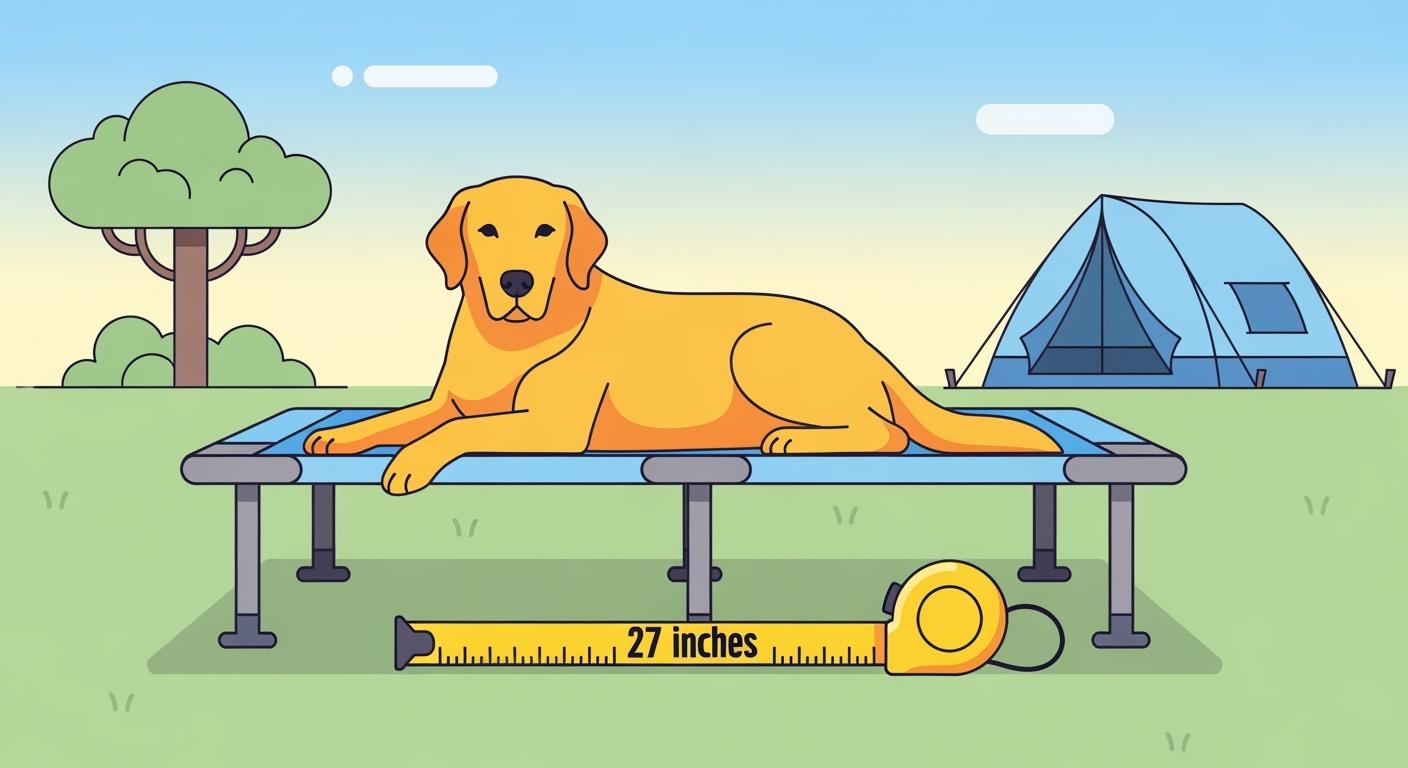
Outdoor sleep can be uncomfortable when the ground is hot, wet, or uneven. An elevated dog cot helps by improving airflow and keeping your dog off dirt and moisture. Most problems come from choosing the wrong size or setting the cot on an unstable surface. Use the measurement steps, buffer rule, and setup checks below to prevent cramped sleep, wobble, and early wear.
Key Takeaways
Choose an elevated dog cot to improve airflow and keep your dog off wet or dirty ground. A raised sleep surface can help reduce heat and moisture buildup outdoors.
Measure your dog in its sleeping position to find the right cot size. Add 4-8 inches to the measurements for extra comfort and space to stretch.
Check the cot’s stability before use. Ensure it sits on a level surface and that all joints are tight to prevent wobbling or sliding.
Keep the cot clean by shaking off dirt and wiping it down after each use. This helps maintain freshness and prevents odors.
Always monitor your dog for signs of discomfort. If your dog seems unhappy or overheated, consider switching to a different type of bed.
Why Choose an Elevated Dog Cot Outdoors
Cooling and Airflow Benefits
You want your dog to stay cool and comfortable outside. An elevated cot helps air move under and around your dog. This airflow keeps your dog cooler in warm weather. It also helps reduce odors that can build up in a regular bed. The mesh center on many cots lets heat and moisture escape, so your dog feels fresh and dry.
Here is a quick look at how an elevated cot improves cooling:
Cooling Advantage | Description |
|---|---|
Air Circulation | Lets air flow under and around your dog, moving body heat away. |
Ground Heat Avoidance | Keeps your dog off hot surfaces like concrete or asphalt. |
Moisture Wicking | Mesh fabric draws moisture away, helping your dog stay dry and cool. |
Protection from Ground Moisture and Dirt
An outdoor dog bed with elevation keeps your dog off wet, muddy, or dirty ground. The raised design, about 8 in (20 cm) high, acts as a barrier. Your dog avoids dampness and bugs that can bother them on the ground. The sturdy frame and mesh surface also give joint support, making rest more comfortable after play or walks.
When a Different Bed Type Works Better
Not every dog needs an elevated cot. Some dogs may feel cold or uneasy on a raised bed, especially in very cold weather or if they have special medical needs. Always watch your dog for signs of discomfort or overheating. If your dog seems unhappy or too warm, stop using the cot and try another type of outdoor dog bed. Your dog’s comfort and safety come first.
Dog Cot Sizing: Measure for Outdoor Comfort
Choosing the right size for your elevated dog cot helps your dog rest well outdoors. You want your dog to stretch, shift, and relax without feeling cramped or slipping off the edge. Start by measuring your dog in its favorite sleeping position. This step helps you match your dog’s needs to the usable sleep surface, not just the frame size.
Measure in Sleeping Position
Follow these steps to measure your dog for an outdoor dog bed:
Watch your dog as it settles into its usual sleeping position.
Use a soft tape measure. Measure from the tip of the nose to the base of the tail while your dog lies down.
Measure the widest part of your dog’s body. For dogs that curl up, measure across the hips or shoulders.
Write down both the length and width in inches and centimeters.
Add 4-8 inches (10-20 cm) to each measurement. This buffer gives your dog space to stretch and helps prevent slipping off the cot.
Tip: Always measure your dog when it is relaxed and resting. This method gives you the most accurate size for comfort.
Usable Sleep Surface vs. Frame Size
You should compare your dog’s measurements to the usable sleep surface, not just the outer frame. Some cots look large but have less space for your dog to lie on. The sleep surface is the area your dog will actually use. Check the product details for this measurement.
Here is a practical table to guide your sizing:
Parameter | Target range or option | Why it matters |
|---|---|---|
Sleep-position length | nose tip to tail base | Sets minimum cot length needs |
Sleep-position width cue | widest point while resting | Reduces edge slip for curlers |
Buffer rule | add 4-8 in (10-20 cm) | Adds room for shifting and stretching |
Usable sleep surface | compare surface, not only frame | Prevents “looks big, feels small” |
Elevation | about 8 in (20 cm) | Helps airflow and reduces damp contact |
Static load example | up to 150 lb (68 kg) | Example capacity cue for listings |
S size example | 32 x 24 x 8 in (81 x 61 x 20 cm) | Concrete example for listings |
M size example | 42 x 30 x 8 in (107 x 76 x 20 cm) | Concrete example for listings |
L size example | 49 x 32 x 8 in (124 x 81 x 20 cm) | Concrete example for listings |
Fabric example | 900D Oxford PU or 600D cationic PVC | Outdoor durability cue |
Mesh center | breathable polyester mesh | Ventilation cue |
Feet | rubber foot caps | Helps reduce sliding |
Care | wipe down, air dry | Helps reduce odor buildup |
Buffer Rule to Prevent Cramped Sleep
Add 4-8 in (10-20 cm) to both measured length and width so your dog can shift and stretch without sliding off the edge. If your dog is between sizes, choose the larger cot and compare against the usable sleep surface.
Add extra length and width for stretching and shifting.
Make sure your dog can lie on its side with shoulders fully supported.
Avoid any part of your dog’s body hanging off the edge.
Worked Scenario A: Backyard Napper
Imagine your dog loves to nap in the backyard. You measure your dog at 28 in (71 cm) long and 20 in (51 cm) wide in its favorite sleeping pose. You add a 6 in (15 cm) buffer to each side. You look for a cot with a usable sleep surface of at least 34 x 26 in (86 x 66 cm). You choose a medium size cot with a sleep surface that matches these needs. After setup, you notice your dog’s paws still hang off the edge. You size up to a large cot, and now your dog can stretch out fully.
Worked Scenario B: Camping Dog
You set up your elevated cot at a campsite. Your dog jumps on, but the cot wobbles and slides on the ground. You check the feet and see they are not gripping well. You move the cot to a level spot and press down on each corner. You adjust the rubber foot caps and make sure all frame joints are tight. The cot now feels stable, and your dog settles in comfortably.
Key Features of the Best Dog Cot for Camping
When you choose a camping dog bed, you want features that keep your dog safe, comfortable, and clean outdoors. The right design helps your dog rest well after a long day of hiking or playing. You also want a bed that is easy to carry and set up at your campsite.
Stable Frame and Joints
A stable frame gives your dog cot better support on uneven ground. Look for reinforced steel tubes and secure corner connectors to reduce wobble. Many steel-frame cots are listed for larger dogs (for example, up to 150 lb (68 kg)), but always verify the listing and check stability in your own environment.
Step-by-step setup for stability:
Place the cot on a flat, level spot.
Press down on each corner to check for wobble.
Tighten all frame joints by hand.
Make sure the feet grip the ground.
Test the cot by gently shifting it side to side.
Breathable Mesh and Durable Fabric
You want your camping dog bed to stay cool and dry. Choose a cot with a breathable mesh center. This feature lets air flow under your dog, which helps with ventilation and odor control. The StridePaw bed uses a polyester mesh center and 900D Oxford fabric with PU backing or 600D cationic fabric with PVC backing. These materials resist moisture and dry quickly after cleaning. Durable fabric also stands up to outdoor use and stress-chewing.
Non-Slip Feet for Outdoor Surfaces
Non-slip feet keep your camping dog bed steady on grass, dirt, or gravel. Rubber foot caps help prevent sliding and protect the frame from wear. You want your dog to feel secure when getting on or off the cot. This feature is important for safety, especially at night or in busy campsites.
Setting Up Your Elevated Dog Cot Outdoors
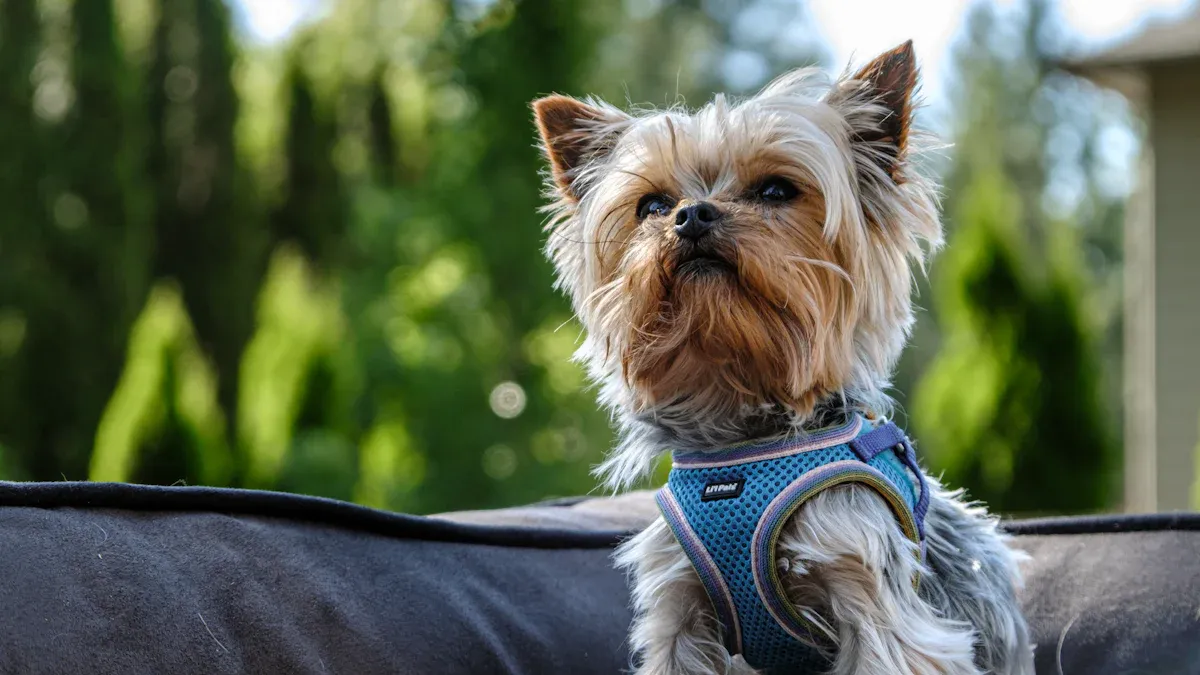
You want your dog to feel safe and relaxed on its outdoor bed. A good setup helps your dog sleep well and prevents problems like wobbling or sagging. Follow these steps to prepare your elevated cot for outdoor use.
Choosing a Level Spot
Step 1: Find a flat, stable area in your yard or campsite.
Grass, packed dirt, or a patio works well. Avoid slopes or uneven ground. A level spot keeps the cot steady and helps your dog feel secure.
Step 2: Place the cot so your dog has shade and shelter nearby.
Shade protects your dog from sun and heat. Shelter keeps your dog safe from wind or rain.
Checking for Wobble and Sag
Step 3: Press down on each corner of the cot.
Check if the frame moves or rocks. If you feel wobble, adjust the feet or move the cot to a flatter spot.
Step 4: Look at the sleep surface.
The fabric should feel tight and even. If you see sagging, check the frame joints. Tighten any loose parts by hand. Make sure the mesh center stays firm for good support.
Step 5: Test the cot by gently shifting it side to side.
The cot should not slide or tip. Rubber foot caps help grip the ground. If the cot slides, try a different spot or adjust the feet.
Safety and Comfort Checks
Before your dog uses the cot outdoors, check these points:
Make sure your dog has access to shade and shelter.
Watch your dog for signs of distress or discomfort.
Stop using the cot if your dog chews through the fabric or seems upset.
Bring your dog inside during bad weather.
Setup and Safety Checklist
Function | Checkpoint | Pass/Fail |
|---|---|---|
Level placement | Cot sits flat and does not rock | |
Frame stability | All joints tight, no wobble | |
Surface tension | Fabric and mesh feel firm, no sag | |
Non-slip feet | Feet grip ground, cot does not slide | |
Shade and shelter | Cot placed near shade or cover | |
Dog comfort | Dog settles calmly, no distress |
Common Setup Issues and Solutions
Issue | Possible Cause | Solution |
|---|---|---|
Cot wobbles | Uneven ground | Move to a level spot |
Surface sags | Loose frame joints | Tighten all connectors by hand |
Cot slides | Missing or loose foot caps | Adjust or replace rubber foot caps |
Dog avoids cot | Unstable or noisy setup | Recheck stability, move to quieter area |
Dog chews fabric | Anxiety or boredom | Supervise use, offer chew-safe toys |
Outdoor Cleaning and Maintenance for Dog Cots
Quick Cleaning After Use
You want your dog’s outdoor bed to stay fresh and last longer. Cleaning your elevated cot after each use helps prevent dirt and odor buildup. Start by shaking off loose dirt and grass. Use a damp cloth to wipe down the fabric and mesh center. For tougher spots, use mild soap and water. Avoid harsh chemicals that can damage the fabric. Always check the corners and joints for mud or debris. Clean these areas with a soft brush if needed.
Step-by-step cleaning routine:
Shake off loose dirt and grass.
Wipe the sleep surface with a damp cloth.
Spot clean with mild soap and water.
Brush corners and joints gently.
Rinse with clean water if needed.
Tip: Quick cleaning after each outdoor use keeps your cot ready for your dog’s next nap or adventure.
Drying and Odor Control
Proper drying helps prevent odors and keeps the cot comfortable. After cleaning, place the cot in a well-ventilated area. Let the fabric and mesh air dry completely. Avoid leaving the cot in direct sunlight for long periods, as this can weaken the fabric over time. If you notice any lingering smells, sprinkle a small amount of baking soda on the sleep surface, then brush it off after a few hours.
Drying Method | Benefit |
|---|---|
Air dry in shade | Protects fabric, reduces odor |
Baking soda sprinkle | Neutralizes smells |
Mesh center airflow | Speeds up drying |
Best Placement for Shade and Airflow
Where you place your cot outdoors affects comfort and maintenance. Choose a spot with shade to protect your dog from heat and sun. Good airflow helps the cot dry faster and keeps odors away. Avoid placing the cot directly on wet ground. Use a level area with grass, packed dirt, or patio. Make sure the cot sits about 8 in (20 cm) above the ground for better ventilation.
Choosing the Best Dog Bed for Camping and Home
For Backyard Naps and Calm Sleepers
If your dog enjoys quiet naps in the backyard, you want a bed that offers comfort and support. An elevated camping dog bed works well for most calm sleepers. It keeps your dog off the ground and provides airflow. You can use the same steps for measurement and setup as before.
Worked Scenario: Calm Backyard Dog
You measure your dog while it sleeps. The length is 24 in (61 cm) and the width is 18 in (46 cm). You add a buffer of 4 in (10 cm) to each side. You look for a cot with a usable sleep surface of at least 28 x 22 in (71 x 56 cm). You choose a small or medium cot based on these numbers. Your dog settles in and stretches out comfortably.
Tip: For calm dogs, check the cot for stability and comfort before each use. Watch for signs of distress or discomfort.
For Camping and Active Dogs
Active dogs benefit from a cot with a strong frame, breathable mesh, and non-slip feet. Choose a design that is easy to wipe down and quick to dry after outdoor use.
Worked Scenario: Restless Camping Dog
Your dog moves a lot at night. You set up a camping dog bed with a stable frame and mesh center. You check the feet for grip and the fabric for tension. Your dog jumps on and shifts around. The bed stays steady and supports your dog’s movements. You wipe it down after use and let it air dry.
For Multi-Dog Households
If you have more than one dog, you may need a large camping dog bed or several beds. Measure each dog in its usual sleeping position. Add the buffer to each measurement. Choose a cot that fits the largest dog or allows two dogs to share. Place the beds in shaded spots with good airflow.
Comparison Table: Cot vs. Foam Bed vs. Ground Mat
Feature | Elevated Cot | Foam Bed | Ground Mat |
|---|---|---|---|
Airflow | Excellent | Fair | Poor |
Moisture Protection | Very Good | Low | None |
Portability | Good | Fair | Excellent |
Outdoor Durability | High | Medium | Low |
Cleaning Ease | Easy | Moderate | Easy |
Notes for Retailers and Brands
Sizing Chart Fields to Reduce Returns
You can help buyers choose the right cot by adding clear sizing charts. Use these fields in your chart:
Usable sleep surface (length x width, in inches and centimeters)
Recommended pet body length (inches and centimeters)
Recommended pet weight (pounds and kilograms)
Buffer rule (add 4-8 in / 10-20 cm for comfort)
Example sizes (S: 32 x 24 x 8 in / 81 x 61 x 20 cm, M: 42 x 30 x 8 in / 107 x 76 x 20 cm, L: 49 x 32 x 8 in / 124 x 81 x 20 cm)
Tip: Show how to measure a dog in its sleeping position. This step helps buyers match their pet to the right cot.
Listing Copy Dos and Don’ts
You want your product listing to be clear and honest. Here are some dos and don’ts:
Do | Don’t |
|---|---|
Use both US and metric units | Promise a perfect fit |
Describe usable sleep area | Use only frame size |
List tested static load | Guarantee suitability |
Explain buffer rule | Omit measurement tips |
Mention mesh and fabric | Hide care instructions |
Note: OEM means original equipment manufacturer. ODM means original design manufacturer. Use these terms if you offer custom or branded products.
Supplier Specs: Frame, Fabric, Feet, Care
You should include these specs in your product details:
Frame: Reinforced steel tube, corner connectors, T-shape joints
Fabric: 900D Oxford with PU or 600D cationic with PVC
Mesh: Breathable polyester center
Feet: Rubber foot caps for grip
Care: Wipe down and air dry after outdoor use
Disclaimer: Elevated cots suit many dogs, but not all. Always check comfort and stop use if your dog shows distress or overheating.
Choosing the right elevated dog cot helps your dog stay comfortable and safe outdoors. You should measure your dog in its sleeping position, check cot stability, and keep the bed clean. Elevated beds keep pets off the ground, which is important for comfort and support, especially in hot weather. Use the tables and guides to make smart decisions. Retailers can help by offering clear sizing charts and honest product details.
FAQ
How do I measure my dog for a cot?
Step 1: Let your dog lie in its usual sleeping position.
Step 2: Measure from nose tip to tail base (length).
Step 3: Measure the widest part of the body.
Step 4: Add 4-8 in (10-20 cm) to both numbers for comfort.
What size cot should I choose if my dog is between sizes?
You should size up. A larger cot gives your dog more room to stretch and shift. Compare your measurements to the usable sleep surface, not just the frame. This helps prevent cramped sleep and edge slipping.
How do I check if the cot is stable outdoors?
Press down on each corner. The cot should not rock or slide. Tighten all frame joints by hand. Make sure the rubber foot caps grip the ground. Test by gently shifting the cot side to side.
How do I keep the cot clean after outdoor use?
Shake off dirt and grass. Wipe the surface with a damp cloth. Spot clean with mild soap and water. Let the cot air dry in the shade. This routine helps reduce odor and keeps the bed fresh.
Is an elevated cot right for every dog?
No. Some dogs may not like elevated cots. Always watch for signs of discomfort or overheating. Stop use if your dog seems unhappy. Comfort and safety come first.






