
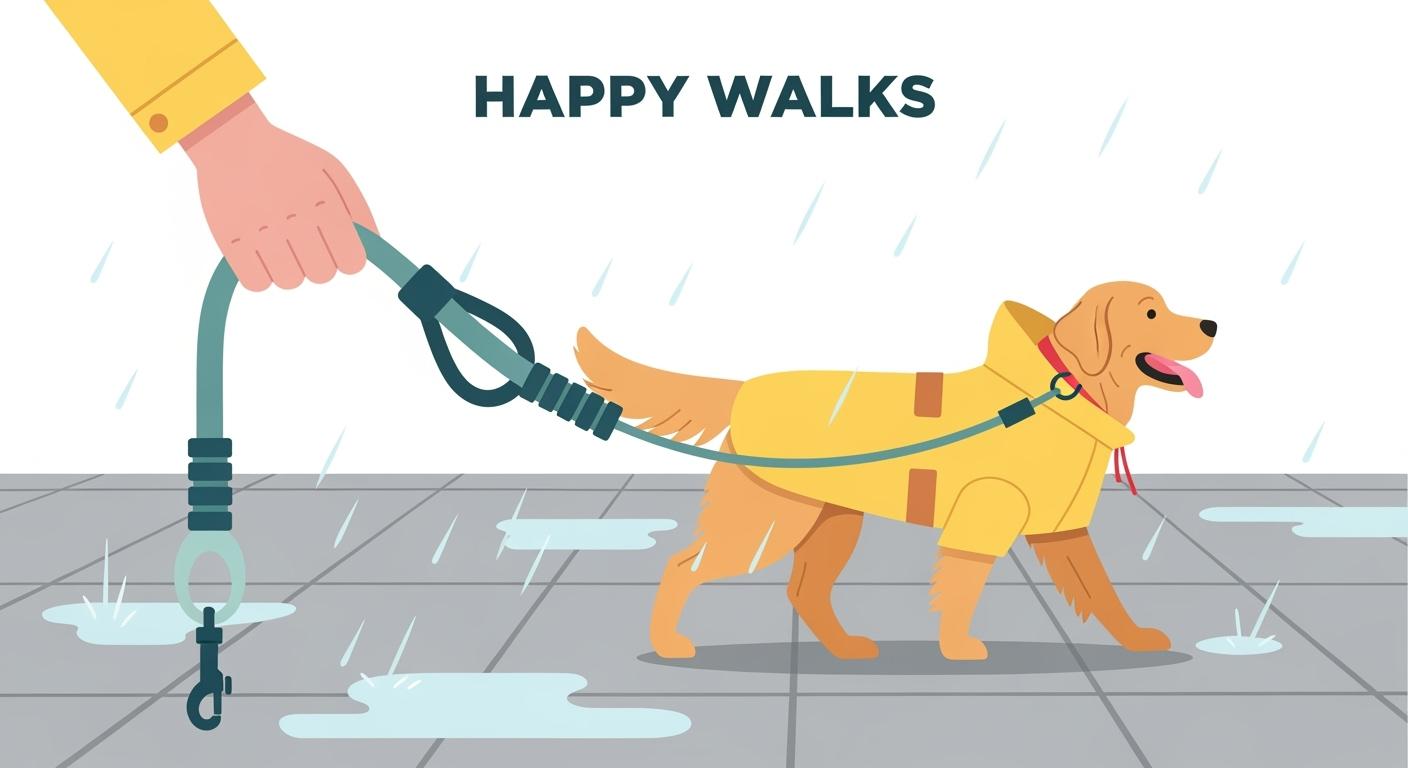
You want dog leashes that work in the rain, keep your hands safe, and resist chewing. Choose biothane for a strong grip and easy cleaning. Pick a chain for a chew proof dog leash. Try padded nylon or leather for comfort and a comfortable grip. Select the leash material and handle based on your dog’s size and habits. Check your leash often to keep it durable and support safety.
Key Takeaways
Choose leashes made of biothane or polyester for a strong grip and quick drying on rainy days.
Select chain leashes for dogs that chew to ensure durability and safety during walks.
Opt for padded handles to enhance comfort and control, especially if your dog pulls.
Inspect your leash daily for wear and tear, focusing on the dog-end and clip-end to maintain safety.
Clean and dry your leash after each walk to extend its life and prevent odors.
Key Takeaways for Dog Leashes
Wet grip and slip risk
Step 1: Choose dog leashes with unmatched grip comfort for rainy walks. Biothane and polyester webbing offer strong grip and quick cleaning. Nylon can feel slippery when wet because it absorbs about 4% moisture, while polyester absorbs only about 0.4%. Look for a leash with a textured or padded handle to help you keep control, even with wet hands.
Chew proof dog leash options
Step 2: If your dog chews, select a chew proof dog leash. Chain leashes provide durability at the dog end. You can also use TPU coated webbing for extra chew resistance. Always inspect the dog-end and clip-end for wear. Chew proof dog leash designs help you maintain safety and performance during walks.
Comfortable grip and handle design
Step 3: Comfort matters. Pick a leash with a comfortable grip, such as padded nylon or leather handles. Wider handles spread pressure across your palm, making walks easier if your dog pulls. For small dogs (up to 20 lb / 9.1 kg), use a leash width of 3/8-1/2 in (9.5-12.7 mm). Medium dogs (20-50 lb / 9.1-22.7 kg) need 1/2-5/8 in (12.7-15.9 mm). Large dogs (over 50 lb / 22.7 kg) do best with 3/4-1 in (19-25 mm).
Leash inspection tips
Tip: Check your leash daily for fraying, rust, or hardware damage. Focus on the dog-end and clip-end. Replace your leash if you see any weak spots.
Solutions for slippery leashes
If your leash feels slippery, add a grip sleeve or switch to a material with better grip. Biothane and textured polyester handles improve control in wet weather.
Sizing for hand comfort
Choose the right width for your hand size and your dog’s weight. Wider leashes offer more comfort and control, especially if your dog pulls hard.
Cleaning and drying advice
Keep your leash durable by cleaning and drying it after rain. Use these methods:
Drying Method | Recommendation |
|---|---|
Air-Drying | Lay flat on a towel, reshape, dry outdoors in shade. |
Hang Drying | Use a rack, avoid hanging by one end. |
Avoid Dryers | Do not use heat; it can damage fabric and plastic. |
Metal Hardware | Dry with a towel or cool hair dryer to prevent rust. |
Safety Disclaimer: This blog does not provide medical advice. Equipment performance depends on training, dog behavior, and correct handling. Always verify local leash rules or venue policies before use.
Material Decision Map for Leash Selection
Choosing the right material for dog leashes in rainy weather means you need to balance grip, chew resistance, comfort, and cleaning needs. Follow these steps to match the best leash to your dog’s habits and your walk context.
Wet grip and drying speed
Step 1: Focus on grip and drying speed when you walk in the rain. Polyester webbing and TPU coated webbing both offer a strong grip and dry quickly. Polyester absorbs about 0.4% moisture, so it stays light and easy to handle. Nylon absorbs about 4% moisture, which can make it feel slippery and heavier when wet. Biothane, a type of TPU coated webbing, wipes clean and dries fast. Leather gives a classic feel but takes longer to dry. Rope leashes can hold water and may feel slick. Chain does not absorb water but can feel cold and hard to hold.
Tip: Choose a leash with a textured or padded handle for better control in wet weather.
Scenario A:
You walk a medium dog (20-50 lb / 9.1-22.7 kg) every day, even when it rains. You want a leash that dries fast and feels secure. Pick polyester webbing or biothane in a 1/2-5/8 in (12.7-15.9 mm) width. Add a padded handle for extra comfort.
Chew resistance and durability
Step 2: If your dog chews, you need a chew proof dog leash. Chain leashes give the best durability at the dog end. TPU coated webbing also resists chewing better than plain fabric. Always check the dog-end and clip-end for signs of wear. Nylon and polyester webbing can fray if chewed, so use a chain section near the clip for extra safety. Leather is strong but not chew proof. Rope leashes are not ideal for heavy chewers.
Note: Set a daily inspection habit to keep your leash safe and durable.
Scenario B:
You have a large dog (over 50 lb / 22.7 kg) that chews the leash. You want a chew proof dog leash for safety. Choose a chain leash with a padded handle in a 3/4-1 in (19-25 mm) width. Inspect the clip and chain links every day for damage.
Comfortable grip during pulling
Step 3: Comfort matters when your dog pulls. A comfortable grip helps you keep control and protects your hands. Wider leashes spread pressure across your palm. Padded handles, especially with neoprene, reduce rope burn and make walks easier. Neoprene padding under the strap also prevents chafing for your dog.
Feature | Description |
|---|---|
Neoprene Padding on Handle | Provides a comfortable grip, reducing rope burn. |
Neoprene Padding Under Strap | Prevents chafing for the dog during use. |
Nylon, polyester, and leather leashes with padded handles give the best comfort. Rope leashes can be comfortable if they have a soft cover. Chain leashes need a padded handle for hand safety.
Weight and cleaning needs
Step 4: Think about leash weight and cleaning. Small dogs (up to 20 lb / 9.1 kg) need lighter leashes, usually 3/8-1/2 in (9.5-12.7 mm) wide. Medium dogs use 1/2-5/8 in (12.7-15.9 mm). Large dogs need 3/4-1 in (19-25 mm). Polyester and biothane leashes are easy to clean and do not hold odors. Leather needs special care and drying. Rope leashes can trap dirt. Chain leashes do not absorb water but can rust if not dried.
Callout: Rotate between two leashes to let each one dry fully after wet walks. This keeps your leash in top performance and extends its life.
You can now match the right material, width, and handle to your dog’s size, chewing habits, and your comfort needs. This helps you get the best control, safety, and durability from your leash.
Common Leash Problems and Solutions Table
Table: Common cause -> What it leads to -> What to do
You want your walks to be safe and comfortable. Use this table to spot common problems with dog leashes and learn how to fix them. Follow each step to keep your leash in top shape and reduce the chance of returns.
Common Cause | What It Leads To | What To Do |
|---|---|---|
Using a thin cord under load | Rope burn, hand injury, sudden break | Step 1: Choose a leash with the right width for your dog’s size. Use 3/8-1/2 in (9.5-12.7 mm) for small dogs, 1/2-5/8 in (12.7-15.9 mm) for medium, and 3/4-1 in (19-25 mm) for large. Avoid thin cords for strong pullers. |
Wrapping leash around your hand | Loss of control, hand injury | Step 2: Hold the handle only. Never wrap the leash around your hand or wrist. |
Ignoring early fraying or rust | Sudden leash failure, lost dog | Step 3: Inspect the dog-end and clip-end daily. Replace the leash if you see fraying, rust, or weak spots. |
Not drying after rain | Odor, mold, hardware rust | Dry the leash fully after wet walks. Rotate between two leashes to let each one dry. |
Using no padding for strong pullers | Hand pain, less control | Pick a leash with a padded handle. This spreads pressure and protects your hand. |
Wrong leash length for walk context | Less control, tangling, tripping | Use 4-6 ft (1.2-1.8 m) for everyday walks. Use 15-30 ft (4.6-9.1 m) for training or recall. |
Not cleaning after muddy walks | Dirt buildup, odor, material breakdown | Wipe the leash clean after each walk. Let it air dry in the shade. |
Tip: Set a routine to check your leash every day. This helps you spot problems early and keeps your dog safe.
Note: Always match the leash material and handle design to your dog’s habits and your comfort needs.
Dog Leash Specs and Sizing Table
Standard leash lengths
Step 1: Choose the right leash length for your walk. Shorter leashes give you more control in busy places. Longer leashes help with training and let your dog explore. Here is a quick guide:
Leash Length | Suitable For | Benefits |
|---|---|---|
4-6 ft (1.2-1.8 m) | Small and toy breeds | Closer supervision, safety in crowds |
6-8 ft (1.8-2.4 m) | Large and working breeds | More exploration, good control |
10-30 ft (3.0-9.1 m) | Advanced training, open spaces | Simulates off-leash, more freedom |
Tip: Use a 4-6 ft (1.2-1.8 m) leash for everyday walks. Try a 15-30 ft (4.6-9.1 m) long line for recall training.
Sizing by dog weight
Step 2: Match the leash width to your dog’s weight. This helps you keep control and protects your hands. Use this guide:
Small dogs (up to 20 lb / 9.1 kg): 3/8-1/2 in (9.5-12.7 mm) wide
Medium dogs (20-50 lb / 9.1-22.7 kg): 1/2-5/8 in (12.7-15.9 mm) wide
Large dogs (over 50 lb / 22.7 kg): 3/4-1 in (19-25 mm) wide
Note: Wider leashes spread pressure and feel better if your dog pulls.
Moisture regain and wet feel
Step 3: Think about how the leash feels when wet. Some materials absorb more water. This can make them heavier or slippery. Polyester absorbs about 0.4% moisture, so it stays light and dries fast. Nylon absorbs about 4%, which can feel slick in the rain. Leather and rope can hold water and take longer to dry.
Callout: Pick polyester or TPU coated webbing for rainy walks. These materials dry quickly and stay easy to grip.
Parameter / Value Table
Here is a summary of key specs for dog leashes:
Parameter | Value |
|---|---|
Standard everyday leash length | 4-6 ft (1.2-1.8 m) |
Training long line length | 15-30 ft (4.6-9.1 m) |
Retractable common max length | up to 30 ft (9.1 m) |
Small dog webbing width | 3/8-1/2 in (9.5-12.7 mm) |
Medium dog webbing width | 1/2-5/8 in (12.7-15.9 mm) |
Large dog webbing width | 3/4-1 in (19-25 mm) |
Nylon moisture regain reference | about 4% |
Polyester moisture regain reference | about 0.4% |
Chew risk focus area | dog-end and clip-end wear points |
Wet grip note | texture and handle design matter most |
Always check your leash for wear, especially after wet walks.
Decision Table for Leash Material and Handle
Choosing the right leash depends on several factors. You want to match the material and handle to your dog’s habits and your walking environment. Use this decision table to guide your selection.
Rain exposure frequency
Step 1: If you walk in the rain often, pick a leash that dries quickly and stays easy to grip. Polyester webbing and TPU coated webbing work well because they absorb very little moisture (about 0.4%). These materials wipe clean and do not get heavy. Add a textured or padded handle for better control when your hands are wet.
Chew risk level
Step 2: If your dog chews, focus on durability at the dog-end and clip-end. Chain leashes resist chewing best. TPU coated webbing also stands up to chewing better than plain fabric. Inspect these areas daily for fraying or damage. For extra safety, use a chain section near the clip.
Pulling intensity
Step 3: If your dog pulls hard, you need a leash that gives you control and protects your hands. Leather leashes offer strong grip and durability. They help you manage pulling during walks. Choose a wider handle to spread pressure across your palm.
Handler hand sensitivity
Step 4: If your hands feel sensitive, look for padded handles. Neoprene padding or soft covers reduce discomfort. Wider leashes also help by spreading force over a larger area.
Cleaning needs
Step 5: If you want easy cleaning, select polyester webbing or TPU coated webbing. These materials do not hold odors and clean up fast after muddy walks. Rotate between two leashes to let each one dry fully.
Weight for small dogs
Step 6: If you walk a small dog (up to 20 lb / 9.1 kg), pick a lightweight leash. Use a width of 3/8-1/2 in (9.5-12.7 mm). This size feels comfortable and gives you good control.
Factor | Best Material/Design Choice |
|---|---|
Frequent rain | Polyester or TPU coated webbing, padded handle |
High chew risk | Chain or TPU coated webbing, inspect daily |
Strong pulling | Leather leash, wide padded handle |
Sensitive hands | Neoprene or soft padded handle, wider leash |
Easy cleaning | Polyester or TPU coated webbing |
Small dog weight | Lightweight leash, 3/8-1/2 in (9.5-12.7 mm) width |
Tip: Always match your leash to your dog’s size, habits, and your comfort needs.
Dog Leash Type Comparison Table
Nylon vs polyester vs biothane
Step 1: Look at these three materials for rainy walks.
Feature | Nylon Webbing | Polyester Webbing | Biothane (TPU Coated Webbing) |
|---|---|---|---|
Wet Grip | Slippery when wet | Grippy and dries fast | Great grip, wipes clean |
Moisture Absorption | Takes in about 4% water | Takes in about 0.4% water | Almost no water absorbed |
Drying Speed | Dries slowly | Dries quickly | Dries very quickly |
Cleaning | Easy to clean, may smell | Very easy, does not smell much | Easiest, does not smell |
Comfort | Feels good with padding | Feels good with padding | Soft, bends easily, easy to hold |
Durability | Strong, can fray if chewed | Strong, does not fray easily | Very strong, hard to chew |
Tip: For rainy days, pick polyester or biothane. Both dry fast and are easy to hold.
Leather vs rope vs chain
Step 2: Check these classic and special leash choices.
Feature | Leather | Rope | Chain |
|---|---|---|---|
Wet Grip | Good when dry, slick when wet | Slick when wet | Does not slip, feels cold |
Moisture Absorption | Soaks up water, dries slowly | Holds water, dries slowly | No water absorbed |
Drying Speed | Dries slowly | Dries slowly | Dries fast |
Cleaning | Needs special cleaning | Can get dirty easily | Wipes clean, can rust |
Comfort | Gets softer over time | Soft if covered, can rub skin | Needs padding on handle |
Durability | Strong, not for chewers | Not good for chewers | Chew proof at dog end |
Step 3: Use chain for a leash that dogs cannot chew. Pick leather for comfort and style, but it needs more care. Rope is okay for light use, but not for strong chewers or rainy days.
Note: Always choose leash material for your dog’s habits and walk weather. You want leashes that keep you safe and comfortable every time.
Rainy Walk Leash Care Checklist
Before and after walk steps
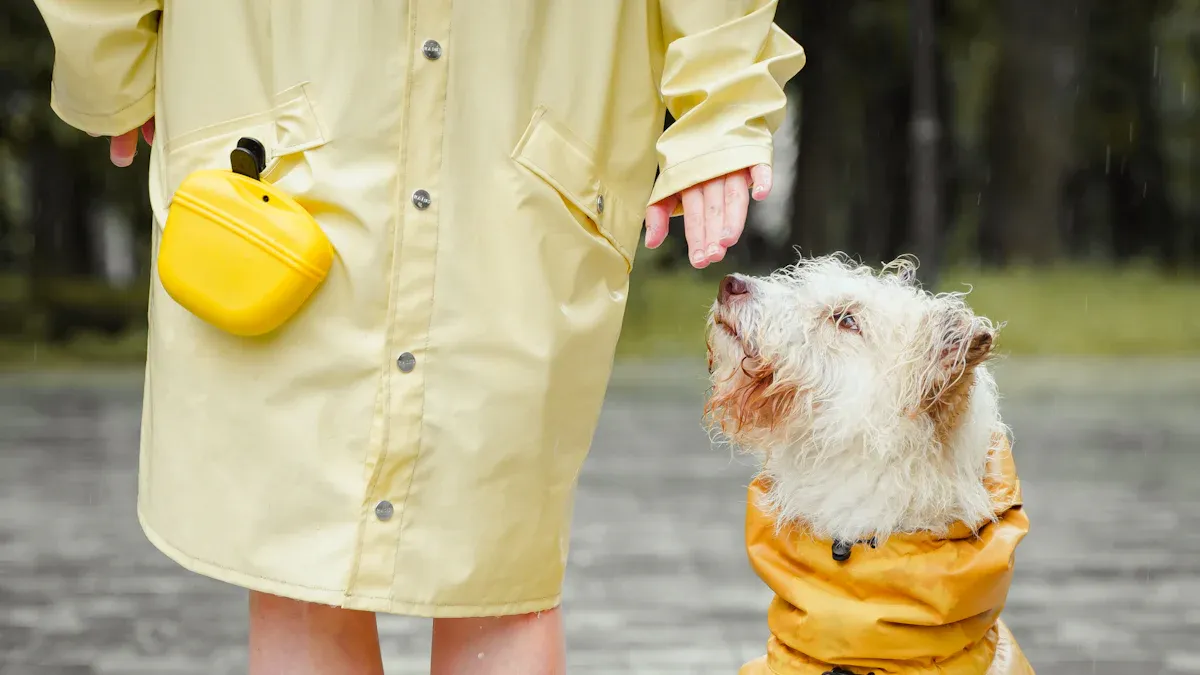
You want your dog leashes to last, even on rainy days. Proper care before and after each walk helps keep your leash safe and strong. Follow these steps to protect your gear and your dog.
Step 1: Prepare before your walk
Check the leash for fraying, rust, or weak spots, especially near the clip and dog-end.
Attach the leash securely to your dog’s collar or harness.
Bring a towel in case you need to wipe off water or mud during your walk.
Step 2: Care during your walk
Avoid dragging the leash through puddles or mud when possible.
Hold the handle firmly, especially if it gets wet. A padded or textured handle gives you better grip.
Watch for signs of chewing if your dog likes to bite the leash.
Step 3: Clean and dry after your walk
Rinse off mud or salt with clean water.
Use a soft brush and mild soap for stains.
Air dry the leash away from direct heat or sunlight.
Rotate between two leashes to let each one dry fully.
Tip: Always store your leash in a dry, cool place. This prevents mold and keeps the hardware from rusting.
Here is a quick guide for caring for different types of leashes:
Type of Leash | Care Steps |
|---|---|
Nylon | 1. Rinse with clean water after exposure to salt or mud. 2. Use mild soap and a soft brush for stains. 3. Air dry away from direct heat sources. 4. Inspect stitching and hardware monthly. |
Leather | 1. Immediately wipe off moisture with a dry cloth after each wet walk. 2. Allow to air dry at room temperature-never near a radiator. 3. Apply leather conditioner every 4-6 weeks during winter. 4. Store in a breathable cotton bag, not plastic. 5. Check for stiffness, discoloration, or cracks weekly. |
Note: Regular care extends the life of your leash and keeps walks safe for you and your dog.
Merchandising and SKU Planning for Dog Leashes
SKU matrix by material, width, length
Step 1: Build your SKU matrix by combining material, width, and length options. This helps you cover all common needs for different dog sizes and walk contexts. You can use the following table to organize your inventory:
Material Type | Width (in / mm) | Length (ft / m) |
|---|---|---|
Nylon Webbing | 3/8-1/2 in (9.5-12.7 mm) | 4-6 ft (1.2-1.8 m) |
Polyester Webbing | 1/2-5/8 in (12.7-15.9 mm) | 15-30 ft (4.6-9.1 m) |
TPU Coated Webbing | 3/4-1 in (19-25 mm) | Up to 30 ft (9.1 m) |
Leather | 3/8-1 in (9.5-25 mm) | 4-6 ft (1.2-1.8 m) |
Rope | 1/2-1 in (12.7-25 mm) | 6-8 ft (1.8-2.4 m) |
Chain | 3/8-1 in (9.5-25 mm) | 4-6 ft (1.2-1.8 m) |
You can match leash width to dog size: small (3/8-1/2 in / 9.5-12.7 mm), medium (1/2-5/8 in / 12.7-15.9 mm), and large (3/4-1 in / 19-25 mm).
Add-ons for comfort and durability
Step 2: Add-ons make dog leashes more comfortable and durable, especially in wet weather. You can offer these features:
Waterproof and quick-drying materials prevent sogginess and odors.
Durable construction stands up to swimming and rough play.
Lightweight design keeps the leash comfortable for all-day use.
Easy-to-clean surfaces let you rinse off dirt and mud.
Traffic handles give you extra control in busy areas.
Adjustable length lets you change from 4 to 6 ft (1.2 to 1.8 m) or wrap around your waist.
Feature | Description |
|---|---|
Waterproof | 100% waterproof webbing and hardware for wet weather use |
Traffic Handles | Multiple handles for better control during walks |
Adjustable Length | Change length or wear around waist for hands-free walking |
Durable Hardware | Aluminum alloy or rust-resistant clips for long-lasting use |
Tip: Choose add-ons that match your customers’ needs for comfort, safety, and easy cleaning.
Planning for climate and chew risk
Step 3: Plan your stock based on climate and chew risk. In rainy climates, focus on polyester webbing or TPU coated webbing. These materials dry quickly and resist odor. For areas with many heavy chewers, stock chain leashes or leashes with reinforced dog-end sections. Always include padded handles for comfort in all weather.
Note: Rotate inventory to keep fresh stock and meet seasonal demand. You can adjust your SKU mix as you learn more about your customers’ needs.
You want the best dog leashes for rainy days. Step 1: Pick biothane or polyester for a strong grip and easy cleaning. Step 2: Choose chain for chew proof needs. Step 3: Select a padded handle for a comfortable grip and comfort. Always match the leash to your dog’s habits and walk style. Check your leash often and dry it after each walk to help it last longer.
FAQ
What leash material works best for rainy walks?
You want polyester webbing or TPU coated webbing for rainy days. These materials absorb very little water (about 0.4%) and dry quickly. Add a padded or textured handle for better grip when your hands get wet.
How do I pick the right leash width for my dog?
Step 1: Check your dog’s weight.
Small (up to 20 lb / 9.1 kg): 3/8-1/2 in (9.5-12.7 mm)
Medium (20-50 lb / 9.1-22.7 kg): 1/2-5/8 in (12.7-15.9 mm)
Large (over 50 lb / 22.7 kg): 3/4-1 in (19-25 mm)
How can I keep my leash from smelling after wet walks?
Tip: Always air dry your leash after each walk. Rotate between two leashes to let each one dry fully. Polyester and TPU coated webbing resist odor better than other materials.
What should I do if my dog chews the leash?
Step 1: Inspect the dog-end and clip-end daily.
Step 2: Use a chain leash or a leash with a chain section near the clip for chew resistance.
Step 3: Replace the leash if you see fraying or damage.
How often should I check my leash for wear?
You should check your leash every day. Focus on the dog-end and clip-end. Look for fraying, rust, or weak spots. Replace your leash if you find any damage.






