
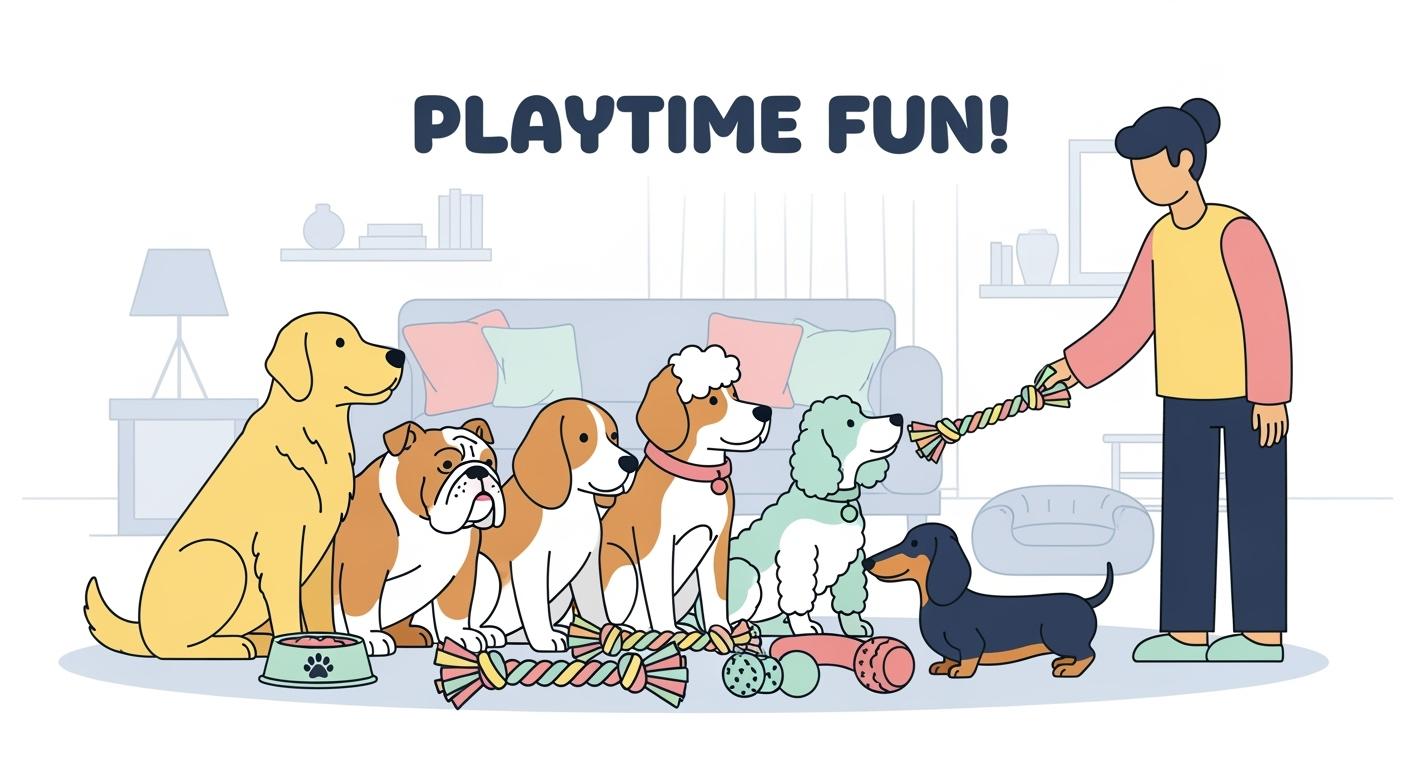
Imagine two dogs locked in a tug of war over one toy. You spot tension as each dog pulls and tugs harder. You want every play session to bring enrichment and fun, not stress or guarding. The right tug of war dog toy helps you create safe enrichment for all dogs. With smart choices, you avoid toy disasters and keep play positive. This guide gives you step-by-step fixes and a buying checklist so your pack enjoys the best enrichment toys.
Key Takeaways
Pick tug toys that fit your dog’s size and strength. This helps keep play safe and fun. Look for early signs of resource guarding, like freezing or growling. Use turns to help dogs share the toy. Check toys before each play time for any damage. This stops choking and keeps dogs safe. Teach commands like ‘drop it’ and ‘trade’ to help control play. These commands also lower fights between dogs. Give each dog the same toy in homes with many dogs. This lowers stress and helps dogs play nicely together.
Tug of war dog toy play in multi-dog homes
Teamwork vs competition in dog tug games
When you introduce a tug of war toy to a group of dogs, you notice how the dynamics shift. Some dogs work together, pulling as a team and sharing the excitement. Others compete, each dog trying to win the tug and claim the toy. You want to encourage teamwork because it builds positive enrichment and helps dogs bond. Competition can lead to stress and guarding, which you want to prevent.
You can set up enrichment sessions that focus on teamwork. Give each dog a chance to join the tug, then rotate turns. Use a toy long enough—about 18 in (46 cm) or more for larger dogs—so every dog has space. If you see one dog dominating, pause the play and redirect with a calm task. This structure keeps enrichment safe and fun for all dogs.
Tip: Structured turns and clear cues help dogs learn that tug play is about sharing, not winning.
Early signs of resource guarding
Resource guarding happens when a dog tries to keep a valuable item away from others. During tug play, you may spot early signals that a dog feels possessive. Watch for freezing over the toy, hard staring, or body blocking. Growling, snapping, or rushing back to reclaim the toy are stronger signs. These behaviors can turn enrichment into a stressful event.
Prevention works better than correction. You can manage space and access so dogs do not feel forced to guard. Duplicate toys sometimes help, but if a dog guards any toy, you need to focus on training and structure. Teach “drop it” and “trade” cues before starting tug play. If you see guarding signals, end the session and give each dog a break.
Guarding Signal | What You See | What To Do |
|---|---|---|
Freezing | Dog stops moving, stares | Pause play, redirect |
Body blocking | Dog uses body to shield toy | Give space, swap toys |
Growling/snapping | Dog vocalizes or snaps | End session, calm break |
Enrichment with tug toys can be safe and rewarding when you watch for early signs and use prevention strategies. You help your dogs enjoy playtime and avoid toy disasters.
Understanding resource guarding in dog tug toys
What is resource guarding? (plain language)
Resource guarding means a dog tries to keep something valuable away from others. You might see this when a dog holds onto a toy and does not want to share. The dog may use body language or actions to protect the item. This behavior can happen with food, toys, or even a favorite spot. In multi-dog homes, resource guarding can turn a fun enrichment activity into a stressful moment. You want to help your dogs feel safe and relaxed during play. When you understand resource guarding, you can set up better enrichment sessions and prevent problems before they start.
Note: If you notice a dog freezing, staring, or blocking others from a toy, these are early signs of guarding. You can step in early and guide the play to keep enrichment positive.
Common triggers and warning signs
Resource guarding often appears during tug-of-war games. Dogs may feel they need to protect their toys, especially if the game gets too competitive. You can spot triggers and warning signs by watching how your dogs interact during enrichment. Some triggers happen more often than others:
Food can cause guarding, especially at mealtime. A dog may feel threatened if another dog or a person comes close.
Toys often lead to guarding during play. Dogs may think they need to protect their belongings.
Tug-of-war games can trigger guarding if you do not set clear rules or use commands like “drop it” or “trade.”
You can look for these warning signs during enrichment:
Warning Sign | What You Might See | What You Should Do |
|---|---|---|
Freezing | Dog stops moving, stares at toy | Pause play, redirect focus |
Body blocking | Dog uses body to shield toy | Give space, swap toys |
Growling/snapping | Dog vocalizes or snaps | End session, calm break |
Rushing to reclaim | Dog quickly grabs toy back | Remove toy, reset play |
You help your dogs by watching for these signals and triggers. You can prevent guarding by using structured turns and teaching cues. When you set up enrichment with clear rules, you make playtime safe and fun for every dog in your pack.
Choosing durable dog tug toys for safety

Durability factors: material and design
You want a tug of war dog toy that lasts through many enrichment sessions. The right material and design make a big difference in durability and safety. Look for toys made from high-density, all-natural rubber or tear-resistant rope. These materials withstand heavy chewing and tough tug games. Some toys use industrial-strength rubber that resists splitting and chunking. Safe materials matter for your dogs. Non-toxic rubber and tightly woven rope help prevent choking or ingestion risks.
Design features also affect durability. Reinforced stitching, strong handle attachments, and solid construction keep toys from breaking during play. Handles should stay secure even when dogs pull hard. You can check for double-layered webbing or extra stitching at stress points. StridePaw offers options with durable handles and safe materials, which you can consider when choosing the best enrichment toys for your pack.
Feature | Description |
|---|---|
Durable Construction | Engineered to be nearly indestructible, withstands heavy chewing |
Safe Materials | Made from 100% non-toxic, high-density, all-natural, pure solid rubber |
Tear-Resistant | Built to withstand tough play sessions with industrial-strength rubber |
Tip: Always inspect toys for loose parts, frayed rope, or cracked rubber before each enrichment session.
Toy length, handles, and dog size
Choosing the right size toy helps keep enrichment safe and fun. For a tug of war dog toy, pick a length that keeps your hands away from your dogs’ mouths. For larger dogs, select toys at least 18 in (46 cm) long. Smaller dogs do well with toys around 12 in (30 cm). Handles give you better grip and control. Look for toys with sturdy handles that attach securely to the main body.
Dog size matters when picking a toy. Small dogs under 20 lb (9 kg) need lighter toys with thinner rope or rubber. Medium dogs between 20-50 lb (9-23 kg) can use thicker rope or rubber rings. Large dogs over 50 lb (23 kg) need heavy-duty toys with reinforced handles and strong stitching. Always match the toy’s weight and thickness to your dog’s strength.
Note: If you have a mixed-size pack, choose a toy that suits the largest dog, or use separate toys for different dogs.
Rope, rubber, and bungee: pros and cons
You see many types of tug of war dog toys. Each material has strengths and weaknesses. Rope toys offer flexibility and grip. They work well for gentle tuggers and puppies. Heavy chewers can fray rope quickly, so inspect often. Rubber toys are easy to clean and resist fraying. Solid rubber rings or bars suit strong chewers and adult dogs. Watch for cracks or chunking over time. Bungee toys absorb shock and reduce jerks on your hands. They help protect your wrists during enrichment. Hardware and stitching on bungee toys can fail, so check attachment points.
Here is a comparison table to help you choose:
Toy Style | Durability | Guarding Risk | Best Use |
|---|---|---|---|
Rope | Medium | Medium | Puppies, gentle tuggers |
Rubber | High | Low | Strong chewers, adults |
Bungee | Medium | Medium | Multi-dog, wrist relief |
Fleece | Low | Medium | Light play, puppies |
Handled Tug | High | Low | Controlled enrichment |
Tip: Eco-friendly materials like natural rubber and recycled rope add safety and sustainability to your enrichment routine.
Single vs duplicate toys for multi-dog homes
You want to avoid toy disasters in a multi-dog home. Using duplicate toys can reduce competition and guarding. Give each dog their own tug of war dog toy during enrichment. This helps prevent fights and stress. Some dogs guard any toy, so structured turns and training matter more than the number of toys. If you use a single toy, supervise closely and teach cues like “drop it” and “trade.” Rotate turns so each dog gets a chance to play.
You can choose from rope, rubber, bungee, fleece, or handled tug toys. StridePaw offers durable handled tugs and rubber rings for multi-dog homes. Look for toys with strong stitching, secure handles, and chew-resistant material. Always inspect toys before play and retire damaged ones to keep enrichment safe.
Safety first: Supervise all tug of war games and stop play if you see guarding signals or toy damage.
Setting up safe enrichment sessions
Space, structure, and turn-taking
Before play, you get the area ready for your dogs. You want enough room so dogs can move without bumping into each other. You plan games that help dogs think and get exercise, like tug-of-war or fetch. You watch the dogs closely to see if any look stressed. If you notice a problem, you step in right away. You make sure dogs have already used up extra energy and feel calm around others. This helps them feel good and play nicely.
Here is a simple pre-play checklist for multi-dog homes:
Step | Description |
|---|---|
Plan Activities | Use structured games for mental and physical stimulation and reduce conflict |
Monitor Safety | Watch dogs for stress or guarding signals during playtime |
Prepare Dogs | Ensure dogs have enough exercise and feel confident in social play |
You pick a play style that works for your dogs. One-on-one play helps shy dogs feel braver. Letting two dogs play with their own toys keeps things fair. You use separate spots for each dog and give rewards to keep things calm.
Teaching “drop it” and “trade” cues
You teach each dog to “drop it” and “trade” before group play. You practice these commands when things are quiet and calm. You give treats or another toy when a dog lets go. This helps dogs feel smart and happy. You also teach start, pause, and stop rules for safe play. You let dogs take turns so everyone gets a chance to play and learn.
When to pause or end tug play
You watch for signs that dogs need a break. If a dog guards a toy, gets too wild, or mouths skin, you stop play. You give the dogs time to calm down and reset the area. You always watch play and check toys for damage. If a toy is broken, you throw it away to keep dogs safe. You want playtime to be fun and help every dog feel good with others.
Preventing breakage and toy hazards
Where dog tug toys fail first
You want your dogs to play safely every time. Some toys break fast, especially if dogs chew or pull hard. The most common problems are frayed rope, split seams, cracked rubber, and loose handles. Bad materials and weak designs make toys break into small pieces. These pieces can be dangerous if a dog swallows them or chokes. When you pick a toy, look for strong stitching, solid rubber, and tight handles. Choosing tough toys helps stop dogs from breaking them.
Here are the most common ways dog tug toys break:
Rope toys: They fray and come apart, mostly with strong chewers.
Rubber toys: They crack or break into small pieces that dogs might eat.
Handles: They can come off or get loose, which is a choking risk.
Seams: They split open and show stuffing or small parts.
Inspection and retirement routine
You keep your dogs safe by checking each toy before play. Look for loose parts, frayed rope, cracked rubber, or weak handles. If you see damage, take the toy away right away. Checking toys often helps you find problems early and avoid accidents. This keeps your dogs safe and makes playtime fun.
Use this table to help you check your toys:
Failure Sign | Risk | What To Do |
|---|---|---|
Frayed rope | Choking, ingestion | Remove and discard |
Cracked rubber | Swallowing sharp pieces | Retire toy immediately |
Loose handle | Choking, mouth injury | Stop play, replace toy |
Split seam | Access to stuffing/parts | Remove from play area |
You make play safer by throwing out broken toys and picking new ones with strong materials. Always watch your dogs during play and check toys after each session. This helps every dog stay happy and healthy.
Troubleshooting multi-dog tug problems
One dog dominates, others shut down
You may notice one dog takes control of the enrichment session. This dog grabs the toy and refuses to let other dogs join. The other dogs lose interest or walk away. You want every dog to enjoy enrichment, so you need to change the play structure. Give each dog a turn with the toy. Use a timer or count to ten, then swap. If the dominant dog struggles to let go, practice the “drop it” cue with treats. You can also use duplicate toys to help dogs feel included. If the same dog keeps shutting down others, pause the session and try again later.
Toy stealing and guarding behaviors
Dogs sometimes steal toys or guard them during enrichment. You may see a dog rush to grab a toy from another dog or block access. These behaviors can lead to stress or fights. You can prevent problems by teaching “trade” and “drop it” cues. Give each dog a reward for sharing or letting go. Supervise closely and use structured turns. If a dog shows guarding signals, end the enrichment session and give the dogs a break. You want to keep play safe and positive for every dog.
Over-arousal and unsafe play
Enrichment can get too exciting. Dogs may bark, jump, or mouth each other. Over-arousal leads to unsafe play and increases the risk of injury. Watch for signs like wild running, rough grabbing, or teeth on skin. You can slow things down by using pause cues and giving dogs a calm task between turns. If play gets too wild, stop the session and let the dogs relax. Always check toys for damage after high-energy enrichment.
Tip: Structured play, clear cues, and supervision help every dog enjoy safe enrichment.
Here is a troubleshooting table to guide you:
Problem | Likely Cause | Fix | When to Stop Session |
|---|---|---|---|
One dog dominates | Lack of structure | Rotate turns, use cues | If others shut down |
Toy stealing/guarding | Competition, stress | Teach “trade”, supervise | If guarding signals appear |
Over-arousal/unsafe play | High excitement | Use pause cues, calm tasks | If teeth contact skin |
Dog tug toy buying guide by household
Matching toy to dog size and strength
You want every dog in your home to enjoy enrichment safely. Start by matching the toy to your dog’s size and strength. Small dogs under 20 lb (9 kg) need lighter toys with thinner handles. Medium dogs between 20-50 lb (9-23 kg) do best with toys that have moderate thickness and sturdy handles. Large dogs over 50 lb (23 kg) require heavy-duty toys at least 18 in (46 cm) long. This keeps your hands safe and gives dogs enough space during enrichment. Always check that the toy fits your dog’s mouth and is not too heavy or too light.
Puppies vs adults: enrichment needs
Puppies need toys that help with teething and learning. Choose soft rope or rubber toys for gentle tugging. Puppies benefit from enrichment that builds confidence and teaches sharing. Adult dogs often need tougher toys for longer enrichment sessions. Pick toys that can handle strong pulling and chewing. Rotate toys to keep enrichment interesting for both puppies and adults. Supervise all play to prevent accidents.
Strong chewers vs gentle tuggers
Some dogs love to chew and tug with all their strength. For a strong chewer, select toys made from ultra-durable rubber or reinforced fabric. Look for options like tough rubber rings or bones with dental ridges. Gentle tuggers do well with softer rope or plush toys. Always inspect toys after enrichment to catch any damage early.
Here are some of the best dog toys for strong chewers, based on durability tests:
Kong Extreme uses ultra-durable black rubber for aggressive chewers.
West Paw Zogoflex Hurley features a tough, dishwasher-safe material that floats.
JW Pet Megabone offers a rubber bone with dental ridges for power chewers.
Tuffy’s Mega Puppy Ring uses reinforced fabric for tug-of-war and resists wear.
Chuckit! Ultra Ball provides a thick, high-bounce rubber ball for repeated use.
Tip: Pick toys that match your dog’s play style and always supervise enrichment.
Household Type | Best Toy Features | Setup Rules | Common Mistake to Avoid |
|---|---|---|---|
Single small dog | Light, thin rope or rubber | Solo play, gentle tug | Toy too heavy or large |
Multi-dog, mixed size | Long, sturdy, handled toys | Structured turns, supervision | Ignoring size differences |
Strong chewer | Ultra-durable rubber, reinforced | Inspect after play, rotate | Using plush or weak toys |
Gentle tuggers | Soft rope, plush, fleece | Calm play, reward sharing | Leaving toys unsupervised |
Safety and when to seek help
Kids and multi-dog tug safety
You want every enrichment session to be safe for kids and dogs. Supervise all play when children join tug games. Kids should use toys with long handles, at least 18 in (46 cm), to keep hands away from mouths. Teach children to wait for a start cue before joining enrichment. Remind them to let go if dogs get too excited or if teeth touch skin. You should separate dogs if you see guarding signals, like freezing or body blocking. Kids must never try to take a toy from a dog’s mouth. You help kids learn to respect dogs and understand safe enrichment rules.
Tip: Always keep a calm environment. If dogs show stress or arousal spikes, pause the game and let everyone take a break.
Here is a simple checklist for kids and multi-dog enrichment:
Supervise every session.
Use toys with long handles (18 in / 46 cm or more).
Teach start, pause, and stop cues.
Watch for guarding signals.
Separate dogs if needed.
When to consult a professional
You may notice guarding behaviors that do not improve with training. If dogs growl, snap, or bite during enrichment, you should seek help from a qualified trainer or behavior professional. You want to keep every dog safe and happy. A professional can help you set up better enrichment routines and teach advanced cues. You should consult an expert if:
Situation | What to Do |
|---|---|
Guarding escalates or repeats | Contact a trainer or behaviorist |
Bites occur during enrichment | Seek professional help immediately |
Dogs cannot relax during play | Get advice on enrichment structure |
You protect your dogs and family by acting early. You make enrichment safe and enjoyable for everyone.
You want every dog in your home to enjoy safe play. Choose a tug of war toy that matches each dog’s size and strength. Inspect toys before every session. Watch for early signs of guarding. Use structured turns so each dog gets a chance with the toy. Supervise all play and retire damaged toys right away. If you see guarding that does not improve, ask a professional for help. With the right toys and routine, you create happy enrichment for every dog.
FAQ
How do I know if a tug toy is safe for my dogs?
Check for strong stitching, secure handles, and non-toxic materials. Inspect toys before each play session. Remove toys with frayed rope, cracked rubber, or loose parts. Choose toys long enough—at least 18 in (46 cm)—to keep hands safe.
What should I do if my dogs start guarding the tug toy?
Pause play immediately. Use “drop it” or “trade” cues. Give each dog space and a calm task. Rotate turns so every dog gets a chance. If guarding continues, consult a professional for help.
How often should I inspect and replace tug toys?
Inspect toys before every play session. Look for frayed rope, cracked rubber, or loose handles. Replace toys showing damage right away. Regular checks keep your dogs safe and prevent accidents.
Can puppies play tug of war safely?
Yes, puppies can play tug with supervision. Use soft rope or rubber toys sized for small dogs under 20 lb (9 kg). Teach gentle play and “drop it” cues. Stop play if puppies get too excited or mouth skin.
What is the best way to prevent toy disasters in multi-dog homes?
Supervise all play. Use structured turns and clear cues. Choose durable toys with secure handles. Inspect toys often and retire damaged ones. Give each dog their own toy if needed to reduce competition.





