
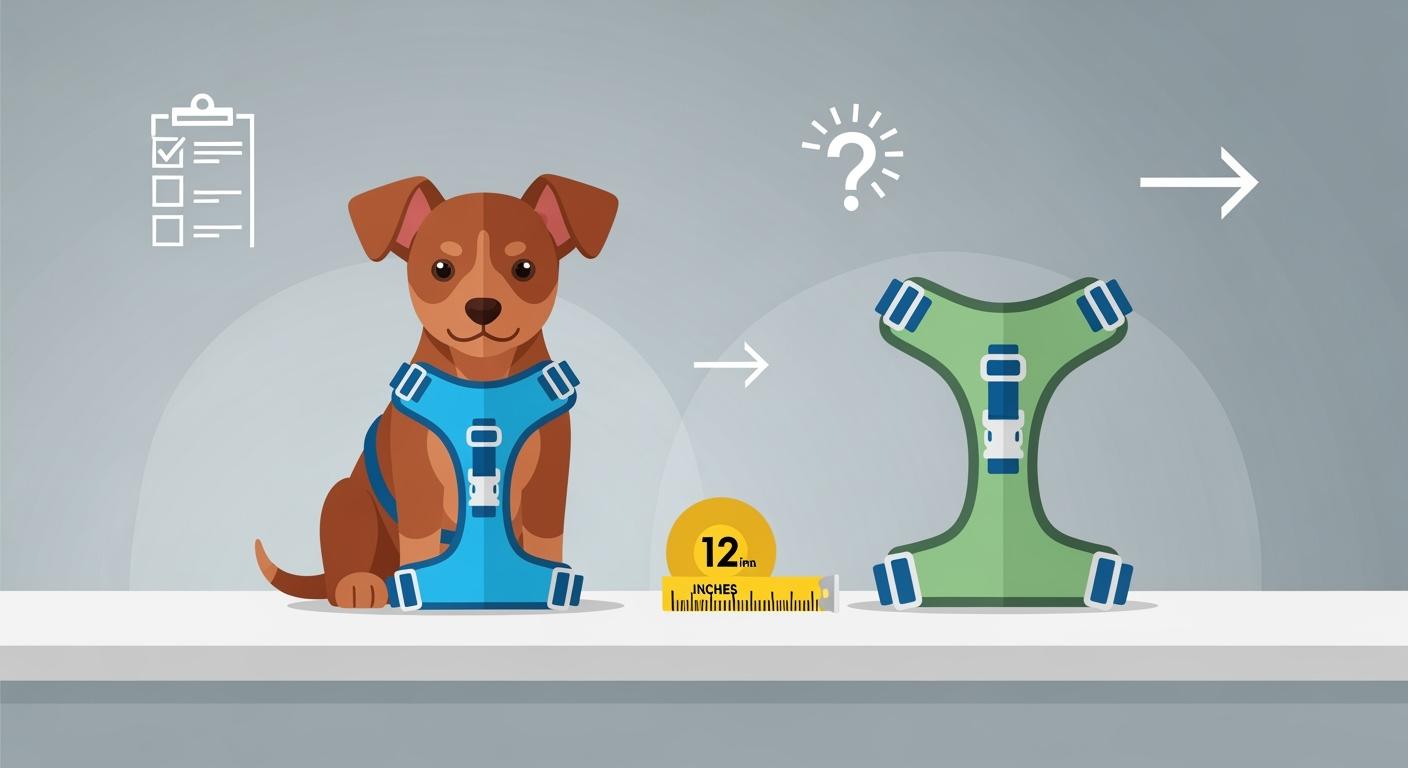
Many puppy owners make mistakes when picking a tiny harness for puppy. They may measure the wrong spots or forget puppies grow fast. If the harness is too tight or too loose, it can cause problems. Your puppy might feel uncomfortable or unsafe. A harness that fits well keeps your puppy calm and safe. It stops stress, limits movement problems, and helps avoid skin issues. You can stop these problems by using a simple guide. Check the harness fit often as your puppy grows.
Impact of Improper Harness Fit | Description |
|---|---|
Physiological Stress | Can put a lot of stress on your dog’s body. |
Restricted Movement | May cause muscle pain. |
Uneven Weight Distribution | Can make your dog hurt or feel bad. |
Chafing and Skin Irritation | Causes quick pain or discomfort. |
Nerve Compression | Can be bad for your dog’s health. |
Increased Risk of Escape | Loose harnesses let dogs slip out on walks. |
Long-term Musculoskeletal Issues | Bad fit can change how your dog walks over time. |
A harness that does not fit right can hurt your puppy’s chest.
A good harness should not have gaps, pull, or rub.
Getting the right size helps your puppy feel good and makes handling easier. It does not fix behavior problems. Always check the fit as your puppy gets bigger. Ask a vet if you see movement or skin problems. Talk to a trainer for behavior help.
Key Takeaways
Measure your puppy at the chest, neck, and back. This helps make sure the harness fits well and is safe. Pick a harness that you can adjust as your puppy grows. This keeps your puppy comfortable and safe. Check the harness fit often, especially after your puppy grows quickly. This stops your puppy from feeling pain or slipping out. Choose a harness style that matches what your puppy needs. Think about how active your puppy is and how they move their head. Always use the two-finger rule to check if straps are too tight. Look for any signs of rubbing or if your puppy seems uncomfortable.
Tiny harness for puppy vs small dog harness
Strap geometry for extra small frames
You may notice that a tiny harness for a puppy looks different from a harness made for a small adult dog. Tiny puppies have shorter backs, narrower chests, and softer bodies. A harness for a small adult dog often has wider straps and larger buckles. These features can overwhelm a puppy’s small frame. When you choose a harness for a tiny puppy, look for narrow straps and small, lightweight buckles. The harness should sit flat against the body and avoid bulky padding that can bunch up. Strap lines should follow the shape of your puppy’s chest and shoulders. This helps prevent rubbing and keeps the harness from twisting during play or walks.
Adjustability for growing puppies
Puppies grow quickly. You need a harness that can adjust as your puppy gets bigger. Look for a harness with a wide adjustment range. This means the straps can lengthen or shorten without reaching the end stops. Try to fit your puppy so their measurement sits near the middle of the adjustment range. This way, you can tighten or loosen the harness as needed. Avoid harnesses where the straps are already at their tightest or loosest setting. If you notice the harness getting snug or loose, adjust it right away. Always check the fit after a growth spurt.
Tip: Recheck the harness fit every week during rapid growth. Puppies can outgrow a harness in just a few weeks.
When a harness is not ideal
Sometimes, a harness may not be the best choice for your puppy. Experts suggest other options in certain situations:
If your puppy pulls hard, a harness can cause choking or gasping.
Harnesses may encourage pulling, which is not helpful during leash training.
Flat collars, head halters, or slip leads can give you better control and communication.
For untrained puppies, a standard leash and collar may help teach better walking behavior.
You should always watch how your puppy reacts to a harness. If you see signs of discomfort or pulling, consider trying a different walking tool. Your goal is to keep your puppy safe and comfortable while building good habits.
How to measure your dog for a harness
Choosing the right harness starts with accurate measurements. You want a secure fit that keeps your puppy comfortable and safe. Many owners ask how to measure your dog for a harness, especially for tiny puppies and extra small dogs. You need three main measurements: chest girth, neck opening, and back length. Use a soft measuring tape or a piece of string. Always keep your puppy calm with treats and make sure they stand up straight for the best results.
Chest girth: measure behind front legs
Chest girth is the most important measurement for harness sizing. You measure around the widest part of your puppy’s ribcage, just behind the front legs. This spot gives you the best fit for security and comfort. Use a flexible tape or string. Wrap it around the ribcage, mark the length, and then check the number in both inches and centimeters. For example, if your puppy’s chest girth is 10 in (25 cm), you use that number to choose the harness size. If your puppy is between sizes, pick the next largest size and check that the adjustment range sits near the middle.
Tip: Allow about 0.5-1 in (1-2.5 cm) extra for breathing and movement. This helps prevent tightness and rubbing.
Neck opening: base of neck, not collar size
The neck opening is where the harness sits or passes over your puppy’s head. You measure at the base of the neck, not where a collar sits. Place the tape a few inches down from the crown of the head, right at the base. This ensures the harness can slip on easily and does not squeeze your puppy’s neck. Always record the measurement in dual units, such as 8 in (20 cm). If the harness feels snug or loose at the neck, adjust the straps or try a different size.
Back length: shoulder to tail base
Back length helps you check strap geometry and harness placement. Start at the shoulder area and measure to the base of the tail. This step makes sure the harness does not bunch up or twist on your puppy’s small frame. You want the harness to sit flat and avoid pressure points. Use a continuous tape or string for accuracy. Double-check your measurement in inches and centimeters.
What to Measure | How to Measure | Why It Matters |
|---|---|---|
Chest girth | Wrap tape or string around widest ribcage behind front legs. Record in inches and cm. | Main sizing driver for harness fit and security. |
Neck opening | Measure at base of neck, a few inches down from crown of head. Record in inches and cm. | Prevents head squeeze or escape. |
Back length | Measure from shoulder area to base of tail. Record in inches and cm. | Checks strap geometry and placement on small frames. |
Step-by-step: How to measure
Measure chest girth behind the front legs using a soft tape or string. Mark and record the length in inches and centimeters.
Measure the neck opening at the base of the neck, a few inches down from the top of the head. Write down the number in dual units.
Measure back length from the shoulder area to the base of the tail. Use a continuous tape or string for best results.
If your puppy’s measurement falls between sizes, choose the next largest size and check that the adjustment range sits near the middle.
Test the harness fit by walking your puppy and watching for signs of discomfort, rubbing, or twisting.
Always recheck the fit after a growth spurt or every week during rapid growth.
Note: Always have a backup collar for safety during walks. Adjust the harness if it feels tight or loose. Use treats to keep your puppy calm while you measure.
You now know how to measure your puppy for a harness. Accurate measurements help you select the right size and style for a secure, comfortable fit.
Harness styles guide for tiny puppies
Step-in dog harness: pros and cons
You may find step-in harnesses easy to use for tiny puppies. You place your puppy’s front legs into the harness and pull it up to fasten. This style works well if your puppy dislikes things near their head. Step-in harnesses spread pressure across the chest, which helps reduce neck strain. You can put them on quickly, which is helpful for wiggly puppies. However, step-in harnesses may not give you enough control if your puppy pulls hard. They can slip off if you do not adjust them tightly. You should check the fit often to prevent escapes.
Overhead dog harness: entry and fit
Overhead harnesses go over your puppy’s head and buckle around the body. You may need to guide your puppy’s head through the neck opening. Some puppies feel nervous when you put something over their head. Overhead harnesses often provide better control and security. They stay on well and lower the risk of escape. You can adjust them for a snug fit. If your puppy dislikes head touching, you may want to try a step-in style instead.
Y-shape vs H-shape: shoulder freedom
You want your puppy to move freely during walks. Y-shape harnesses allow your puppy’s front legs to move without restriction. These harnesses minimize pressure on the throat and spine. Y-shape designs work well for energetic puppies who run and jump. H-shape harnesses may limit movement around the shoulders. They can restrict natural motion, which may bother active puppies. You should choose a harness that matches your puppy’s activity level.
Y-shape harnesses let your puppy move their front legs easily.
H-shape harnesses may restrict movement, especially near the shoulders.
Y-shape harnesses help keep pressure off the throat and spine.
Comparison table: style, entry, best use
Harness Type | Easiest Entry Cue | Best For | Watch-outs |
|---|---|---|---|
Step-in Harness | Legs step in | Nervous puppies, quick use | May slip off if not tight enough |
Overhead Harness | Head goes through | Training, secure fit | Can scare puppies who dislike head touching |
Y-shape Harness | Overhead or step-in | Active puppies, shoulder freedom | May need more adjustment for tiny frames |
H-shape Harness | Overhead | Calm puppies, basic walks | Can restrict shoulder movement |
Adjustable Harness | Varies | Growing puppies | Can be tricky to adjust |
Neoprene Harness | Overhead or step-in | Comfort, water resistance | May not suit very small breeds |
Step 2: Pick harness style based on entry tolerance and escape risk. If your puppy dislikes head touching, try a step-in harness. If your puppy tries to back out of harnesses, choose an overhead style with secure buckles.
You can use this guide to match harness style to your puppy’s needs. Always check fit and comfort after each walk.
Harness size guide: convert measurements and adjust
Picking the right harness size for your puppy can be hard. You want it to fit well but also let your puppy move and grow. This harness size guide helps you avoid mistakes and find the best harness for tiny puppies and extra small dogs.
Mid-range fit: avoid extremes
Try to have your puppy’s size in the middle of the harness’s adjustment range. This lets you make the harness tighter or looser as your puppy grows. If your puppy’s size is at the end of the range, you might not be able to adjust it later. A middle fit keeps the harness comfy and safe as your puppy gets bigger.
Step 3: Pick a harness size where your puppy’s measurement is in the middle of the adjusters. This makes it easier to change the fit as your puppy grows.
Avoid maxed-out or loose straps
Straps that are too tight or too loose can cause trouble. If the straps are too tight, the harness can squeeze your puppy and hurt them. Loose straps can let your puppy slip out or twist the harness. Check the straps after every walk and fix them if needed.
Risk Type | Description |
|---|---|
Escape Risk | A loose harness can let a dog back out of it. |
Physical Discomfort | A harness that is too tight can rub or chafe. |
Pressure Issues | Bad fitting can press on sensitive spots and make moving or resting hard. |
Size-up rules for between sizes
If your puppy’s size is between two harness sizes, you need to pick which one to get. Use these tips to help you choose:
Measure your puppy from the base of the neck around the chest.
If your puppy’s size is close to or over the top of the smaller size, pick the next size up.
Go up a size if your puppy has a thick coat, wide chest, or big belly.
Sizing up gives you more room to adjust and stops the harness from getting too tight as your puppy grows.
Sizing decision table: profile, cues, choice
Different puppies need different harness features. Use this table to match your puppy’s needs to the best size choice.
Puppy Profile / Context | Measurement Cues | Size Choice Approach | What to Avoid |
|---|---|---|---|
New Puller, Busy Area | Snug chest, wide padded straps | Front-clip, secure fit | Loose fit, back-clip only |
Reactive or Sudden Changes | Easy adjust, pressure spread | Front-clip, mid-range adjustment | Tight neck, squeezing straps |
Outdoor/Long Walks, Strong Puller | Wide, padded front-clip | Adjustable straps, mid-range fit | Thin straps, poor adjusting |
Small Breed | Light, padded, step-in style | Step-in, soft edges | Heavy, bulky parts |
Flat-Faced Breed | Wide chest padding, soft harness | Soft harness, wide chest area | Narrow straps, chest pressure |
Sensitive Skin | Neoprene, mesh, soft edges | Soft edges, gentle fit | Rough edges, heavy parts |
Parameter and value table
You should check a few things when picking a harness for your puppy. This table shows what to measure and why it matters.
Parameter | Target range or option | Why it matters |
|---|---|---|
Chest girth | measured at widest ribcage | Main sizing driver |
Neck opening | base of neck measurement | Prevents head squeeze or escape |
Back length | shoulder to base of tail | Checks strap geometry on small frames |
Entry style | overhead or step-in | Changes how harness goes on |
Adjustment range | mid-range fit preferred | Prevents running out of strap |
Allowance | 0.5-1 in (1-2.5 cm) | Comfort starting point |
Finger check | two-finger starting check | Quick fit validation |
Elbow clearance | no rubbing behind elbows | Prevents hotspots |
Shoulder freedom | no restriction | Improves comfort |
Post-walk check | re-check after short walk | Catches twist and rub |
Tip: Always check the harness after a few wears and after your puppy’s coat changes. Puppies grow fast, so checking often helps you spot problems early.
You can use this harness size guide to make good choices for your puppy. Taking careful measurements, using mid-range adjustments, and checking the fit often will help keep your puppy safe and happy.
First fitting guide: prevent rubbing and slipping
Getting the first harness fit right helps your puppy stay comfortable and safe. You want to avoid rubbing, slipping, and escape risks. Start by preparing your harness and knowing the adjustment points before you begin.
Overhead harness: put-on order
You can fit an overhead harness by following these steps:
Loosen all adjustment points so the harness slides on easily.
Place the harness over your puppy’s head, making sure the neck opening sits at the base of the neck.
Secure the buckles around your puppy’s chest and belly.
Use the adjustment points to tighten the straps. Aim for a snug fit, but make sure you can slide two fingers under each strap.
Check for rubbing near the elbows and shoulders. Walk your puppy for a few minutes and watch for twisting or slipping.
Tip: Always check the adjustment points after your puppy moves or sits. Puppies can shift the harness during play.
Step-in harness: put-on order
Step-in harnesses use a different entry method:
Lay the harness flat on the ground and open all adjustment points.
Guide your puppy’s front legs into the harness openings.
Pull the harness up and fasten the buckles on the back or sides.
Adjust the straps at each adjustment point for a secure fit.
Make sure the harness does not rub behind the elbows or restrict shoulder movement.
Note: Step-in harnesses may need extra checks at the adjustment points to prevent slipping.
Adjustment order for secure fit
You should adjust the harness in a specific order for best results:
Start with the neck opening, then move to the chest girth.
Use the adjustment points to fine-tune the fit.
Check the back length and make sure the harness sits flat.
After walking your puppy, recheck all adjustment points for changes.
Regular adjustment keeps the harness secure and comfortable. Puppies grow fast, so you need to check the adjustment points often.
Step table: step, pass sign, adjust
Step | Pass Sign | What to Adjust |
|---|---|---|
1. Loosen all straps | Harness slides on | Adjustment points at neck and chest |
2. Place harness correctly | No bunching | Neck opening, back length |
3. Secure buckles | No pinching | Buckle position, adjustment points |
4. Adjust straps | Two-finger check | All adjustment points |
5. Walk and observe | No rubbing/slip | Elbow clearance, shoulder freedom |
Step 4: Put on the harness and adjust in the recommended order. Always check the adjustment points after each walk and as your puppy grows.
Fit checks for tiny harness for puppy
Checking the fit of a tiny harness for puppy keeps your dog safe and comfortable. You need to look for problem areas and test the harness often. Use these steps to spot issues early and make quick fixes.
Hotspot zones: elbows, armpits, chest
You should check the elbows, armpits, and chest for rubbing or red marks. These spots get the most contact from the harness. Slide two fingers under each strap to test for comfort. If you see redness or your puppy licks these areas, the harness may be too tight or twisted.
Tip: Always check for chafing after walks. Puppies with sensitive skin need extra attention.
Twist and rotation checks
Before each walk, straighten the straps so they lie flat against your puppy’s coat. Watch your puppy move. If the harness twists or rotates, adjust the straps or try a different entry style. A stable tiny harness for puppy should not slide to one side or bunch up. Fluid movement and no visible discomfort show a good fit.
Make sure the harness stays in place during play.
Look for shifting or bunching, which means you need to readjust.
Escape check: backing up, spinning
Some puppies try to back out or spin to escape. If your tiny harness for puppy feels loose, your puppy may slip out. Watch for signs your dog’s harness isn’t fitting right, such as sudden escapes or twisting. If you notice these problems, tighten the straps or size up for better security.
Step-by-step block
Step 5: Do a short walk fit check and re-check regularly as the puppy grows. Puppies change quickly, so repeat these checks every week.
Fit test table
Fit Check | Pass Sign | What to Change |
|---|---|---|
Two-finger under straps | Fingers slide easily | Loosen or tighten straps |
Elbow clearance | No rubbing or redness | Adjust strap position |
Shoulder freedom | Puppy moves freely | Change harness style |
Twist/rotation | Harness stays in place | Straighten or adjust straps |
Escape risk | Puppy cannot slip out | Tighten or size up harness |
Post-walk check | No marks or discomfort | Refit or try new harness |
Common mistakes table
Mistake | What It Leads To | What to Do Next |
|---|---|---|
Straps too tight | Chafing, discomfort | Loosen straps, check fit |
Straps too loose | Escape risk, twisting | Tighten straps, size up |
Wrong measurement spots | Poor fit, rubbing | Re-measure, follow guide |
Ignoring growth | Harness outgrown | Re-check weekly, adjust |
Scenario A: Slipping out
Your puppy backs up and slips out of the tiny harness for puppy. This means the straps are too loose or the harness is too big. Tighten the straps and check the adjustment range. If the problem continues, pick a smaller size or a harness with a different entry style.
Scenario B: Rubbing
You notice red marks behind the elbows after a walk. The tiny harness for puppy may have straps that are too tight or in the wrong spot. Loosen the straps and move them away from the soft area. If rubbing continues, try a harness with softer edges or a different strap layout.
Note: Regular fit checks help you catch problems early and keep your puppy happy. Always use the two-finger rule and watch for changes as your puppy grows.
Retail guide: tiny puppy harness assortment
Listing copy: teach measurement and adjustment
You want customers to buy the right harness for their puppy. Clear product descriptions help teach how to measure chest girth, neck opening, and back length. Use easy steps and show both inches and centimeters, like 10 in (25 cm). Show how to check if the harness can be adjusted. Explain the two-finger rule for checking fit. Remind buyers to check the harness fit as puppies grow. Give tips about picking a bigger size for thick coats or fast-growing puppies. When you guide customers through measuring and adjusting, they can pick the best harness and return less.
Spec checklist: chest, neck, strap, buckle, stitching
A good store should have harnesses with all the important features. You should include harnesses with:
Chest girth sizes for very small puppies
Neck openings that sit low on the neck
Straps that are easy to adjust and stay flat
Buckles that are quick to snap on and off
Stitching that lasts through daily use
You can use this table to compare features in your store:
Feature | Description |
|---|---|
Functionality and Fashion | Mixes safety and style for today’s pet owners. |
Padded Mesh Construction | Gives comfort and lets air flow during walks. |
Reflective Details | Makes puppies easier to see when it’s dark. |
Increased Adjustability | Fits many dog shapes and sizes. |
Escape-proof Mechanisms | Stops dogs from slipping out by accident. |
Easy On/Off Buckles | Makes putting on and taking off the harness simple. |
Tailored Features for Seniors | Adds extra padding or support for older dogs. |
Tech-enabled Features | Can have GPS or health tracking built in. |
Return reduction: measure-choose-fit-recheck
You can lower returns by teaching customers to measure, choose, fit, and recheck. Tell buyers to measure their puppy before buying. Suggest picking a harness where the puppy’s size is in the middle of the adjustment range. Advise them to use the two-finger rule and watch for rubbing or slipping. Remind them to check the fit every week as puppies grow. Giving clear steps helps customers get the right fit and keeps puppies safe.
Tip: Add a sizing chart and step-by-step fitting guide to every product page. This helps buyers make better choices and avoid mistakes.
OEM and ODM explainer
You might see OEM and ODM in harness listings. OEM means Original Equipment Manufacturer. ODM means Original Design Manufacturer. These options let you change harness designs, materials, and logos. You can offer more products that meet different safety or eco-friendly needs. This helps you match your store to what customers want and what is popular.
You keep your puppy safe and comfy by checking the harness fit often. Puppies grow and change shape fast, so you must adjust the harness as they get bigger. This guide helps you pick the right size and enjoy walks together. Checking the harness regularly gives these long-term benefits:
Stops pain and skin problems
Helps your puppy move well
Lowers the chance of escape
If your puppy seems hurt, limps, has red skin, or will not walk, stop using the harness and ask an expert for help. Check the size again as your puppy grows.
FAQ
How do I know if a dog harness fits my puppy correctly?
You should check that you can slide two fingers under each strap. The dog harness should not rub behind the elbows or restrict shoulder movement. Watch your puppy walk and play to see if the harness stays in place.
What measurements do I need before buying a dog harness?
You need chest girth, neck opening, and back length. Measure the widest part of the ribcage, the base of the neck, and from the shoulder to the tail base. These numbers help with sizing and choosing the right dog harness.
How often should I recheck the fit of my dog harness?
You should recheck the fit every week, especially during growth spurts. Puppies change size quickly. Adjust the dog harness as needed to keep it secure and comfortable.
Can I use a dog harness for leash training a tiny puppy?
You can use a dog harness for leash training, but watch for pulling or discomfort. Some puppies respond better to other tools. Always check the fit and make sure the dog harness does not encourage pulling.
What should I do if my puppy slips out of the dog harness?
If your puppy slips out, tighten the straps or try a smaller size. Make sure the dog harness sits flat and does not twist. You may need to change the entry style or ask for help with sizing.






