
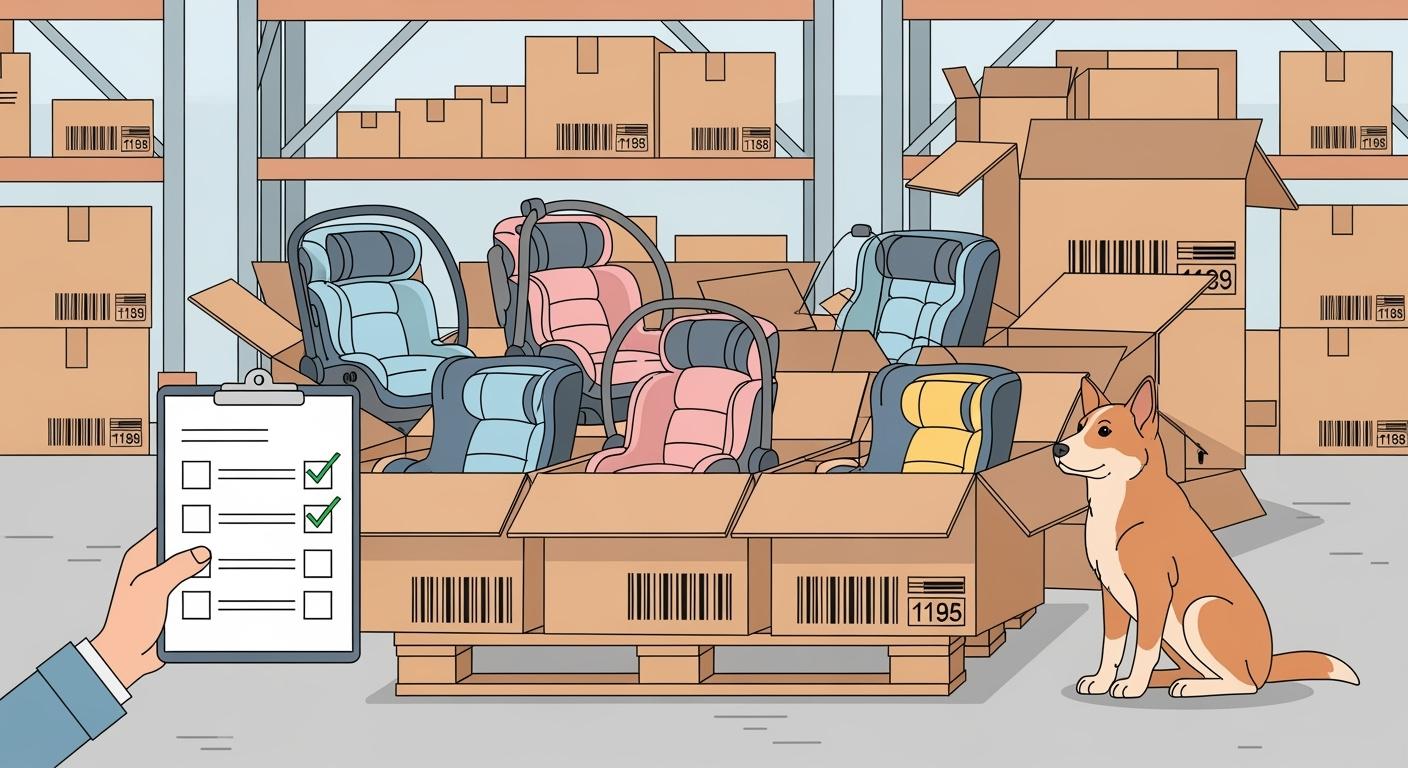
B2B buyers often deal with shipment damage, returns, and chargebacks when packaging is not repeatable. Supplier-ready master carton specs and digital templates help buying teams evaluate faster and help factories pack the same way every time. Using standard, traceable documentation for car seat for dogs improves comparability across suppliers, reduces claim risk, and speeds up buyer approval—without relying on unverifiable market statistics.
Last reviewed: 2025-12-15. Scope: This page covers shipping-packaging requirements (unit pack, master carton, palletization, marking, and transit simulation). It does not define vehicle crash-safety performance for pet restraint products. Final parameters must be aligned with the buyer’s routing, warehouse constraints, and acceptance criteria.
- Shipment damage can cause more claims and slow delivery.
- Clear case pack rules and carton marking help stop confusion.
- Digital templates help people research quickly and correctly.
Key Takeaways
- Good packaging stops things from breaking when shipped. Use strong cartons and moisture barriers to keep car seats for dogs safe.
- Clear rules help suppliers do things right. Use templates and checklists to make packing the same every time.
- Drop tests are very important. They show if packaging can handle shipping and help lower the chance of damage.
- Labels help people track shipments. Each carton needs clear marks like PO numbers, SKU, and handling symbols.
- Use a buyer-ready checklist. This makes sure all packaging rules are followed before shipments leave.
- Packing the same way helps compare shipments. Suppliers should use the same steps so checking is easier.
- Moisture control is very important. Use polybags and desiccants to keep things dry and stop water damage.
- Regular QA checks make quality better. Check each shipment to find problems early and keep standards high.
Packaging Spec for Car Seat for Dogs
Preventing Shipment Damage
Shipments of car seat for dogs can get damaged while moving. Rough handling and weak padding often cause problems. Wrong labels can also lead to damage. Boxes may get crushed or scratched. Parts can fall out or get lost. Water can make the product bend or change color. Bumps and shaking can break pieces or dent them. Dust and heat or cold can hurt the product too. Bad handling can scratch items or lose accessories.
A strong packaging spec helps stop these risks. Teams use tough cartons and good inserts to protect each item. Moisture barriers keep water away from the product. Clear labels show workers how to move and store boxes. Rules help suppliers meet safety goals. When packaging fits the product, damage is less likely. This helps buyers get products that are not broken and lowers claims.
Spec Deliverables Overview
A full packaging spec for car seat for dogs has important items. Each one helps keep shipments safe and the same:
To make the spec auditable, cite standards by ID (not just “ISTA/ASTM/ISO”) and state what each one covers. Example mapping: ISTA 3A for parcel delivery system simulation; ASTM D5276 for free-fall drop testing; ASTM D642 for box compression; ASTM D4332 for conditioning prior to testing; ASTM D4169 for distribution-cycle test planning; ISO 780 for handling and storage symbols. Document the chosen standard IDs in your test plan and keep the evidence in the SKU record.
- Packout Standard Operating Procedure (SOP): Tells how to pack each item.
- Case Pack Rules: Sets how many go in each box and how they fit.
- Test Plan: Lists drop tests and checks with rules for passing.
- Carton Marking Guide: Shows what info and signs go on each box.
- Palletization Plan: Explains how to stack and tie boxes on pallets.
These items give clear steps to suppliers. They help teams check if shipments follow the rules. When everyone uses the same papers, they can track and compare results.
Ensuring Supplier Comparability
Supplier comparability means buyers can check and compare suppliers using the same rules. A clear packaging spec for car seat for dogs makes this easy. Each supplier follows the same packout SOP, case pack rules, and test plan. This cuts down on confusion and helps buyers pick the best one.
Teams use lists and forms to check each supplier’s work. They look for strong boxes, right labels, and good pallet stacking. When suppliers use the same ways, buyers can trust the results. This helps fair checks and lets teams make quality better over time.
Buyer-Ready Packaging Checklist
A buyer-ready packaging checklist helps teams make sure shipments meet standards. This checklist helps buyers and suppliers talk clearly. It also lowers the chance of damage and claims. Use this checklist to check each packaging spec for car seat for dogs before you say yes to a shipment.
Tip: Print or send this checklist to suppliers so every step gets done.
Buyer-Ready Packaging Checklist
- Packout SOP
- The packout SOP is simple and easy to use.
- Every packing step is written out.
- All accessories and inserts are in the instructions.
- The SOP has pictures or drawings for each step.
- Case Pack Rules
- The number of units in each carton is set.
- How each unit sits in the carton is shown.
- Carton size and weight limits are listed.
- Padding and dunnage needs are included.
- Test Plan
- Drop-test methods must cite the exact standard ID and shipping path (e.g., ISTA 3A for parcel shipments; ASTM D5276 for free-fall drops; ASTM D642 for compression; ASTM D4332 for conditioning; ASTM D4169 for distribution-cycle planning). Do not approve a “test plan” that names only an organization without a standard number.
- Drop heights and ways to drop are listed.
- Rules for passing the test are set.
- The plan shows how many samples and how often to test.
- Carton Marking Guide
- Each carton has the PO number, SKU, and carton count.
- Gross and net weights are marked.
- Carton size and where it was made are easy to see.
- Handling signs like arrows and “keep dry” are on the carton.
- Palletization Plan
- The way cartons stack on the pallet is shown.
- The tallest pallet and heaviest weight are set.
- Shrink-wrap and strapping steps are included.
- Forklift access and how much the pallet can hang over are listed.
- Moisture and Surface Protection
- Moisture barriers or polybags are used if needed.
- Surface protection for fabric or plastic is included.
- Edge and corner protection is there.
- Accessory Containment
- All accessories are kept inside the unit pack.
- Small parts are bagged or boxed so they do not get lost.
- Change Control
- Any changes to packaging specs need buyer approval.
- Version control is tracked on all papers.
Table: Quick Reference for Packaging Spec Review
| Spec Area | Requirement Met? | Notes/Comments |
|---|---|---|
| Packout SOP | ☐ Yes / ☐ No | |
| Case Pack Rules | ☐ Yes / ☐ No | |
| Test Plan | ☐ Yes / ☐ No | |
| Carton Marking Guide | ☐ Yes / ☐ No | |
| Palletization Plan | ☐ Yes / ☐ No | |
| Moisture Protection | ☐ Yes / ☐ No | |
| Accessory Containment | ☐ Yes / ☐ No | |
| Change Control | ☐ Yes / ☐ No |
This checklist gives buyers and suppliers an easy way to check every packaging need for car seat for dogs. Teams can copy, share, and use this list to help pack right and lower shipping risks.
Packout Design for Car Seat for Dogs
Unit Pack Structure
A good unit pack keeps the car seat for dogs safe. It protects the seat during shipping and storage. Teams pick the right carton size for each pet’s weight and the carrier’s size. The table below lists common sizes and weights for car seat for dogs packaging:
| Pet Weight | Carrier Size (L×W×H cm) | Weight (kg) |
|---|---|---|
| ≤5 kg | 40×30×25 | 1–1.5 |
| 5–10 kg | 50×35×30 | 1.5–3 |
| 10–15 kg | 60×40×35 | 3–5 |
Each pack has the main seat, straps, and accessory bags. Teams use inserts to stop parts from moving. Edge and corner protectors help stop crushing. Small accessories like buckles or clips go in sealed bags or boxes. This keeps all items together and stops them from getting lost.
Surface Protection
Surface protection keeps the seat clean and free from scratches. Teams use layers to cover the car seat for dogs. The top layer uses strong fabric that keeps out liquids and pet fur. A middle waterproof layer blocks spills from reaching the seat. The bottom layer has non-slip material to hold the seat still. Strong stitching helps stop rips from active pets.
Materials for surface protection include:
- Oxford fabric with tight weave to stop scratches and water.
- Polyester with PVC or TPU coating for a waterproof barrier.
- Mesh panels for air flow and to stop tears.
These materials help the seat look good and work well. Non-slip backings keep the seat from moving during travel. This lowers the chance of damage.
Moisture Controls
Moisture controls keep water out and the seat dry. Teams use polybags or moisture barriers to wrap each seat. Waterproof fabrics protect the seat from spills and wet air. Desiccant packs soak up extra moisture inside the box. Cartons with tight seals keep outside water away.
Key moisture control features include:
- Polybags for each seat pack.
- Waterproof membrane layers.
- Desiccant packs inside boxes.
- Cartons with sealed flaps.
These steps help stop bending, color changes, and mold. Moisture controls help make sure the seat arrives safe and dry. Teams check each seat to make sure it is not wet or damaged.
Packout SOP Checklist
A clear packout SOP helps teams pack each car seat for dogs the same way every time. This checklist gives step-by-step actions for assembly, protection, and accessory placement. Teams can use this list to train staff and check each shipment before it leaves the factory.
Packout SOP Checklist:
- Bagging and Wrapping
- Place the car seat in a clean polybag or moisture barrier.
- Seal the bag to keep out dust and water.
- Inserts and Padding
- Add foam or cardboard inserts around the seat.
- Use edge and corner protectors to prevent crushing.
- Accessory Containment
- Place straps, buckles, and small parts in a sealed pouch or box.
- Attach the accessory pouch to the main seat or secure it inside the carton.
- Assembly Steps
- Check that all parts match the packing list.
- Follow the order: bag seat, add inserts, place accessories, close carton.
- Carton Closure
- Fold carton flaps tightly.
- Seal with strong tape or glue as defined in the spec.
- Labeling
- Attach the correct label with SKU, PO, and handling symbols.
- Check that all markings are clear and in the right place.
Tip: Teams should use this checklist at each packing station. Supervisors can sign off after each step to ensure a validated packout.
Unit Pack BOM Template
A unit pack BOM (Bill of Materials) template lists every item and material used in the packout. This template helps teams track what goes into each box and supports defined acceptance criteria for quality checks.
| Item No. | Description | Material Type | Size/Spec | Qty per Pack | Assembly Step |
|---|---|---|---|---|---|
| 1 | Main Car Seat | Fabric/Plastic | 50×35×30 cm | 1 | 1 |
| 2 | Polybag/Barrier | PE/PP | Fits seat | 1 | 2 |
| 3 | Foam Insert | Foam | Edge/corner sizes | 2–4 | 3 |
| 4 | Accessory Pouch | PE/PP | 15×10 cm | 1 | 4 |
| 5 | Straps/Buckles | Nylon/Plastic | Standard | 2–4 | 4 |
| 6 | Carton | Corrugated | 55×40×35 cm | 1 | 5 |
| 7 | Label | Paper | 10×5 cm | 1 | 6 |
Note: Teams can fill in this template for each shipment. This helps with traceability and supports quality audits.
A complete BOM and SOP checklist help teams reduce risk and ensure every car seat for dogs arrives with all parts protected and accounted for.
Case Pack Rules for Bulk Shipments
Case Count and Orientation
Decide how many units go into each master carton based on product protection, warehouse pickability, and handling constraints. Set the maximum manual-handling weight using an ergonomics method (e.g., the Revised NIOSH Lifting Equation) and the buyer’s warehouse policy. Do not hardcode one “safe” weight across all programs; record the approved limit in the case-pack spec for each buyer and lane.
Orientation matters for protection. Seats should stand upright if possible. This keeps the structure strong and reduces the risk of bending. If the seat shape requires laying flat, teams must use extra padding. Accessories must stay in their own compartments or pouches. Teams should avoid stacking seats directly on top of each other without inserts.
Tip: Teams should use a simple diagram to show how seats fit inside the carton. This helps workers pack each box the same way.
Master Carton Requirements
Master cartons must be engineered for the expected stacking load, storage duration, and distribution hazards. Select corrugated material and box construction based on required compression performance, then verify via a compression test plan. Do not treat a single ECT value as universally correct. Record the chosen board grade (ECT or burst), carton style, and verification method in the spec so suppliers can be compared on the same basis.
Corner supports add extra strength. Teams can use cardboard or foam inserts at each corner. These supports help prevent dents and keep the carton shape. Cartons must have folded flaps that close tightly. Teams should check that the outside dimensions fit standard pallet sizes, such as 60×40×35 cm. The carton weight must stay below the set limit for safe handling.
| Carton Feature | Requirement |
|---|---|
| Board Strength | Double-wall (or buyer-approved equivalent), grade defined in the approved spec and verified by compression performance testing |
| Closure Method | Reinforced tape or glue |
| Corner Support | Cardboard/Foam inserts |
| Max Weight | Per buyer manual-handling policy |
| Outside Dimensions | Fits standard pallet |
Palletization Rules
Palletization keeps shipments stable and safe. Teams must stack master cartons on pallets in a set pattern. Cartons should align with pallet edges to avoid overhang. Overhang can lead to damage during transport. Teams must keep the stack height within the buyer-approved maximum height for safety and easy handling.
Shrink-wrap and strapping should stabilize the load without crushing cartons. Define wrap type, number of wrap layers/turns, and strap placement in the pallet SOP, and verify stability during pre-ship inspection.
- Stack cartons in even rows and columns.
- Use shrink-wrap and strapping for stability.
- Add top caps and corner boards for protection.
- Keep pallet height and weight within set limits.
Note: Teams should review pallet patterns and stacking rules before each shipment. This helps ensure a validated packout and reduces risk during transit.
Case Pack Checklist
A clear case pack checklist helps teams make sure every shipment of car seat for dogs meets the rules. This checklist helps people in buying, packing, and QA check each master carton before it ships. Teams use this list to lower risk and make sure the packout is right.
Case Pack Checklist for Car Seat for Dogs:
- Carton Strength
- The carton uses double-wall corrugated board with ECT 44 or more.
- There are no dents or weak spots on the carton.
- Closure Method
- The carton is closed with strong tape or glue as needed.
- All flaps are shut tight with no spaces.
- Corner and Edge Protection
- Corner supports or inserts are at every corner.
- Edge protection is added where needed to stop crushing.
- Case Count and Orientation
- The right number of units are in each carton.
- Units stand up or are packed as shown in the diagram.
- Seats are not stacked on top of each other without inserts.
- Accessory Containment
- All accessories are in pouches or boxes inside the carton.
- There are no loose or missing parts.
- Carton Dimensions and Weight
- The outside size matches the spec for palletizing.
- The carton weight must meet the buyer’s manual-handling policy and warehouse workflow. Record the approved maximum carton weight per program and verify it during packing QC.
- Dunnage and Padding
- Enough dunnage is used to stop things from moving.
- There are no empty spaces that let items shift during shipping.
- Labeling
- The carton has a label with SKU, PO, carton count, and symbols.
- Labels are in the right spot and easy to see.
Tip: Teams should check off each item before closing the carton. This helps keep things the same and makes it easy to track every shipment.
Case Pack Spec Template
A case pack spec template gives suppliers and buyers a form to fill out for each shipment of car seat for dogs. This template makes sure all important details are written down and checked before shipping.
| Field | Specification / Entry |
|---|---|
| Product Name | Car Seat for Dogs |
| SKU / Item Number | |
| Case Quantity | |
| Carton Outside Dimensions (L×W×H, cm) | |
| Carton Gross Weight (kg) | |
| Carton Board Strength | Double-wall, ECT 44+ |
| Closure Method | Reinforced tape / Glue |
| Corner Support Type | Cardboard / Foam |
| Dunnage Type | Foam / Paper / Airbag |
| Accessory Containment | Pouch / Box |
| Labeling Details | SKU, PO, Carton Count, Symbols |
| Pallet Pattern | Rows × Columns |
| Max Pallet Height (cm) | |
| Max Pallet Weight (kg) | |
| QA Check Completed By | |
| Date of Inspection | |
| Comments / Notes |
Teams can copy and fill in this template for each shipment. This record helps with quality checks and tracks changes or fixes over time.
Drop-Test and Transit Simulation

Test Path Selection
Teams need to pick the right test paths. These tests copy real shipping for car seat for dogs. Each way of shipping has its own risks. Parcel shipments get dropped and handled roughly. LTL and FTL shipments get stacked and squeezed. Mixed shipping has both kinds of risks.
To make sure packing works, teams should:
- Find out which shipping me thod is used for each order.
- Use ISTA or ASTM standards that fit the shipping path.
- Copy drops, shaking, and stacking that happen during shipping.
- Change test plans if the shipping route changes.
Picking the right test path helps teams set clear rules for each shipment. This step lowers risk and helps compare suppliers.
Drop-Test Targets
Drop-test targets must be set by the selected standard and the packaged-product profile (weight, dimensions, and shipping path). Do not publish a generic height range. Define: (1) standard ID, (2) package type and weight band, (3) drop orientations and sequence, and (4) acceptance criteria. Record the actual values used in the test report and link them to the packout SOP version.
A normal drop-test plan has:
| Test Aspect | Requirement |
|---|---|
| Drop Height | Per selected standard and weight band (record actual value used) |
| Drop Orientations | Per selected standard (record sequence used) |
| Sample Size | Define by buyer requirement and risk level (record actual n) |
| Acceptance Criteria | No loss of accessories; no exposure of product due to packaging failure; closures remain secure; labels remain legible; and cosmetic damage does not exceed the agreed defect limits |
Teams must check that the packaging keeps the product safe and holds all accessories inside. If the carton fails, teams need to fix the packout and test again until it passes.
Add-On Hazards
Normal drop tests do not cover every risk in shipping. Teams should think about extra hazards that can hurt car seat for dogs during transit. These hazards are:
- Shaking during long truck or train trips
- Squeezing from stacking in warehouses or trucks
- Weather problems like moisture, heat, or cold
Note: Most tests do not measure the real forces on the dog or injury risk. Teams should check if extra tests are needed for special shipments or customer needs.
Transit simulation focuses on shipping and handling hazards (drops, vibration, compression, and environment). It does not evaluate vehicle crash-safety performance for pet restraint systems. If a buyer requires crash-related evidence, treat that as a separate requirement track with its own test plan and claims rules.
Drop-Test Plan Checklist
A drop-test plan checklist helps teams make sure packaging for car seat for dogs is safe for shipping. This checklist shows packaging engineers, QA staff, and suppliers each step in the drop-test process. Teams use it to check if cartons, unit packs, and accessories can handle shipping bumps. The checklist also helps teams follow acceptance rules and pack items the right way.
Drop-Test Plan Checklist for Car Seat for Dogs:
- Test Method Selection
- Pick the right standard like ISTA, ASTM, or ISO.
- Match the test to the shipping route, like parcel or LTL.
- Sample Preparation
- Choose 3–5 master cartons from the batch.
- Pack each carton using the approved packout SOP.
- Drop Heights and Orientations
- Set drop heights from 76 to 120 cm.
- Plan drops on every side, edge, and corner.
- Accessory Containment Check
- Make sure all accessories stay inside after each drop.
- Look for any loose or missing parts.
- Carton Integrity Assessment
- Check for crushed spots, tears, or broken seals.
- Make sure the carton shape and closure are still good.
- Product Condition Review
- Look at the car seat for dogs for dents or scratches.
- Check for moisture damage and see if inserts protect well.
- Documentation
- Write down test results with photos and notes.
- Record any problems and what was done to fix them.
- Acceptance Criteria
- Make sure there is no major damage to the carton or product.
- Check that all parts and accessories are there and not broken.
- Confirm the packout meets the acceptance rules.
Tip: Teams should use this checklist for every shipment type. Supervisors can sign off each step to help track and follow the rules.
Drop-Test Template
A drop-test template gives teams a simple form to record test details and results. This template helps teams keep track of each test, compare how suppliers do, and keep quality records for car seat for dogs shipments. The template helps teams make decisions using proof and control changes.
| Field | Entry / Specification |
|---|---|
| Product Name | Car Seat for Dogs |
| SKU / Item Number | |
| Shipping Path | Parcel / LTL / FTL / Mixed |
| Test Standard | ISTA / ASTM / ISO |
| Drop Height (cm) | |
| Drop Orientations | Sides / Edges / Corners |
| Sample Count | |
| Packout SOP Version | |
| Carton Board Strength | |
| Accessory Containment | Pass / Fail |
| Carton Integrity | Pass / Fail |
| Product Condition | Pass / Fail |
| Evidence (Photos/Notes) | |
| Acceptance Criteria Met | Yes / No |
| Corrective Actions Needed | |
| QA Inspector Name | |
| Date of Test | |
| Comments / Observations |
Teams can copy and fill in this template for each batch. This record helps teams pack right, lower risk, and keep improving quality.
Carton Marking for Car Seat for Dogs Shipments
Mandatory Markings
Clear carton markings help teams track and handle shipments of car seat for dogs. Each carton must show key information so workers and buyers can check and trace every box. These markings also help with customs and warehouse checks. Teams should print or label the following details on every master carton:
| Required Marking | Description |
|---|---|
| PO | Order number for the shipment. |
| SKU | Unique code for the product. |
| Carton Count | Total number of cartons in the shipment. |
| Gross Weight | Weight of the carton with contents. |
| Net Weight | Weight of the carton without contents. |
| Dimensions | Size of the carton (L×W×H in cm or in). |
| Country of Origin | Where the product is made (e.g., Made in China). |
| Lot Number | Batch number for tracking. |
Teams should also include the company name as the main identifier. Markings must be easy to read and match the shipping documents. Using both kilograms and pounds for weight helps with global shipments. Carton dimensions in centimeters and inches support volumetric checks.
Handling Symbols
Handling symbols guide workers on how to move and store cartons safely. Use standardized handling and storage symbols and apply them consistently across carton sides. For general distribution packaging symbols, align your icon set and usage rules to ISO 780 (graphical symbols for handling and storage). Define minimum print size, placement (at least two adjacent sides), and contrast requirements so symbols remain readable after wrapping and transit.
| Symbol Type | Description |
|---|---|
| Keep Dry | Shows the carton must stay away from water and moisture. |
| This Way Up / Orientation Arrows | Points to the top of the carton to keep the product in the right position. |
| Stacking Limit | Tells how many cartons can be stacked to avoid crushing. |
Teams should print these symbols on at least two sides of each carton. Symbols must be large enough to see from a distance. Using the right symbols helps workers handle cartons with care and follow defined acceptance criteria.
Tip: Teams can use black or red ink for symbols to make them stand out on brown cartons.
Marking Checklist
A marking checklist helps teams check every carton before shipping. This list makes sure all required markings and symbols are present and correct. Teams can use this checklist at the packing line or during final inspection.
Carton Marking Checklist:
- PO number is printed and matches the order.
- SKU is clear and correct.
- Carton count is shown (e.g., 1 of 10).
- Gross and net weights are listed in kg and lbs.
- Carton dimensions are marked in cm and in.
- Country of origin is present (e.g., Made in China).
- Lot number or batch code is included.
- Company name is visible.
- “Keep Dry” symbol is on at least two sides.
- “This Way Up” arrows are on at least two sides.
- Stacking limit symbol is present if needed.
- All markings are easy to read and match documents.
Teams should check off each item before sealing the carton. This step supports a validated packout and reduces the risk of shipping errors.
Marking Layout Template
A clear marking layout helps teams put labels on every master carton for car seat for dogs shipments. This template shows the right spot for each marking and symbol. Teams use it to follow the rules and make sure packing is done right. Good layout lowers the chance of mistakes when moving or storing boxes.
The table below is a template for carton marking. Teams can copy this table and fill in each part before they print or label cartons.
| Marking Area | Location on Carton | Content Example | Notes / Instructions |
|---|---|---|---|
| PO Number | Top left, long side | PO# 123456 | Use bold, easy-to-read font |
| SKU | Top right, long side | SKU: CSD-001 | Match product code in documents |
| Carton Count | Bottom left, long side | 1 of 10 | Show total and sequence |
| Gross Weight | Bottom right, long side | 18 kg / 39.7 lbs | Include both kg and lbs |
| Net Weight | Near gross weight | 16 kg / 35.3 lbs | Use same units as gross weight |
| Dimensions | Center, short side | 60×40×35 cm / 23.6×15.7×13.8 in | List both metric and imperial units |
| Country of Origin | Near bottom, short side | Made in China | Use standard country format |
| Lot Number | Near PO number | Lot: 202406A | Supports batch traceability |
| Company Name | Center, long side | [Your Company Name] | Main identifier, large font |
| Handling Symbols | Two sides, near corners | ⬆️ (Up arrows), 📦 (Stack limit), 💧 (Keep dry) | Use standard icons, black or red ink |
Tip: Teams should use waterproof labels or print straight on the carton for all markings. This keeps the info easy to see during shipping and storage.
Sample Marking Layout Diagram
+-------------------------------------------------------------+
| [Your Company Name]                                         |
| PO# 123456        SKU: CSD-001         1 of 10              |
|                                                         ⬆️  |
| Gross: 18 kg / 39.7 lbs   Net: 16 kg / 35.3 lbs             |
| Dimensions: 60×40×35 cm / 23.6×15.7×13.8 in                 |
| Made in China         Lot: 202406A                          |
| 📦 (Stack limit)         💧 (Keep dry)                       |
+-------------------------------------------------------------+
Teams should put handling symbols on at least two sides. Arrows must point up to show which way is correct. Stack limit and keep dry icons help workers follow safety steps. All markings must match the shipping papers and help with tracking.
A good packout uses this template for every shipment of car seat for dogs. This layout helps teams meet what buyers want and lowers the chance of mistakes or claims.
Freight Packout Specs
Pallet Pattern and Stacking
Teams need to pick the best pallet pattern for safety. Heavy cartons should always go on the bottom. This keeps the load steady and stops it from tipping. Column stacking is good for boxes that are all the same and for fragile things. Interlocking patterns make the stack stronger for bumpy trips. Chimney stacking works best for heavy or thick items. Mixed-size patterns help when there are many different SKUs in one shipment. Do not let boxes hang over the edge. Overhang can make the stack weak and cause damage.
| Pattern | Stability Load | Efficiency | Ideal for |
|---|---|---|---|
| Column | Medium–High | Excellent | Uniform boxes, fragile goods |
| Interlocking | Very High | Good | Transit-heavy environments |
| Chimney | Excellent | Low | Heavy or dense materials |
| Mixed-size | Variable | Variable | Retail, e-commerce, high SKU facilities |
Set maximum pallet height based on the buyer’s warehouse constraints (door height, racking, stacking policy) and the carrier’s freight requirements. Do not publish a single “best” height for all programs. Record the approved max height, pattern (rows × columns), and stability controls (top cap, corner boards, wrap, straps) in the palletization plan.
Shrink-Wrap and Strapping
Shrink-wrap and strapping keep car seat for dogs shipments safe from water, dirt, and tampering. Teams must check if shrink-wrap is right for the load. Pick the right film for the weight and sharp edges of the cartons. Stack boxes flat, put the heavy ones at the bottom, and use corner boards to protect the edges. A top cap helps keep water off the top boxes.
Wrap the film all around the load, but not too tight. Make sure the wrap goes under the pallet. Put vent holes in the wrap so air can get out. Use tape to hold the wrap in place. Heat the wrap starting at the bottom, then do the corners and sides. Let the load cool down before moving it. Check that all seams are sealed and labels are easy to read.
Best Practices for Shrink-Wrap and Strapping:
- Make sure shrink-wrap is right for the shipment.
- Choose film and tools for the weight and edges.
- Stack boxes flat and use corner boards.
- Put a top cap on for water protection.
- Cover the whole load with wrap and add vent holes.
- Heat from the bottom up, then let it cool.
- Check seams and labels before shipping.
Use strapping for extra hold, especially for long trips or heavy loads. Straps should be tight but not crush the boxes. Good shrink-wrap and strapping help keep shipments safe and lower the risk of damage.
Weight Restrictions
Set maximum pallet and carton weights by buyer policy, handling method (manual vs. mechanical), and carrier limits. Document the approved limits in the freight packout spec and verify them during pre-ship inspection. Avoid universal weight claims; treat weight limits as program-specific acceptance criteria.
Forklifts need space on all sides to get in and lift the pallet. Do not let boxes stick out past the edge of the pallet. Overhang can make the stack weak and cause accidents. Some shipments may need lighter pallets if the cargo or carrier has special rules.
Tip: Teams should check weight limits and forklift space before every shipment. This helps keep shipments safe and follows the rules for packing.
Teams that use these freight packout specs help make sure every car seat for dogs shipment arrives safely and meets what buyers want.
Freight Packout Checklist
A freight packout checklist helps teams make sure every shipment of car seat for dogs is packed safely. This checklist helps people in buying, packing, QA, and shipping. Each step checks the packout and lowers shipping risks.
Freight Packout Checklist for Car Seat for Dogs Shipments
- Pallet Pattern and Stacking
- Pick the right pallet pattern for box size and weight.
- Put heavy boxes at the bottom of the stack.
- Line up boxes with the pallet edge to stop overhang.
- Keep pallet height within the buyer-approved maximum for the lane (warehouse doors, racking, and stacking policy). Record the approved max height in the palletization plan and verify on each shipment.
- Use column or interlocking patterns to make stacks stable.
- Shrink-Wrap Application
- Cover the whole pallet with shrink-wrap film.
- Make sure the film goes around all sides and under the pallet.
- Add vent holes if air needs to get out.
- Check that the wrap is tight but does not crush boxes.
- Strapping and Top Cap
- Use strapping for extra hold, especially for long trips.
- Put corner boards on to protect box edges.
- Add a top cap to keep out water and dust.
- Weight Restrictions
- Ensure pallet weight stays within the buyer’s and carrier’s limits for the shipping lane. Record the approved maximum pallet weight in the freight packout spec and verify it during pre-ship inspection.
- Check that each carton weight meets the buyer’s manual-handling policy for the destination warehouse. If the program requires mechanical handling only, document that exception in the case-pack spec.
- Make sure the stack is steady and does not lean or tip.
- Forklift Access
- Leave space on all sides for forklifts to get in.
- Make sure boxes do not stick out past the pallet edge.
- Look at the pallet for damage before loading.
- Label Visibility
- Make sure all box labels can be seen after wrapping.
- Check that symbols and markings are easy to read.
- Final Inspection
- Look over the whole pallet for loose boxes or bad wrap.
- Make sure all rules are met before shipping.
- Write down inspection results and sign for tracking.
Tip: Teams should use this checklist for every shipment of car seat for dogs. Supervisors can sign and date each checklist to help track packout and batches.
Sample Freight Packout Review Table
| Step | Completed (✔/✘) | Notes / Comments |
|---|---|---|
| Pallet Pattern & Stacking | ||
| Shrink-Wrap Application | ||
| Strapping & Top Cap | ||
| Weight Restrictions | ||
| Forklift Access | ||
| Label Visibility | ||
| Final Inspection |
Teams can use this table for every shipment. This record helps keep things the same, supports quality checks, and lowers risk for every car seat for dogs delivery.
QA and Change Control
Inspection Points
Quality assurance teams check each shipment of car seat for dogs. They use inspection points to find problems before products leave the factory. Teams look at the unit pack, master carton, pallet, and carton markings. They check for damage, missing parts, and wrong labels. Each step follows set rules to lower risk and make sure packing is correct.
Authority note: When you cite test outcomes, keep third-party lab evidence where possible (e.g., ISO/IEC 17025 accredited laboratories) and store reports in the SKU record with a spec version and test plan ID. This makes packaging claims auditable for buyers and reduces disputes.
QA should separate (1) packaging performance validation and (2) market compliance evidence. Packaging validation includes packout verification, marking checks, and transit simulation evidence tied to a spec version. Market compliance (e.g., restricted substances) is buyer- and destination-specific; manage it via an approved requirements list and a SKU-level evidence pack (test reports, declarations, and version-controlled labels). Do not imply universal compliance without buyer-approved criteria and traceable records.
| Key Element | Description |
|---|---|
| Safety of the Pet Products | Test if the product is safe for pets by checking strength and grip. |
| Chemical requirements of pet product | Make sure chemical tests are done before shipping. |
| Performance test | Check how the product works in different situations. |
| Reliability of pet product | See if the product is reliable and works as the maker says. |
| Quantity Check | Count products in cartons to make sure the number is right. |
| Packing and Marking Verification | Pick products at random to check packaging matches the rules. |
| Product specifications | Check size, materials, and labels to see if they meet the rules. |
| Functional tests | Test all features to make sure they work and have no problems. |
Tip: Teams should use this checklist for every shipment. This helps catch problems early and follow the rules.
Drop-Test Documentation
Drop-test documentation helps teams see how packaging does during shipping tests. QA staff write down each test, the way it was done, how many samples, drop heights, and what happened. They use photos and notes to show if the car seat for dogs and packaging meet the rules. The records include the packout SOP version, carton board strength, and if accessories stay inside.
Teams keep track of pass or fail for carton strength and product condition. If a shipment fails, teams write down what they fix and test again until it passes. This helps teams trace problems and lets buyers compare suppliers. Keeping drop-test records builds trust in the packing and lowers risk for later shipments.
Note: QA teams should keep drop-test records with batch and shipment info. This makes tracking easy.
Batch Traceability
Batch traceability lets teams track every car seat for dogs shipment from making to delivery. Each batch gets a special lot number on cartons and shipping papers. Teams write down the date, packout SOP version, and inspection results for each batch. This helps buyers find problems in certain shipments and supports change control.
Teams use batch codes to keep track of versions. If packaging changes, the new version links to the batch number. This makes sure only approved changes go to buyers. Traceability helps follow the rules, fix claims, and make quality better over time.
Tip: Teams should update batch records after every check. Keep these records for audits or customer reviews.
QA Checklist
A strong QA checklist helps teams keep quality high and lower risk for every shipment of car seat for dogs. This checklist gives easy steps for checking each unit, carton, pallet, and marking. Teams use it to make sure every shipment meets the rules and helps track each box.
QA Checklist for Car Seat for Dogs Shipments
- Unit Pack Inspection
- Look at each car seat for dogs for damage or problems.
- Make sure all accessories are inside and held in place.
- Check that moisture barriers, inserts, and edge guards are used.
- Read product labels to see if they are correct and clear.
- Master Carton Inspection
- Check carton strength and look for dents or tears.
- Make sure the carton is closed with tape or glue as needed.
- See if corner and edge supports are in the right spots.
- Measure carton size and weight to match the packing list.
- Pallet Inspection
- Make sure cartons are stacked in the right way with no overhang.
- Check that shrink-wrap and straps are put on correctly.
- Look at pallet height and weight to see if they fit the rules.
- Make sure forklifts can reach all sides of the pallet.
- Carton Marking Verification
- Check all needed markings: PO, SKU, carton count, weights, size, country, and lot number.
- Make sure handling symbols are easy to see and read.
- Look at markings to see if they match shipping papers.
- Batch and Version Control
- Make sure lot numbers and batch codes are on cartons and records.
- Check that the packout SOP version is written down for tracking.
- Look at any changes to packaging specs and see if buyer approval is saved.
- Drop-Test and Compliance Review
- Check that drop-test results are written down for each batch.
- Make sure all rules are met with photos or notes.
- Look at fixes for any tests that did not pass.
- Final Sign-Off
- Finish the QA checklist for every shipment.
- Write down inspector name, date, and any notes.
- Save records for later checks and tracking.
Tip: Teams should use this checklist for every shipment. Supervisors can sign off each step to help make sure packing is done right and claims are less likely.
Sample QA Review Table
| QA Step | Completed (✔/✘) | Notes / Comments |
|---|---|---|
| Unit Pack Inspection | ||
| Master Carton Inspection | ||
| Pallet Inspection | ||
| Carton Marking | ||
| Batch/Version Control | ||
| Drop-Test Review | ||
| Final Sign-Off |
This checklist helps teams keep shipments the same, follow the rules, and build trust with buyers. Using a clear QA process for car seat for dogs lowers the chance of damage, claims, and returns.
When teams use set rules for master carton specs, packout, drop-test, carton marking, and freight packout, they keep every car seat for dogs shipment safe. Supplier-ready templates and checklists help teams work the same way each time. This makes things safer and helps follow the rules. The table below lists the main benefits:
| Benefit | Description |
|---|---|
| Maintaining consistency | Makes sure product quality stays the same. |
| Reducing additional costs | Cuts down on money lost from packaging mistakes. |
| Enhancing brand loyalty | Helps customers trust and buy again. |
| Protecting products from damage | Keeps items safe while moving and handling. |
| Increasing efficiency and profitability | Makes work faster and helps earn more money. |
To lower risk and make sure packing is right, teams should use these tools for every shipment. Stridepaw can help with packaging checks or making specs.
Pass rule: MCRS ≥ 85 for “ship-ready”; 70–84 requires corrective actions; <70 is not approved for shipment. Record the score with the packout SOP version and batch/lot number.
Score categories (weights in %): Documentation completeness (15), Packout repeatability (15), Carton performance verification (20), Transit simulation evidence (15), Marking & symbol compliance (10), Pallet stability controls (10), Change control & traceability (15).
Use this score to compare suppliers and packaging versions with one repeatable metric. Score each category 0–5 and multiply by weight to reach a 0–100 total.
Master Carton Readiness Score (MCRS)
FAQ
What is a master carton for car seat for dogs?
A master carton holds multiple unit packs of car seat for dogs. It protects products during shipping and makes handling easier for warehouses and buyers.
How do teams choose the right carton strength?
Teams select carton strength based on weight, stacking needs, and shipping risks. Double-wall corrugated board with an ECT rating of 44 or higher meets most defined acceptance criteria.
Why are drop tests important for car seat for dogs shipments?
Drop tests help teams check if packaging can handle real shipping bumps and drops. Passing these tests shows a validated packout and reduces risk of damage.
What information must appear on each master carton?
Each master carton must show the PO number, SKU, carton count, gross and net weights, dimensions, country of origin, lot number, and handling symbols.
How do teams control moisture during shipping?
Teams use polybags, moisture barriers, and desiccant packs inside each carton. These steps help keep car seat for dogs dry and safe from water damage.
What is the best way to stack cartons on a pallet?
Teams stack cartons in columns or interlocking patterns. Heavy cartons go on the bottom. No box should hang over the pallet edge. This method keeps the load stable and reduces risk.
How do buyers track changes to packaging specs?
Buyers use version control and batch codes on all documents and cartons. Any change to packaging specs needs approval and gets recorded for traceability.
Why is accessory containment important?
Accessory containment keeps all straps, buckles, and small parts together. This step prevents loss and ensures every car seat for dogs shipment meets defined acceptance criteria.






